


With approximately 900,000 botulinum toxin procedures performed annually in the United Kingdom, the demand for forehead rejuvenation has never been higher; however, the success of the treatment depends as much on post-procedure conduct as it does on the injector's skill. Many patients understandably feel a sense of trepidation regarding potential side effects like eyelid ptosis or an unnaturally static expression. It's common to feel overwhelmed by conflicting advice found online, particularly when trying to determine exactly what to avoid after botox for forehead lines to ensure the toxin remains precisely where it was administered.
This article provides a definitive clinical aftercare checklist designed to mitigate the risk of toxin diffusion and protect your aesthetic investment. You'll discover the essential restrictions and lifestyle adjustments required during the critical first 48 hours, including specific guidance on physical activity, sleep positions, and skincare. By following these medical-grade protocols, you can move forward with the confidence that your results will be both safe and predictably refreshed. We'll examine the physiological reasons behind these restrictions to help you understand why maintaining an upright position and avoiding certain stimulants is vital for a smooth, natural outcome.
Key Takeaways
- Learn why the first four hours post-treatment are critical for the toxin to bind to the frontalis muscle and prevent migration to the levator muscles.
- Understand the specific physical restrictions, such as remaining upright and avoiding strenuous exercise, to maintain optimal brow positioning and fluid balance.
- Gain clarity on what to avoid after botox for forehead lines, including heat exposure and alcohol consumption, to minimise the risk of bruising and swelling.
- Discover the appropriate clinical timeline for reintroducing active skincare ingredients like Retinol and Vitamin C whilst protecting your results with daily SPF.
- Identify the benefits of a medically-led approach to ensure your forehead rejuvenation results appear natural, refreshed, and precise.
Understanding Forehead Botox: Why Post-Treatment Care is Critical
Forehead Botox injections target the frontalis muscle, a broad, flat muscle located just beneath the skin. This muscle is unique because it's the only one responsible for elevating the eyebrows; its repetitive contraction creates the horizontal furrows commonly known as forehead lines. When Botulinum toxin is introduced, it doesn't immediately paralyse the nerve endings. Instead, it requires several hours to fully bind to the receptors at the neuromuscular junction. During this latent phase, the product remains somewhat mobile within the tissue.
Toxin diffusion is the unintended spread of the substance beyond the targeted injection site, which results in muscle relaxation in adjacent areas. This migration occurs when external pressure or significantly increased blood flow shifts the fluid before it has securely bound to the targeted nerve endings. Understanding this mechanism is vital for patients learning what to avoid after botox for forehead lines, as improper post-treatment behaviour directly increases the risk of complications. By adhering to clinical restrictions, patients can significantly reduce the likelihood of these adverse events.
The Anatomy of the Forehead and the Risk of Ptosis
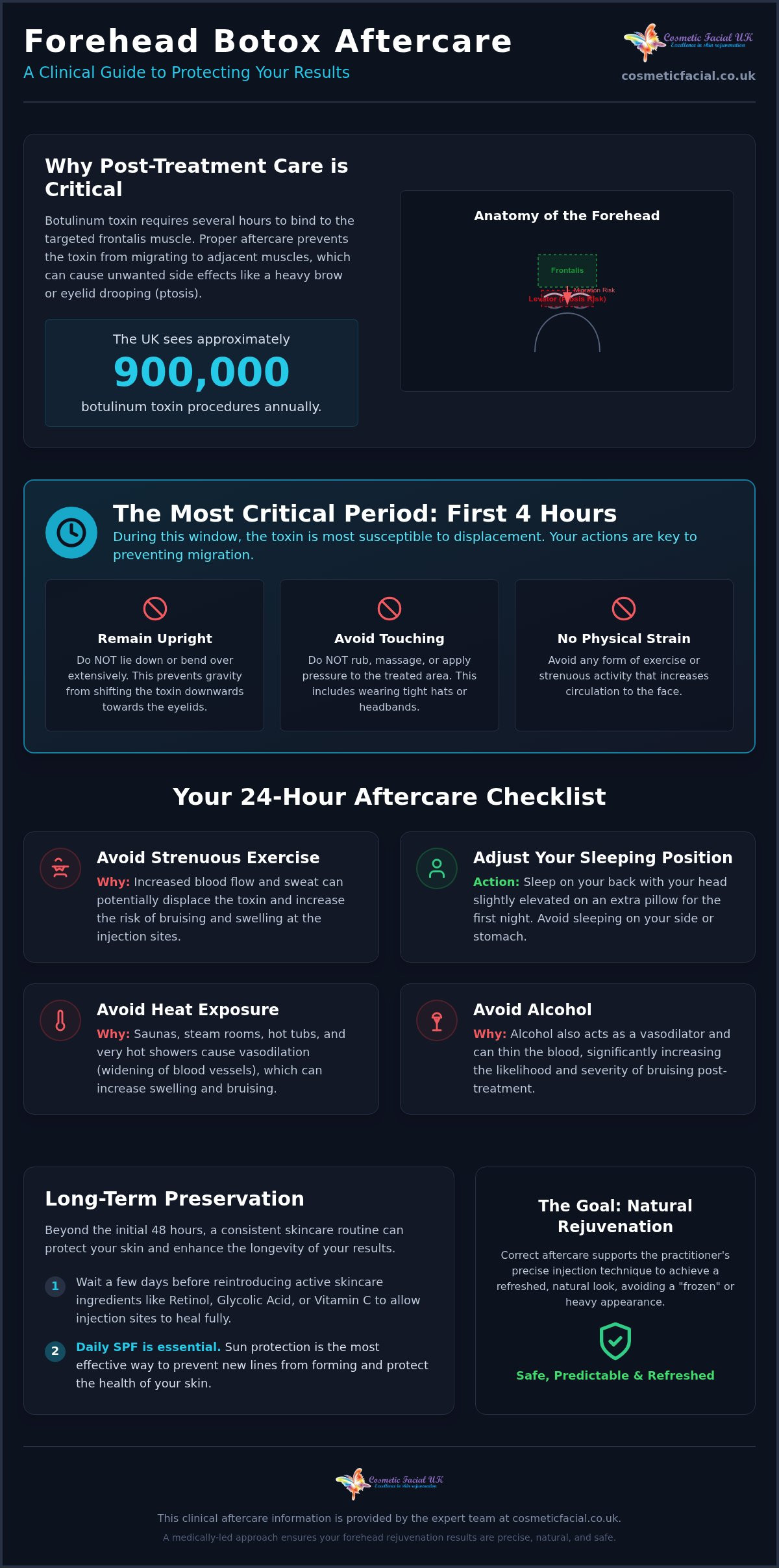
The primary concern with migration in the upper face is the proximity of the frontalis to the levator palpebrae superioris, the muscle responsible for lifting the upper eyelid. If the toxin drifts downwards, it can inadvertently relax this muscle, leading to eyelid ptosis or a significantly "heavy" brow appearance. This complication is not just an aesthetic issue; it can physically obstruct the field of vision. Clinical data suggests that the first four hours after your appointment represent the most critical window. During this time, the toxin is most susceptible to displacement. Remaining upright and avoiding any manipulation of the forehead is essential to ensure the product stays within the intended boundaries of the frontalis.
Expert Oversight: Why the Practitioner Matters
Achieving a natural, refreshed look requires more than just following aftercare; it starts with the precision of the initial placement. Precision is paramount. A practitioner must account for individual variations in muscle strength and forehead height to prevent the "frozen" look or brow heaviness. At Cosmetic Facial, our facial rejuvenation services are led by Dr Faramarz Didar. His MSc in Dermatology Skills and Treatment provides the high-level anatomical knowledge necessary to navigate these complex muscle structures safely. Knowing exactly what to avoid after botox for forehead lines allows you to protect the integrity of the treatment while Dr Didar's expertise ensures the toxin is placed with medical-grade accuracy.
Physical Restrictions: Activities to Avoid in the First 24 Hours
The first 24 hours following your procedure are pivotal for ensuring the botulinum toxin settles correctly within the frontalis muscle. Whilst the injection process is relatively quick, the physiological integration of the product requires a period of physical stability. During this window, your primary objective is to prevent any external force or internal circulatory surge from displacing the toxin. Understanding what to avoid after botox for forehead lines during this initial phase is the most effective way to safeguard your results and ensure a smooth, symmetrical finish.
Posture and Sleeping Positions
Clinical guidelines dictate that patients must remain upright for at least four hours post-treatment. This restriction prevents fluid shifts that could carry the toxin toward the levator muscles, which would increase the risk of eyelid drooping. You should avoid bending over to tie shoes, lying down for a nap, or engaging in any activity where your head is not positioned vertically. When it's time to sleep on the first evening, we recommend resting on your back with an extra pillow to keep the head slightly elevated. This position minimises the risk of side-sleeping, which can apply uneven, prolonged pressure to the forehead injection points and potentially compromise the precision of the treatment.
Exercise and Physical Strain
Strenuous physical activity is contraindicated for at least 24 hours, though some clinical protocols suggest extending this to 48 hours for optimal safety. The risk lies in systemic blood circulation. High-intensity interval training (HIIT) or heavy weightlifting causes significant vasodilation, a process where blood vessels expand to regulate body temperature. This increased blood flow to the face can "flush" the toxin away from the target site before it has fully bound to the nerve endings. While a gentle walk is generally acceptable, any activity that significantly raises your heart rate should be postponed. For those seeking more detailed guidance on recovery timelines, a consultation at our Marylebone clinic can provide personalised advice based on your specific treatment plan.
In addition to avoiding exercise, you must resist the urge to touch, rub, or massage the treated area. Physical manipulation is a leading cause of toxin migration. Even gentle pressure from a tight-fitting hat or a facial massage can shift the product. According to the Mayo Clinic, avoiding rub-induced migration is essential for preventing unintended muscle relaxation in adjacent facial regions. Finally, whilst some practitioners suggest that light facial expressions like raising the eyebrows may help the toxin distribute, it's best to avoid exaggerated or forceful movements until the following day.
Skin and Lifestyle Factors: External Irritants and Temperature Controls
Whilst physical stability is essential, environmental and lifestyle factors equally influence the final aesthetic result. Patients must be mindful of external irritants that can provoke inflammation or increase local blood flow to the injection sites. When considering what to avoid after botox for forehead lines, environmental temperature control is a paramount clinical consideration. Exposure to intense heat sources, such as saunas, steam rooms, and excessively hot baths, should be restricted for at least 48 hours. These environments induce vasodilation, which can cause the toxin to diffuse into unintended muscle groups or exacerbate post-procedure swelling.
Managing Heat and Vasodilation
During the initial integration phase, the skin remains sensitive. We advise washing the face with lukewarm water rather than hot, as the latter can trigger a flush response. Adhering to these Botox aftercare best practices ensures the inflammatory response is kept to a minimum, allowing the frontalis muscle to settle without interference from thermal stress. Inflammation in these early stages is a natural response to the needle's entry, but excessive heat can turn a minor reaction into prolonged oedema or discomfort.
Physical pressure from tight-fitting headwear, such as hats, headbands, or cycling helmets, should also be avoided for the first 24 hours. These items can physically displace the neurotoxin through sustained compression against the frontalis muscle. Additionally, whilst the treatment itself doesn't make the skin photosensitive, UV exposure can cause general skin irritation. Protecting the forehead with a high-factor SPF is recommended to maintain the health of the collagen structures surrounding the treated lines and to prevent premature degradation of the skin's surface.
Alcohol and Blood Thinners
When determining what to avoid after botox for forehead lines, the interaction between the toxin and systemic blood thinners is often overlooked. Alcohol consumption is a critical factor in the recovery process. Clinical advice suggests avoiding alcohol for 24 hours both before and after your appointment. Alcohol acts as a vasodilator and a mild anticoagulant, which increases the likelihood of bruising and prolongs the healing time of the micro-injection sites. Similarly, patients should avoid non-steroidal anti-inflammatory drugs (NSAIDs) like ibuprofen or aspirin, which can thin the blood and increase the risk of a visible haematoma. For a more comprehensive list of medications and lifestyle choices to monitor, please refer to our Botox FAQ page.
Long-term Preservation: Skincare and Maintenance Beyond Day One
Once the initial 48-hour clinical window has passed, the focus shifts from preventing migration to preserving the longevity of the results. Whilst the immediate restrictions are behind you, the way you manage your skin in the following weeks determines how effectively the lines remain softened. Understanding what to avoid after botox for forehead lines in terms of active skincare is essential. We recommend pausing the use of potent topicals, such as Retinol, Vitamin C, and Alpha Hydroxy Acids (AHAs), for at least 24 to 48 hours. These ingredients can occasionally cause micro-inflammation or irritation, which is best avoided whilst the injection sites are still healing.
Daily application of a broad-spectrum SPF is perhaps the most critical long-term maintenance step. UV radiation accelerates the breakdown of collagen and elastin, the very proteins that provide the skin with its structural integrity. When the frontalis muscle is relaxed, the skin has an opportunity to repair itself; however, sun damage can counteract this process by deepening static lines. Additionally, we consider the two-week follow-up appointment a clinical standard. It takes approximately 14 days for the toxin to reach its full effect, and this review allows your practitioner to assess the symmetry and depth of the muscle relaxation, ensuring the outcome meets the intended aesthetic goals.
Combining Botox with Professional Skin Treatments
Integrating Botox into a broader rejuvenation plan requires careful timing to ensure each modality performs optimally. For patients considering a chemical peel, a mandatory waiting period of at least one week is advised. This ensures the skin's barrier has fully recovered from the injections before being exposed to exfoliating acids. Similarly, laser resurfacing and Botox should be spaced at least two weeks apart. High-energy devices generate significant dermal heat, which could theoretically interfere with the toxin's binding process if performed too soon. For those looking to address volume loss alongside wrinkle reduction, our Dermal Fillers London Guide provides a detailed look at how these treatments can be safely layered.
Skincare Ingredients to Favour
While you should be mindful of what to avoid after botox for forehead lines, certain ingredients can actively support your results. Hyaluronic acid and peptides are particularly beneficial, as they bolster the skin's moisture barrier and support dermal density without causing irritation. Professional-grade antioxidants, such as Ferulic acid, help neutralise environmental pollutants that contribute to skin ageing. Medical-grade skincare and botulinum toxin work synergistically to address both dynamic muscle movement and static skin texture. This dual approach ensures that as the muscle activity is modulated, the skin's surface remains resilient and hydrated.
Professional Forehead Rejuvenation at Cosmetic Facial London
Cosmetic Facial operates with a clear objective: to provide refined, natural-looking results through clinically rigorous protocols. Located in the Marylebone area of London, the clinic serves as a dedicated centre for those seeking aesthetic improvements that respect the natural proportions of the face. We understand that the decision to undergo injectable treatments often comes with concerns about safety and outcome predictability. By providing clear, medically-vetted guidance on what to avoid after botox for forehead lines, we empower our patients to take an active role in their own recovery and result preservation.
Our practice is led by Dr Faramarz Didar, a GMC-registered practitioner with over 30 years of medical experience. His MSc in Dermatology Skills and Treatment with Commendation informs every aspect of our injection technique. This academic background ensures that anatomical landmarks are identified with precision, reducing the risk of toxin migration and ensuring the frontalis muscle is treated with the correct concentration of product. This level of expertise is essential for navigating the complex muscular structure of the upper face. We don't believe in a one-size-fits-all approach; instead, we conduct a comprehensive medical assessment to ensure Botox is the most appropriate modality for your specific skin concerns. This consultation involves a detailed analysis of your facial dynamics and skin quality, which allows us to tailor the dosage and injection points to your unique anatomy.
The Marylebone Clinic Experience
The environment at our Marylebone clinic is designed to reflect the highest medical standards. From the initial consultation to the final review, patient safety remains our primary focus. We provide each individual with a personalised aftercare instruction set that details exactly what to avoid after botox for forehead lines to ensure the best possible outcome. This structured approach is a hallmark of our line and wrinkle treatments, where we prioritise clinical excellence over marketing trends. Our patients appreciate the unhurried, thorough nature of our service, which ensures all clinical questions are answered before any procedure begins.
Next Steps for Your Skin Journey
Preparing for your visit involves a straightforward booking process through our online portal or via telephone. We encourage patients to schedule their appointments at least two weeks before any major social events to allow the treatment to reach its full clinical effect. A 14-day review is an integral part of the service for all forehead Botox patients. This review allows Dr Didar to assess the muscle response and perform any necessary refinements once the toxin has fully bound to the receptors. We view this as a vital step in the clinical process rather than an optional extra. This commitment to follow-up care ensures that your journey toward a refreshed appearance is managed with professional oversight at every stage, providing peace of mind that your results are both safe and effective.
Securing Your Aesthetic Results through Clinical Precision
Following a precise aftercare protocol is essential for the success of your forehead rejuvenation. The most critical period involves the first four hours, where remaining upright and avoiding manipulation prevents toxin diffusion into adjacent muscles. By understanding what to avoid after botox for forehead lines, such as strenuous physical activity and extreme heat, you mitigate the risk of eyelid ptosis and ensure a smooth, symmetrical outcome. These clinical restrictions are designed to protect the integrity of the treatment whilst the toxin binds to the targeted nerve endings.
At our Marylebone clinic, Dr Faramarz Didar applies over 30 years of medical experience to every procedure. His MSc in Dermatology with Commendation ensures that each injection is placed with the highest level of anatomical accuracy. This medically-led approach provides the reassurance that your skin health is managed by a GMC-registered practitioner dedicated to achieving refreshed, natural results. Taking these necessary precautions during the first 48 hours is the most effective way to safeguard your aesthetic investment.
We look forward to supporting you through every stage of your skin journey, from the initial consultation to your 14-day clinical review. Achieving a rested, youthful appearance is a collaborative process, and we're here to ensure your results are both safe and predictable.
Frequently Asked Questions
Can I lie down after Botox for forehead lines?
You should remain upright for at least four hours following your procedure. Lying down or bending over horizontally can cause fluid shifts that potentially move the botulinum toxin away from the frontalis muscle and toward the eyelid muscles. This migration increases the risk of eyelid ptosis, or drooping. To ensure the product binds correctly to the targeted nerve endings, it's essential to keep your head vertical during this initial critical window.
How long after Botox can I exercise?
You must avoid strenuous exercise for at least 24 hours, though 48 hours is often recommended for optimal safety. High-intensity activity increases systemic blood circulation and causes vasodilation, which may flush the toxin from the injection site before it's fully integrated. Light walking is acceptable, but any activity that significantly raises your heart rate or involves inverted positions, such as certain yoga poses, should be postponed to protect your results.
Can I drink alcohol after my forehead Botox treatment?
It's clinically advised to avoid alcohol for at least 24 hours after your treatment. Alcohol acts as a vasodilator and a mild anticoagulant, which increases the likelihood of localised bruising and swelling at the injection sites. To achieve the clearest aesthetic outcome, you should also refrain from alcohol for 24 hours prior to your appointment. This precaution ensures the blood remains at a normal consistency, reducing the risk of visible haematomas.
What happens if I accidentally rub my forehead after Botox?
Accidentally rubbing the area once is unlikely to cause a major issue, but you should immediately stop any manipulation. Sustained pressure or massage can physically displace the toxin into adjacent muscles, potentially causing a heavy brow or drooping eyelid. If you notice any unusual heaviness or asymmetry in the days following your treatment, please contact our Marylebone clinic for a clinical review. Avoiding physical contact is a key part of what to avoid after botox for forehead lines.
When can I wash my face after having Botox injections?
You may wash your face approximately four hours after your injections, provided you use a very gentle technique. It's important to use lukewarm water rather than hot water to prevent unnecessary vasodilation. Avoid using abrasive scrubs, electronic cleansing brushes, or applying significant pressure to the forehead for the first 24 hours. Pat the skin dry gently with a soft towel instead of rubbing to ensure the toxin remains undisturbed in the frontalis muscle.
Can I wear a hat or headband after forehead Botox?
You should avoid wearing tight-fitting hats, headbands, or helmets for at least 24 hours post-treatment. These items apply direct, sustained pressure to the forehead, which can physically shift the botulinum toxin from its intended placement. This is a significant factor in what to avoid after botox for forehead lines to prevent unintended muscle relaxation. Once the initial integration period has passed, you can resume wearing headwear without any risk to your aesthetic results.
Is it safe to have a facial or skin peel after Botox?
Professional skin treatments such as facials or chemical peels should be postponed for at least seven to fourteen days. These procedures often involve heat, steam, or vigorous massage, all of which can interfere with the binding process of the toxin. Spacing these treatments allows the skin's barrier to recover from the needle entries and ensures the Botox has fully stabilised. Always inform your aesthetician about recent injectables before proceeding with further clinical skin modalities.
How long does it take for forehead Botox to show full results?
While some patients notice softening within three to four days, it takes a full 14 days to see the final clinical effect. During this fortnight, the toxin gradually binds to the receptors, leading to the progressive relaxation of the frontalis muscle. We schedule a follow-up review at the two-week mark to assess the symmetry and effectiveness of the treatment. This standard ensures any necessary refinements are made only once the full result is visible.
Disclaimer
All content on cosmetic Facial website, including blogs, graphics, logos, images, and software, is the property of CosmeticFacial UK or its content suppliers and is protected by applicable copyright laws. Unauthorized use, reproduction, distribution, or modification of any content without prior written permission is strictly prohibited.


