


While many providers suggest a uniform three-month timeline for every patient, the clinical reality is that Botox longevity is a biological variable rather than a fixed calendar date. It is common to feel frustrated when results appear to dissipate sooner than expected, or to feel confused by the conflicting advice offered by various practitioners regarding how long does botox last. This uncertainty often arises because the duration of effect depends on complex physiological interactions rather than a simple lapse of time.
At Cosmetic Facial, we believe in providing a thorough, evidence-based understanding of your treatment. In this article, we will examine the scientific factors that determine the endurance of your results, including metabolic rate and the precision of the injection technique. You will gain a clear, clinical timeline for your expectations and learn how to identify the correct moment for a follow-up appointment. We also address the reality of "Botox immunity" to provide clarity for those concerned about declining efficacy. By understanding these mechanisms, you can better manage your treatment cycle and maintain optimal facial rejuvenation through precise, medically led care.
Key Takeaways
- Understand that Botox typically remains effective for 12 to 16 weeks, though results don't disappear overnight once the three-month mark is reached.
- Learn how individual metabolic rates and biological factors determine how long does botox last for your specific physiology.
- Discover why dosage precision and injection depth are critical for ensuring the toxin achieves maximum "grip" within the muscle layer.
- Identify essential aftercare strategies, such as avoiding strenuous exercise in the first 24 hours, to ensure the toxin doesn't migrate.
- Recognise how specialist medical expertise and anatomical knowledge prevent wasted units whilst optimising the placement of the treatment.
The Reality of Botox Longevity: Why 'Three Months' is Only an Average
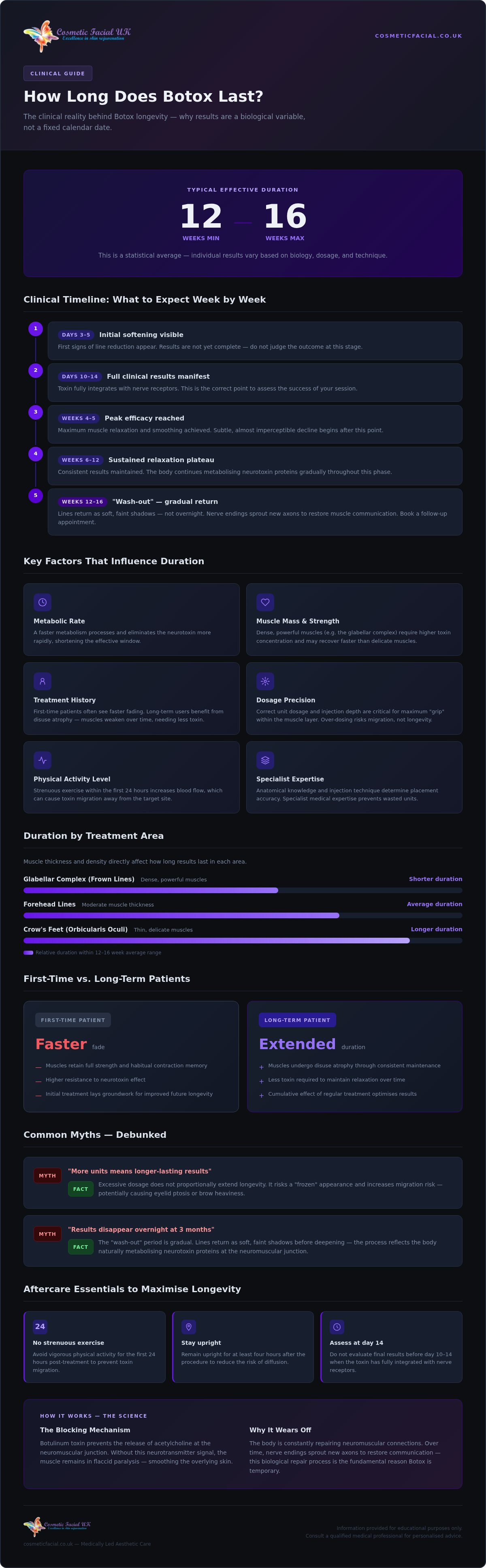
The standard clinical expectation for Botox (OnobotulinumtoxinA) is that it typically remains effective for 12 to 16 weeks. This range represents a statistical average rather than a definitive guarantee for every patient. Many individuals operate under the misconception that results disappear overnight once the 90-day mark is reached; however, the reality is a far more nuanced, gradual return of muscle movement. As the body naturally metabolises the neurotoxin proteins, the blockade at the neuromuscular junction begins to dissolve, allowing acetylcholine to slowly resume its signal transmission. This process is often referred to as the "wash-out" period, where fine lines don't return instantly but reappear as soft, faint shadows before eventually deepening back to their pre-treatment state.
First-time patients often notice that their initial treatment seems to fade slightly faster than subsequent sessions. This occurs because the targeted muscles are still at their full strength and retain a high degree of "memory" regarding their habitual contractions. Long-term users, conversely, frequently experience extended longevity because the muscles have undergone a degree of disuse atrophy, meaning they require less toxin to remain relaxed over time. Understanding how long does botox last requires acknowledging this cumulative effect of consistent maintenance and the physiological changes that occur over multiple years of regular treatment.
Understanding the Onset vs. Longevity
Patients must distinguish between the onset of action and the total duration of the effect. While some softening of lines may appear within three to five days, full clinical results typically manifest between day 10 and day 14. The treatment usually reaches its peak efficacy around week four or five, after which a very subtle, almost imperceptible decline in muscle relaxation begins. This biological timeline means that patience is a clinical necessity before assessing the success of a session. You shouldn't judge the final outcome or the potential longevity of the treatment until the proteins have fully integrated with the nerve receptors.
Myth: Botox is Permanent if You Get Enough Units
Increasing the dosage beyond the recommended units does not proportionally extend the lifespan of the results. Instead, excessive administration often leads to a "frozen" or unnatural appearance that lacks the refined subtlety of expert placement. Botox functions as a temporary blockade of neurotransmitters rather than a permanent structural change to the facial anatomy. Botox is a temporary aesthetic intervention with no permanent paralytic effect. Seeking to "over-dose" the muscle for the sake of longevity prioritises quantity over the precision required for a dignified, clinical outcome. A higher concentration in a single area may even increase the risk of migration to adjacent muscles, which can lead to complications like eyelid ptosis or brow heaviness.
The Science of Relaxation: How Metabolism and Biology Affect Results
The efficacy of botulinum toxin relies on its ability to intercept chemical messages at the neuromuscular junction. When injected, the toxin prevents the release of acetylcholine, a neurotransmitter responsible for triggering muscle contraction. Without this signal, the muscle remains in a state of flaccid paralysis. This biological blockade is what smooths the overlying skin. However, the body is constantly working to repair these connections. Over time, the nerve endings sprout new axons to restore communication, which is the fundamental reason why patients ask how long does botox last. The duration of this repair process varies significantly based on individual biology.
Muscle mass and strength play a decisive role in the longevity of the treatment. The glabellar complex, which comprises the muscles responsible for frowning, is often dense and powerful. These muscles require a higher concentration of the toxin to achieve relaxation and may recover their function more quickly than the delicate orbicularis oculi muscles around the eyes. Crow's feet treatments often appear to last longer because the targeted muscles are thinner and less resistant to the neurotoxin's effects. A thorough medical consultation is essential to determine if the lack of duration in a specific area is biological or technical.
A common concern amongst patients is the development of "Botox immunity" or the production of neutralising antibodies. Whilst clinical studies indicate that this phenomenon is exceptionally rare, occurring in less than 1% of patients, it remains a frequent topic of discussion. In most instances, what is perceived as resistance is actually a result of insufficient dosage or imprecise placement. If the concentration is too low for the muscle's strength, the results will naturally fade prematurely.
Metabolism and Lifestyle Factors
Metabolic rate is a primary determinant of toxin degradation. Individuals with high metabolic profiles, such as high-intensity athletes or those with physically demanding occupations, often find that their results dissipate more rapidly. Increased blood circulation and higher body temperatures may accelerate the breakdown of the neurotoxin proteins. When considering how long does botox last, one must account for these lifestyle variables. Whilst the impact of frequent sauna use or sunbed exposure is not fully quantified in clinical literature, practitioners often observe a correlation between high-heat environments and reduced treatment lifespan. For those looking to manage lifestyle factors and metabolic health through behavioural change, London Hypnotherapy & NLP offers professional support in rewiring subconscious habits, such as those related to weight control.
For active individuals who balance fitness with their aesthetic goals, maintaining total body health is essential; seeking specialist support from a provider like Local Foot Doc can ensure that foot and ankle health is managed with the same professional care as your skin.
Additionally, MoveMed offers exercise physiology and Clinical Reformer Pilates focused on treating the underlying causes of illness and injury, helping you maintain physical health while managing your aesthetic treatments.
Muscle Memory and Long-term Treatment
Consistent adherence to a treatment schedule can lead to a cumulative benefit. Over years of regular use, the targeted muscles may undergo a degree of disuse atrophy. This thinning of the muscle means it exerts less force on the skin even as the toxin wears off, making wrinkles appear less pronounced. By "training" the facial muscles to remain in a relaxed state, patients can often extend the interval between their visits. Integrating Botox into a broader facial rejuvenation therapy plan ensures that the skin's structural integrity is maintained alongside muscle relaxation.
Key Factors That Influence Your Treatment Duration
The duration of effect is not solely dependent on the patient's biological response. Technical variables, such as the concentration of the neurotoxin and the depth of the injection, significantly influence how long does botox last. A precise clinical approach ensures the toxin reaches the specific muscle layer where it can achieve maximum grip, rather than dispersing into superficial tissues where its efficacy is diluted. When the toxin is placed with medical accuracy, the blockade of acetylcholine is more robust, leading to a more predictable and sustained period of relaxation.
The anatomical location of the injection is another critical factor. Muscles that are in constant use, such as those around the mouth or the eyes, tend to metabolise the toxin faster than broader, flatter muscles like the frontalis in the forehead. The frequent mechanical movement associated with talking, eating, and smiling places a higher demand on the chemical blockade. Consequently, treatments in highly active zones often require more frequent attention than those in relatively static areas of the upper face.
Patient age and underlying skin quality also play a role in the perceived longevity of the results. Younger skin with robust collagen levels can maintain a smooth appearance even as the toxin begins to wear off. In contrast, mature skin with significant elastosis or a loss of structural proteins may show a return of wrinkles more quickly. In these instances, combining Botox with other line and wrinkle treatments can help provide a more comprehensive and enduring result by addressing both muscle activity and skin texture simultaneously.
Dosage vs. Longevity: The Balancing Act
A direct correlation exists between the volume of units administered and the timeframe of muscle relaxation. Whilst a "frozen" look may endure for the full four months, many patients in professional London environments prefer a more mobile, natural appearance. This approach, often detailed in our Baby Botox Guide, involves using fewer units to soften lines whilst retaining facial expression. Lower dosages naturally have a shorter lifespan, often requiring maintenance every eight to ten weeks to sustain the desired aesthetic.
The Impact of Facial Expressions
Hyper-expressive individuals, who naturally recruit more facial muscles during communication, may find their results dissipate sooner than those with more static features. This is not a failure of the product, but a reflection of the intensive neuromuscular activity. Treating deep-set structural wrinkles often requires a different maintenance schedule than treating fine, dynamic lines. A patient's unique expressive behaviour is a primary consideration during the initial medical assessment to ensure the dosage is tailored to their specific muscular recruitment patterns.
Extending Your Results: Clinical Aftercare and Maintenance Strategies
The period immediately following administration is a critical window for ensuring the longevity of your treatment. To optimise how long does botox last, patients should avoid strenuous cardiovascular exercise for at least 24 hours. Increased heart rate and blood flow can lead to unintended diffusion of the neurotoxin away from the targeted muscle groups. This migration reduces the concentration in the intended area and increases the risk of affecting adjacent muscles, which can compromise the aesthetic result. Precision in the hours following your appointment is just as vital as the precision of the injection itself.
There is a long-standing clinical debate regarding post-treatment posture. Whilst the risk of the toxin moving significantly due to gravity is minimal, modern clinical guidelines for 2026 still suggest caution to ensure the protein binds effectively to the nerve receptors. Strategic scheduling is also vital for long-term efficacy. You should avoid seeking "top-up" treatments too frequently; allowing the body to fully process the previous dose prevents the potential development of neutralising antibodies that could diminish future results. A measured approach to maintenance preserves the integrity of the treatment cycle.
Post-Treatment Do’s and Don’ts
Avoiding external pressure on the treated areas is essential during the initial four to six hours. Patients must refrain from facial massages, professional facials, or wearing tight-fitting headwear like motorcycle helmets or swimming goggles. Such pressure can physically displace the neurotoxin before it has fully integrated into the neuromuscular junction. You must remain in an upright position for at least four hours following your injections to ensure the product remains localised. Some clinical evidence suggests that Zinc levels can influence the duration of muscle relaxation. Supplements that combine Zinc with Phytase are sometimes utilised to support toxin longevity, as Zinc is a necessary co-factor for the botulinum toxin's enzymatic activity.
Protecting Your Investment
Maintaining the quality of the overlying skin is as important as managing the muscle activity beneath it. Chronic UV exposure degrades the structural integrity of collagen and elastin, which can make fine lines reappear significantly faster as the neurotoxin begins to metabolise. Daily application of broad-spectrum sun protection is a non-negotiable clinical requirement for preventing the development of permanent, static wrinkles that remain visible even when the face is at rest. Integrating Botox with professional skin peels can further enhance the aesthetic result by improving epidermal texture and tone whilst the underlying muscles are relaxed. Ultimately, the predictability of your results depends on the medical expertise of your practitioner. A consistent injector who understands your unique facial anatomy and previous response patterns can refine your dosage and placement to achieve the most durable and natural outcome possible.
Professional Precision: Why Specialist Expertise Dictates Duration
The technical proficiency of the injector is perhaps the most significant external variable influencing how long does botox last. In the London aesthetic market, the distinction between a high-street treatment and a clinical procedure is often found in the practitioner's medical credentials. Seeking a provider with General Medical Council (GMC) registration and specialist dermatology training is essential for ensuring both your safety and the longevity of your results. A qualified medical professional understands the pharmacological properties of the neurotoxin and can adjust the concentration to suit your specific needs.
A deep, clinical understanding of facial anatomy allows the practitioner to identify the exact vectors of muscle pull. This expertise ensures that every unit of the neurotoxin is placed with absolute precision into the muscle layer where it can achieve maximum grip. Precise placement prevents the "wasting" of units that might otherwise disperse into superficial tissues or non-target muscles. When the treatment is delivered with this level of accuracy, the blockade of neurotransmitters is more effective, which directly impacts the duration of the relaxation effect.
Practitioners at Skinstitute similarly advocate for this level of anatomical precision, drawing on over 26 years of experience in medical-grade cosmetic procedures to optimise patient outcomes.
Similarly, for patients in Australia seeking medical-grade aesthetic treatments, you can check out Skin Project Clinics, which prioritises doctor-led precision to achieve natural and long-lasting results.
This commitment to clinical excellence is shared by leading UK practices such as Peacock Dental Spa, where specialist knowledge of facial anatomy is used to tailor treatments for maximum efficacy.
In Malaysia, Damansara Dental Studio follows a similar philosophy, providing award-winning care that combines dental mastery with a deep understanding of facial aesthetics.
A bespoke consultation at our Marylebone centre is the foundation of a successful, long-term treatment plan. We assess your unique muscular recruitment patterns and skin quality to determine the optimal dosage for your face. This personalised approach is explored further in our Botox in London Pillar, which provides a full overview of the clinical standards and patient journey at a specialist clinic.
The Cosmetic Facial Approach in Marylebone
At Cosmetic Facial, all treatments are overseen by Dr Faramarz Didar (GMC 5200505), who holds an MSc in Dermatology with a commendation for his clinical skills. This academic background, combined with over 30 years of medical experience, ensures that your treatment is delivered with academic rigour. As a GP-led clinic located in the medical heart of London, we prioritise medical oversight and patient safety above all else. Our focus on facial rejuvenation ensures that Botox is utilised as a precise tool within a broader strategy for skin health and structural integrity.
Booking Your Maintenance Appointment
Determining the ideal window for re-treatment is a balance between maintaining a refreshed appearance and avoiding the risks of over-treatment. We generally recommend waiting until a significant degree of muscle movement has returned before scheduling your next session. This measured interval helps prevent the muscles from reaching a state of total atrophy and reduces the likelihood of the body developing a resistance to the toxin. When considering how long does botox last for your specific physiology, a structured, long-term plan ensures your results remain predictable and natural throughout the year.
Establishing a Precise Clinical Maintenance Plan
Understanding the physiological mechanisms of neurotoxins is essential for managing your aesthetic expectations. The duration of muscle relaxation is determined by a complex interplay of metabolic rate, muscle density, and the technical precision of the injector. There is no universal answer to how long does botox last, as each patient requires a bespoke approach based on their unique facial anatomy and expressive behaviour. By prioritising medical expertise over high-street convenience, you ensure that every unit is utilised to its full potential.
At Cosmetic Facial, your treatment is led by Dr Faramarz Didar, a GMC Registered Specialist (5200505) with over 30 years of medical experience. Holding an MSc in Dermatology with Commendation, Dr Didar provides a level of academic rigour and clinical oversight that is fundamental to achieving sustained, natural results. A thorough medical assessment in our Marylebone clinic allows us to refine your dosage and establish a sustainable treatment cycle tailored to your specific skin health needs.
To complement clinical care, understanding the deeper biological causes of skin ageing, such as the impact of 'zombie cells', can be explored through resources like mypure.co.uk.
Beyond clinical skin health, many patients like to coordinate their rejuvenation with other high-quality aesthetic services; for those interested in the latest trends and pricing for professional nail care, fingerSPA offers a comprehensive guide to modern manicure options.
Furthermore, maintaining internal health through natural methods can be a valuable adjunct to aesthetic procedures; Dr.Vaishali Nore's Homeopathy & Wellness Clinic offers expert insight into how homeopathy can support long-term wellness and natural healing.
For individuals prioritising comprehensive medical care alongside their aesthetic journey, Kingsford Medical Services offers expert GP services and specialist healthcare to support long-term wellness.
Furthermore, for those requiring specialist surgical interventions, you can check out Brisbane Hernia Clinic to understand the clinical process and expert care involved in modern hernia repair.
To further support your aesthetic journey with professional physical therapies, learn more about Body Therapist and their specialised remedial massage and body-contouring treatments.
We look forward to helping you maintain a refreshed and dignified appearance through expert medical care.
Frequently Asked Questions
Can I make my Botox last 6 months?
Achieving a six-month duration for results is clinically uncommon for the majority of patients. While the neurotoxin proteins may technically remain present, the nerve endings typically sprout new axons and restore muscle function within 12 to 16 weeks. Attempting to force a half-year lifespan through excessive dosage often compromises facial expression and increases the risk of a heavy, unnatural aesthetic.
Why did my Botox only last 2 months this time?
A two-month duration often indicates that the dosage administered was insufficient for the strength of the targeted muscle complex. Other variables include a sudden increase in metabolic rate, such as starting a new high-intensity exercise programme, or the "first-time" effect where muscles have not yet been trained to relax. It's essential to review the units used during your consultation to determine if an adjustment is required for future sessions.
Does exercise really make Botox wear off faster?
Regular, high-intensity cardiovascular exercise is clinically observed to accelerate the breakdown of botulinum toxin. Increased metabolic activity and core body temperature facilitate faster cellular repair, allowing the nerve endings to restore communication with the muscles sooner. This is a primary reason why active individuals frequently ask how long does botox last and often find their results lean toward the shorter end of the 12-week average.
Is it true that Botox stops working after many years?
True biological resistance to botulinum toxin is exceptionally rare, affecting less than 1% of the population according to clinical data. Most patients who feel the treatment is becoming less effective are actually experiencing changes in skin elasticity or muscle recruitment patterns associated with ageing. In these instances, a medical professional may recommend rotating the brand of toxin or adjusting the injection sites to regain the desired level of relaxation.
What are the first signs that Botox is wearing off?
The initial indication that the neurotoxin is metabolising is the gradual return of dynamic movement. You may notice subtle muscle recruitment when performing intentional expressions, such as a slight crinkle at the corners of the eyes or a faint furrow in the brow. These signs typically appear well before the return of static wrinkles, providing a window of time to organise your next maintenance appointment.
Does the brand of toxin (Azzalure vs Botox) affect how long it lasts?
While brands such as Azzalure and Botox have different molecular weights, their clinical longevity remains broadly similar. The choice between brands is usually dictated by the practitioner's preference for diffusion and precision in specific anatomical zones. When equivalent units are administered by a specialist, the primary factor determining how long does botox last remains the patient's individual biological response rather than the specific product name.
How often should I get Botox for the best long-term results?
For most individuals, a treatment interval of 12 to 16 weeks provides the most consistent aesthetic results. This schedule allows the targeted muscles to remain in a relaxed state, which can lead to long-term thinning of the muscle and a reduction in wrinkle depth over time. We recommend booking your follow-up when you regain a significant portion of your muscle movement to maintain a refreshed appearance.
Can certain vitamins or supplements help Botox last longer?
Evidence suggests that Zinc levels play a supportive role in the enzymatic activity of botulinum toxin. Clinical observations have indicated that patients who take a Zinc supplement, particularly those containing phytase to aid absorption, may experience a more robust and slightly longer-lasting effect. Maintaining adequate levels of this mineral ensures the neurotoxin can effectively bind to the nerve receptors, potentially extending the duration of the chemical blockade.
Disclaimer
All content on cosmetic Facial website, including blogs, graphics, logos, images, and software, is the property of CosmeticFacial UK or its content suppliers and is protected by applicable copyright laws. Unauthorized use, reproduction, distribution, or modification of any content without prior written permission is strictly prohibited.


