

The fine wrinkles that appear on the bridge of the nose when you smile, commonly known as bunny lines, are often misidentified as a simple sign of ageing rather than the complex result of facial muscle compensation. Many patients find that these diagonal creases create an aged or strained expression that doesn't align with their actual mood. It's a common concern amongst those who value a refined aesthetic; particularly when there's uncertainty about whether the lines are temporary movements or have become permanent features of the skin.
You might feel that your facial expressions have lost their natural fluidity, or perhaps you worry that previous anti-wrinkle injections have caused other muscles to overwork. This clinical guide explains the anatomical triggers for these nasal wrinkles and demonstrates how targeted medical interventions can restore a smoother bridge. We'll detail the specific techniques used to achieve natural results and provide expert insight into the preventative measures available at our London-based clinic. By understanding the relationship between the nasalis muscle and surrounding tissue, you can make an informed decision about restoring a composed and refreshed appearance.
Key Takeaways
- Understand the anatomical function of the nasalis muscle and how its repeated contraction leads to the formation of diagonal bunny lines on the nasal bridge.
- Explore the 'compensation effect' and why anti-wrinkle treatments in the forehead or glabella can sometimes trigger secondary wrinkles on the nose.
- Learn about the clinical application of botulinum toxin as a precise solution for restoring a smooth, natural-looking appearance to the mid-face.
- Discover essential preventative measures, such as the consistent application of broad-spectrum SPF and medical-grade skincare, to maintain long-term results.
- Gain insight into the importance of a comprehensive facial analysis within a medically led environment to ensure patient safety and injection precision.
What are bunny lines and why do they form?
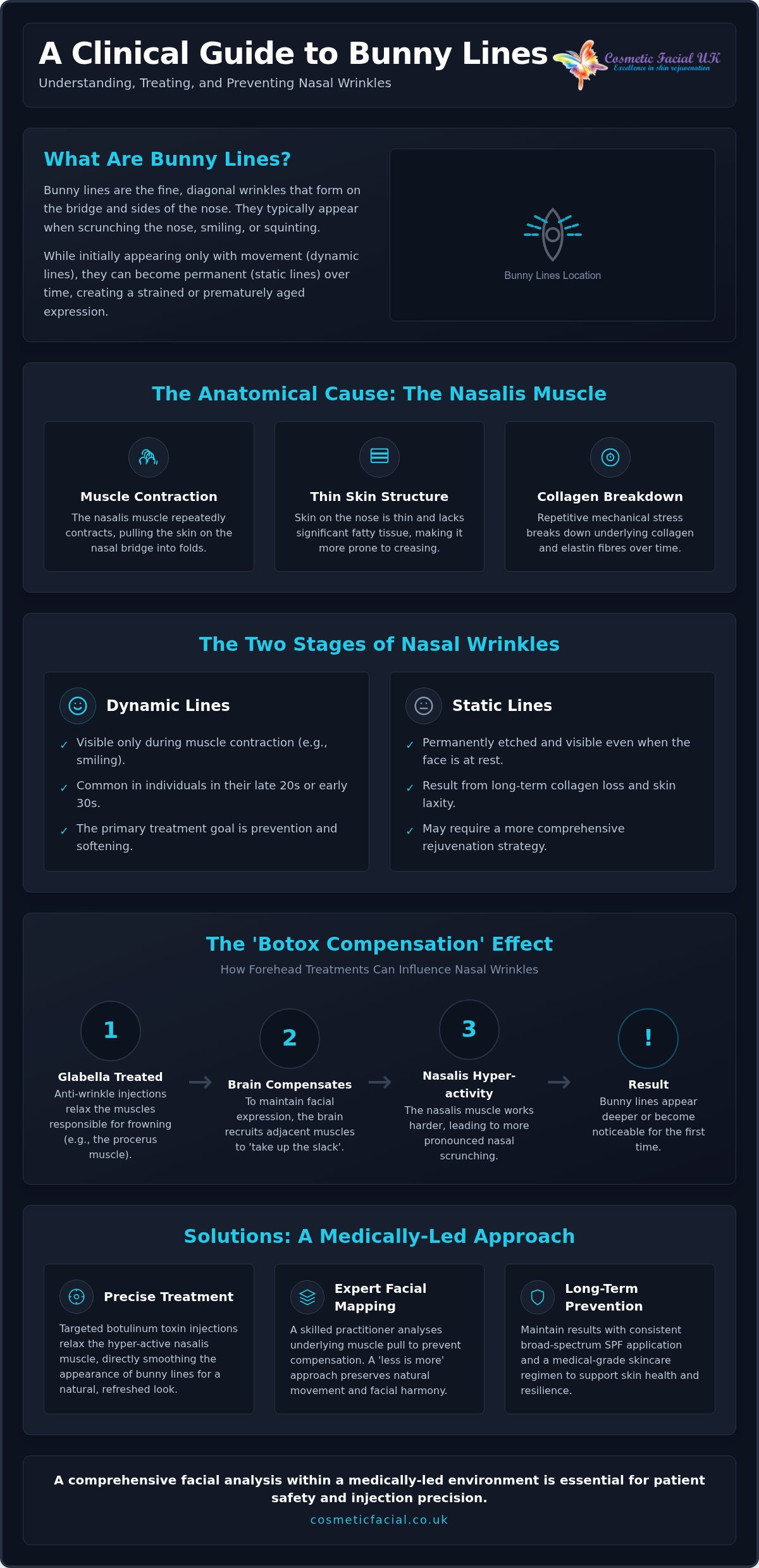
To accurately define What are bunny lines, clinicians categorise them as diagonal rhytides that manifest on the lateral aspects of the nasal bridge. These creases typically emerge when an individual engages in specific facial behaviours, such as scrunching the nose, squinting in bright light, or laughing heartily. Whilst they are often seen as a charming feature of a person's expression, many patients seek clinical intervention when the lines become more pronounced or begin to lend an aged appearance to the mid-face. As a dynamic wrinkle, bunny lines initially vanish when the muscles relax, but the cumulative effect of thousands of expressions eventually transitions them into static lines that persist at rest.
The anatomy of the nasalis muscle
The primary driver of these wrinkles is the nasalis muscle. This muscle is divided into two distinct components: the transverse part, which arches over the bridge of the nose to compress the nostrils, and the alar part, which serves to dilate them. Every time the transverse nasalis contracts, it pulls the skin of the nasal bridge into folds. Because the skin in this specific area is notably thin and lacks the structural support of significant fatty tissue, the repetitive mechanical stress eventually breaks down the underlying collagen and elastin fibres. Genetic factors also play a significant role here; some individuals possess naturally overactive nasal muscles that exert greater force on the skin, leading to deeper creases at an earlier age. Beyond simple contraction, the way the nasalis muscle interacts with the surrounding mid-facial musculature can also influence the depth and direction of the lines, requiring a high degree of precision during any clinical assessment.
Dynamic vs. static nasal wrinkles
Distinguishing between dynamic and static nasal wrinkles is a vital step during a clinical consultation. Dynamic lines are those visible only during active muscle contraction, such as when you smile or squint. In contrast, static lines are those that have become permanently etched into the dermis due to long-term skin laxity and dermal thinning. Identifying the stage of these wrinkles is essential because it dictates the treatment approach. For patients in their late 20s or early 30s, the focus is often on preventative care to stop dynamic lines from setting. Older patients may present with deeply established static rhytides that require a more comprehensive rejuvenation strategy. Whilst botulinum toxin is highly effective at relaxing the muscles to treat dynamic movement, static lines may require a multi-modality approach, potentially involving skin-resurfacing treatments or medical-grade topicals to improve the dermal texture and restore a smooth nasal profile.
The 'Botox compensation' effect: Can treatment cause bunny lines?
It's a clinical observation that anti-wrinkle injections in the forehead or glabella can occasionally lead to the emergence of new wrinkles. This phenomenon occurs when the muscles responsible for frowning are significantly relaxed, causing the brain to recruit adjacent muscles to maintain facial expression. The nasalis muscle, which is located on the bridge of the nose, often "takes up the slack" in these instances. This results in the formation of bunny lines that may appear deeper or more pronounced than they were prior to the initial treatment. Patients often describe feeling that their face looks "scrubby" or unnatural when they smile because the nasal area is working harder than usual.
Why the glabella and bunny lines are linked
The muscular synergy between the procerus muscle and the nasalis is a key consideration in aesthetic medicine. When the procerus is heavily treated, the nasalis often exhibits hyper-activity to compensate for the lack of movement in the brow. This compensatory behaviour is what makes nasal wrinkles appear more noticeable to the patient after their frown lines have been smoothed. Facial harmony is the ultimate objective of any professional injectable plan. It ensures that the face doesn't look "frozen" in one area while appearing overly active in another. Balance is essential. Our London-based practitioners prioritise this anatomical equilibrium to avoid the tell-tale signs of over-treatment.
Preventing compensation through expert mapping
Expert mapping is the most effective way to mitigate the risk of recruitment. A skilled practitioner doesn't just look at the wrinkles; they observe the underlying muscle pull during a series of exaggerated facial expressions. By adopting a "less is more" approach, clinicians can preserve a degree of natural movement while still achieving a rejuvenated look. Techniques such as micro-dosing involve injecting smaller, more frequent amounts of product to achieve a subtle transition between treated and untreated zones. This is particularly effective for patients who are prone to overactive nasal expressions.
Monitoring the Prevention and long-term maintenance of your results is part of a high-standard clinical care package. This involves a mandatory review to see how the muscles have settled. If the nasalis muscle shows signs of over-activity, a tiny amount of toxin can be added to the nasal bridge to harmonise the face. For those seeking a more balanced aesthetic, booking a consultation for precision injectables provides the opportunity to have your facial anatomy mapped by a specialist.
Treatment options for smoothing bunny lines
Botulinum toxin remains the clinical standard for addressing dynamic bunny lines. The procedure is precise and relatively brief; it involves the administration of 2-3 small injections on each side of the nasal bridge. These injections target the nasalis muscle to inhibit the repetitive folding of the skin that occurs during facial expressions. Patients typically observe the onset of results within 5-14 days, with the smoothing effect lasting approximately 3-4 months before a maintenance session is required. While toxin is the primary choice, the clinical approach often shifts depending on whether the wrinkles are dynamic or have become permanently etched into the skin.
Injectable solutions: Botox and Dermal Fillers
Botox works by temporarily blocking the neuro-signals that cause the nasalis muscle to contract. This prevents the skin from scrunching, which allows the dermis to recover from constant mechanical stress. An anatomical study of bunny lines highlights how the precise placement of these injections is necessary to avoid impacting adjacent muscles, such as the levator labii superioris alaeque nasi. For lines that have progressed to a static state, where they're visible even when the face is relaxed, dermal fillers provide a different clinical utility. Fillers use hyaluronic acid to "fill" deep grooves, physically elevating the skin to create a level surface. While Botox requires maintenance every few months, fillers often provide results that persist for six to nine months, depending on the product density and the patient's metabolic rate.
Skin rejuvenation: Microneedling and Peels
Treatments that focus on the dermal layer are essential for patients whose concerns relate to skin texture and laxity. Microneedling, or Dermaroller treatment, involves creating controlled micro-injuries to the skin. This process triggers a natural healing response, stimulating the production of collagen and elastin to thicken the thin skin over the nasal bridge. Chemical peels offer a complementary approach by removing the outermost layers of damaged skin. This improves surface texture and reduces the visibility of fine rhytides. These non-injectable options don't stop muscle movement, so they're often used in conjunction with Botox to achieve the most comprehensive results. Combining muscle relaxation with structural skin improvement ensures the nasal area remains smooth and resilient against future expression-based damage. Just as patients explore regenerative medicine and stem cells to enhance tissue repair in advanced orthopaedic care, this multi-layered strategy is often discussed during an initial consultation to ensure the treatment plan addresses both the cause and the visible symptoms of nasal wrinkling.
Prevention and long-term maintenance
Effective management of bunny lines extends beyond clinical intervention; it requires a proactive approach to skin health and muscle behaviour. Protecting the dermal matrix from environmental degradation is the first line of defence against the formation of permanent creases. Early intervention with small, precise doses of botulinum toxin can prevent dynamic movement from setting into static lines that persist even when the face is at rest. By relaxing the nasalis muscle before the skin loses its structural elasticity, patients can maintain a smoother nasal bridge for longer periods between clinic visits.
In a clinical setting, we often observe that nasal wrinkles don't occur in isolation. There is a significant anatomical overlap between the muscles that cause nasal scrunching and those responsible for a gummy smile. The levator labii superioris alaeque nasi muscle plays a dual role in both elevating the upper lip and flaring the nostrils. Patients who present with hyperactive nasal expressions often find they also have an excessive gingival display when laughing. Addressing these mid-face concerns together ensures that the transition between the nose and the mouth remains fluid and natural. A holistic facial assessment allows for a treatment plan that harmonises these adjacent muscle groups, providing a more balanced aesthetic than treating the nose in isolation.
The role of medical-grade skincare
The skin on the bridge of the nose is particularly thin and vulnerable to oxidative stress. Daily application of a broad-spectrum SPF is mandatory to protect this area from UV damage, which is a primary cause of collagen depletion. Incorporating retinoids into an evening routine promotes cellular turnover and helps to thicken the dermis over time. Hyaluronic acid is also beneficial for maintaining the "plumpness" and elasticity required to resist folding. For the best results, consulting a clinical specialist for a bespoke skincare programme ensures that the active ingredients are appropriate for your specific skin type and sensitivity levels.
While human dermatology focuses on aesthetic and functional health, the need for specialised care is mirrored in the veterinary world. For pet owners in Taipei, 亞洲獸醫專科醫院 provides expert dermatological services for dogs and cats, utilising an integrated Chinese and Western medical approach to treat complex skin diseases.
Lifestyle adjustments and facial habits
Being mindful of repetitive facial habits can significantly slow the progression of nasal wrinkles. Many individuals unconsciously scrunch their nose whilst reading or using digital screens due to uncorrected vision or glare. Wearing the correct prescription eyewear or sunglasses reduces the need to squint, which in turn limits unnecessary nasal muscle activity. Maintaining optimal hydration levels also supports the efficacy of aesthetic treatments, as well as the skin's natural ability to bounce back from expression. If you're concerned about how your facial expressions are affecting your skin, you can book a dermatology consultation to receive a comprehensive skin analysis and professional advice on long-term maintenance.
Seeking expert care at Cosmetic Facial in London
Patients seeking treatment for bunny lines in London deserve a clinical environment that prioritises medical precision over marketing trends. Our Marylebone practice offers a doctor-led approach to facial aesthetics, ensuring that every procedure is underpinned by a deep understanding of facial anatomy. This specialised oversight is crucial for patient safety, particularly when administering prescription-only medicines like botulinum toxin. By choosing a medically led clinic, you ensure that your treatment plan is designed to respect the unique proportions of your face while adhering to the highest standards of clinical governance. This level of professional reassurance is essential in an industry that requires strict adherence to safety protocols and precise injection techniques.
The importance of a clinical consultation
The importance of a clinical consultation cannot be overstated, as a one-size-fits-all approach is often the primary cause of the unnatural results patients fear. During your initial appointment, we conduct a comprehensive facial analysis to determine exactly how your nasalis muscles interact with the rest of the mid-face during movement. We review your medical history and any previous aesthetic treatments to build a complete profile of your skin health and previous responses to injectables. This allows us to design a bespoke treatment plan that addresses the nasal bridge whilst considering adjacent areas like the forehead or crow's feet. This integrated strategy ensures that the relaxation of one muscle group doesn't lead to compensatory movement elsewhere, maintaining the facial harmony that is the hallmark of expert care. We focus on a natural look philosophy, ensuring your expressions remain fluid and authentic.
Your journey at our Marylebone clinic
Our Marylebone clinic is designed to provide a calm, professional experience from the moment you arrive. The treatment itself is efficient, but the assessment and aftercare are thorough and unhurried, reflecting our commitment to intellectual honesty and clinical excellence. Following the administration of toxin for bunny lines, we provide clear, written instructions on post-treatment care. In the first 24 hours, it's essential to avoid strenuous exercise, excessive heat, or massaging the treated area to prevent the medicine from migrating to unintended muscle groups. This methodical approach ensures that you feel supported throughout your aesthetic journey and that your results are both safe and effective. If you are ready to address nasal wrinkles with a focus on precision and natural outcomes, you can Book your consultation at Cosmetic Facial Marylebone to begin your clinical assessment.
Restoring facial harmony through precision aesthetics
Successfully managing bunny lines requires more than just masking surface wrinkles; it demands a precise understanding of mid-face musculature and its compensatory behaviours. By identifying whether nasal creases are dynamic or static, clinicians can implement a targeted strategy that combines muscle relaxation with dermal rejuvenation. Achieving a smooth nasal bridge while preserving the natural fluidity of your smile is the ultimate objective of a professional treatment plan. This methodical approach ensures that results remain subtle and respect the underlying anatomy of the face.
At our practice in Marylebone, we prioritise a medical-led approach that respects your unique facial structure. Our clinic provides expert clinical care in the heart of London, specialising in natural-looking anti-wrinkle results through comprehensive dermatology and aesthetic services. This measured methodology ensures that every intervention supports long-term skin health and aesthetic balance. If you're concerned about the appearance of nasal wrinkles or wish to discuss a bespoke rejuvenation programme, we're here to provide professional guidance. You can Book a clinical consultation for bunny line treatment in Marylebone to begin your journey toward a refreshed and composed appearance.
Frequently Asked Questions
What are bunny lines on the face?
Bunny lines are fine, diagonal wrinkles that manifest on the bridge of the nose when the nasalis muscle contracts. These rhytides are typically visible during facial expressions such as laughing, squinting, or scrunching the nose. While they begin as dynamic lines that disappear when the face is at rest, they can eventually become static creases due to the cumulative breakdown of collagen in the thin nasal skin.
Can you get rid of bunny lines without Botox?
While botulinum toxin is the clinical standard for treating dynamic movement, non-injectable options focus on improving the structural quality of the skin. Medical-grade skincare containing retinoids and antioxidants can help strengthen the dermis over time. Alternatively, microneedling and chemical peels improve surface texture and elasticity. These treatments may soften the appearance of fine lines but don't address the underlying muscle contraction that causes the skin to fold.
How much does bunny line Botox cost in London?
The cost of treating nasal wrinkles in London clinics varies depending on whether the procedure is performed as a standalone treatment or as part of a multi-area plan. Most patients find it more cost-effective to include this area as an additional "zone" alongside forehead or glabella treatments. Prices reflect the practitioner's expertise and the clinic's location, so a formal consultation is necessary to receive an accurate quote based on your unique anatomy.
Will bunny line treatment make my smile look fake?
Precision injection techniques ensure that the treatment preserves natural facial expressions rather than creating a frozen or unnatural appearance. A skilled clinician targets only the specific fibres of the nasalis muscle, leaving the surrounding mid-face muscles active. This allows for authentic movement while smoothing the bridge of the nose. The objective is always to achieve a subtle result that maintains the fluidity and character of your natural smile.
How long does it take for bunny line injections to work?
Initial results usually become visible within three to five days after the procedure as the muscle begins to relax. The full clinical effect of the botulinum toxin typically stabilises between 10 and 14 days post-injection. During this period, the bunny lines gradually soften, leading to a smoother appearance on the nasal bridge. We recommend a follow-up appointment after two weeks to assess the final outcome and ensure facial harmony.
Are bunny lines a sign of ageing or just a habit?
These wrinkles are a combination of repetitive facial habits and the natural ageing process. Frequent nose-scrunching or squinting creates dynamic lines, while the age-related loss of elastin and collagen causes these lines to become permanently etched into the skin. Some individuals are also genetically predisposed to overactive nasal muscles, which can lead to the appearance of these wrinkles earlier in life, regardless of their chronological age.
What happens if bunny lines are left untreated?
If left untreated, dynamic nasal wrinkles will eventually transition into deep, static grooves that remain visible even when the face is relaxed. Over time, the repeated mechanical stress on the thin nasal skin causes permanent dermal damage and loss of elasticity. While static lines can still be managed with a combination of dermal fillers and skin resurfacing, early intervention with toxin is more effective at preventing these creases from becoming permanent features.
Is there any downtime after treating nasal wrinkles?
There is virtually no downtime associated with this procedure, allowing patients to return to their daily activities immediately. Some individuals may experience minor localised redness or tiny swellings at the injection sites, which typically resolve within a few hours. We advise avoiding strenuous exercise, saunas, and facial massages for 24 hours post-treatment. This ensures the product remains correctly positioned within the targeted nasalis muscle for optimal results.
Disclaimer
All content on cosmetic Facial website, including blogs, graphics, logos, images, and software, is the property of CosmeticFacial UK or its content suppliers and is protected by applicable copyright laws. Unauthorized use, reproduction, distribution, or modification of any content without prior written permission is strictly prohibited.


