


The success of a line and wrinkle treatment is determined as much by your clinical adherence in the hours following the procedure as it is by the precision of the initial injections. While many patients view the recovery phase as a series of lifestyle inconveniences, post-treatment protocols are actually essential biological requirements for the effective binding of the toxin to the targeted neuromuscular junctions. It's natural to feel concerned that a minor lapse, such as bending over or exercising too soon, might cause the neuromodulator to migrate and lead to unwanted muscle weakness or an asymmetrical result.
By following these botox aftercare instructions uk, you'll secure the necessary peace of mind to navigate the first 24 hours with confidence. This guide provides a comprehensive clinical checklist designed to ensure optimal protein binding and maximise the longevity of your facial rejuvenation results. We'll examine the precise timeline for recovery, clarify the science behind restrictions on alcohol and physical activity, and outline exactly what to expect during the initial healing phase at our Marylebone centre.
Key Takeaways
- Understand the biological mechanism of toxin binding and why the "no-touch" rule is essential to prevent unwanted muscle migration or ptosis (drooping).
- Follow specific botox aftercare instructions uk regarding alcohol consumption and physical activity to minimise vasodilation and localised bruising.
- Learn to distinguish between common post-treatment sensations, such as a temporary heavy forehead, and symptoms that require clinical attention.
- Discover why avoiding high-heat environments like saunas and steam rooms for 48 hours is critical for maintaining the longevity of your facial rejuvenation results.
- Recognise the importance of a mandatory two-week clinical review with a GMC-registered practitioner to ensure the precision and safety of the final outcome.
The First 4 Hours: Critical Toxin Binding and Migration Prevention
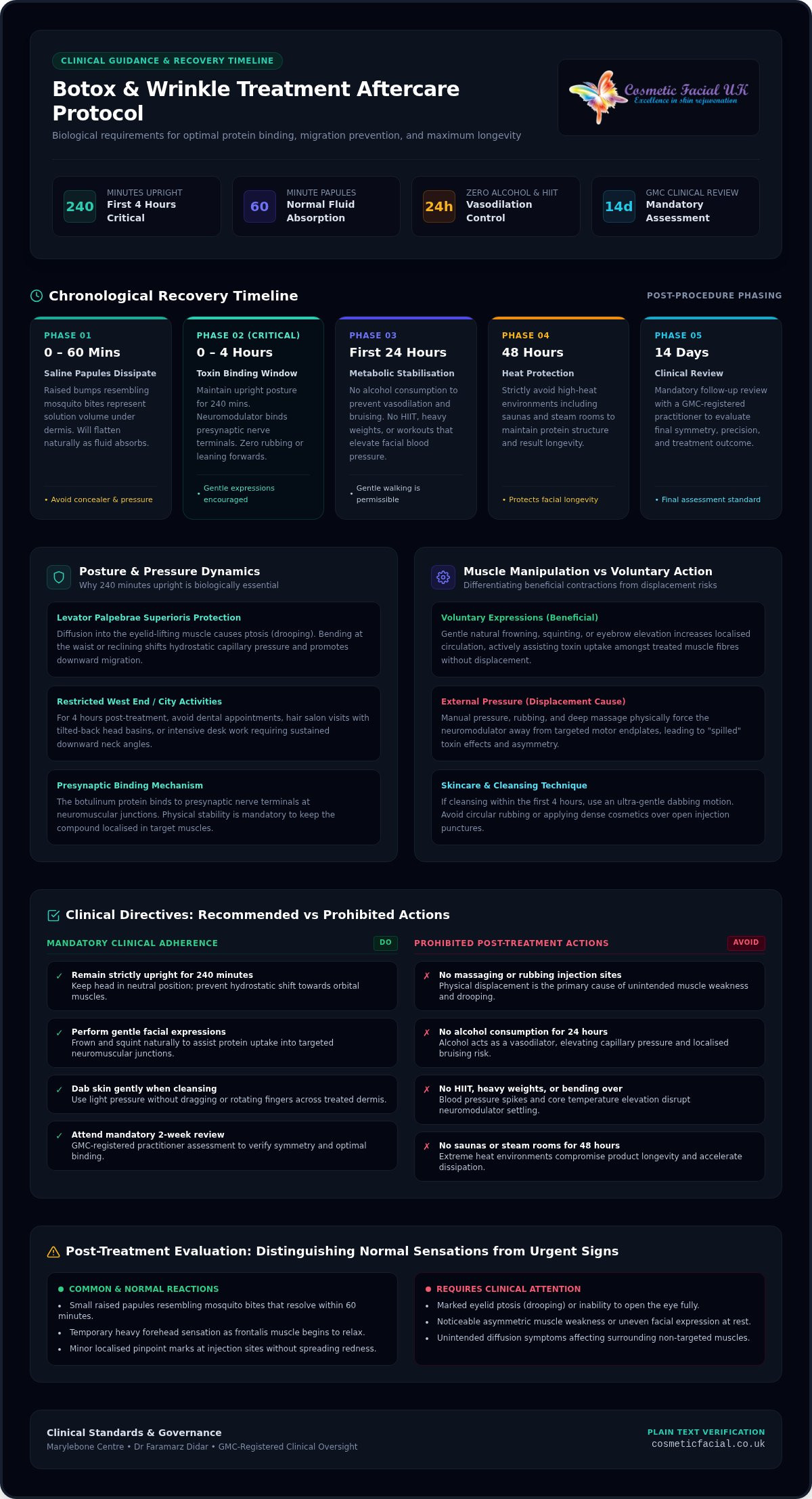
The first four hours following a line and wrinkle treatment represent the most critical window for ensuring the neuromodulator remains localised within the targeted muscle groups. During this period, the botulinum toxin binding mechanism involves the protein attaching to the presynaptic nerve terminals, a process that requires absolute stability to be effective. If the toxin is disturbed before it has sufficiently bound to the neuromuscular junction, it can diffuse into adjacent, non-targeted muscles, leading to complications such as muscle ptosis or facial asymmetry. Strict botox aftercare instructions uk dictate a "no-touch" policy during this initial phase to protect the integrity of the clinical outcome.
Why Posture Matters Post-Injection
Clinical protocols at our Marylebone clinic require patients to maintain an upright posture for at least 240 minutes after their procedure. You must avoid reclining, lying flat, or bending over at the waist, as these actions alter the hydrostatic pressure in the facial capillaries and can encourage the toxin to migrate. This is particularly dangerous for the levator palpebrae superioris, which is the muscle responsible for lifting the eyelid; diffusion into this area is the primary cause of a "droopy" eyelid. For professionals returning to offices in the West End or the City, this means you shouldn't attend dental appointments, hair salon visits where the head is tilted back, or engage in intense desk work that requires looking down for extended periods immediately following the session.
The Science of Muscle Manipulation
The "no-touch" rule is perhaps the most vital component of botox aftercare instructions uk. Manual pressure, such as rubbing or massaging the injection sites, physically forces the toxin away from the intended nerve endings. This mechanical displacement is the leading cause of "spilled" toxin effects, where the results appear uneven or affect unintended areas of expression. It's essential to distinguish between voluntary muscle contraction and external manipulation.
If you must cleanse your face within this four-hour window, you should do so with extreme caution. Use a gentle, dabbing motion rather than a circular rubbing motion. Whilst you should avoid physical manipulation, making gentle facial expressions, such as frowning or squinting, is actually beneficial. These voluntary contractions increase localised blood flow and can assist the uptake of the toxin amongst the treated muscles without the risk of migration. Under the guidance of Dr Faramarz Didar, patients are encouraged to move their face naturally whilst strictly avoiding any external pressure.
The 24-Hour Protocol: Daily Activities and Skincare Integration
Once the initial binding window has passed, the focus of botox aftercare instructions uk shifts toward managing systemic factors that influence toxin metabolism and tissue recovery. Increased blood flow to the face is the primary concern during the first 24 hours. Elevated circulation can potentially accelerate the metabolism of the toxin before it has fully stabilised within the muscle tissue. Additionally, patients should abstain from alcohol consumption for at least one full day. Alcohol acts as a vasodilator, widening blood vessels and increasing blood flow to the skin's surface. This process significantly heightens the risk of localised bruising at the injection sites by increasing capillary pressure and slowing the natural clotting process.
It's common to observe small, raised papules resembling mosquito bites immediately after the procedure. These are not a cause for alarm; they represent the volume of the saline-toxin solution sitting beneath the dermis. These typically dissipate within 60 minutes as the fluid is absorbed by the surrounding tissues. Managing these sites simply requires patience. You must resist the urge to apply concealer or pressure to these areas until the skin has closed and the bumps have flattened naturally.
Exercise and Physical Exertion Restrictions
Adhering to botox aftercare instructions uk regarding exercise is vital because high-intensity interval training (HIIT) and heavy weightlifting cause significant blood pressure spikes. These physiological changes, combined with an increase in core body temperature, can interfere with the settling of the neuromodulator. Whilst a gentle walk is permissible, any activity that causes facial flushing or requires you to wipe sweat from the treated area must be avoided. The goal is to keep the heart rate stable and prevent the rapid dispersal of the toxin into non-targeted muscle groups through increased systemic circulation.
Skincare Adjustments: Acids, Retinols, and Facials
You may resume a basic skincare routine the following morning, but you must avoid aggressive mechanical exfoliation. We recommend pausing the use of active ingredients such as Vitamin C, AHAs, BHAs, and Retinols for the first 24 hours to prevent irritation of the injection sites. If you intend to supplement your results with a chemical peel or microdermabrasion, clinical safety standards require a minimum seven-day wait period. This allows the toxin to stabilise fully without the interference of deeper epidermal manipulation or inflammatory responses triggered by resurfacing treatments. For those planning a comprehensive facial rejuvenation strategy, you can consult with our medical team to coordinate these treatments effectively.
Managing Side Effects: Normal vs. Urgent Clinical Signs
The physiological response to a line and wrinkle treatment is gradual. It's essential to understand that the initial 48 hours won't reflect the final aesthetic outcome. Most patients begin to observe a reduction in muscle activity between day three and day five, with the full clinical effect stabilising by day 14. During this settling phase, you might notice slight asymmetry where one side of the face responds more rapidly than the other. This is a common occurrence and is not indicative of a failed procedure; patience is required as the toxin continues to bind to the nerve endings.
A frequent sensation reported in botox aftercare instructions uk is a "heavy" feeling in the forehead or between the brows. This sensation is a result of the targeted muscles losing their accustomed tone and the brain adjusting to the lack of feedback from those receptors. It typically resolves within a week. For bruising, which occurs when a needle inadvertently disturbs a small capillary, we recommend the application of arnica cream or a cold compress. However, you must apply these with extreme care to avoid any manual pressure that could cause toxin migration into non-targeted areas.
Dealing with Post-Treatment Headaches
Some patients experience a mild, dull headache shortly after the procedure. This is often a sensory reaction to the physical insertion of the needle or a slight inflammatory response at the injection sites. If required, paracetamol is the preferred clinical choice for pain relief. You should avoid ibuprofen or aspirin, as these non-steroidal anti-inflammatory drugs (NSAIDs) possess blood-thinning properties that can exacerbate bruising or prolong the healing of the injection sites. Maintaining high levels of hydration also supports the body whilst it processes the treatment.
When to Contact Your Aesthetic Practitioner
Whilst minor swelling and redness are expected, you should be able to distinguish them from urgent clinical signs. Standard bruising is localised and fades over several days. In contrast, an allergic reaction might present as widespread hives or intense itching. Most importantly, any systemic symptoms, such as sudden difficulty swallowing, speaking, or breathing, require immediate medical attention. If you experience any persistent concerns or unexpected changes in your vision, follow the protocol for contacting the Marylebone clinic for a professional assessment.
Lifestyle and Environmental Factors: The 48-Hour to 2-Week Window
The days following your procedure are essential for ensuring the longevity of the neuromodulator. Whilst the initial binding occurs quickly, the tissue remains sensitive to environmental stressors for several days. Adhering to botox aftercare instructions uk during this secondary phase prevents premature breakdown of the toxin and supports the overall rejuvenation process. This period is when the clinical results truly begin to manifest as the muscle activity gradually diminishes.
Heat, Steam, and Toxin Stability
Exposure to extreme heat must be avoided for at least 48 hours. Environments such as saunas, steam rooms, and hot yoga studios induce vasodilation and localised inflammation, which can negatively impact the stabilising toxin. Similarly, hot baths and showers should be kept to a moderate temperature during this window. Increased skin temperature accelerates metabolic processes that may reduce the duration of the anti-wrinkle effect. Professional facial massages or lymphatic drainage treatments must be postponed for a minimum of seven days. These procedures involve significant tissue manipulation that can displace the product even after the initial binding period has passed.
Long-Term Maintenance for Optimal Results
Maintaining the results of a line and wrinkle treatment requires a strategic approach to skincare and lifestyle. Protecting the skin from UV damage is paramount; sun exposure degrades collagen and can diminish the visible benefits of the treatment. Integrating medical-grade skincare into your daily routine provides a supportive framework for a non-surgical facelift effect, ensuring the skin remains hydrated and resilient. Following these botox aftercare instructions uk ensures your investment in facial aesthetics is protected from external degradation whilst the skin continues its natural turnover process.
Consistent treatments every three to four months are recommended. This regular interval allows for a degree of muscle "training," where the targeted muscles gradually become less active over time, often leading to longer-lasting results between sessions. A healthy lifestyle, including adequate sleep and a balanced diet, prevents premature toxin breakdown and supports the body’s natural regenerative processes. Regarding sleeping positions, most patients can safely resume side or stomach sleeping after 48 hours, once the risk of migration through pressure is negligible. Air travel is generally considered safe immediately after treatment, as modern cabin pressure does not influence toxin distribution; the pressurised environment does not cause the neuromodulator to move.
Professional Follow-up and Clinical Safety Standards in the UK
The final component of professional botox aftercare instructions uk is the formal clinical review. This appointment is typically scheduled 14 days after the initial procedure. It represents the point at which the neuromodulator has reached its maximum efficacy. Whilst some patients may feel their results are visible sooner, a medical assessment cannot be accurately performed until the full two-week window has elapsed. This ensures that any adjustments made are based on the final stabilised state of the muscle tissue.
The Importance of the 14-Day Review
During this follow-up at our Marylebone clinic, we evaluate the degree of muscle relaxation and ensure that facial movement remains natural. We specifically look for any minor asymmetries that may have occurred as the toxin settled amongst the muscle fibres. If a "top-up" or adjustment is required, it's performed during this session to refine the final result. Clinical documentation is a vital part of this process. We use standardised "before and after" photography to objectively track your progress and ensure that the treatment plan is meeting your rejuvenation goals. This methodical approach is a hallmark of medical-led care. It's never appropriate to seek additional injections before this 14-day period concludes.
Choosing a CQC-Regulated Clinic in London
Safety standards in the United Kingdom vary significantly between providers. Seeking a private dermatologist consultation within a CQC-regulated environment ensures that your treatment meets rigorous hygiene and clinical safety benchmarks. The risks associated with "Botox parties" or treatments in non-clinical settings are substantial. Unregulated providers often lack the medical training to manage rare complications or understand the complex facial anatomy required for precise injections. These environments don't offer the same level of accountability as a registered medical centre.
Choosing a GMC-registered doctor like Dr Faramarz Didar provides the reassurance of over 30 years of medical experience. Dr Didar’s MSc in Dermatology Skills and Treatment from the University of Hertfordshire further distinguishes the clinic’s expertise in facial aesthetics. Following these botox aftercare instructions uk within a medically supervised framework is the most effective way to guarantee both the safety and the longevity of your results. Expert care is unhurried and prioritises clinical evidence over marketing trends.
Securing the Longevity of Your Facial Rejuvenation
Adhering to a structured clinical protocol after your procedure is the most effective way to ensure the longevity of your results. The success of the toxin depends on the initial four-hour binding window and your commitment to avoiding environmental stressors, such as extreme heat and intense physical exertion, during the first 48 hours. By following these botox aftercare instructions uk, you provide the neuromodulator with the necessary stability to settle effectively within the targeted muscle groups.
Professional care doesn't end with the injections. A mandatory 14-day review at our CQC-compliant Marylebone clinic allows for the precise assessment of your results. Dr Faramarz Didar, a GMC-registered doctor with over 30 years of medical experience and an MSc in Dermatology with Commendation, oversees every aspect of your recovery. This medical-led approach ensures that your treatment remains safe and maintains natural facial movement. You can move forward with confidence, knowing your aesthetic health is managed by a specialist who prioritises clinical precision and long-term skin integrity.
Frequently Asked Questions
Can I drink alcohol after Botox in the UK?
You should abstain from alcohol for at least 24 hours following your procedure. Alcohol acts as a vasodilator; it widens the blood vessels and increases circulation to the skin's surface. This process significantly heightens the risk of localised bruising and swelling at the injection sites. To ensure the most precise result at our Marylebone clinic, we recommend maintaining stable blood pressure and avoiding substances that thin the blood during the initial recovery phase.
How long after Botox can I exercise or go to the gym?
We advise waiting a minimum of 24 hours before resuming strenuous exercise or visiting the gym. High-intensity interval training (HIIT) and heavy lifting cause significant spikes in blood pressure and core body temperature. These physiological changes can interfere with the binding of the toxin to the neuromuscular junction or cause it to migrate into non-targeted muscles. Gentle walking is permissible; however, any activity that causes facial flushing must be avoided.
Is it safe to fly immediately after having Botox injections?
Air travel is clinically safe immediately after treatment, as modern aircraft cabin pressure does not cause the neuromodulator to migrate. However, we suggest waiting 24 to 48 hours if your schedule allows. This precaution ensures you are in a stable environment should you experience any minor side effects, such as a mild headache or localised swelling. Following these botox aftercare instructions uk ensures you remain comfortable during your journey whilst the product stabilises.
When can I lie down or go to sleep after my treatment?
You must remain upright for at least four hours after your injections to prevent the toxin from diffusing into unintended areas, such as the eyelid-lifting muscles. Regarding sleep, it is safest to sleep on your back for the first night. You can usually return to your preferred side or stomach sleeping position after 24 hours. This timeline allows the toxin sufficient time to bind securely to the targeted nerve endings without being displaced by physical pressure.
Can I wear makeup to cover any redness or bruising after Botox?
It is best to wait at least six hours before applying makeup to the treated areas. The injection sites are technically micro-wounds that require time to close naturally to prevent bacterial infection. If you must apply cosmetics to cover redness or bruising the following day, ensure your brushes and applicators are thoroughly sanitised. Using mineral-based products is often recommended as they are less likely to irritate the sensitive skin during the initial healing process.
What happens if I accidentally rub my face after the injections?
If you accidentally rub your face shortly after treatment, do not panic, but monitor the area closely for any signs of muscle migration. Manual pressure is the primary cause of toxin displacement, which can lead to temporary drooping of the eyelid or brow. Whilst a single light touch is unlikely to cause significant issues, you should strictly adhere to the botox aftercare instructions uk moving forward. Contact our London clinic if you notice any sudden asymmetry.
How soon will I see the full results of my line and wrinkle treatment?
Full results from a line and wrinkle treatment typically manifest within 14 days. Whilst some patients begin to notice a reduction in muscle movement after three to five days, the biological process of the toxin binding to the nerve receptors takes two weeks to complete. You may observe slight asymmetry or uneven settling during this period. This is a normal part of the stabilisation process and usually resolves once the full clinical effect is achieved.
When should I book my follow-up or top-up appointment?
Your follow-up appointment should be scheduled exactly 14 days after your initial procedure. We do not perform top-ups or adjustments before this date because the toxin's effect is not yet finalised. At our Marylebone centre, this two-week review is a standard of care to ensure muscle balance and patient satisfaction. This appointment allows Dr Didar to assess your unique facial dynamics and make any necessary refinements to ensure a natural, rejuvenated appearance.
Disclaimer
All content on cosmetic Facial website, including blogs, graphics, logos, images, and software, is the property of CosmeticFacial UK or its content suppliers and is protected by applicable copyright laws. Unauthorized use, reproduction, distribution, or modification of any content without prior written permission is strictly prohibited.


