


Rosacea treatment in London usually focuses on controlling symptoms rather than curing the condition. Management may include gentle skincare, sun protection, avoiding personal triggers and prescription treatments. Laser or light procedures can help reduce visible redness and blood vessels. The right approach depends on your symptoms and how they affect your skin.
Persistent facial redness, flushing or spots can be uncomfortable, and rosacea may resemble other skin conditions. A clinical examination and medical history help distinguish rosacea from conditions such as acne, so treatment can be matched to the diagnosis.
This guide explains common rosacea symptoms, how a dermatologist assesses the condition and available treatment options, including laser and light procedures. It also covers practical points to consider when arranging an appointment in London, so you know what to expect before discussing a treatment plan.
Key Takeaways
- Recognise how rosacea can affect the skin and eyes, and why symptoms may vary or flare over time.
- Identify personal triggers such as sunlight, heat, alcohol and spicy food to support day-to-day symptom management.
- Compare how laser and light treatments may help with visible redness and blood vessels, and what a treatment course can involve.
- Learn how a dermatologist uses your medical history and a clinical examination to distinguish rosacea from acne and other skin concerns.
- Know what temporary warmth, redness or swelling may follow IPL treatment, and why aftercare matters.
WHAT ARE THE SYMPTOMS/TYPES OF ROSACEA?
Rosacea can cause facial redness, flushing and spots, with symptoms that change over time. Recognising which areas are affected and how symptoms develop can help you describe the condition clearly during an assessment.
Common Rosacea Symptoms
Persistent redness and episodes of flushing are common signs, particularly across the cheeks and nose. Some people also develop visible blood vessels, spots, or discomfort such as stinging and burning. Symptoms can fluctuate, with flare-ups followed by periods of relative improvement, so a clear complexion on one day doesn’t rule out recurring symptoms.
Rosacea is chronic, but its appearance and severity vary. It is not contagious and isn’t caused by poor hygiene. Small blood vessels in the skin can become enlarged, contributing to visible redness. Rosacea affects up to 10% of the population, and it can occur in people with different skin tones, although it’s more commonly seen in people with fair skin.
Affected Areas and Recognised Subtypes
The face is most commonly affected, especially on and around the nose and cheeks. Rosacea is broadly classified into four types, which can overlap in one person. Their symptoms may include redness and flushing, visible blood vessels, spots, or eye symptoms; the dominant signs can vary between individuals.
Ocular rosacea affects the eyes and may cause redness, itching, burning, dryness, irritation or a gritty sensation. Note any eye symptoms alongside facial changes to give a fuller picture of how the condition affects you. Rosacea often first appears in the thirties, but age alone doesn’t identify the type or explain every symptom.
To track changes, record what you notice and when. Note whether facial flushing is brief or persistent, which areas show visible blood vessels, and whether spots occur at the same time. Include eye irritation or discomfort. This record can help you describe patterns during a clinical assessment without relying on memory.
Also note skincare products that seem to aggravate symptoms, as some products may worsen rosacea. Don’t assume every red patch or spot is rosacea: acne can look similar, but the conditions require different treatments. A clinical diagnosis helps establish which symptoms fit rosacea and whether facial or eye signs need attention.
Rosacea treatment in London starts with understanding your symptom pattern rather than judging redness alone. A concise record of affected areas, visible changes and eye symptoms can make your next discussion more precise.
HOW CAN ROSACEA BE TREATED?
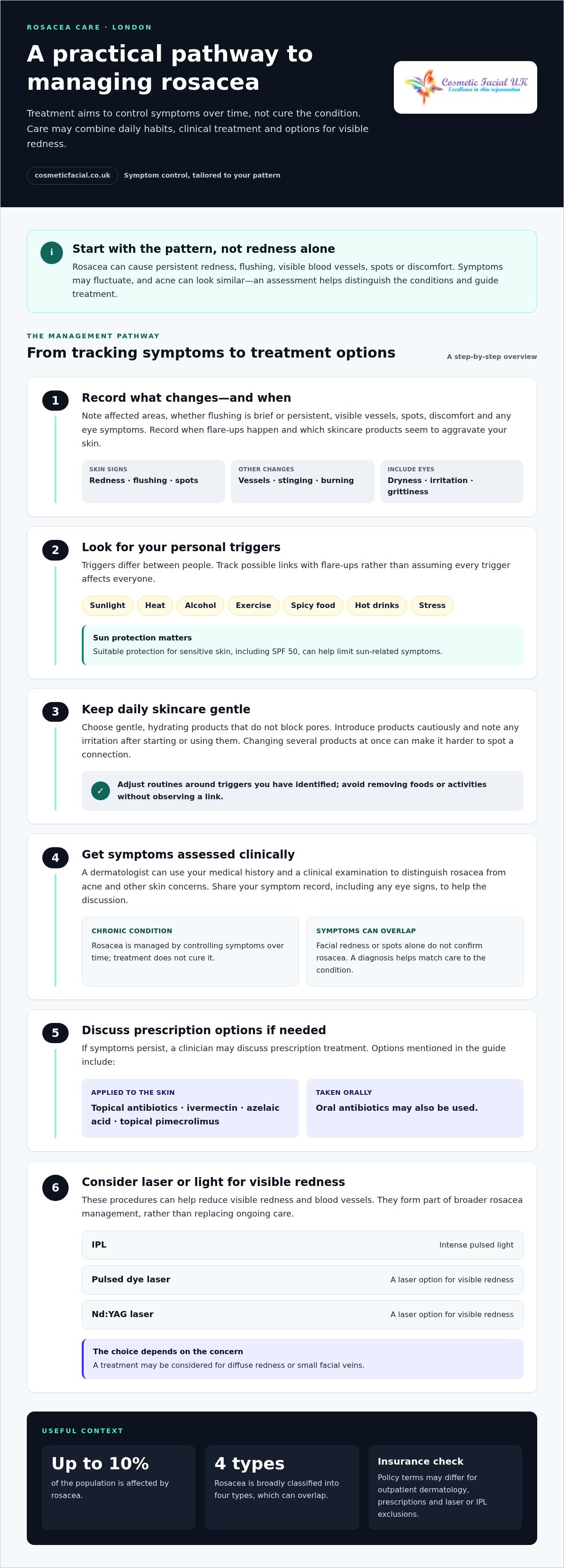
Rosacea is a chronic condition, so treatment aims to control symptoms over time rather than cure it. Management can combine awareness of personal triggers, suitable skincare and prescribed medicines.
Private health insurance cover depends on the policy and treatment. Read the terms for outpatient dermatology, prescription medicines and exclusions relating to laser or IPL procedures.
Lifestyle Changes and Trigger Management
Triggers vary, so recording flare-ups can help you identify personal patterns. Note heat, sunlight, alcohol, exercise, spicy food, hot drinks and stress alongside changes in visible redness. For example, if flushing follows a hot drink, record the timing and symptoms. This gives you a practical basis for adjusting routines without assuming every trigger affects everyone.
Sun protection is a useful part of management. Suitable protection for sensitive skin, including SPF 50, can help limit sun-related symptoms. Avoiding known triggers is more targeted than removing foods or activities without observing a connection. Rosacea occurs when small blood vessels in the skin become enlarged, but triggers can aggravate symptoms without being the sole cause of the condition.
Skincare Advice
Choose gentle, hydrating skincare that does not block pores, and introduce products cautiously. Some skincare products and medications can aggravate rosacea, so note any changes after starting or using a product. A simple routine makes it easier to see which items coincide with irritation, rather than changing several products at once.
What skincare and lifestyle changes help manage rosacea symptoms? Use gentle, hydrating products, protect your skin from sunlight and reduce exposure to triggers you have identified. These measures support symptom control, but persistent symptoms may require prescription treatment. Options can include topical antibiotics, ivermectin, azelaic acid or topical pimecrolimus. Oral antibiotics may also be used.
There is no single cause or trigger pattern that applies to everyone. Heat, sunlight, alcohol, exercise, spicy food, hot foods or drinks and stress can contribute to flare-ups. Some medications and skincare products can also aggravate the condition. Identifying your own pattern helps distinguish a likely trigger from coincidence.
An effective treatment plan often combines daily management with clinical care. A clinician may consider your symptoms and their pattern when discussing prescription options, including topical or oral antibiotics. Laser and light procedures can address visible redness and blood vessels, but they are part of broader management, not a standalone solution.
For London patients considering the next step, information about skin consultations can help explain how a clinical discussion fits into ongoing rosacea care.
Laser and light treatments
Laser and intense pulsed light (IPL) procedures can reduce rosacea redness and visible blood vessels. They form part of a wider plan for this chronic skin condition, rather than replacing ongoing management.
Laser and IPL Procedures
Options include IPL, pulsed dye laser and Nd:YAG laser, which use energy-based technology to target visible redness. The choice depends on the concern being addressed, such as diffuse redness or small facial veins. An IPL course may involve four to six treatments spaced four weeks apart; another approach may involve four sessions at two-week intervals.
Small facial veins typically disperse after one to two laser treatments, with sessions six weeks apart. About 85% of patients improve after laser or light treatment for visible blood vessels. These figures describe different treatment approaches, not a single schedule for every facial treatment. A treatment plan should account for the area treated and the type of visible change.
Treatment for Facial Redness
Laser treatment can reduce the redness associated with rosacea, including redness across the cheeks. IPL can also address visible blood vessels and facial redness. Improvement may continue for many weeks after an IPL course ends, so results are not assessed only immediately after a session. Sun exposure remains relevant to skin management after treatment.
Laser and light procedures do not treat every rosacea symptom in the same way. They focus on visible redness and blood vessels, while other symptoms may need different management. They are therefore used alongside a broader plan, not as a standalone solution. This distinction matters when choosing a procedure for a specific facial concern.
Risks and Side Effects
After IPL, the treated area may feel hot for roughly 15 minutes. Redness or swelling generally disappears within a few hours. Follow the aftercare instructions, including applying sunscreen with SPF 25 or greater whenever the treated area is exposed to sunlight. If the area tans, delay further IPL for two weeks or until the tan has significantly faded.
The clinic advises that IPL should not be undertaken whilst taking retinoids or for several months afterwards. These restrictions help reduce avoidable skin irritation around a course. Record your medicines, recent tanning and any changes in the treated area before each session, so these factors can be considered when planning treatment.
For London patients considering laser treatment for rosacea, the procedure should fit into an overall management plan. IPL and laser can address visible facial changes, while skincare and sun protection remain important after sessions. A course may use different intervals depending on the procedure, so clarify the schedule before treatment begins.
How does a Dermatologist diagnose Rosacea?
Rosacea is diagnosed through a clinical examination and medical history. A dermatologist considers the symptom pattern, duration and areas affected. Persistent redness across the cheeks, episodes of flushing or visible blood vessels can help describe the presentation. Because rosacea varies between people, diagnosis depends on the overall pattern, not one sign alone.
During a consultation, explain when symptoms first appeared and how they have changed. Say whether redness is persistent or comes and goes, and whether spots occur during flare-ups. If symptoms fluctuate, describe periods of improvement as well as worsening. These details help the dermatologist build a timeline and compare your account with the skin’s appearance during examination.
Your medical history matters too. Be ready to discuss medicines and skincare products you use, including anything that seems to aggravate irritation. Note eye symptoms, such as dryness, itching or a gritty sensation, alongside facial changes. A concise record can keep the consultation focused and help ensure relevant symptoms are considered together.
Rosacea should be distinguished from acne vulgaris because the conditions require different treatments. Spots alone do not establish a rosacea diagnosis. A dermatologist assesses whether spots occur alongside facial redness or flushing and considers the full clinical picture. Avoid starting acne products solely because you see spots, as some skincare products can aggravate rosacea symptoms.
There is no single symptom pattern that applies to everyone. One person may mainly report persistent facial redness, whilst another may describe flushing, visible blood vessels or eye irritation. The dermatologist uses the examination and medical history to assess whether the signs fit rosacea or suggest another explanation. This distinction informs diagnosis and care.
To prepare, write down the changes you have noticed, when they occur and any products or medicines used around that time. For instance, record whether a skincare product coincided with increased irritation. Bring the names of current treatments rather than relying on memory. Clear examples connect your medical history to the clinical examination without treating a possible trigger as a confirmed cause.
After diagnosis, treatment discussions can focus on the symptoms that matter most to you. Prescription options may include topical treatments or oral antibiotics, whilst laser and light procedures may help reduce visible redness and blood vessels. A dermatologist can explain how each option relates to your symptoms and fits into longer-term management. The diagnosis guides those choices, but not every treatment suits every symptom.
What are the risks and side effects of rosacea laser or IPL treatment
After IPL treatment, the treated area may feel hot for roughly 15 minutes. Redness or swelling generally disappears within a few hours. These effects are temporary responses described after IPL, and they differ from the longer-term changes the treatment aims to address, such as visible redness and blood vessels.
Sun exposure is an important aftercare consideration. Apply sunscreen with an SPF of 25 or greater whenever the treated area is exposed to sunlight. This remains relevant for facial areas such as the cheeks and nose. Protecting the skin helps support care after treatment, particularly when sunlight is a known rosacea trigger.
A tan in the proposed IPL treatment area affects timing. Delay further treatment for two weeks or until the tan has significantly faded. This allows the colour change to recede before another session. Mention recent tanning when discussing your next appointment, rather than proceeding as though your skin had not changed.
Retinoid use also affects IPL timing. Treatment should not take place whilst taking retinoids or for several months afterwards. Include prescribed and topical retinoids in your medication history before starting a course. This matters even when the treatment area looks calm, because the restriction relates to retinoid use, not only visible redness.
These aftercare points apply specifically to IPL. Laser and light procedures include IPL, pulsed dye laser and Nd:YAG laser, but their names alone do not establish identical aftercare. Ask for instructions that match the procedure, treated facial area and timing of any follow-up. Don’t automatically apply IPL guidance to another procedure.
Before treatment, note your skincare products, medicines, sun exposure and any recent tan. This short list helps bring relevant factors into the treatment discussion. For example, report retinoid use even if it began after you arranged an appointment. Also clarify when to apply sunscreen to the treated area and how tanning affects the next IPL session.
Keep a simple record after each session: the treatment date, any warmth, redness or swelling, and when each effect settles. The expected IPL warmth lasts roughly 15 minutes, while redness or swelling generally resolves within a few hours. Recording these details helps distinguish the short-term response from the gradual improvement that can continue for many weeks after a course.
Rosacea laser or IPL treatment should sit within broader symptom management, not replace it. Sun protection and awareness of retinoid use remain practical parts of planning. Understanding these aftercare points helps you prepare for a course and follow instructions consistently between sessions.
Cosmetic Facial: Botox Treatment
Cosmetic Facial offers Botox Treatment for people considering treatment for facial lines, a concern separate from rosacea symptoms. Botox does not replace rosacea care, which may involve skincare, prescription treatments or laser and light procedures. Keeping these aims distinct helps you focus on treatment for your specific concern.
If facial redness or visible blood vessels are your priority, discuss rosacea management and suitable options with a qualified clinician. If you are also considering Botox for facial lines, Cosmetic Facial can provide information about that treatment, separately from your rosacea plan.
Choose a considered next step for your skin
Deciding what to address first can make a treatment discussion more focused. Consider which aspect of rosacea most affects your comfort or daily routine, and what you want care to help you manage. This gives you a practical starting point for discussing a plan that reflects your priorities, rather than choosing a procedure based on appearance alone.
For rosacea treatment in London, Cosmetic Facial offers Rosacea Treatment. An appointment is a next step if you want to discuss your skin concerns and relevant options. Treatment decisions should focus on rosacea care; Botox Treatment, HIFU Face Lift and IPL Hair Removal Treatment address different aesthetic concerns and are not substitutes for rosacea management.
Understanding your priorities can help you approach the next conversation with confidence and make an informed decision about your care.
Frequently Asked Questions
WHAT CAUSES ROSACEA?
Rosacea involves enlarged small blood vessels in the skin, but no single cause explains every case. Sunlight, heat, stress and some skincare products can aggravate symptoms, rather than necessarily causing the underlying condition. Rosacea isn’t contagious and isn’t caused by poor hygiene. If symptoms appear after starting a new medicine or product, note its name and the timing so you can discuss them during a medical assessment.
HOW CAN I MANAGE ROSACEA?
Manage rosacea with a consistent, gentle skincare routine and by tracking changes in your skin. Introduce one new product at a time so you can identify whether irritation follows its use. Keep a brief record of flare-ups and relevant circumstances, such as a sunny commute or stressful day. This can help you focus on personal patterns and discuss practical adjustments with a clinician.
WHAT ARE THE RISK FACTORS OF ROSACEA?
Rosacea can affect anyone, although it is more commonly seen in people with fair skin. Family history may also be relevant: approximately a third of people with rosacea have a relative with the condition. These factors don’t establish a diagnosis. If persistent facial changes develop, consider the pattern and duration of symptoms, and seek clinical assessment rather than relying on risk factors alone.
Can you cure my rosacea?
There is currently no cure for rosacea, but treatment can help control symptoms over the long term. Some people experience remission, when symptoms become less active. The aim is to find an approach suited to your symptoms, which may involve prescription medicines, skincare measures or procedures. A change in appearance does not necessarily mean the condition has permanently gone, so continue to monitor symptoms.
Do you offer laser treatment for facial redness?
Laser and light treatments can help reduce rosacea-related facial redness and visible blood vessels. Cosmetic Facial offers Laser Treatments and Rosacea Treatment. These procedures address visible changes but don’t replace broader rosacea management. The choice depends on the concern and how it fits into the overall plan. For example, diffuse redness and visible facial veins may call for different considerations.
How can YOU minimise the effects?
To minimise rosacea’s effects, keep a simple record of flare-ups and use it to identify patterns you can act on. Note whether redness follows a sunny journey, exercise or a particular product. Keep sun protection and gentle skincare consistent, rather than changing several parts of your routine at once. If symptoms persist or worsen, arrange a clinical assessment to discuss options beyond self-care.
What treatments are available for rosacea in London?
Options in London include prescription treatments such as topical antibiotics, ivermectin or azelaic acid, alongside gentle skincare and sun protection. Laser and light procedures, including IPL, pulsed dye laser and Nd:YAG laser, can target visible redness and blood vessels. The appropriate option depends on your symptoms and treatment aim. Rosacea care is usually a management plan, rather than one procedure addressing every feature.
Which London dermatology clinics specialise in rosacea treatment?
Cosmetic Facial is a London clinic offering Rosacea Treatment and Dermatology Services, including skin analysis. For rosacea treatment in London, the clinic provides a local option for discussing skin concerns and possible management. Start by describing the changes you’ve noticed, the products you use and any eye symptoms. This helps focus the discussion on suitable treatment options.
Disclaimer
All content on cosmetic Facial website, including blogs, graphics, logos, images, and software, is the property of CosmeticFacial UK or its content suppliers and is protected by applicable copyright laws. Unauthorized use, reproduction, distribution, or modification of any content without prior written permission is strictly prohibited.


