


The biological success of your PRP (Dracula face) treatment is determined as much by your behaviour in the forty-eight hours following the procedure as it is by the clinical application itself. It's a common concern amongst London patients that a simple mistake, like using the wrong cleanser or exercising too soon, might inadvertently 'wash away' the concentrated growth factors just as they begin their work. You've likely encountered conflicting advice regarding PRP facial aftercare that leaves you feeling hesitant about your recovery steps, especially when balancing visible healing with a busy professional schedule.
This article provides a comprehensive, medically-led checklist designed to remove that uncertainty and protect your investment in your skin health. We'll outline a clear, day-by-day roadmap for managing downtime in a professional environment, detailing exactly how to navigate the inflammatory phase to optimise collagen production and achieve that characteristic regenerative glow. By following this structured protocol, you can manage minor side effects with confidence whilst ensuring the biostimulation process remains undisturbed for the best possible clinical outcome.
Key Takeaways
- Maintain the PRP film for at least twenty-four hours to ensure the concentrated growth factors are fully absorbed through the open micro-channels.
- Suspend the use of active skincare ingredients, including retinoids and Vitamin C, for seven days to prevent irritation and support the skin's natural healing process.
- Implement specific lifestyle adjustments for effective PRP facial aftercare, such as avoiding strenuous exercise and protecting the skin from Central London air particulates.
- Recognise the difference between normal post-treatment erythema and signs that may require a professional dermatology consultation.
- Understand why a clinical course of three to six sessions is recommended to achieve the most significant and long-lasting improvements in collagen density.
The Critical First 24 Hours: Immediate Post-Treatment Protocol
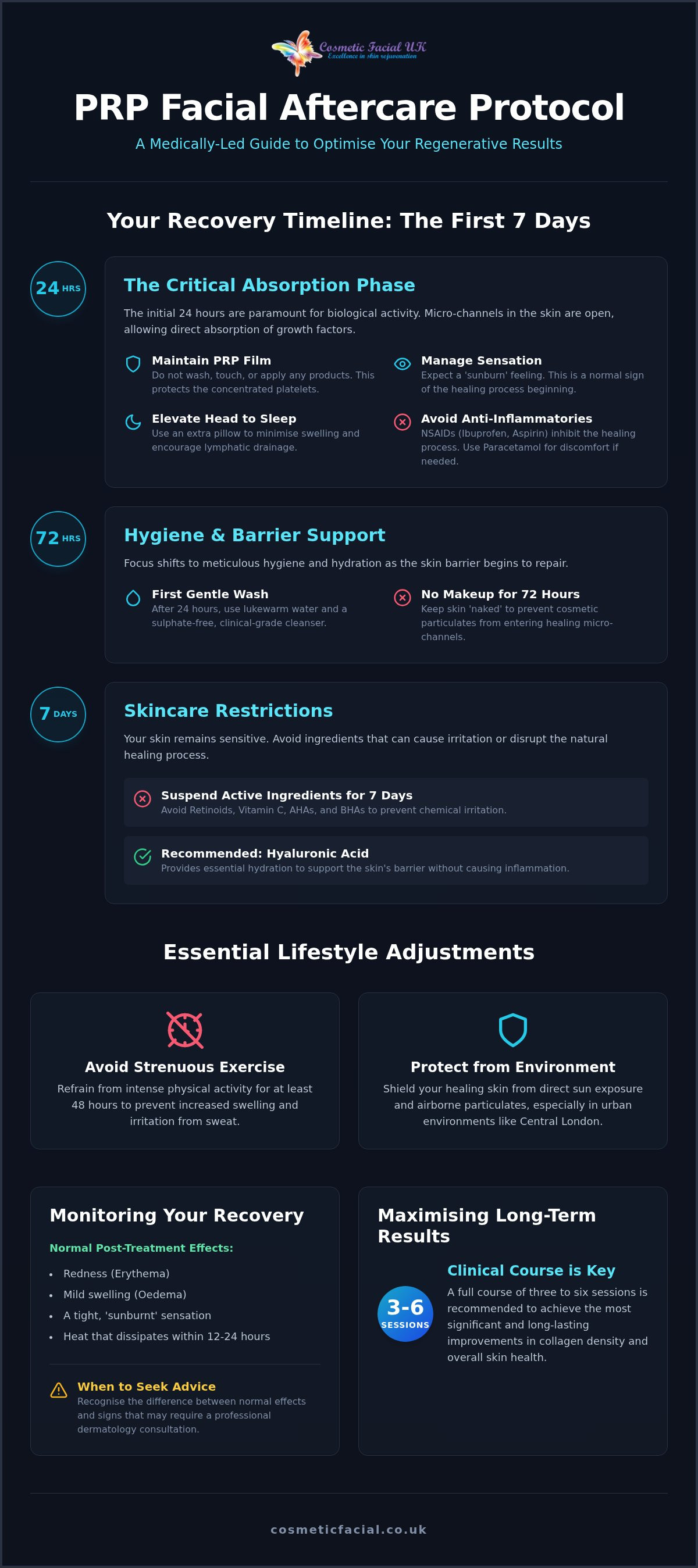
The initial twenty-four hours following your procedure represent the most significant window for biological activity. During this time, the micro-channels created during the facial rejuvenation process remain patent, or open, providing a direct pathway for the concentrated platelets to reach the deeper dermal layers. Maintaining the PRP film on the skin surface is a fundamental requirement of effective PRP facial aftercare. Prematurely washing the face or applying topical products can disrupt this absorption process and diminish the regenerative potential of the PRP (Dracula face) treatment.
You must strictly adhere to a 'no-touch' policy during this period. This means avoiding all water, cleansers, and cosmetic creams. Water can cause the micro-channels to close prematurely, whilst the chemical components in standard skincare products may introduce irritants into the vulnerable tissue. To manage immediate oedema, or swelling, and erythema, we recommend keeping the head elevated. Sleeping with an additional pillow for the first night encourages lymphatic drainage and helps minimise morning-after puffiness, particularly around the periorbital area. Adhering to these restrictions is the cornerstone of successful PRP facial aftercare during the immediate recovery phase.
Why You Must Avoid Anti-Inflammatories
The efficacy of Platelet-rich plasma (PRP) relies on the body's natural inflammatory response. When platelets are introduced into the skin, they release growth factors that trigger a controlled cascade of tissue repair and collagen synthesis. Suppressing this inflammation with non-steroidal anti-inflammatory drugs (NSAIDs) like Ibuprofen or Aspirin can inhibit the very mechanisms we aim to stimulate. If you experience discomfort, Paracetamol is the only recommended analgesic, as it doesn't interfere with platelet function or the inflammatory pathway. PRP growth factors trigger tissue repair through controlled inflammation.
Managing the 'Sunburn' Sensation
It's normal for the skin to feel hot, tight, and sensitive immediately after the procedure, a sensation often compared to a moderate sunburn. This is a clinical indication of increased blood flow and the start of the regenerative process. This heat typically dissipates within twelve to twenty-four hours as the initial inflammatory peak subsides. Whilst it's tempting to apply cooling gels, you should leave the skin entirely dry unless specifically instructed otherwise. If the heat becomes particularly distracting, a light misting of clinical-grade thermal water spray may be permitted after the first six hours, provided it's used sparingly to avoid saturating the PRP film.
Skincare and Hygiene Checklist: Cleaning Your Skin Safely
Once the initial twenty-four-hour absorption window has passed, the focus of PRP facial aftercare shifts to maintaining meticulous hygiene whilst the skin barrier remains compromised. The first wash should be performed using lukewarm water and a sulphate-free, clinical-grade cleanser. You should avoid hot water, as it can exacerbate lingering erythema or cause unnecessary discomfort to the sensitive tissue. It's best to use your fingertips to gently massage the cleanser in circular motions rather than using flannels or abrasive cloths, which can cause micro-trauma to the healing dermis.
Certain active ingredients must be strictly avoided for at least seven days following your PRP (Dracula face) treatment. These include retinoids, Vitamin C, and chemical exfoliants such as Alpha-Hydroxy Acids (AHAs) and Beta-Hydroxy Acids (BHAs). These substances are designed to penetrate deeply or accelerate cell turnover; when the skin's protective layer is impaired, they can cause significant irritation or chemical burns. Conversely, Hyaluronic Acid is highly recommended during this period. It provides essential hydration by drawing moisture into the skin without causing inflammation, helping to support the skin whilst its natural barrier is temporarily weakened.
Clinical protocols suggest that keeping the skin 'naked'—free from makeup or tinted sunscreens—for seventy-two hours is the clinical gold standard. This precaution prevents cosmetic particulates from entering the healing micro-channels, which reduces the risk of infection or granuloma formation. For those seeking comprehensive advice on maintaining skin health, our specialists in Facial Rejuvenation London can provide tailored recommendations for your specific skin type.
Days 1 to 3: The Protective Phase
During the first three days, your routine should remain minimal and protective. Use only bland, fragrance-free moisturisers to prevent transepidermal water loss. When drying your face, pat the skin gently with a clean, single-use paper towel. Shared bathroom towels often harbour bacteria that could compromise the vulnerable tissue. Adhering to these hygiene standards is a vital component of successful PRP facial aftercare. If you are unsure about a specific product, it is always safer to seek professional aesthetic guidance before application.
Days 4 to 7: Resuming Your Routine
By the fourth day, the 'sandpaper' texture or slight pinpoint crusting typically associated with the healing process should begin to subside. This indicates that the skin barrier has largely re-sealed. You may then begin the gradual reintroduction of active ingredients, starting with lower concentrations to monitor for any delayed sensitivity. However, physical exfoliants and facial scrubs must be avoided for at least fourteen days. The newly regenerated tissue is delicate, and mechanical scrubbing can lead to post-inflammatory hyperpigmentation or scarring.
Lifestyle Adjustments and Environmental Protection in London
Successful PRP facial aftercare requires more than just a modified skincare routine; it necessitates temporary adjustments to your lifestyle and environmental exposure. Strenuous physical exercise must be avoided for at least forty-eight hours following the procedure. Perspiration is naturally acidic and can transport surface bacteria into the healing micro-channels, increasing the risk of folliculitis or localised infection. Additionally, the increased blood flow and vasodilation associated with cardiovascular activity can exacerbate post-treatment oedema, prolonging the visible recovery period.
In the urban environment of Marylebone and Central London, air particulates present a unique challenge to the healing dermis. Microscopic pollutants and carbon particles found in city air can settle into the skin whilst the barrier is compromised. This can trigger an unnecessary secondary inflammatory response that competes with the regenerative work of the growth factors. To mitigate this, patients should avoid high-traffic areas where possible and ensure they apply a high-factor mineral sunscreen after the initial twenty-four-hour window. Alcohol should also be avoided for seventy-two hours, as it acts as a vasodilator and diuretic, which can lead to systemic dehydration and diminish the immediate 'plumping' effect following your PRP (Dracula face) treatment.
Navigating the London Environment Post-PRP
The London Underground environment, particularly the deeper lines like the Northern or Central, should be avoided for the first forty-eight hours. These areas often have higher concentrations of airborne dust and bacteria, alongside elevated temperatures that can cause discomfort. When walking through the medical district of Marylebone, wearing a wide-brimmed hat provides essential physical shade and a barrier against environmental debris. For patients concerned about sensitivity during their commute, applying a bland, occlusive barrier cream, only after the first twenty-four hours, can help shield the skin from urban pollutants.
Heat and Steam: What to Avoid
Exposure to excessive heat must be strictly limited to prevent increased swelling and irritation. We implement a seventy-two-hour ban on saunas, steam rooms, and hot yoga sessions. These environments promote significant vasodilation which can disrupt the settling of the injected plasma. Similarly, you should avoid hot showers. Tepid water is far safer for the delicate skin barrier during the first week of PRP facial aftercare. For patients who frequently combine treatments, procedures like dermal fillers also require similar heat-avoidance protocols to ensure optimal results.
Monitoring Your Recovery: Normal Side Effects vs Warning Signs
Monitoring the progression of your skin's response is a critical component of PRP facial aftercare. Most patients experience erythema, a clinical term for redness, which typically resembles a mild to moderate sunburn. This is a standard inflammatory response that should resolve within twenty-four to forty-eight hours. You may also notice localised oedema, or swelling, particularly in areas with thinner skin such as the periorbital region. This is expected as the tissue accommodates the injected volume of plasma and the subsequent influx of repair cells.
A common observation amongst patients is the development of a 'sandpaper' texture. This occurs as micro-scabs, or pinpoint crusting, form at the entry sites of the micro-needles. This is a natural part of the healing process and represents the shedding of old epidermal cells as the new, regenerated tissue moves to the surface. It's vital that you don't pick or scratch these areas, as doing so can lead to scarring or post-inflammatory hyperpigmentation. Haematoma, or bruising, can also occur, especially at injection sites where the skin is more vascular. These marks may take slightly longer to heal than the general redness, often fading over five to seven days.
The Clinical Timeline of Healing
The recovery process follows a predictable biological sequence. On Day 1, expect significant redness and a sensation of heat. By Days 2 and 3, the skin often feels tight and may begin to peel slightly as the 'sandpaper' texture becomes more apparent. By Days 4 and 5, most visible side effects subside, and the skin begins to appear more radiant. Understanding these stages is essential for effective PRP facial aftercare. Dr. Faramarz Didar’s background, including an MSc in Dermatology Skills and Treatment with Commendation, ensures that even complex skin reactions are assessed with clinical precision. For those comparing different resurfacing methods, you may find our analysis on microneedling vs chemical peel for skin texture useful for your long-term planning.
Red Flags and Complications
Whilst complications are rare due to the autologous nature of the treatment, you must be vigilant for signs of secondary infection. These include pain that increases after the first twenty-four hours, the presence of yellow or cloudy discharge, or a systemic fever. It's also important to distinguish between normal PRP swelling and an allergic reaction to a topical product used later in the week. If you observe spreading redness that feels hot to the touch or persistent itching, you should contact our Marylebone clinic immediately for a dermatology consultation.
Maximising Your PRP Results: Long-Term Skin Health
While the initial phase of PRP facial aftercare focuses on safety and immediate healing, the long-term success of the treatment depends on a structured approach to skin health. Clinical evidence suggests that while a single session initiates the regenerative cascade, a course of three to six PRP (Dracula face) treatments is necessary to achieve a significant and durable increase in collagen density. Each subsequent session builds upon the previous biological response, creating a cumulative biostimulatory effect that leads to more profound structural improvements in the dermis.
Results can be further enhanced by integrating synergistic treatments into your rejuvenation programme. For instance, combining PRP with Mesotherapy provides the skin with a high concentration of hyaluronic acid and vitamins that support the cellular environment for growth factor activity. Similarly, light skin peels can be scheduled between sessions to maintain epidermal clarity and turnover. This multi-modal approach ensures that all layers of the skin are addressed, from the superficial texture to the deeper structural matrix.
Nutritional support plays a vital role in providing the biological building blocks required for new collagen synthesis. We advise patients to maintain a diet rich in Vitamin C and Amino Acids in the months following their procedure. Vitamin C is a necessary cofactor for the hydroxylation of collagen molecules, a process essential for the stability of the collagen triple helix. Without these nutritional precursors, the regenerative signal provided by the platelets may not reach its full potential. It's also important to manage expectations: the immediate 'glow' is often a result of increased vascularity, whilst genuine structural tightening typically takes three to six months to manifest.
The Role of Professional Skincare
Maintaining your clinical results between visits requires a disciplined commitment to medical-grade skincare. At our Marylebone clinic, we believe a professional skin analysis is the essential first step in creating a bespoke long-term plan. This allows us to identify specific dermal deficiencies and recommend products that complement your PRP facial aftercare. These Facial Rejuvenation Plans London are designed to protect the newly synthesised collagen from environmental degradation and UV damage.
Scheduling Your Maintenance
Once your initial course is complete, we recommend maintenance sessions every six to twelve months to preserve the regenerative benefits and counteract the natural ageing process. We utilise clinical photography to track your progress over time, providing a clear record of your dermal improvements. This methodical tracking ensures that your treatment plan remains aligned with your evolving aesthetic goals and skin health requirements; for a broader look at how these technologies are applied, you can explore PRP PRF PRGF hair and skin restoration as part of your research into advanced regenerative medicine.
Adhering to a precise PRP facial aftercare protocol is essential to ensure the autologous growth factors effectively stimulate dermal repair and collagen synthesis. By respecting the initial twenty-four-hour absorption window and protecting the skin from Central London's urban pollutants, you preserve the integrity of the regenerative process. As a CQC registered private clinic located in the medical heart of Marylebone, we prioritise clinical safety and evidence-based outcomes. Led by Dr. Faramarz Didar, who holds an MSc in Dermatology Skills and Treatment with Commendation, our team specialises in regenerative aesthetic medicine to help you achieve measurable, long-term improvements in skin quality.
The transition from immediate recovery to sustained biostimulation requires both patience and professional oversight. Following the structured roadmap provided will help you navigate the inflammatory phase with confidence whilst optimising your skin's natural healing capacity. We're committed to providing the clinical expertise necessary to protect your investment in your skin health and ensure a refined, professional result.
Frequently Asked Questions
How soon can I wash my face after a PRP facial?
You should wait at least twenty-four hours before washing your face to allow for the complete absorption of growth factors. This waiting period is a fundamental aspect of PRP facial aftercare, as it ensures the micro-channels remain undisturbed during the initial healing phase. After this window, use only lukewarm water and a gentle, sulphate-free cleanser. Avoid any vigorous scrubbing or the use of flannels to prevent mechanical irritation of the delicate, regenerating epidermal tissue.
Is it normal to have bruising after a Dracula face treatment?
Localised bruising, or haematoma, is a common and expected side effect of the procedure, particularly in highly vascular regions like the periorbital area. While the treatment is minimally invasive, the injection process can occasionally disrupt small capillaries. These marks typically transition from a dark hue to a yellowish tint before resolving completely within five to seven days. Applying a cold compress gently after the initial twenty-four-hour window can help expedite the resolution of any minor swelling or bruising.
Can I wear makeup the day after my PRP session?
Clinical protocols recommend waiting at least seventy-two hours before applying makeup or tinted sunscreens to the treated area. Applying cosmetics too early can introduce particulates and bacteria into the healing micro-channels, which increases the risk of secondary infection or granuloma formation. Keeping the skin 'naked' allows the dermis to breathe and heal without interference. Once the seventy-two-hour period has passed, we advise using mineral-based makeup products that are less likely to clog pores or cause irritation.
What should I avoid eating or drinking after PRP therapy?
You must avoid consuming alcohol for at least seventy-two hours following your session, as it acts as a systemic vasodilator and diuretic. Alcohol consumption can increase post-treatment swelling and lead to dehydration, which negatively impacts the immediate 'plumping' effect of the treatment. It's also advisable to limit high-sodium foods to prevent fluid retention. Instead, focus on high water intake and a diet rich in Vitamin C to provide the necessary nutritional support for new collagen synthesis.
When will I see the final results of my PRP facial?
While an immediate 'glow' is often visible due to increased blood flow, the final structural results typically manifest between three and six months post-treatment. This timeline reflects the biological reality of collagen synthesis and tissue remodelling, which are gradual processes. For optimal outcomes, a course of three to six sessions is usually recommended. Consistent PRP facial aftercare during this period ensures that the newly formed collagen matrix remains healthy and protected from environmental damage.
Can I go to the gym after my PRP treatment?
Strenuous physical activity should be avoided for at least forty-eight hours to prevent perspiration from irritating the treated skin. Sweat is naturally acidic and can carry bacteria into the micro-channels, potentially leading to localised infections or folliculitis. The increased heart rate and body temperature associated with exercise can also exacerbate erythema and oedema, prolonging your visible recovery time. You may resume light walking immediately, but high-intensity workouts should be postponed until the skin barrier has sufficiently re-sealed.
Is it safe to have PRP if I have active acne?
PRP (Dracula face) treatment is generally not recommended if you have active, inflammatory, or cystic acne in the treatment area. Performing the procedure over active lesions can spread P. acnes bacteria and exacerbate the condition. A thorough clinical skin analysis at our Marylebone clinic is required to determine suitability. If your acne is currently stable or in a scarring phase, the treatment may be beneficial for improving skin texture and reducing the appearance of post-acne marks.
Does the PRP (Dracula face) treatment require any downtime?
The treatment involves minimal social downtime, with most patients experiencing redness similar to a mild sunburn for twenty-four to forty-eight hours. You may also notice a temporary 'sandpaper' texture as the skin undergoes natural epidermal shedding. While you can return to most professional duties immediately, we suggest scheduling the procedure when you can avoid important social engagements for the first two days. This allows the initial inflammatory response to subside without the pressure of concealing visible side effects.
Disclaimer
All content on cosmetic Facial website, including blogs, graphics, logos, images, and software, is the property of CosmeticFacial UK or its content suppliers and is protected by applicable copyright laws. Unauthorized use, reproduction, distribution, or modification of any content without prior written permission is strictly prohibited.


