


A lifted brow doesn’t always require surgery. For a non-surgical brow lift in London, botulinum toxin can relax muscles that pull the eyebrows down, creating a gentle lift. Dermal fillers and PDO threads are other options. The most suitable approach depends on your brow position, facial anatomy and desired result.
It’s helpful to understand what a treatment involves before deciding, especially because methods differ in how they work and how long results last. This guide explains suitability, expected timelines and what affects the cost of a non-surgical brow lift in London.
Cost depends on the treatment method and the plan for your concerns, and is given after a quote request. You’ll also find practical detail on what each approach involves, how results develop and what to consider when weighing a non-surgical lift against surgery.
Key Takeaways
- Different approaches act in different ways: botulinum toxin relaxes muscles that pull the brows down, while fillers and threads provide alternative options.
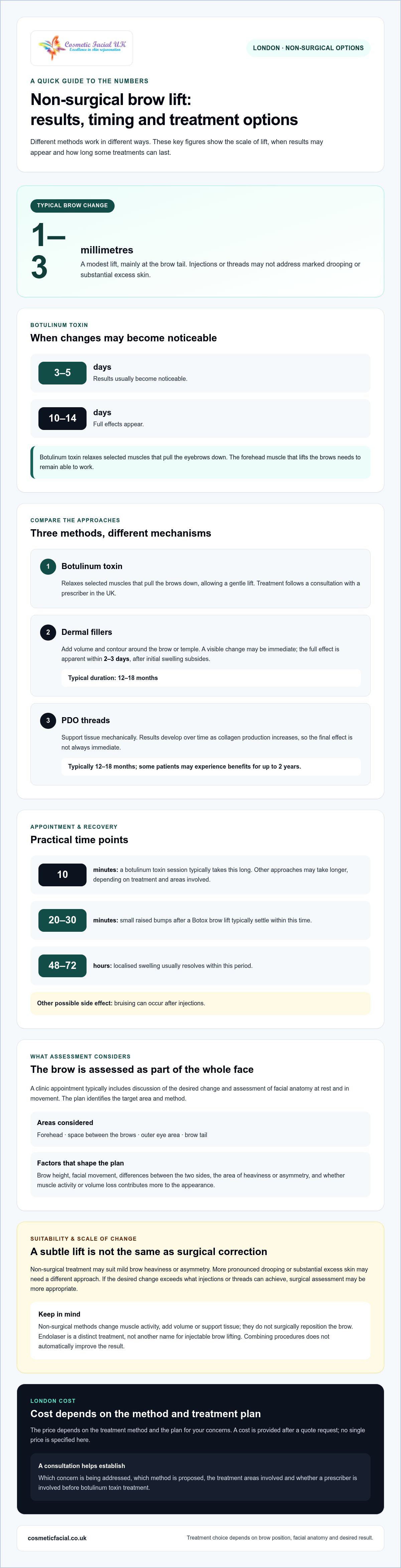
- Botulinum toxin results usually become noticeable within 3-5 days, with full effects appearing after 10-14 days.
- Thread-lift results develop over time as collagen production increases, so the final effect is not always immediate.
- Non-surgical treatment may suit mild brow heaviness or asymmetry, whilst more pronounced drooping may call for a different approach.
- London treatment costs depend on the method and the plan required to address your brow concerns.
What Is Non-surgical Brow Lift?
A non-surgical brow lift uses injections or threads to create a subtle change in brow position without an operation. In London, the approach depends on the concern, such as a low brow tail, forehead lines or uneven positioning.
For an overview of injection placement and facial anatomy, watch this educational tutorial:
Injectable lifting and brow contouring
Botulinum toxin injections relax selected muscles that pull the eyebrows down, allowing the brow to lift gently. According to The Aesthetics Doctor, this approach works by reducing the downward pull rather than physically repositioning tissue. Dermal fillers add volume and contour around the brow or temple, while PDO threads provide another non-surgical option. A typical brow lift raises the brow by one to three millimetres, mainly at the tail.
Options available in London include botulinum toxin, dermal fillers and PDO thread treatments. In the UK, botulinum toxin treatment must follow a consultation with a prescriber. This assessment helps determine whether the approach suits your brow position and the movement of surrounding muscles.
Forehead and eye treatment areas
Assessment considers the forehead, the space between the brows, the outer eye area and the brow tail. These areas work together: relaxing the muscles that pull the brow down can alter its position, while forehead muscles help lift it. The frontalis muscle must remain able to work during a non-surgical lift.
For a balanced result, the practitioner considers brow height, facial movement and differences between the two sides. The aim is to address the specific area of heaviness or asymmetry, rather than treating the forehead and eyes as unrelated features.
A clinic appointment typically begins with discussion of the desired change and an assessment of facial anatomy at rest and in movement. The treatment plan then identifies the target area and method. A botulinum toxin session typically takes 10 minutes; other approaches may take longer, depending on the treatment and areas involved.
Non-surgical treatment is intended to create a modest lift. The typical one-to-three-millimetre change may not address marked drooping or substantial excess skin. If the degree of descent exceeds what injections or threads can achieve, surgical assessment may be more appropriate. The key difference is the scale of correction, not simply the treatment setting.
Risks and side effects include localised swelling and small raised bumps at injection points. Swelling usually resolves within 48 to 72 hours, while bumps after a Botox brow lift typically settle within 20 to 30 minutes. Bruising can also occur after injections.
Endolaser is a distinct treatment, not another name for injectable brow lifting. If it is considered alongside injections or threads, the proposed sequence and treatment areas need to be assessed together. Combining procedures does not automatically improve the result. Suitability depends on the concern and the tissue involved.
How non-surgical brow lifts work
Non-surgical methods change muscle activity, add volume or support tissue, rather than surgically repositioning the brow. The method affects how the lift looks, when it appears and how long it lasts.
Comparing how each method works with the degree of brow change you want can help you decide what to discuss at consultation.
Injectable lift methods
Botulinum toxin reduces the downward pull of selected muscles, allowing the brow to rise gently. The frontalis muscle, which lifts the eyebrows, needs to remain able to work. In the UK, botulinum toxin treatment must follow a consultation with a prescriber. This matters because excessive weakening of the forehead muscles can affect brow support.
Wrinkle injections address muscle movement, while dermal fillers add volume and contour. The choice depends on whether muscle activity or volume loss contributes more to the brow’s appearance. A non-surgical lift typically raises the brow by one to three millimetres, mainly at the tail.
Filler and temporal lift approaches
Dermal fillers can add support around the brow or temple, with a visible change immediately. The full effect is apparent within two to three days, after initial swelling subsides. A temporal brow lift focuses on the outer brow and temple area; wrinkle injections work differently by changing muscle activity.
Pre-trichial and temporal pre-trichial lifts are surgical approaches, not injectable treatments. The term pre-trichial describes an incision near the hairline, while the temporal pre-trichial approach involves the temple region. These options may be considered when the desired change exceeds the modest lift injections or threads can provide.
Botox, thread and filler comparisons
Botox brow lifts reduce downward muscle pull; PDO threads support tissue mechanically, while fillers add volume. These methods address different features, so they are not interchangeable. PDO thread results typically last 12-18 months, and some patients may experience benefits for up to two years. Dermal filler brow lifts generally last 12-18 months.
Non-surgical treatment avoids an operation, but cannot provide the same correction as surgery for pronounced drooping. Compare the scale of change you want, how the method works and the expected maintenance. For London clinics, an advertised treatment alone doesn’t establish CQC registration; registration status is specific to each clinic.
Clinics offering brow treatments use different methods, including injections, fillers and threads. A consultation should establish the treatment plan and whether a prescriber is involved before botulinum toxin treatment. For information about available aesthetic treatments, see aesthetic treatment information.
When will I see results, and how long can I expect them to last?
Results develop on different schedules because botulinum toxin, dermal fillers and PDO threads work in different ways. The timeline also matters when deciding whether before-and-after photographs provide a meaningful comparison of brow position.
Results timeline
After botulinum toxin injections, the lift usually becomes noticeable within 3-5 days. The full effect typically appears 10-14 days after treatment, when muscle activity has responded to the injections. Assessing the result around two weeks allows the effect to settle and any fine adjustment to be considered.
Dermal filler creates an immediate visible change, with the full effect apparent within 2-3 days after initial swelling subsides. PDO thread results develop differently: the mechanical support is present after placement, while the full benefits build over 2-3 months as collagen production increases and tissue quality improves.
How long results last
Duration depends on the method. Botulinum toxin results are commonly maintained with repeat treatment approximately every 3-4 months, according to The Cosmetic Skin Clinic. Dermal filler brow lifts generally last 12-18 months. PDO thread brow lift results typically last 12-18 months, while some patients experience benefits for up to two years.
Silhouette Soft threads are naturally absorbed over the 18 months after placement, according to The Cosmetic Skin Clinic. Absorption and visible results are not identical measures: tissue changes continue as collagen develops, and the appearance can evolve during that period. Before planning maintenance, compare the brow’s current position with its settled result.
Expected lift and visible outcomes
A non-surgical lift typically raises the brow by one to three millimetres, mainly at the tail. Because the change is subtle, before-and-after photographs should clearly show the brow and upper eye area. Images taken from the same angle, in similar lighting and with a similar facial expression make it easier to distinguish a change in position from differences in photography.
For a useful comparison, review the untreated image beside one taken after the expected settling period for that method. For botulinum toxin, that means allowing 10-14 days for full effects; for threads, collagen-related benefits develop over 2-3 months. Assess brow height, the outer tail and any asymmetry, rather than relying on forehead lines alone.
Ageing, muscle movement and the treatment method all influence how long a visible change lasts. Botulinum toxin results gradually diminish as muscle activity returns, while filler volume and thread-related tissue support follow their own timelines. Treatment planning considers both the initial lift and likely maintenance, not just the first visible change.
Suitability for mild brow heaviness and asymmetry
Non-surgical brow lifting is generally suited to early or moderate brow descent, including mild heaviness and uneven brow position. A treatment plan considers brow height, facial movement and whether the concern affects one or both sides.
People aged 30-60 with early to moderate brow drooping are described as generally ideal candidates. Age alone does not determine suitability: the practitioner also assesses the degree of descent, skin and tissue position, and the change the person wants. Non-surgical techniques can achieve 2-5 millimetres of elevation, although the typical lift is more modest and concentrated around the brow tail.
An assessment can distinguish a low brow from an upper-eyelid concern. For example, a hooded appearance may relate to brow position, eyelid skin or both. Injections that adjust muscle activity address brow movement but do not remove excess eyelid skin. Identifying the main cause helps set realistic expectations.
- Mild heaviness: treatment can gently raise the brow, particularly its outer tail.
- Asymmetry: assessment compares both eyebrows at rest and during facial movement.
- Marked drooping: surgical assessment may better address substantial descent or excess skin.
These distinctions matter because lifting one brow can change the balance between the eyebrows and upper eye area. The practitioner considers whether the forehead muscles are compensating for a low brow. The frontalis muscle lifts the eyebrows, so preserving its function is important when planning botulinum toxin treatment.
At consultation, describe the effect you want, such as reducing heaviness at the outer brow or improving mild asymmetry. The practitioner examines your face at rest and in motion, then discusses a suitable approach.
Bruising and swelling are relevant considerations for injectable procedures. Localised swelling usually resolves within 48 to 72 hours, while small raised bumps after a Botox brow lift typically settle within 20 to 30 minutes. Patients are advised to avoid alcohol, aspirin and anti-inflammatory medication for about 24 hours before the appointment to reduce bruising risk.
A non-surgical approach is less suited to someone seeking a substantial change in brow position or correction of excess eyelid skin. The consultation should clarify whether the concern is mainly brow descent or eyelid anatomy. Matching treatment to the concern helps avoid expecting injections or threads to achieve a surgical result.
Non-surgical brow lift cost in London
The cost of a non-surgical brow lift in London depends on the method and the treatment plan for your concerns. Cosmetic Facial lists fees by treatment type, with charges made per appointment. The areas treated and the amount of product or support required also shape the plan.
Botulinum toxin, dermal fillers and PDO threads work differently, so their treatment plans are not directly interchangeable. Injections target muscle activity, fillers add volume and threads support tissue. The extent of correction and the areas treated affect what the plan involves. A subtle change at the brow tail may call for a different approach from treatment addressing both temples and brows.
Before deciding, ask for a clear explanation of what the proposed treatment includes. A useful breakdown identifies the method, treatment areas and any planned review or adjustment. A filler plan should explain where volume is proposed, while a botulinum toxin plan should identify the muscles being targeted. These details help you compare the treatment with your concern.
- Method: botulinum toxin, dermal fillers and PDO threads involve different techniques.
- Treatment area: a brow-tail concern differs from a plan involving the temples and forehead.
- Amount required: filler volume or the extent of thread placement affects the proposed plan.
- Assessment: facial anatomy, brow movement and the desired degree of lift shape treatment planning.
When choosing a London clinic, look for a consultation that assesses facial movement and explains the proposed method, target areas and cost. A clear explanation should also cover expected effects and relevant risks, rather than treating every brow concern with the same injections.
Cost alone does not show whether a treatment plan is suitable. Compare the proposed method with your concern, such as mild asymmetry, a low brow tail or volume loss at the temple. The clinic should explain why the method fits the area being treated and how it relates to your intended result. If surgery is more suitable for the degree of drooping, a non-surgical plan may not address the underlying concern.
Before deciding, note the areas you want assessed and the result you hope to achieve. Use the consultation to clarify what the proposed plan covers, how the method works and whether follow-up is included. This makes it easier to understand the treatment’s value without relying on headline prices or comparing unrelated procedures.
Cosmetic Facial: Botox Treatment
Cosmetic Facial offers Botox Treatment, which may suit concerns where muscle activity contributes to a low brow or forehead lines. Botulinum toxin relaxes selected muscles that pull the eyebrows down, potentially creating a gentle lift. In the UK, treatment must follow a consultation with a prescriber, where you can discuss brow position, facial movement and your intended result.
This approach suits concerns involving muscle movement; it does not remove excess eyelid skin or provide the same correction as surgery. A consultation can clarify whether Botox Treatment matches your concern or whether another approach is more suitable.
Choose your next step with confidence
If you’re considering a non-surgical brow lift in London, start by defining the change that matters most to you. Note whether your priority is brow position, facial balance or the appearance of the upper eye area, then use that goal to guide a focused discussion about treatment options.
Cosmetic Facial offers Botox Treatment, HIFU Face Lift and IPL Hair Removal Treatment for different aesthetic concerns. Book a consultation to discuss your brow goals and whether Botox Treatment may be relevant to your needs.
Clarifying your priorities can help you make a considered decision that feels right for you.
Understanding your options is a good starting point for deciding what feels right for you.
Frequently Asked Questions
Botulinum toxin or filler for a heavy brow?
Botulinum toxin may suit heaviness linked to muscles pulling the brows down, while filler addresses volume and contour. For example, temple hollowing can affect the appearance of the outer brow, while a downward pull relates to muscle activity. A consultation assesses movement, brow shape and volume before selecting an approach. The aim is to match the treatment to the feature contributing most to the heavy appearance, rather than choosing by product name alone.
Can you really lift eyebrows without surgery?
Yes. Non-surgical treatments can create a modest lift by changing muscle activity or supporting tissue, but they don’t remove excess eyelid skin. Techniques can achieve 2-5 millimetres of eyebrow elevation, with the typical lift often concentrated at the tail. For someone seeking a substantial repositioning or correction of marked skin excess, non-surgical treatment has limits. A non-surgical brow lift in London is therefore best considered for a measured change, not a surgical equivalent.
How do age changes occur around the forehead, brows, and eyelids?
Age-related changes can alter the appearance of the forehead, brow position and upper eyelid. Repeated facial movement can contribute to forehead lines, while changes in tissue support can affect brow contour and the appearance of the eyelid. These features overlap visually: a lower brow can make the upper eye look heavier. Assessment distinguishes brow position from eyelid skin, since treatment targeting brow muscles does not remove excess skin.
How long does a typical treatment session take?
A non-surgical brow lift session typically takes 10 minutes. That figure describes the treatment session, not necessarily the full appointment, which includes consultation and planning. Before injections, a prescriber discusses the intended result and assesses facial movement and treatment areas. If the plan involves threads or fillers instead, the procedure and appointment duration can differ. Allow time for the assessment rather than planning around injection time alone.
How long does it last, and what happens when it wears off?
Botulinum toxin results are generally maintained with repeat treatment approximately every 3-4 months, according to The Cosmetic Skin Clinic. As its effect fades, muscle activity gradually returns and the brow moves towards its previous position. Dermal filler and PDO thread brow lifts typically last 12-18 months. These differing timelines affect maintenance planning, so compare the method’s duration with the change you want to maintain.
How much lift is realistic?
Non-surgical techniques can achieve 2-5 millimetres of eyebrow elevation, although a typical lift is one to three millimetres, mainly at the tail. The visible change is usually a subtle adjustment to brow position rather than a dramatic repositioning. Before treatment, identify the area you want changed, such as a low outer tail or mild asymmetry. This gives the practitioner a specific outcome to assess against your facial anatomy.
Which areas can be treated?
Assessment commonly considers the forehead, brow tail, temples and area around the eyes. These structures affect the upper eye’s appearance together, so the plan should account for their relationship rather than treating one point in isolation. For example, temple volume and brow position can both influence the outer brow contour. The practitioner maps treatment areas according to facial movement and the concern being addressed.
Which concerns can be addressed?
Non-surgical brow treatments can address mild brow heaviness, a low brow tail and some asymmetry. They may soften the downward pull of selected muscles or improve contour when volume loss contributes to the concern. They don’t remove excess eyelid skin or correct substantial drooping. Before treatment, describe the specific effect you notice, such as one eyebrow sitting lower, so the assessment can distinguish brow position from eyelid anatomy.
Disclaimer
All content on cosmetic Facial website, including blogs, graphics, logos, images, and software, is the property of CosmeticFacial UK or its content suppliers and is protected by applicable copyright laws. Unauthorized use, reproduction, distribution, or modification of any content without prior written permission is strictly prohibited.


