


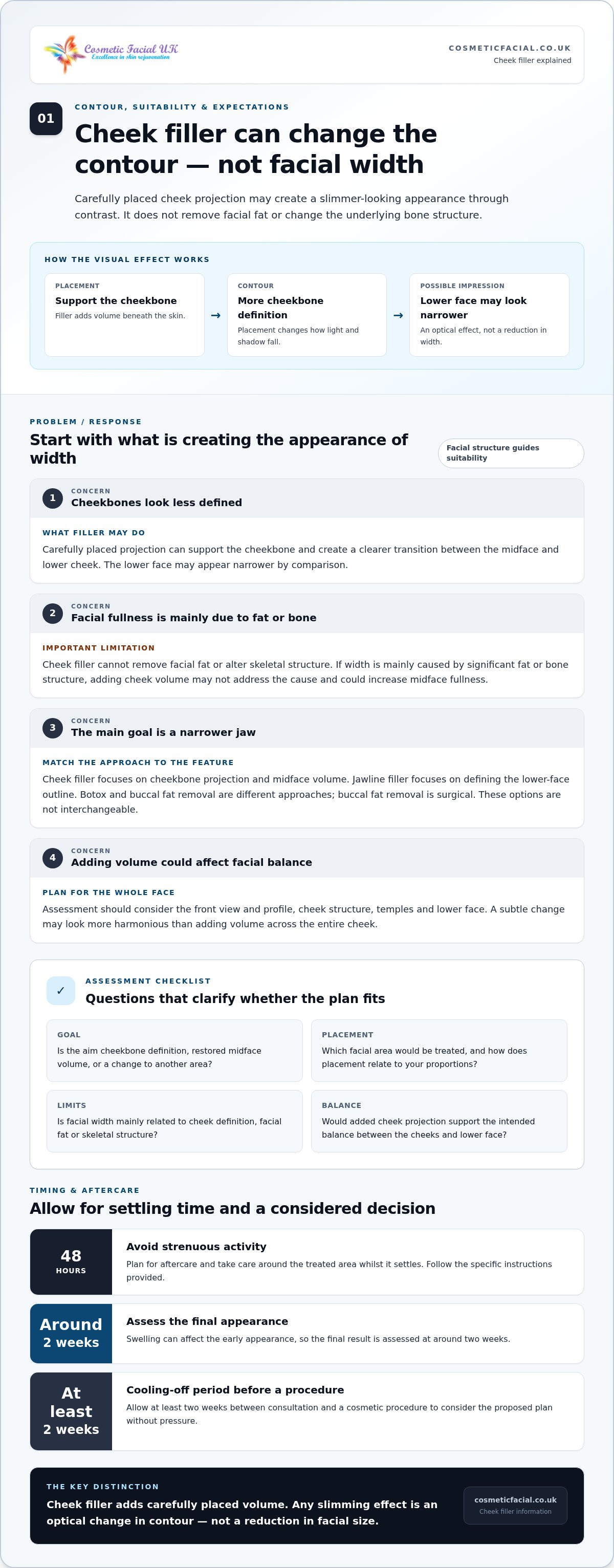
Cheek filler can create a slimmer-looking face by adding carefully placed projection and definition. This is an optical effect, not a reduction in facial width. For people considering cheek filler for face slimming in London, suitability depends on facial structure and where fullness sits. Filler does not reduce facial fat or change the underlying bone structure.
Wanting clearer facial contours without surgery is understandable, but adding volume does not suit every face or create the same effect for everyone. Placement and amount matter: the aim is to support the cheeks in a way that balances the face, rather than simply making them fuller.
This guide explains what cheek fillers are and how they may create a slimmer-looking appearance, as well as who may be suitable and when another approach may be more appropriate. It also covers treatment expectations, including swelling, risks, downtime and aftercare, so you can understand the considerations before deciding whether to explore treatment.
Key Takeaways
- Cheek filler adds carefully placed volume to define the cheekbones and may create a slimmer-looking facial contour through an optical effect.
- Suitability depends on facial structure and the cause of facial width; filler may be a poor fit when fullness is mainly due to significant fat or skeletal structure.
- Swelling can affect the early appearance, so the final result is assessed at around two weeks.
- Plan for aftercare, including avoiding strenuous activity for 48 hours and taking care around the treated area while it settles.
- A thorough assessment helps clarify whether cheek filler aligns with your facial proportions and treatment goals.
What are cheek fillers?
Dermal cheek fillers add volume beneath the skin to define cheekbones, restore facial fullness or adjust contour. Most dermal filler brands use hyaluronic acid. The intended effect depends on placement and your existing facial proportions.
Dr Sarah Tonks discusses the anatomical principles behind cheek filler and a slimmer-looking face in this video:
Restoring facial volume is another purpose of cheek filler. Adding support where fullness has reduced can soften hollows and balance the midface. During an appointment, a treatment plan can distinguish this goal from cheekbone definition. Combining cheek filler with other treatments depends on the concern being addressed. For example, cheek projection and lower-face muscle activity may call for separate approaches, rather than being treated as the same issue.
Cheekbone definition and facial contouring
Filler placed to support the cheekbone can create a clearer transition between the midface and lower cheek. This changes how light and shadow fall across the contours, which may make the cheekbones appear more defined. Assess the whole face in a relaxed expression, not just one angle in a photograph. A subtle change may look more harmonious than adding volume across the entire cheek.
Types of cheek filler
Most dermal filler brands use hyaluronic acid, a substance used in injectable gels. The type and placement depend on the intended contour, such as restoring volume or supporting cheekbone definition. Ask which facial area the proposed filler will address and how the placement relates to your proportions. The treatment plan should explain the intended effect, rather than treating all cheek fillers as identical.
Facial harmony and lifting effects
Cheek support may create a mild lifting appearance by improving midface projection, but it does not surgically lift tissue. The visual change depends on the relationship between the cheeks, temples and lower face. For example, adding cheek volume without considering a narrow lower face may affect overall balance. Assess facial harmony from both the profile and front view, alongside the change you want to see.
How cheek filler creates a slimming effect
Cheek filler does not remove facial fat or reduce bone width. Instead, carefully positioned projection can create an optical illusion: greater cheekbone definition may make the lower face appear narrower by comparison. Jawline filler focuses on defining the lower-face outline, while Botox and buccal fat removal are different approaches. Buccal fat removal is surgical. These options target different features and are not interchangeable.
Suitability and when treatment is not appropriate
Suitability for cheek filler depends on what creates facial width and which contour you want to change. A consultation should distinguish cheekbone definition from fullness caused by facial fat or skeletal structure.
Treatment suitability and limitations
Cheek filler may suit someone seeking more cheekbone projection or restored midface volume. An assessment should consider your front view and profile, existing cheek structure, and whether added volume would support the intended facial balance. In London, including around Mayfair, the key decision is anatomical rather than postal: filler adds volume and cannot remove fat or alter bone.
Bring a clear treatment goal to your appointment, such as defining the cheekbones rather than narrowing the jaw. This helps distinguish a subtle contour change from a broader facial reshaping goal. The proposed plan should identify the areas being treated and explain how placement relates to your features. Cheek filler is not a substitute for surgery or a way to reduce overall facial size.
When treatment may not be appropriate
A V-Lift may not be suitable when facial width is mainly caused by significant fat or skeletal structure. In these cases, adding cheek volume may not address the source of width and could increase fullness in the midface. This distinction matters when comparing a goal, such as narrower-looking cheeks, with the anatomical changes filler can make.
Other factors include your desired result and the balance between the cheekbones and lower face. If your main concern is jaw width, cheek filler alone may not address it. A V-Lift plan may combine dermal fillers, jawline-slimming injections and energy-based devices, but each component should have a defined purpose.
Planning should begin with a discussion of facial proportions, treatment priorities and limitations. For example, a practitioner can assess whether cheek projection is likely to create useful contrast with the lower face, or whether another concern is driving the appearance of width. Discuss the proposed filler treatment, anaesthetic arrangements, expected downtime and aftercare, so you can decide based on the complete process, not just the immediate contour.
Allow a cooling-off period of at least two weeks between consultation and a cosmetic procedure. This gives you time to consider the proposed plan without pressure and to decide whether its aims match your priorities. If you are exploring cheek filler in London, including Mayfair, use the consultation to discuss the specific facial areas involved and the limits of non-surgical treatment. Information about facial aesthetic treatments can help you understand the available treatment context before planning your next step.
Risks, swelling, downtime and aftercare
Hyaluronic acid cheek filler can cause swelling, which may affect the early appearance. Plan around the recovery period and follow the specific aftercare instructions provided.
Potential side effects
Swelling is a relevant short-term effect to consider after an aesthetic filler procedure. The early contour may therefore differ from the settled result, so avoid judging the outcome immediately. Most patients rate pain after cheek filler treatment as 2 out of 10, according to the clinic’s reported experience. Individual responses still vary, and a doctor should explain the risks before treatment.
Before the procedure, discuss your medical history, planned injection sites and any concerns with the doctor. Ask what changes to expect after treatment and what to do if you are worried about your recovery. This gives you a clear plan for the first hours and days, rather than leaving you to make assumptions about injectable procedures.
Swelling and recovery
Allow around two weeks for swelling to subside before assessing the final cheek filler result. Changes in the treated area during this period can make the contour look different from its settled appearance. Avoid scheduling an important event immediately after treatment if early swelling would concern you. The result should be assessed around two weeks later, not as soon as the injections are complete.
Downtime varies with the individual and the treatment response. The aftercare advice includes avoiding strenuous activity, including the gym, for 48 hours after treatment. It also advises avoiding sunbeds, saunas and extreme temperatures for one week after treatment. These limits help you plan ordinary commitments around recovery.
Aftercare guidance
Follow the aftercare steps given for your filler treatment, particularly during the first days. The clinic advises avoiding strenuous exercise, saunas, alcohol and make-up on the treated area for about 24 hours. Keep make-up away from the injection sites during that period, and do not use a sauna as a way to relax after treatment. The guidance also recommends sleeping on your back in a semi-upright position for 48 hours.
- For four weeks, the clinic advises drinking 2-3 litres of water per day.
- For four weeks, the clinic advises taking around 1000 mg of vitamin C daily.
- For one week, avoid sunbeds, saunas and extreme temperatures.
Use these timings to plan work, exercise and social activities around recovery. If your doctor gives different instructions for your treatment, follow their advice. A clear aftercare plan makes it easier to manage swelling and know when to assess the final result.
Practitioner experience and clinic care
Practitioner experience matters because cheek filler placement affects facial appearance and balance. In London, consider the practitioner, treatment plan and clinic arrangements before booking.
Practitioners in the UK can have different levels of experience. Check their relevant qualifications, professional registration and experience administering dermal filler. Establish who will perform the procedure and how the proposed plan addresses your facial goals.
Practitioner experience and qualifications
Ms Anna De Leo has more than 20 years of experience in cosmetic and reconstructive surgery and is registered with the General Medical Council under number 6138534. Dr Nyla Raja has over 20 years of experience in aesthetic medicine. These details offer a starting point for understanding practitioner backgrounds, but experience should also relate to the procedure being considered.
At your consultation, ask the practitioner to explain the injection areas, intended changes and limitations. A personalised plan should relate those choices to your facial structure, rather than rely on a standard pattern. Discussing how the practitioner approaches volume restoration or cheekbone definition can help you assess whether the treatment fits your priorities.
Checking clinic safety and results
When considering a London clinic, identify who will administer the filler and review their professional credentials. Read reviews for details about consultation, communication and follow-up, rather than relying only on star ratings. Before-and-after photographs should use comparable angles and lighting, so you can assess facial appearance without mistaking camera changes for treatment effects.
Ask how the clinic explains risks and aftercare, and what happens if you have a concern after treatment. A useful consultation gives clear answers about the product, placement and recovery plan. Compare those details with your goals, such as subtle cheek definition or restoring midface volume, rather than treating photographs as a prediction of your result.
Harley Street is a named London location associated with the practice described for cheek filler. If travelling there, plan your route to the street and allow time for your appointment; do not assume a particular transport link or access arrangement. Confirming the appointment details and the treatment plan beforehand helps you prepare without rushing.
Allow time to consider the proposed cosmetic procedure. The practice advises a cooling-off period of at least two weeks between consultation and treatment. Use that interval to review the information, consider whether the plan reflects your desired appearance, and note any further questions for the practitioner. A considered decision is especially relevant when both volume restoration and contour are treatment goals.
Using cheek filler for a slimmer-looking face
Cheek filler can create a slimmer or more sculpted appearance through an optical effect. Carefully placed projection can increase cheekbone definition and create contrast with the lower face; it does not remove facial fat or narrow bone. For anyone considering cheek filler for face slimming in London, the key question is whether cheek definition suits their facial proportions.
The effect depends on the relationship between the cheekbones, midface and jaw, not simply the amount of hyaluronic acid injected. For example, adding volume high on the cheeks may emphasise their contour, while placing filler broadly through already full cheeks could make the midface look heavier. The proposed injection sites matter more than a general request for a slimmer appearance.
Before treatment, describe the change you want in practical terms, such as clearer cheekbone definition or a more sculpted transition towards the lower face. A practitioner can assess your face from the front and in profile, then discuss whether filler placement suits that aim. Expect added volume at the injection sites, not a reduction in overall facial size.
To assess the proposed effect, consider these points during planning:
- Where definition is needed: identify whether the concern sits at the cheekbone, midface or jawline.
- How the profile balances: cheek projection should be considered alongside the chin and lower face.
- What the filler changes: injections can alter contour, but cannot change the underlying skeleton.
- How much volume is proposed: the plan should explain the placement and purpose of each treated area.
Combining cheek filler with other treatments requires a separate reason for each area. A V-Lift plan, for example, may combine dermal fillers, jawline-slimming injections and energy-based devices. That does not mean everyone needs each treatment. Ask whether each component addresses a specific feature and contributes to facial balance.
Cheek filler is less likely to create the intended slimming effect if facial width mainly comes from significant fat or skeletal structure. In that situation, adding cheek volume does not address the underlying cause. A useful treatment discussion distinguishes between improving contour and reducing width, so expectations remain tied to what injections can change.
After treatment, swelling can temporarily obscure definition. The final result is assessed at around two weeks. Compare the settled appearance with your original goal, such as cheekbone definition rather than a smaller face overall. This helps you judge the result by contour and harmony, rather than expecting filler to reduce weight or reshape bone.
Cosmetic Facial: Botox Treatment
Cosmetic Facial offers Botox Treatment as a separate aesthetic option, not as a way to add cheekbone volume. Cheek filler and Botox address different aims, so consider what you want to change before choosing between them. If your priority is facial contour, the earlier sections explain how filler may create definition and why facial structure matters. Botox Treatment may be relevant to other concerns addressed by this treatment, rather than cheek projection or fat reduction.
A consultation can help clarify which treatment relates to your concern and what each approach can achieve. Cosmetic Facial also offers HIFU Face Lift for people considering a different non-surgical facial treatment.
Take the next step towards a considered treatment plan
Choosing cheek filler is not simply about adding volume. It is a chance to define your desired facial contour and discuss whether that goal suits your features. If you are considering cheek filler for face slimming in London, take time to describe the change you want, the areas that concern you and the result that would feel balanced.
Cosmetic Facial offers dermal fillers, Botox Treatment, HIFU Face Lift and IPL Hair Removal Treatment. These treatments address different concerns, so a conversation can help you focus on the option that suits your priorities. Discussing the intended result and treatment limitations can support an informed decision without pressure to proceed.
Take your next step with clear expectations and a treatment goal that feels right for you.
Frequently Asked Questions
How long do dermal fillers last?
Dermal filler results typically last 6-18 months, depending on the product used and treatment site. For cheek filler, the treated area and the individual’s response influence how long definition remains visible. This range is a guide rather than a fixed maintenance schedule. At a review, compare the result with your original treatment aim and discuss whether any further treatment is appropriate, rather than assuming repeat injections are automatically needed.
How long does the treatment take to perform?
Cheek filler treatment at the Harley Street practice typically takes about 30-45 minutes. Allow additional time for the appointment process, including discussion of the treatment plan and preparation of the area. LMX local anaesthetic cream is applied for 10-15 minutes before treatment, and the filler gel contains lidocaine. The exact appointment schedule can depend on the assessment and the areas being treated.
What are the risks of the treatment?
Cheek filler involves injections, so the treatment carries risks that should be discussed before proceeding. Swelling can affect the treated area, and pain is reported as 2/10 by most patients at the practice. Your doctor should explain the procedure, the expected recovery and what to do if you have concerns afterwards. Consider these points alongside the planned injection sites and your own priorities before deciding.
What are the risks and side effects of cheek filler?
Swelling is a known short-term side effect that can change the appearance of the cheeks after treatment. Assess the final result at around two weeks, once swelling has subsided. The first few days are not the time to judge the settled contour. Before treatment, discuss risks related to the planned injection sites, make sure you understand the aftercare instructions and ask how to respond if you have concerns during recovery.
How long does cheek filler last, and how often do results need maintaining?
Cheek filler results last 6-18 months, depending on the product used and treatment site. There is no single maintenance interval that suits everyone, so base any decision on the visible result and whether it still meets your aims. For example, someone seeking cheekbone definition may assess whether that contour remains satisfactory, rather than scheduling repeat treatment solely because time has passed.
What happens during a cheek filler consultation and treatment in London?
A London consultation involves discussing your goals, facial proportions and the proposed placement before deciding whether to proceed. The treatment itself typically takes about 30-45 minutes at the Harley Street practice. LMX local anaesthetic cream is applied for 10-15 minutes beforehand, and the gel contains lidocaine. The practice advises a cooling-off period of at least two weeks between consultation and a cosmetic procedure.
Who is a suitable candidate for cheek filler, and who should avoid it?
Cheek filler may suit someone seeking cheekbone definition or restored facial volume. It is less appropriate when facial width is mainly caused by significant fat or skeletal structure, because filler addresses neither cause. Start by identifying whether your goal concerns cheek projection, lower-face width or overall facial size. This distinction helps set realistic aims for an injectable treatment.
Disclaimer
All content on cosmetic Facial website, including blogs, graphics, logos, images, and software, is the property of CosmeticFacial UK or its content suppliers and is protected by applicable copyright laws. Unauthorized use, reproduction, distribution, or modification of any content without prior written permission is strictly prohibited.


