


Many adults believe that acne is a condition confined to adolescence, yet clinical observations reveal a significant rise in persistent hormonal breakouts amongst professionals well into their thirties and forties. It's profoundly frustrating to manage painful cystic lesions along the jawline whilst also addressing the first signs of skin ageing, especially when standard topical treatments or repeated courses of antibiotics fail to provide lasting relief. You've likely found that the cycle of inflammation and subsequent post-inflammatory hyperpigmentation feels impossible to break without professional intervention.
For those seeking a definitive solution, a specialist laser treatment for hormonal acne london offers a medical-first approach that targets the underlying biological causes rather than merely addressing surface symptoms. This guide examines the most effective clinical pathways for adult hormonal acne, ranging from advanced laser technologies to specialist dermatological consultations at our Marylebone practice. We will explore how suppressing overactive sebaceous glands leads to a sustained reduction in oil production and clearer skin texture; providing a viable alternative to the side effects associated with oral medications like Roaccutane.
Key Takeaways
- Identify the underlying biological causes of adult breakouts, including androgen sensitivity and the specific reasons why inflammation clusters around the jawline.
- Discover why 1726 nm wavelengths are considered the clinical gold standard for reducing oil production and suppressing overactive sebaceous glands.
- Evaluate the long-term benefits of advanced laser programmes compared to traditional systemic medical interventions like Roaccutane.
- Understand the essential clinical analysis and skin preparation phases required before commencing a laser treatment for hormonal acne london.
- Learn how a specialist-led approach in Marylebone provides a more precise and medically supervised recovery pathway for complex skin conditions.
Understanding Adult Hormonal Acne: Why Standard Treatments Fail
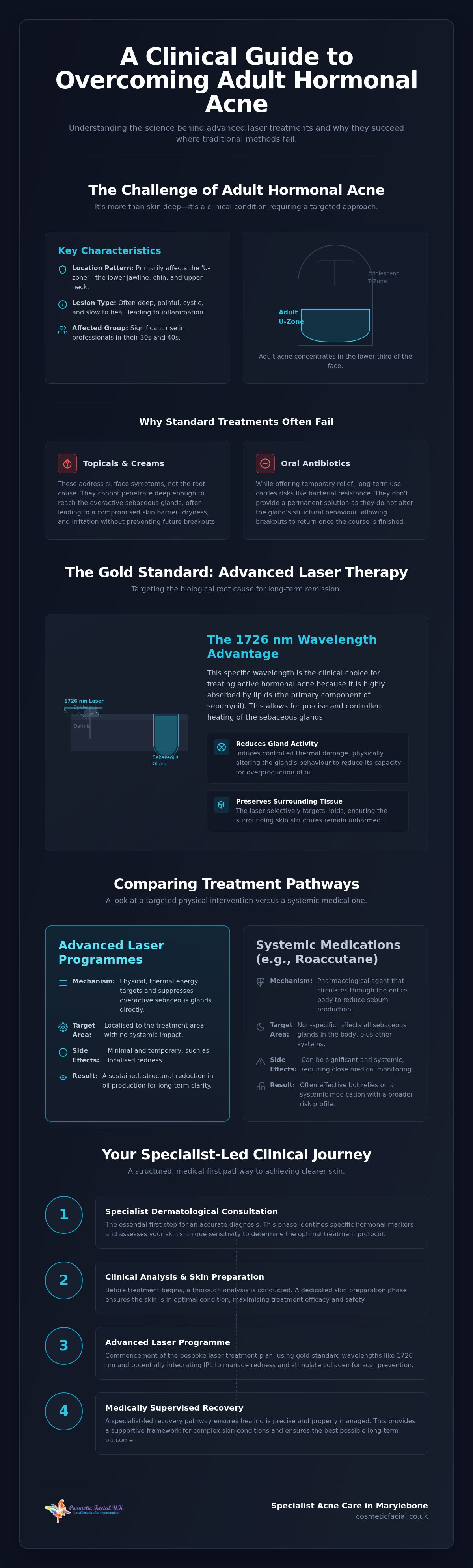
Adult hormonal acne is a distinct clinical entity, primarily driven by the skin's sensitivity to circulating androgens. Whilst adolescent acne typically concentrates in the T-zone, adult-onset cases manifest in a 'U-zone' pattern. This distribution affects the lower third of the face, specifically the jawline, chin, and upper neck. These lesions are often deep-seated, painful, and slow to resolve, creating a cycle of inflammation that impacts both physical appearance and psychological well-being. For many professionals, these persistent breakouts undermine social confidence and professional presence. This often leads patients to seek a definitive laser treatment for hormonal acne london to end the reliance on temporary fixes.
The Role of Sebaceous Gland Hyperactivity
The physiological basis of this condition lies in the hyperactivity of the sebaceous glands. Under hormonal influence, these glands produce sebum that is both more abundant and thicker in consistency. This process is central to Understanding Acne Vulgaris and its various manifestations. When this excess oil combines with dead skin cells, it creates a blockage deep within the follicle. Because the trigger is internal, high-street 'anti-acne' topicals like benzoyl peroxide often fail; they strip the surface of essential moisture without addressing the underlying glandular dysfunction. This results in a compromised skin barrier, leading to redness and flaking whilst the original cysts remain untouched. To determine the specific hormonal markers and skin sensitivity involved, a private dermatologist consultation London is essential for an accurate diagnosis.
Why Topicals and Antibiotics are Often Temporary
Many patients arrive at our Marylebone clinic after years of relying on oral antibiotics or medical-grade creams. Whilst these can offer short-term relief, they rarely provide a permanent solution. Long-term antibiotic use carries the risk of bacterial resistance, and topical agents cannot penetrate the deeper dermal layers where hormonal cysts originate. This structural limitation is why surface treatments often cause excessive dryness and irritation without stopping the next breakout cycle. Achieving long-term remission requires a shift toward energy-based devices. A targeted laser treatment for hormonal acne london can induce thermal changes in the sebaceous glands, reducing their capacity to overproduce oil. By physically altering the gland's behaviour, we can achieve a more durable structural change than traditional pharmacology. This approach addresses the root cause rather than merely managing the symptoms as they appear.
Laser and Energy-Based Solutions for Hormonal Breakouts
The primary objective of advanced laser therapy for acne is to induce controlled thermal damage within the sebaceous glands. By targeting these glands, we can significantly reduce the volume of sebum produced, which is the fundamental driver of hormonal breakouts. Whilst standard NHS acne treatment guidelines often focus on systemic medications or topical creams, energy-based devices offer a targeted physical intervention. A specialist laser treatment for hormonal acne london prioritises this mechanical reduction in gland activity to achieve long-term remission without the systemic side effects of oral drugs.
In clinical dermatology, 1726 nm wavelengths are now recognised as the gold standard for treating active acne. This specific wavelength is highly absorbed by lipids, allowing the laser to heat the oil-producing glands without damaging the surrounding skin tissue. For patients presenting with significant erythema, or redness, and post-inflammatory hyperpigmentation, we often integrate Intense Pulsed Light (IPL). IPL effectively targets the vascular components of active lesions, reducing inflammation and accelerating the healing process. Simultaneously, the thermal energy stimulates dermal fibroblasts to produce new collagen. This process is critical for maintaining skin structural integrity and preventing the 'pitting' or atrophic scarring often seen after cystic episodes.
Harmony ClearSkin and Vacuum-Assisted Tech
The Harmony ClearSkin system represents a significant advancement in non-ablative laser technology. It utilises integrated vacuum-assisted technology to gently lift the skin, bringing the sebaceous glands closer to the laser source. This ensures deeper, more effective energy penetration whilst an active cooling mechanism protects the epidermis from thermal injury. This combination makes the procedure highly tolerable for patients. Because the treatment is non-ablative, it results in zero downtime, allowing busy London professionals to return to their daily schedules immediately following a session.
Carbon Laser Facials for Congested Skin
For patients experiencing significant congestion and surface oiliness, carbon laser facials provide a dual-action benefit. The process involves applying a medical-grade carbon paste to the skin, which binds to sebum and cellular debris within the pores. As the laser passes over the area, it vaporises the carbon particles, mechanically clearing the pores and refining the skin's texture. This is particularly effective for reducing the 'shine' associated with hormonal oiliness and serves as an excellent adjunct to a broader facial rejuvenation programme. Ensuring that your treatment is managed by a qualified clinician is paramount for safety and efficacy. You can view our full range of medical-grade treatments to understand which technology best suits your specific skin profile.
Comparing Treatment Pathways: Laser vs. Medical Alternatives
When addressing persistent cystic lesions, patients often weigh the efficacy of systemic medications against targeted clinical interventions. Isotretinoin, commonly known as Roaccutane, remains a standard medical response for severe cases, yet its systemic nature necessitates rigorous liver monitoring and carries risks of significant side effects, including mood changes and extreme mucosal dryness. In contrast, a specialised laser treatment for hormonal acne london provides a localised solution. By focusing energy precisely on the affected dermal layers, we can achieve remission without impacting the whole body's physiology. This distinction is particularly relevant for professionals who require a treatment pathway that doesn't demand the lifestyle restrictions or health monitoring associated with high-dose oral retinoids.
The choice between 'medical grade' and 'spa grade' environments in London is equally critical. Whilst high-street clinics may offer general light therapies, they often lack the diagnostic depth required for hormonal conditions. A clinical environment, such as our Marylebone practice, ensures that treatments are supervised by practitioners with advanced qualifications, such as Dr. Didar's MSc in Dermatology. This medical oversight allows for the safe integration of multiple modalities, ensuring that the depth of laser energy is perfectly calibrated to the patient's specific skin thickness and inflammatory response.
The Case for Energy-Based Devices over Medication
Energy-based devices offer a targeted approach that systemic antibiotics cannot match. Whilst antibiotics often lead to a 'rebound' effect once the course is completed, laser therapy induces structural changes in the sebaceous glands that provide greater longevity. Research into laser and light-based acne treatments confirms that by reducing the gland's capacity for oil production, we can break the cycle of chronic inflammation. This method avoids the risks of bacterial resistance and eliminates the need for daily pill regimes, offering a more sustainable path for those with sensitive systems or busy schedules.
Combining Peels and Lasers
A bespoke clinical plan rarely relies on a single technology. Integrating chemical peels into a treatment programme serves to exfoliate the stratum corneum, the skin's outermost layer. This removal of cellular debris allows the subsequent laser energy to penetrate the dermis more effectively, reaching the sebaceous glands without being scattered by surface irregularities. Salicylic acid peels are particularly effective for immediate oil control and quietening active inflammation. However, because these combinations increase skin sensitivity, accessing professional dermatology services is vital to ensure the skin's barrier remains intact throughout the recovery process. This multi-layered strategy ensures that both surface texture and deep-seated hormonal triggers are addressed simultaneously.
Your Step-by-Step Guide: How to Treat Hormonal Acne Clinically
Successful management of adult hormonal breakouts requires a structured clinical pathway. This process begins with a comprehensive skin analysis to identify specific hormonal markers and establish baseline sensitivity levels. Following this assessment, the preparation phase involves the use of medical-grade topicals for several weeks. These agents stabilise the skin barrier and reduce active inflammation, ensuring the skin is sufficiently 'quietened' before commencing a laser treatment for hormonal acne london.
The active treatment cycle typically involves a programme of 4-6 sessions spaced at regular intervals. During this phase, some patients experience a temporary 'purge' as deep-seated congestion is brought to the surface; this is a normal part of the skin's inflammatory response. Post-treatment recovery focuses on barrier repair and the management of transient erythema. Once active lesions are suppressed, the clinical focus shifts to maintenance and transitioning to resurfacing techniques. This final stage is crucial for addressing any residual texture issues and ensuring long-term remission.
What to Expect During a Laser Session
A typical laser session lasts approximately 30 minutes. Patients often describe the sensation as a series of quick 'snapping' feelings, similar to a small elastic band against the skin. Immediately following the procedure, you may notice mild redness and a sensation similar to a light sunburn, which usually subsides within 24 hours. Adhering to pre-treatment requirements is essential for safety:
- Avoid direct sun exposure for at least two weeks prior to your appointment.
- Discontinue the use of active retinoids or exfoliating acids five days before treatment.
- Ensure the treatment area is free of any self-tanning products or heavy oils.
Managing Post-Acne Scarring
Transitioning from active acne management to scar correction is a distinct clinical phase that requires specific technology. Once the hormonal trigger is controlled, we often recommend fractional CO2 laser for acne scars to address deeper structural pitting. Microneedling may also be utilised to refine surface texture and stimulate further dermal repair. It is essential to remain patient during this stage. Collagen remodelling is a biological process that typically requires 3-6 months to manifest visible improvements in skin density and smoothness. By separating the 'clearance' phase from the 'resurfacing' phase, we ensure the skin is never over-taxed, leading to superior aesthetic outcomes.
Specialist Acne Care in Marylebone: The Cosmetic Facial Approach
The clinical management of adult acne requires an intersection of general medical knowledge and advanced dermatological expertise. At Cosmetic Facial, this is provided by Dr. Faramarz Didar, whose professional background combines extensive experience as a General Practitioner with an MSc in Dermatology Skills and Treatment. This dual perspective is essential when administering a laser treatment for hormonal acne london, as it allows for a holistic assessment of the patient's health alongside the specific cutaneous pathology. By positioning the clinic as a medical-first alternative to high-street laser chains, we prioritise clinical outcomes over commercial volume.
Located in the professional district of Marylebone, the practice provides a discreet and highly controlled environment for Central London patients. This setting is designed to reflect the seriousness of the treatments provided, moving away from the 'spa-style' approach often found in non-medical facilities. Our philosophy is rooted in a consultation-first model. We don't offer standardised treatment packages; instead, we develop bespoke medical plans based on the individual's inflammatory response, skin type, and previous treatment history. This ensures that the energy levels and wavelengths used are precisely calibrated to your unique requirements.
The Importance of Medical Supervision
GMC registration and specialist postgraduate training are vital markers of safety when using high-energy devices on inflammatory conditions. Dr. Didar's MSc from the University of Hertfordshire, awarded with Commendation, signifies a high level of proficiency in both the theory and application of dermatological therapies. In our practice, every laser treatment for hormonal acne london is overseen by a doctor to ensure that safety protocols are strictly maintained. This oversight is particularly critical when managing the risks of post-inflammatory hyperpigmentation or adjusting energy fluences for sensitive, reactive skin. Our commitment to clinical excellence means that patient safety and the integrity of the skin barrier are never compromised for the sake of speed.
Booking Your Consultation in Marylebone
The pathway to clearer skin begins with a formal clinical analysis rather than a simple aesthetic overview. You can initiate this process by visiting the Cosmetic Facial homepage to request a specialist appointment. During this initial session, we perform a detailed skin analysis to determine your suitability for laser intervention and discuss the anticipated timeline for your recovery. We encourage all new patients to bring their current skincare regime to this first appointment. Reviewing your existing products allows Dr. Didar to identify potential irritants and ensure that your home-care routine supports, rather than hinders, your clinical treatment plan. This methodical approach ensures that every aspect of your skin health is accounted for before the first laser pulse is delivered.
Advancing Your Clinical Pathway to Clearer Skin
Achieving long-term remission from adult hormonal acne requires moving beyond standard high-street remedies toward a structured clinical intervention. By targeting the sebaceous glands directly, a specialist laser treatment for hormonal acne london provides a sustainable method for reducing oil production and suppressing deep-seated inflammation. This approach addresses the biological triggers of the 'U-zone' and doesn't rely on the systemic burdens often associated with long-term oral medication.
Every treatment plan at our Marylebone practice is personally developed and supervised by Dr. Faramarz Didar. His expertise, backed by an MSc in Dermatology with Commendation and GMC registration (5200505), ensures that your care is grounded in clinical precision and safety. Transitioning from active cystic breakouts to a clear, refined complexion is a gradual process that requires patience and specialist guidance. With the correct energy-based technology and rigorous medical oversight, achieving lasting skin health and restored confidence is an attainable goal for every patient.
We look forward to supporting you through every stage of your skin's recovery and helping you maintain these results for years to come.
Frequently Asked Questions
Is laser treatment for hormonal acne permanent?
Laser therapy provides long-term remission by inducing thermal damage in the sebaceous glands, which significantly reduces oil production. Whilst it effectively decreases the frequency and severity of breakouts, it's not always a permanent cure because hormonal fluctuations can still occur. Most patients experience a durable structural change in their skin texture and a substantial reduction in active lesions. Maintenance sessions may be required annually to sustain the results of your laser treatment for hormonal acne london.
Can I have laser treatment while taking Roaccutane or antibiotics?
Laser therapy is generally compatible with oral antibiotics, but patients taking Roaccutane, or Isotretinoin, must wait until their course is finished. Clinical guidelines typically recommend a waiting period of six months after the last dose of Isotretinoin before commencing laser resurfacing or targeted acne laser. This delay is essential because the medication increases skin fragility and can impair the healing process. A full medical review during your consultation will determine the safest timeline for your specific circumstances.
How many sessions of laser will I need for adult acne?
A standard clinical programme usually requires four to six sessions to achieve significant and lasting clearance. These appointments are typically scheduled four weeks apart to align with the skin's natural regenerative cycle. Some patients with severe cystic congestion may require additional sessions to fully suppress glandular hyperactivity. During your initial skin analysis in Marylebone, we'll establish a bespoke timeline based on the severity of your inflammation and your skin's response to the initial treatment.
Does laser treatment for acne work on dark skin tones?
Advanced laser technologies are effective for dark skin tones when administered under medical supervision. We use specific wavelengths and cooling technologies that bypass the melanin in the epidermis to target the sebaceous glands safely. This precision minimises the risk of post-inflammatory hyperpigmentation, which is a common concern for Fitzpatrick skin types IV to VI. Ensuring that your laser treatment for hormonal acne london is managed by a GMC-registered practitioner is vital for protecting darker skin.
What is the difference between a Carbon Peel and a standard chemical peel?
A Carbon Peel combines a medical-grade carbon paste with laser energy to mechanically clear pores and refine texture. In contrast, a chemical peel relies on acids, such as salicylic or glycolic acid, to dissolve the bonds between dead skin cells. Whilst chemical peels are excellent for surface exfoliation, Carbon Laser treatments provide a deeper thermal effect that helps to quieten overactive oil glands. Both modalities can be integrated into a comprehensive acne management plan depending on your skin's needs.
Can hormonal acne be cured without birth control or spironolactone?
Laser therapy offers a physical, non-systemic alternative for those who cannot or prefer not to use birth control or spironolactone. By thermally targeting the sebaceous glands, we address the skin's response to hormonal triggers without altering your internal hormone levels. This makes it an ideal clinical pathway for patients who experience side effects from hormonal medications. Whilst it doesn't cure the underlying hormonal flux, it effectively stops the skin from reacting with painful cystic lesions.
Is there any downtime after a Harmony ClearSkin session?
The Harmony ClearSkin system is a non-ablative technology, meaning it leaves the surface of the skin intact. Consequently, there is virtually zero downtime associated with this procedure. Most patients experience mild erythema, or redness, similar to a light sunburn, which typically resolves within a few hours. This allows London professionals to return to their work or social commitments immediately. We recommend avoiding intense heat and direct sun exposure for 48 hours following each session to protect the skin barrier.
How much does a private dermatologist consultation for acne cost in London?
Private dermatology consultations in London are typically charged as a standalone fee per appointment. At Cosmetic Facial, this initial session includes a comprehensive skin analysis and a review of your medical history by Dr. Didar. This ensures that any proposed treatment plan is medically appropriate for your specific condition. Whilst we don't provide fixed package prices without an assessment, our fee structure is transparent and discussed fully before any clinical procedures or laser sessions commence.
Disclaimer
All content on cosmetic Facial website, including blogs, graphics, logos, images, and software, is the property of CosmeticFacial UK or its content suppliers and is protected by applicable copyright laws. Unauthorized use, reproduction, distribution, or modification of any content without prior written permission is strictly prohibited.


