


With nearly 900,000 Botox procedures performed annually in the UK, the distinction between a routine cosmetic enhancement and a precise medical intervention has never been more critical. It's common to feel a sense of trepidation regarding the safety of injections performed in non-clinical settings; the fear of an unnatural or "frozen" result is a significant concern for those prioritising subtle rejuvenation. You'll find that achieving a refreshed appearance doesn't require compromising on safety or facial expression when treatments are grounded in medical science.
This reference explains why choosing a doctor-led botox clinic marylebone provides the necessary clinical framework to ensure both safety and natural-looking outcomes. We'll examine the specific advantages of specialist dermatological expertise, the implications of the 2026 licensing regulations, and how the oversight of a GMC-registered practitioner like Dr Faramarz Didar (GMC 5200505) supports long-term skin health. By the end of this article, you'll understand how the intersection of medical qualification and aesthetic precision defines the standard of care in Central London.
Key Takeaways
- Understand the clinical standards of a doctor-led botox clinic marylebone, where medical practitioners oversee the entire treatment pathway from initial diagnosis to post-procedure aftercare.
- Learn how specialist dermatological training, such as an MSc from the University of Hertfordshire, ensures precise anatomical mapping for subtle, natural-looking results.
- Identify the critical differences between high-street aesthetic services and clinical settings, specifically regarding the depth of medical history reviews and product concentration.
- Discover the diagnostic importance of facial movement mapping during a consultation to mitigate the risk of a "frozen" appearance.
- Recognise how GMC-registered oversight (GMC 5200505) integrates aesthetic outcomes with professional medical safety and long-term skin health.
What Defines a Doctor-Led Botox Clinic in Marylebone?
A doctor-led botox clinic marylebone is defined by the continuous involvement of a medical professional throughout the entire patient journey. This oversight begins with a clinical diagnosis and extends through the technical application to the post-procedural aftercare. Marylebone has established itself as London's epicentre for regulated, high-standard medical aesthetics because the district attracts practitioners with robust academic credentials. Patients choose this location when they require the assurance that their aesthetic goals are managed within a medical framework rather than a purely cosmetic one. It's a shift from retail-style treatments to clinical interventions.
To better understand the importance of clinical expertise in facial aesthetics, watch this helpful video:
The distinction between a cosmetic technician and a GMC-registered doctor with dermatological training is fundamental. While a technician may understand the mechanics of the procedure, a doctor evaluates the underlying skin health and facial anatomy. A medical diagnosis of the skin condition is a prerequisite for any successful Botox treatment. This ensures that the intervention addresses the specific pathology of lines and wrinkles whilst maintaining the structural integrity of the facial tissue. It's about precision. Without this diagnostic depth, results often lack the natural movement desired by discerning patients.
The Clinical Necessity of GMC Registration
The General Medical Council (GMC) regulates all UK doctors and sets the professional standards for medical practice. Selecting a practitioner with a valid registration, such as Dr Faramarz Didar (GMC 5200505), provides a layer of patient protection that non-medical settings simply cannot replicate. This accountability ensures that the practitioner adheres to strict ethical guidelines and maintains continuous professional development. As the new national licensing scheme is finalised in 2026, the presence of a UK-qualified GP offers the clinical rigour necessary to prioritise patient safety over commercial convenience.
Prescription-Only Medicine and Patient Safety
In the United Kingdom, Botulinum toxin is classified as a prescription-only medication (POM). This legal status means it must be prescribed following a face-to-face consultation with a qualified prescriber. Remote prescribing is strictly prohibited. A doctor-led clinic manages this process with considerable scrutiny, reviewing complex medical histories and potential contraindications that a non-medic might overlook. This rigorous screening is essential for preventing adverse reactions and ensuring the concentration of the toxin is appropriate for the patient's specific anatomical requirements. It ensures the medication is used as a targeted therapeutic tool.
The Role of Specialist Dermatology in Precise Aesthetic Injections
Specialist dermatological knowledge transforms an aesthetic procedure into a precise clinical treatment. Dr Faramarz Didar's MSc in Dermatology Skills and Treatment with Commendation from the University of Hertfordshire provides an advanced understanding of the integumentary system that exceeds standard injector training. This academic distinction is significant; it indicates a high level of proficiency in identifying complex skin types and pathological changes. At a doctor-led botox clinic marylebone, this expertise is applied to every patient to ensure the highest standards of clinical safety. When patients seek Botulinum toxin therapy, they're often unaware that their specific skin thickness and elasticity influence how the medication diffuses within the tissue. Specialist dermatological diagnostic skills enable a practitioner to precisely modulate muscle activity, which results in a refreshed, natural appearance rather than the immobile, "frozen" look often associated with non-medical injectors.
Anatomical Precision and Injection Technique
Precision in aesthetics requires a deep comprehension of facial musculature and the vascular system. The intersection of surgical dermatology training and non-surgical facial aesthetics ensures that every injection is placed with anatomical accuracy. Dr Didar's advanced training at the Instituto Javier de Benito in Barcelona has refined his approach to facial structures, particularly in the placement of sutures and the management of facial volume. This surgical perspective translates to a more nuanced application of Botox. By targeting specific muscle groups with the accuracy of a trained medical professional, the risk of ptosis, or eyelid drooping, and asymmetrical results is substantially reduced. It's a matter of clinical technique over simple repetition.
Beyond Wrinkles: Holistic Skin Assessment
A doctor-led botox clinic marylebone prioritises the overall health of the skin alongside the reduction of dynamic lines. During a consultation, it's essential to integrate facial rejuvenation strategies with a comprehensive medical skin analysis. Identifying underlying conditions such as rosacea, chronic acne, or melasma is vital because these pathologies can affect how the skin responds to treatment. Patients benefit from the expertise of a practitioner who can provide private dermatologist consultations to address these medical concerns concurrently. This dual approach ensures that the aesthetic outcome is supported by healthy, resilient skin. If you're concerned about both texture and tone, you can book a comprehensive skin analysis to determine the most appropriate clinical pathway.
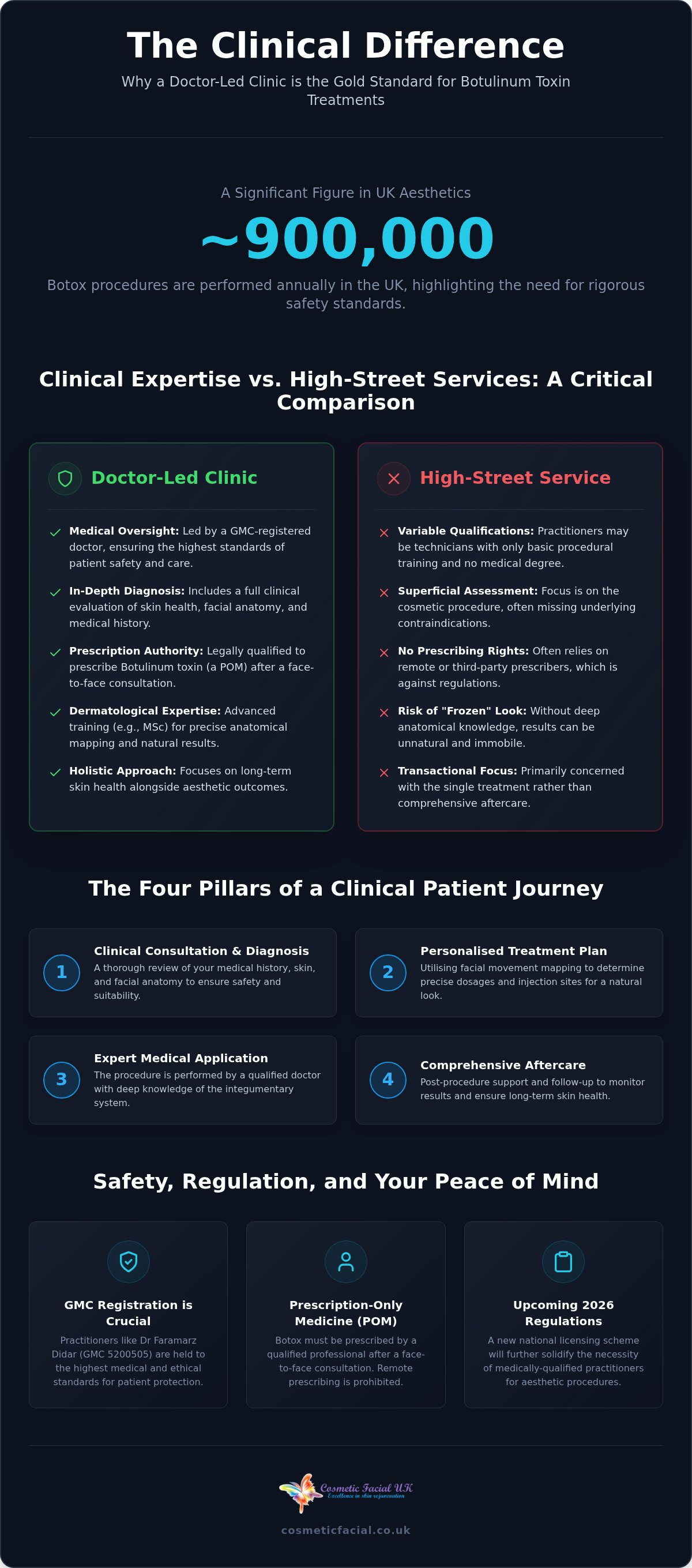
Comparing Clinical Aesthetics: High-Street vs. Specialist Marylebone Clinics
The choice between a high-street aesthetic provider and a specialist clinic involves more than geographic convenience. In a doctor-led botox clinic marylebone, the consultation process is a structured medical assessment rather than a brief transactional encounter. Whilst high-street "quick fixes" might only allocate five minutes for an appointment, a clinical reference standard requires a comprehensive review of the patient's medical history, current medications, and previous aesthetic outcomes. This depth ensures that the treatment is appropriate and safe. The products used in a specialist setting are consistently regulated, high-concentration Botulinum Toxin variants. These are handled within a sterile environment that utilises medical-grade equipment, adhering to the UK Government Cosmetic Procedure Regulations.
Continuity of care is another distinguishing factor. Aesthetic ageing is a long-term process. Having a single doctor manage your treatment path over several years leads to superior, more predictable results. This avoids the "patchwork" effect that occurs when multiple injectors with varying techniques and products treat the same facial areas. Patients who value this consistency often find the answers they need in a detailed aesthetic treatment FAQ, which outlines the necessity of professional medical oversight and the long-term benefits of a consistent clinical approach.
Regulatory Compliance and Insurance
Medical doctors are held to a significantly higher standard of professional indemnity insurance than non-medical aesthetic injectors. This insurance reflects the level of responsibility a GMC-registered practitioner carries. Historically, the Postgraduate Medical Education and Training Board (PMETB) oversaw medical standards before its functions were merged with the GMC, ensuring that UK-qualified doctors possess the required competencies for specialist practice. In a Marylebone clinic, maintaining CQC-style standards provides a level of reassurance that is often absent in unregulated high-street settings. It guarantees that the facility operates with rigorous hygiene protocols and professional accountability.
Managing Complications: The Doctor's Advantage
Complications from Botox are rare, but they require immediate medical intervention if they occur. A doctor-led botox clinic marylebone is equipped with emergency medical protocols and reversal agents that aren't typically available in non-clinical environments. If a patient experiences an adverse reaction or an unexpected anatomical response, a qualified GP has the clinical diagnostic skills to manage the situation effectively. Dr Didar's decades of experience since qualifying in 1991 mean that patients aren't just receiving an injection; they're under the care of a practitioner who understands systemic health. This clinical advantage is the foundation of patient safety in modern aesthetics.
What to Expect During Your Marylebone Botox Consultation
Entering a doctor-led botox clinic marylebone involves a methodical diagnostic phase that prioritises anatomical assessment over aesthetic speed. The initial mapping of facial movement allows the practitioner to identify hyperkinetic muscles that contribute to dynamic rhytids, or wrinkles. This process involves observing the face at rest and during various expressions to determine exactly where the Botulinum Toxin will have the most effective, natural-looking impact. Identifying these specific areas of concern ensures the treatment plan is tailored to the individual's unique musculature. It's a clinical standard of care that moves beyond simple cosmetic application.
Medical screening is a non-negotiable component of the clinical framework. A thorough review of allergies, current medications, and previous aesthetic history is conducted to mitigate risks and ensure patient safety. This rigour ensures that the bespoke treatment plan aligns clinical possibilities with the patient's aesthetic goals. Informed consent is obtained only after the patient fully understands the mechanism of line and wrinkle treatments, including the expected duration of results and potential side effects. The practitioner doesn't just perform a procedure; they manage a medical intervention with long-term implications for facial harmony.
The Consultation Framework
The consultation follows a precise structure to maintain clinical integrity. It begins with a clinical skin analysis to determine suitability by assessing skin quality and dermal thickness. This is followed by a detailed discussion of specific muscle dynamics, identifying how various muscle groups interact during expression to avoid a "frozen" appearance. Finally, the practitioner verifies their credentials, including GMC registration 5200505, and records the specific product batch numbers to ensure full medical transparency and traceability for the patient.
Aftercare and Long-Term Maintenance
Post-injection behaviour is critical for optimising the outcome. Patients receive clinical advice to avoid strenuous exercise and extreme heat for 24 to 48 hours to prevent the toxin from diffusing into unintended muscle groups. A specialist clinic always schedules a two-week follow-up appointment to assess the results and make minor adjustments if necessary. This ensures the outcome is symmetrical and meets the initial objectives. For many, Botox is just one element of a wider full face rejuvenation plan that addresses volume loss and skin texture concurrently.
Cosmetic Facial: Advanced Medical Aesthetics in the Heart of Marylebone
Cosmetic Facial represents a specialised centre for dermatology-led aesthetics, where medical precision meets aesthetic refinement. As a doctor-led botox clinic marylebone, the facility is designed to provide treatments that are safer and more effective than those found in non-clinical environments. Dr Faramarz Didar (GMC 5200505) leads the clinic with a unique combination of general practice experience and specialist dermatological training. This dual perspective ensures that every intervention is grounded in an understanding of systemic health and specific skin pathology. The clinic's commitment to natural, dignified results means that treatments respect the patient's unique facial architecture. Rather than following generic templates, each plan is a bespoke response to the patient's anatomical requirements.
Whilst Botox remains a foundational tool for managing dynamic lines, it's often most effective when integrated with other modalities. Cosmetic Facial offers a wide range of complementary treatments, including chemical peels and advanced laser therapy, to address concerns such as texture, tone, and pigmentation. This holistic approach ensures that the skin's surface is as healthy as the underlying musculature is relaxed. It's a comprehensive strategy for long-term facial health that avoids the pitfalls of over-treatment.
A Track Record of Academic Excellence
Dr Didar's practice is underpinned by a consistent track record of academic achievement. He earned his MSc in Dermatology Skills and Treatment with Commendation from the University of Hertfordshire in 2015. This qualification is supplemented by a Postgraduate Diploma in Non-Surgical Facial Aesthetics. His professional affiliations, including membership in the European Academy of Dermatology and Venereology (EADV) and the European College of Aesthetic Medicine & Surgery (ECAMS), reflect a dedication to the highest clinical standards. International fellowships in advanced aesthetic science, including training at the Instituto Javier de Benito in Barcelona, ensure the clinic remains at the forefront of 2026 technical innovations.
Booking Your Appointment in Marylebone
The clinic is located in the heart of Marylebone, offering convenient access for clients across Central London and the West End. It operates on a professional Monday-to-Saturday schedule. It's important to note that the clinic does not offer Sunday appointments; this reinforces its commitment to a structured, clinical environment. When preparing for your first visit for a botox london consultation, patients are advised to bring a list of current medications and details of any previous aesthetic procedures. This information is essential for Dr Didar to conduct a safe and thorough medical assessment during the diagnostic phase.
Securing Your Aesthetic Future with Clinical Precision
Prioritising clinical oversight in facial aesthetics is a decision that impacts both immediate safety and long-term skin health. As the 2026 regulatory landscape evolves, the requirement for medical accountability becomes even more apparent for those seeking subtle, refreshed results. Selecting a doctor-led botox clinic marylebone ensures that your treatment is managed by a practitioner with the diagnostic depth to understand complex facial anatomy. This specialist approach, exemplified by Dr Faramarz Didar (GMC 5200505), integrates GP-level medical safety with the precision of an MSc in Dermatology Skills and Treatment with Commendation. It's a shift from simple cosmetic application to a rigorous medical intervention.
You can achieve a youthful appearance that remains entirely natural by aligning your aesthetic goals with a specialist Central London clinical setting. Entrusting your care to a UK-qualified medical professional provides the reassurance that every procedure is conducted with the highest standards of anatomical accuracy and ethical practice. This ensures that your results are predictable and respect the natural movement of your face. The journey toward healthy, rejuvenated skin starts with a clinical diagnosis.
Frequently Asked Questions
Is a doctor-led Botox clinic safer than a high-street aesthetician?
A doctor-led botox clinic marylebone offers superior safety because a medical professional can diagnose underlying skin pathologies and manage rare complications with emergency protocols. High-street aestheticians often lack the clinical training to identify contraindications in your medical history. A GMC-registered doctor provides a level of accountability and sterile practice that is essential for minimising the risk of infection or vascular compromise during injectable treatments.
What specific qualifications should I look for in a Marylebone Botox doctor?
You should prioritise a practitioner with a valid GMC registration, such as Dr Faramarz Didar (GMC 5200505), and specialist academic credentials. Look for an MSc in Dermatology Skills and Treatment, ideally from a recognised institution like the University of Hertfordshire. Additional certifications from the European College of Aesthetic Medicine & Surgery (ECAMS) indicate a commitment to peer-validated standards and advanced international training in facial aesthetics.
How long does a doctor-led Botox consultation typically take?
A comprehensive consultation at a specialist clinic usually requires 20 to 30 minutes to complete. This time allows for a detailed review of your medical history, current medications, and previous aesthetic treatments. The doctor performs a dynamic anatomical mapping of your facial muscles to ensure the toxin concentration is precisely targeted. This unhurried approach contrasts with the rapid appointments often found in non-medical high-street settings.
Can a dermatologist-led clinic help with more than just wrinkles?
Yes, a dermatologist-led clinic provides a holistic approach to skin health that extends beyond managing dynamic lines. Because the practitioner understands biological processes, they can concurrently treat conditions such as acne, rosacea, and hyperhidrosis. You can also access medical services like mole checks and skin analysis. This ensures that your aesthetic outcomes are supported by the treatment of underlying pathologies that affect skin texture and tone.
What is the difference between GMC registration and a cosmetic certificate?
GMC registration is a statutory requirement for doctors and ensures they are held to strict professional and ethical standards. In contrast, a cosmetic certificate may only indicate attendance at a short-term training course. A GMC-registered practitioner, like a UK-qualified GP, carries professional indemnity insurance and is accountable to a national regulatory body. This provides a level of patient protection and clinical rigour that a simple certificate cannot offer.
Are there any medical conditions that prevent me from having Botox?
Certain medical conditions, such as neuromuscular disorders like myasthenia gravis, typically preclude the use of Botulinum Toxin. Treatment is also not recommended for individuals who are pregnant or breastfeeding. During your medical screening, the doctor will evaluate your history for any contraindications or potential drug interactions. This rigorous assessment is a fundamental part of the safety protocol in a specialist clinical environment in Marylebone.
Why is it important that my Botox practitioner is also a prescriber?
Botulinum toxin is a prescription-only medicine (POM) in the UK, meaning it must be prescribed by a qualified professional after a face-to-face consultation. When your practitioner is also the prescriber, they take full clinical responsibility for the medication and its application. This avoids the risks associated with remote prescribing and ensures that the practitioner has personally assessed your suitability for the specific concentration and volume of the toxin.
What happens if I am not happy with my Botox results at a clinical practice?
Clinical practices schedule a mandatory two-week follow-up appointment to assess the treatment's effectiveness and your satisfaction with the outcome. If the results are asymmetrical or require minor refinement, the doctor can make precise adjustments within a professional medical framework. This continuity of care ensures that your aesthetic goals are met whilst maintaining facial harmony. It's a structured process that prioritises long-term patient outcomes over immediate, unregulated fixes.
Disclaimer
All content on cosmetic Facial website, including blogs, graphics, logos, images, and software, is the property of CosmeticFacial UK or its content suppliers and is protected by applicable copyright laws. Unauthorized use, reproduction, distribution, or modification of any content without prior written permission is strictly prohibited.


