


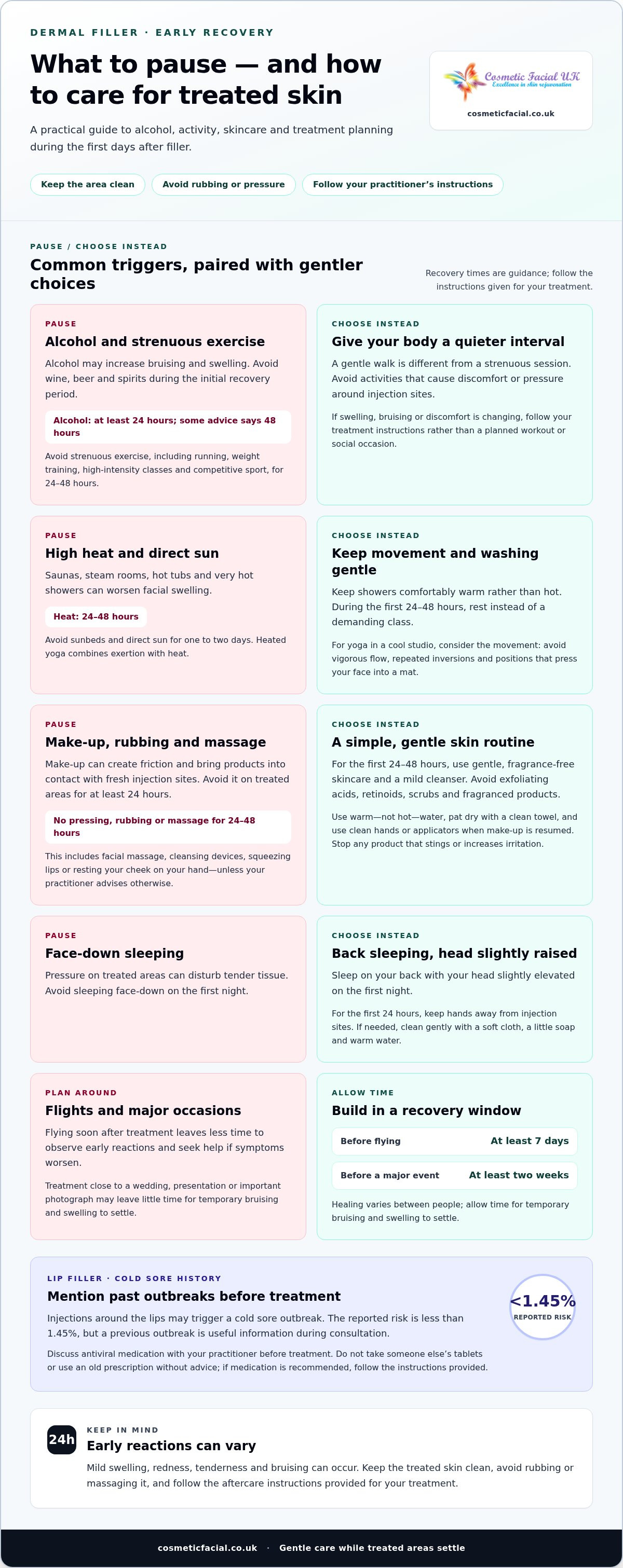
Alcohol is best avoided for at least 24 hours after dermal filler treatment, and some aftercare recommendations advise waiting 48 hours. Avoid make-up on treated areas for at least 24 hours, too. These are key dermal filler aftercare dos and don'ts, although the area may need longer to settle fully.
It’s understandable to want clear guidance about what you can drink, apply to your skin and expect during recovery. Mild swelling, redness, tenderness and bruising can occur after treatment, so knowing what is typical can make the first few days easier to manage. This guide explains how alcohol, make-up and skincare fit into aftercare, what common reactions may look like, and how healing usually progresses. It also covers warning signs that need prompt medical attention, so you can care for the treated area and respond appropriately if symptoms change.
Key Takeaways
- Keep treated skin clean and avoid rubbing or massaging the area unless your practitioner gives different instructions.
- Cold sore outbreaks after dermal filler are reported at a rate of less than 1.45%; lip filler may be relevant if you have a history of cold sores.
- Mild swelling, redness, tenderness and bruising are common early reactions, but their duration can vary.
- Escalating pain, unusual numbness, pale or dusky skin, or a purple net-like pattern needs prompt medical attention; any change in vision is an emergency.
- Track how symptoms change as the filler settles, and contact the practitioner who treated you if side effects do not reduce within the advised time.
1. Can I drink alcohol after filler?
Avoid alcohol and strenuous exercise during the initial recovery period after dermal filler injections. Wait at least 7 days after treatment before flying.
Alcohol can increase bruising and swelling, so avoid wine, beer and spirits during the initial recovery period. Some aftercare recommendations advise waiting 48 hours after treatment. This longer interval provides a straightforward approach if bruising or swelling is a concern. If you have an event planned, arrange drinks for another day rather than testing your reaction immediately after treatment.
Exercise guidance varies between 24 and 48 hours. Avoid strenuous exercise during this period, including running, weight training, high-intensity classes and competitive sport. Exercise can involve exertion and increased facial flushing, which may make early swelling more noticeable. A gentle walk is different from a strenuous session, but avoid activities that cause discomfort or pressure around the injection sites. Follow the aftercare instructions provided for your treatment.
Heat is another reason to pause certain activities. Saunas, steam rooms, hot tubs and very hot showers can worsen facial swelling. Avoid these forms of heat for 24-48 hours, and keep showers comfortably warm rather than hot. Sunbeds and direct sun are also best avoided for one to two days after treatment. A heated yoga class combines physical exertion with heat, so postpone it during the same recovery window.
For yoga in a cool studio, consider the type of movement rather than treating every class as equivalent. A vigorous flow, repeated inversions or positions that press the face into a mat can place extra strain or pressure on recently treated areas. Choose rest instead of a demanding session during the first 24-48 hours. Do not massage or press filler areas while stretching, even if they feel firm or swollen.
Flying needs separate planning. Wait at least 7 days after dermal filler treatment before travelling by air. This leaves time to observe early reactions and seek help if symptoms worsen before departure. If travel is unavoidable, do not assume that a short flight removes the recommended waiting period. Build the pause into your plans when booking treatment.
These practical dermal filler aftercare dos and don'ts help reduce avoidable triggers during early healing: avoid alcohol, strenuous exercise and high heat, then resume activities gradually after the advised interval. If swelling, bruising or discomfort is changing, follow your treatment instructions rather than sticking to a planned workout, sauna visit or social occasion.
2. Skincare and make-up after treatment
Sleep on your back with your head slightly elevated on the first night, and avoid sleeping face-down. For the first 24 hours, keep hands away from injection sites; clean them gently with a soft cloth, a little soap and warm, not hot, water.
Make-up can introduce friction and bring products into contact with fresh injection sites. It may be sensible to avoid applying make-up to freshly treated skin until it feels settled. Although some advice gives a shorter interval, waiting a full day is a clear approach, particularly if the skin remains tender, bruised or swollen. When you resume, apply products gently and use clean hands or applicators.
Do not press, rub or massage filler areas for 24 to 48 hours unless your practitioner specifically instructs you to do so. Pressure from facial massage, a cleansing device or resting your cheek on your hand can irritate tender tissue. Avoid repeatedly checking or shaping a lip by squeezing it. If an area feels uneven, leave it alone and follow your aftercare instructions.
Alcohol is best avoided for at least 24 hours after treatment; some aftercare advice recommends waiting 48 hours. It can increase bruising and swelling, so consider postponing wine or spirits while these reactions are developing. If you have already had a drink, avoid rubbing or applying pressure to the treated area, and monitor how it changes.
Plan treatment at least two weeks before a major event, such as a wedding, work presentation or important photograph. This allows time for temporary bruising and swelling to settle, although healing varies between people. Scheduling filler immediately before an occasion leaves little time for visible injection marks or tenderness to improve.
During the first day, keep the routine simple: clean gently, avoid make-up, and leave the treated area undisturbed. Once the initial 24 to 48 hours have passed, reintroduce ordinary skincare cautiously, without vigorous rubbing. For people considering treatment alongside a broader facial-care plan, information about facial aesthetic treatments can help explain the available options.
3. Cold sore risk and antiviral medication
Dermal filler injections around the lips may trigger a cold sore outbreak. The reported risk is less than 1.45%, but a previous outbreak is still useful information during consultation. Tell the practitioner if you have had cold sores, especially if they recur around your lips. Mention any current symptoms before the procedure, rather than waiting until after injection.
If you have a history of cold sores, discuss antiviral medication before treatment. Your practitioner can consider the timing and treatment area when deciding whether it is appropriate. Do not take someone else’s antiviral tablets or use an old prescription without advice. If medication is recommended, follow the specific instructions provided for your treatment.
Prepare a full list of medicines and supplements for your consultation. Include prescribed medicines, over-the-counter products and supplements such as fish oil, vitamin E or ginkgo. These supplements may affect bruising, so mention them before the injection. Even routine wellness blends, such as the functional mushroom and flower remedies available at lanori.shop, should be noted so your practitioner has a complete overview. Do not stop prescribed medication on your own; discuss any changes with the clinician responsible for your care.
Pain relief also needs consideration. Ask your clinical team before taking medication after filler, including medicines you already use for headaches or joint pain. Aspirin and non-steroidal anti-inflammatory drugs, such as ibuprofen, are often avoided for 24 to 48 hours after treatment because they can increase bruising risk. If you take either regularly, raise this before changing your usual routine.
Paracetamol may be advised for mild discomfort after the procedure, but ask the clinical team before taking it. Check the active ingredients in combination cold or pain remedies, as some contain additional medicines. Avoid taking multiple products with the same ingredient. This simple check can help prevent an accidental duplicate dose while you manage tenderness or swelling.
After injection, note any new symptoms and when they began. A cold sore can present as tingling or a developing blister around the lip, so report a suspected outbreak promptly. Also seek clinical advice if swelling and bruising are increasing rather than settling, or if you are unsure whether a medicine is suitable. Keep the details of your medication list accessible during the first 48 hours, when aftercare questions may arise.
Make medication disclosure part of practical filler aftercare: record what you take, discuss any history of cold sores before treatment, and seek guidance before using pain relief. Clear information helps the practitioner consider relevant risks and give instructions suited to your treatment.
4. Common side effects and healing timeline
Small injection marks, redness, tenderness, mild swelling and bruising can appear immediately after dermal filler treatment. These are common side effects, particularly around delicate areas such as the lips. Swelling can peak over one to two days, then gradually reduce. Bruising often lasts five to seven days, although it can sometimes remain visible for two weeks. The treated area may also feel slightly firm at first.
Healing does not follow one exact schedule. Mild swelling, redness, tenderness or small bruises often improve within 24 to 72 hours, while common injection-related effects can take 7 to 14 days to clear. The filler itself may continue settling for one to two weeks. Lip filler can take about four weeks to reach its final appearance. These timelines describe different processes, so early swelling is not necessarily the final result.
Hyaluronic acid filler can attract water, contributing to temporary fullness as the tissue settles. Alcohol can also increase bruising or swelling, making early changes more noticeable. Compare the treated area over time rather than judging it immediately after injection. A dated photograph in consistent lighting can help you track changes without repeatedly pressing or manipulating the skin.
Some complications need faster attention than routine bruising. Escalating pain, unusual numbness or altered sensation, pale or dusky skin, and a purple, net-like pattern can indicate impaired blood flow after hyaluronic acid filler. These warning signs need urgent clinical assessment. Pain may take several hours to become noticeable, particularly when the filler contains lidocaine, so monitor for changes after leaving the appointment.
Any change in vision after filler requires emergency medical help. Do not wait for the treated area to change in appearance or for pain to develop. Contact emergency services if your vision becomes blurred, reduced or otherwise altered after an injection. Severe or worsening pain, particularly if it continues beyond day two, also warrants prompt contact with the practitioner who performed the treatment.
Pay attention to how symptoms change, not just whether they are present. Improving bruising and swelling generally fit the expected healing pattern; worsening pain, colour changes or unusual sensation do not. If side effects have not reduced within the advised period, contact the treating practitioner. Keep your aftercare instructions accessible, note when symptoms began, and describe any changes clearly. This record can help distinguish routine recovery from complications that need assessment.
5. Typical early reactions after dermal filler
After an appointment, the treated area may look uneven before swelling settles. Small injection marks, local redness, tenderness, bruising or slight firmness can occur. These reactions may appear together or separately, so compare the specific injection sites rather than judging your whole face. The lips, cheeks and under-eye area can each respond differently to treatment.
In the first 24 hours, note changes without repeatedly touching the skin. A photograph in consistent lighting can help you compare appearance later. Keep the image at the same distance and angle; close-up selfies can exaggerate asymmetry. Record where tenderness or firmness occurs, and whether it changes during ordinary activities such as eating or speaking.
Early variation can reflect the treatment area and the tissue’s response. For example, one side may look fuller if swelling is more noticeable there. That appearance alone does not establish the final result. Allow the filler to settle before assessing aesthetic balance, and follow the aftercare instructions for your injection sites. Avoid pressing an area to test whether it feels even.
Hydrated skin and ordinary fluid intake support general wellbeing, but drinking extra water will not instantly settle filler. Keep water nearby and drink normally throughout the day. Avoid adding unfamiliar skincare or supplements to your routine while your skin is sensitive. A simple record of products, symptoms and timing can make changes easier to describe during follow-up.
In the UK, ask the practitioner to explain their relevant clinical qualifications and specific training in facial anatomy and injectable treatments. Before your appointment, ask how they assess suitability, explain consent, identify the product used and manage complications. Clear answers about aftercare and follow-up are also useful signs of a considered clinical process.
Distinguish an expected local reaction from a symptom that is escalating or changing quickly. Increasing pain, unusual numbness, pale or dusky skin, or a purple, net-like pattern needs urgent clinical assessment. Any change in vision after filler requires emergency medical help. Keep your appointment details and aftercare instructions accessible so you can describe the timing and location of a concern accurately.
If a concern develops, contact the practitioner who performed the treatment. Describe the affected area, when the reaction began and how it has changed. Do not try to correct unevenness with massage unless specifically instructed. This measured approach helps you track early reactions while the treated area settles.
Cosmetic Facial: Botox Treatment
Cosmetic Facial offers Botox Treatment for people considering an alternative to dermal filler. Botox is an anti-wrinkle injection, and its effects typically reach their peak two to three weeks after treatment.
Dermal fillers and Botox are different treatments, so the right option depends on your concern and the treatment plan discussed with a practitioner. If you are exploring facial aesthetic treatments beyond filler, a discussion can help clarify how Botox may fit your goals and what to expect afterwards.
Make your next decision with confidence
Use your recovery period to note what matters to you beyond the immediate result. A brief record of questions, concerns and treatment goals can make a future discussion more focused. Dermal filler aftercare dos and don'ts are useful beyond the first days: they can also help you recognise what information to share when planning further aesthetic treatment.
Before pursuing another procedure, consider what you want to change and whether your concern is about movement, volume or skin quality. These distinctions help guide a clear conversation about suitable options, expected outcomes and aftercare. If a reaction still concerns you, prioritise addressing it rather than arranging another treatment.
Cosmetic Facial can be your next point of contact to discuss aesthetic treatment options. Bring your questions to a consultation and consider your priorities at a pace that feels right for you.
Frequently Asked Questions
Can I drink alcohol after filler?
It is best to avoid alcohol for at least 24 hours after filler, with some aftercare advice recommending 48 hours. If you have a social occasion planned, choose a non-alcoholic drink and avoid combining alcohol with medicines unless a clinician says they are suitable. Alcohol may make bruising or swelling more noticeable, so note any changes and follow the instructions given for your treatment.
Can I exercise after lip filler?
Wait at least 24 hours before exercising after lip filler, and avoid strenuous activity for 24-48 hours. A gentle walk is less demanding than a run, weights session or high-intensity class. Choose an activity that does not cause marked facial flushing or pressure around your lips. If exercise makes the area throb or feel increasingly uncomfortable, stop and follow your aftercare instructions.
How long does it take for facial fillers to settle?
Facial fillers may take up to three weeks to settle fully, while lip filler can take about four weeks to reach its final appearance. These timelines refer to the settling process, not necessarily the duration of every early reaction. Avoid judging symmetry from a single mirror check immediately after treatment. Comparing photographs taken in similar lighting can give you a more consistent view as the area changes.
How long does swelling last after filler?
Swelling commonly peaks during the first one to two days and improves over the following few days, although mild puffiness can last longer. The lips may look especially full early on, so avoid trying to reshape them by pressing or massaging. Track whether swelling is easing or worsening. Increasing swelling alongside pain, unusual numbness or skin colour changes needs prompt clinical assessment.
How soon after having cosmetic fillers can I sunbathe?
Wait one week before sunbathing after dermal filler treatment. During that period, avoid sunbeds, prolonged direct sun and intense heat, which may aggravate swelling. If you need to be outdoors, seek shade and follow your usual sun-protection routine without rubbing the treated area. Postpone sunbathing if your skin remains tender, bruised or swollen.
Is there any specific advice for cheek filler aftercare?
Cheek filler needs the same careful aftercare as other facial injection sites, with particular attention to pressure on the cheeks. Avoid sleeping face down, facial massage and activities that rest your cheek against equipment or a treatment surface. On the first night, sleep on your back with your head slightly elevated. If one cheek feels firmer, avoid manipulating it and observe how it changes.
What are some of the possible side effects I should be aware of?
Possible short-term effects include bruising, redness, tenderness, swelling, itching and slight firmness at injection sites. Seek urgent clinical assessment for escalating pain, unusual numbness, pale or dusky skin, or a purple, net-like pattern. Any change in vision after filler requires emergency medical help. How symptoms change matters: worsening symptoms need attention, rather than simply waiting for the usual recovery period.
What should you do after dermal filler injections?
Follow your practitioner’s aftercare instructions, keep injection sites clean and avoid pressure or massage unless specifically advised. Avoid facials, microdermabrasion, chemical peels and laser treatments for two weeks after filler. Note when symptoms begin and how they change, so you can describe any concern clearly. If a reaction worsens or does not ease within the advised period, contact the practitioner who treated you.
Disclaimer
All content on cosmetic Facial website, including blogs, graphics, logos, images, and software, is the property of CosmeticFacial UK or its content suppliers and is protected by applicable copyright laws. Unauthorized use, reproduction, distribution, or modification of any content without prior written permission is strictly prohibited.


