


Wrinkle filler results don’t all last the same length of time: hyaluronic acid facial fillers typically last 6 to 12 months. The best fillers for deep wrinkles in the UK depend on the type of line, the area being treated and the treatment approach, so duration is only one part of the decision.
It’s understandable to focus on how long results may last, especially when deep facial lines remain visible at rest. The filler material, treatment area and your individual features all influence which option may suit you.
This article compares five approaches, explains how long their effects may last and outlines what to consider after a consultation. It also explains why lines caused by volume loss may respond differently from those linked to facial movement.
Key Takeaways
- Compare filler options by their intended use as well as how long results may last; calcium hydroxylapatite has different stated durations for contouring and wrinkle filling.
- Poly-L-lactic acid effects may last up to two years, and treatment usually involves two or three sessions.
- Fat grafting results may last one or two years, but it is a different approach from injectable fillers.
- Consider whether your lines are visible at rest or mainly appear with facial movement, as this can affect the treatment approach.
- A consultation can help match the option to the line, treatment area and desired outcome, rather than choosing on duration alone.
1. How long do the effects of wrinkle fillers last?
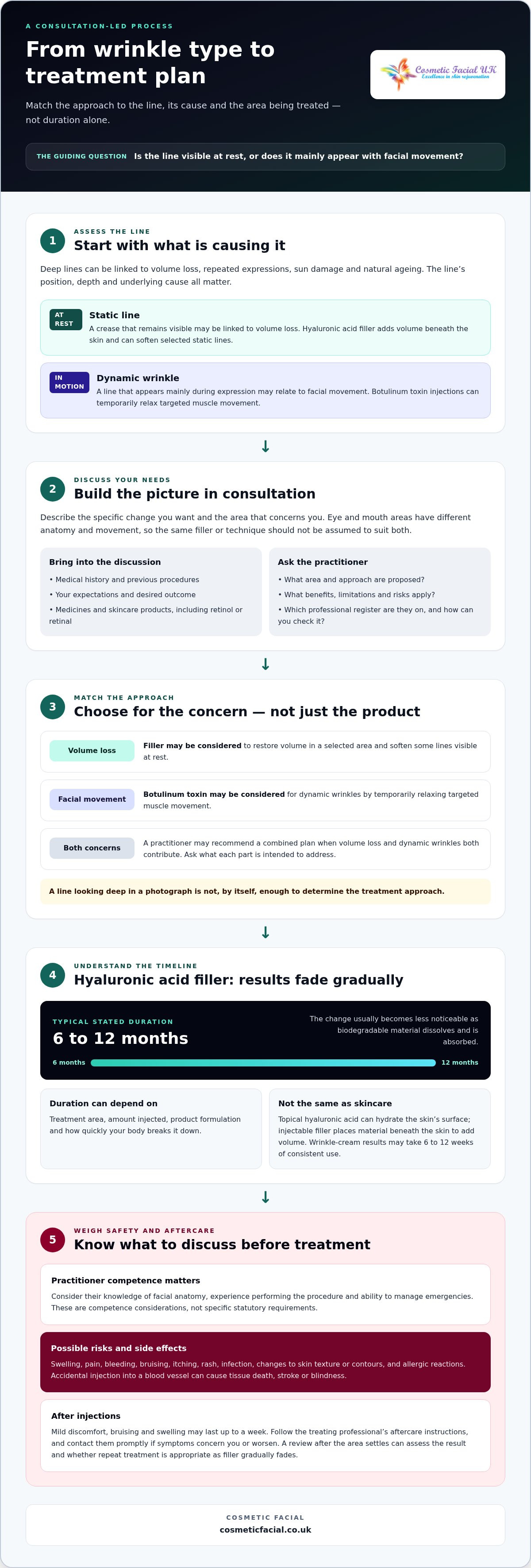
Hyaluronic acid facial fillers typically produce results lasting 6 to 12 months. The duration depends on the treatment area, the amount injected, the product formulation and how quickly your body breaks it down. Results usually fade gradually as the biodegradable material dissolves and is absorbed, rather than ending on a fixed date. For example, the change may become less noticeable over time as the treated area loses volume.
Hyaluronic acid occurs naturally in the body. In dermal fillers, it adds volume beneath the skin and can soften static lines that remain visible at rest. A crease linked to volume loss may respond differently from a line that appears mainly during facial movement. Assessing the line’s cause and location helps determine whether filler fits your treatment goal.
Deep lines can reflect several processes, including collagen and elastin loss, repeated expressions, sun damage and natural ageing. Filler can restore volume in a selected area, but it does not reverse every cause of wrinkles. The right option depends on a line’s position, depth and underlying cause, not just on how long a product may last.
Peptides and hyaluronic acid in topical skincare are not the same as injectable hyaluronic acid fillers. A serum may hydrate the skin’s surface, while an injectable filler places material beneath the skin to add volume. These approaches have different purposes. Visible wrinkle-cream results may take 6 to 12 weeks of consistent use, so topical products do not provide the same immediate volume replacement.
When considering dermal filler treatment in the UK, practical safety criteria include the injector’s knowledge of facial anatomy, experience performing the procedure and ability to manage emergencies. These are competence considerations, not specific statutory requirements. Before proceeding, discuss the practitioner’s approach to treatment and emergency management.
Risks and side effects can include swelling, pain, bleeding, bruising, itching, rash, infection, changes to skin texture or contours, and allergic reactions. Accidental injection into a blood vessel can cause tissue death, stroke or blindness. These serious risks make anatomical knowledge and emergency preparedness important aspects of safe treatment.
After deep wrinkle filler injections, mild discomfort, bruising and swelling may last up to a week. Follow the treating professional’s aftercare instructions, and contact them promptly if symptoms concern you or worsen. Once the area has settled, a review can help assess the result and whether repeat treatment is appropriate as the filler gradually fades.
2. Choosing a treatment after consultation
A consultation should match treatment to the line, its cause and the area affected. The practitioner can assess whether a wrinkle is static, visible at rest, or dynamic, appearing with facial movement. They should also discuss your medical history, previous procedures, expectations, and the likely benefits and limitations of each option. Bring a list of medicines and skincare products, including retinol or retinal, to inform the discussion.
Forehead lines that deepen during expression may have a different cause from creases beside the mouth that remain visible at rest. Fillers address volume loss, while botulinum toxin injections can soften dynamic wrinkles by temporarily relaxing targeted muscle movement. A plan may combine fillers and Botox when both volume loss and movement contribute. Neither approach should be chosen solely because a line looks deep in a photograph.
The eye and mouth areas need individual assessment because their anatomy and movement differ. Describe the specific change you want, such as softening a line beside the mouth or reducing a crease near the eye. The practitioner should explain the proposed treatment area, expected effect and relevant risks before proceeding. Don’t assume the same filler or technique suits both areas.
Retinol and retinal are topical skincare ingredients, not injectable fillers. Retinoids such as Retin-A may form part of a skincare routine to help prevent wrinkles. Consistent use matters: visible results from wrinkle creams may take 6 to 12 weeks. Tell the practitioner what you already apply, especially if your skin becomes irritated, so skincare and procedures can be considered together.
What qualifications and registration should a UK filler practitioner have? Look for a healthcare professional who understands facial anatomy, has performed the procedure successfully many times and knows how to manage emergencies. Ask which professional register they belong to, then check their registration directly with that register.
How can I check a UK clinic or practitioner before booking fillers? Confirm the practitioner’s identity and registration, ask about their experience with your treatment area, and discuss complications and emergency arrangements. A clear consultation should explain the proposed approach and give you time to make an informed decision.
Use the consultation to compare treatment goals, not just product names. A useful next step is to review aesthetic treatment information and prepare questions about your forehead, eye area or mouth lines before discussing options.
Consider whether a combined plan is relevant to the concerns you have described. Dermal fillers and Botox may be recommended together to address volume loss and dynamic wrinkles. Ask the practitioner how that recommendation relates to your treatment goals and what each part of the plan is intended to address. Discuss whether both volume loss and dynamic wrinkles are part of your concern, rather than assuming a combination is necessary. Before deciding, ask for the proposed approach to be explained in relation to the specific changes you want. This keeps the discussion focused on whether the combined option fits your goals and helps you decide whether to proceed.
3. Temporary smoothing and plumping effects
Hyaluronic acid filler can add volume beneath the skin during treatment, creating a visible change soon after injection. The effect depends on placement, crease depth and the amount used. For example, a fold beside the mouth may look softer when lost volume is restored. This initial appearance is not necessarily the final result, as swelling from the injections can affect how the area looks.
Facial filler procedures usually take up to an hour. The practitioner assesses facial movement and skin texture, then selects injection points for the agreed area. Hyaluronic acid attracts and holds water, contributing to a plumping effect. The aim is to soften the line while retaining natural facial movement, not to make every crease disappear or change your overall expression.
Results from hyaluronic acid facial fillers typically last 6 to 12 months. The material is biodegradable and gradually dissolves as the body absorbs it. The duration can vary with the treatment area, the filler used and how quickly the individual body breaks it down. As the volume diminishes, the treated line may become more visible again; maintaining the effect generally requires repeat injections.
Expect the appearance to change as the initial response settles. Mild discomfort, bruising and swelling after injections may last up to a week, temporarily affecting smoothness or symmetry. Follow the practitioner’s aftercare instructions and allow the area to settle before judging the result. Seek advice from the treating professional if a symptom concerns you or worsens.
Topical ingredients work differently. A moisturiser containing hyaluronic acid can hydrate the skin’s surface, but it does not place volume beneath a deep crease like an injectable filler. Peptides in skincare are also topical ingredients, not a substitute for injected material. Wrinkle creams may need consistent use for 6 to 12 weeks before visible results appear, so they suit a gradual skincare approach rather than immediate plumping.
Distinguish the immediate effect from longer-term skin changes. Filler restores volume in a selected area; it does not remove every cause of lines, such as repeated facial movement or collagen loss. Compare a static crease at rest with a forehead line that appears during expression. These patterns can point to different treatment aims. Assess the visible change against the agreed aim once early swelling has eased.
4. Best wrinkle fillers available in the UK
No single filler is best for every deep wrinkle. The suitable option depends on the line’s cause, facial area and treatment goal. Hyaluronic acid fillers add volume and can soften static folds linked to volume loss. Their effects typically last 6 to 12 months, and the material is gradually absorbed. For people comparing the best fillers for deep wrinkles in the UK, intended use matters as much as duration.
Which dermal fillers are best for deep wrinkles and folds? Hyaluronic acid may suit lines where restoring volume is the aim. Calcium hydroxylapatite is another option: results can last up to three years when used to fill wrinkles. These durations describe particular uses, not a guarantee that either material will suit every person or treatment area.
How do hyaluronic acid fillers compare with other filler types for deep wrinkles? Hyaluronic acid effects typically last 6 to 12 months, while poly-L-lactic acid effects last up to two years. Poly-L-lactic acid treatment usually involves two or three sessions. Calcium hydroxylapatite results last up to a year for contouring and three years for wrinkle filling. Fat grafting results may last one or two years.
These options differ in material, purpose and treatment course. Hyaluronic acid adds volume directly, while poly-L-lactic acid generally involves a course of sessions. Calcium hydroxylapatite has different stated durations for contouring and wrinkle filling. Fat grafting is a separate approach. Compare options according to the specific fold and intended treatment, rather than ranking materials by longevity alone.
An “instant” change refers to visible volume being added, not a permanent effect. Early swelling or bruising can also influence appearance, so assess the result after recovery. Retinol skincare works differently: it does not place material beneath a deep fold. Visible wrinkle-cream results may take 6 to 12 weeks of consistent use, making topical care a gradual approach rather than an immediate substitute for filler.
To compare the best fillers for deep wrinkles in the UK, consider the treatment area, the material’s intended use, the number of sessions and its expected duration. Someone prioritising a longer stated duration, for example, might discuss poly-L-lactic acid, while direct volume replacement may make hyaluronic acid relevant. A practitioner can assess whether the line is static or linked to facial movement, then explain how that affects the options and their likely effects.
FDA-approved dermal fillers are available by prescription for injection by a licensed healthcare professional. When discussing options, consider prescription availability and who would perform the injection, alongside the material’s intended use and expected duration.
5. Fillers for deep facial lines
Deep facial lines need assessment by cause, not just by how noticeable they look. A static crease remains visible when the face is at rest, while a dynamic wrinkle appears during movement. Hyaluronic acid filler adds volume beneath the skin and can soften folds where volume loss contributes. It cannot address every cause of a deep line or replace treatments aimed at skin texture.
Which deep wrinkles can fillers treat, and which need other treatments? Fillers may soften static folds linked to volume loss, while dynamic forehead lines may respond to botulinum toxin treatment. Deep wrinkles associated with surface damage, scars or sagging may need another approach, such as fractional CO2 laser treatment, which targets these concerns by stimulating collagen production and skin cell renewal.
A line’s position can help clarify its likely cause. A fold beside the nose or mouth may remain visible at rest, while a forehead line can become more noticeable during expression. These examples are not interchangeable: the facial area, tissue support and movement all affect treatment planning. The aim is to address the underlying concern, rather than treat every line with the same formula.
Fine lines and surface texture differ from a deep fold. A chemical peel removes the outer layer of damaged skin to reveal smoother-looking skin underneath. Microneedling creates tiny injuries, and the healing process stimulates collagen production. Neither approach adds volume like a filler, so the distinction matters when the main concern is a crease caused by lost support.
Topical skincare also has a separate role. A cream whose formula contains retinoids may support a consistent skincare routine, but it does not inject volume beneath a deep line. Visible results from wrinkle creams may take 6 to 12 weeks of regular use. By contrast, filler creates a change through material placed under the skin, although swelling can affect the early appearance.
A useful consultation follows three steps: identify whether the line remains visible at rest, assess whether volume loss contributes, then compare suitable treatment mechanisms. A static fold and a movement-related forehead line, for example, may call for different options. The practitioner should explain the intended effect, likely limitations and relevant risks of each proposed procedure. This keeps the decision focused on your facial anatomy and treatment goal.
The key takeaway for deep folds is that filler is most relevant when restoring volume addresses the cause. Lines driven by movement or surface damage may need another treatment strategy, and some concerns may call for a combined plan. Comparing the cause, area and expected effect gives you a more useful basis for choosing than the word “filler” alone.
Cosmetic Facial: Botox Treatment
Cosmetic Facial’s Botox Treatment may be relevant when facial lines are linked to repeated muscle movement rather than volume loss. Botulinum toxin temporarily relaxes targeted muscles, which can soften dynamic wrinkles; it does not replace filler’s role in restoring volume to selected areas.
When movement-related lines and volume loss occur together, a consultation at Cosmetic Facial in London can help clarify whether Botox Treatment, dermal fillers or a combined approach suits your concerns. The decision should reflect the line’s cause, location and your treatment goals, rather than relying on duration alone.
If you’re considering options for facial lines, contact Cosmetic Facial to discuss your concerns.
Make your next step an informed one
Choosing among the best fillers for deep wrinkles in the UK begins with defining what you want to change. Note which lines concern you most, when they appear and what result would feel appropriate. This gives your consultation a clear focus and helps distinguish a wish to soften a particular crease from a broader aim to improve facial appearance. Bring questions about the proposed approach, expected effects, recovery and follow-up so you can consider the decision carefully.
You don’t need to decide on a treatment before discussing your concerns. A focused conversation can help you understand which options relate to your aims and what each involves. Take time afterwards to reflect on the information and choose a next step that feels considered, rather than relying on a product name or a single advertised result.
With clear priorities and the right information, you can approach your treatment decision with greater confidence.
Frequently Asked Questions
How long do the effects of wrinkle fillers last?
Hyaluronic acid filler effects typically last 6 to 12 months. The timing can vary by facial area and how quickly your body absorbs the material. If you are planning around an event, discuss timing with your practitioner rather than scheduling treatment close to the date. This allows you to consider the settling period and review the result before deciding whether any follow-up is appropriate.
How long do different fillers for deep wrinkles last?
Reported durations vary by filler and intended use: hyaluronic acid typically lasts 6 to 12 months; calcium hydroxylapatite lasts up to a year for contouring or three years for wrinkles; poly-L-lactic acid effects last up to two years; and fat grafting results may last one or two years. These figures are not directly interchangeable, since the material and treatment purpose differ. Compare the planned use as well as duration.
Are fillers suitable for deep wrinkles in people with different skin types or medical conditions?
Wrinkle fillers are described as suitable for all skin colours, with very little risk of post-inflammatory pigmentation or keloid scarring. Skin colour alone therefore does not determine suitability. Medical conditions require individual consideration: share your health history, allergies and current medicines during consultation, and mention any previous filler reactions. For example, a history of infection or a reaction to an injectable is relevant when discussing the procedure and its risks.
What UK rules apply to dermal filler treatments and clinics?
The practical criteria are to choose a healthcare professional who understands facial anatomy, has successfully performed the procedure many times and can manage emergencies. Ask which professional register they belong to and check their registration directly. Discuss the clinic’s complication and emergency arrangements before treatment.
Disclaimer
All content on cosmetic Facial website, including blogs, graphics, logos, images, and software, is the property of CosmeticFacial UK or its content suppliers and is protected by applicable copyright laws. Unauthorized use, reproduction, distribution, or modification of any content without prior written permission is strictly prohibited.


