


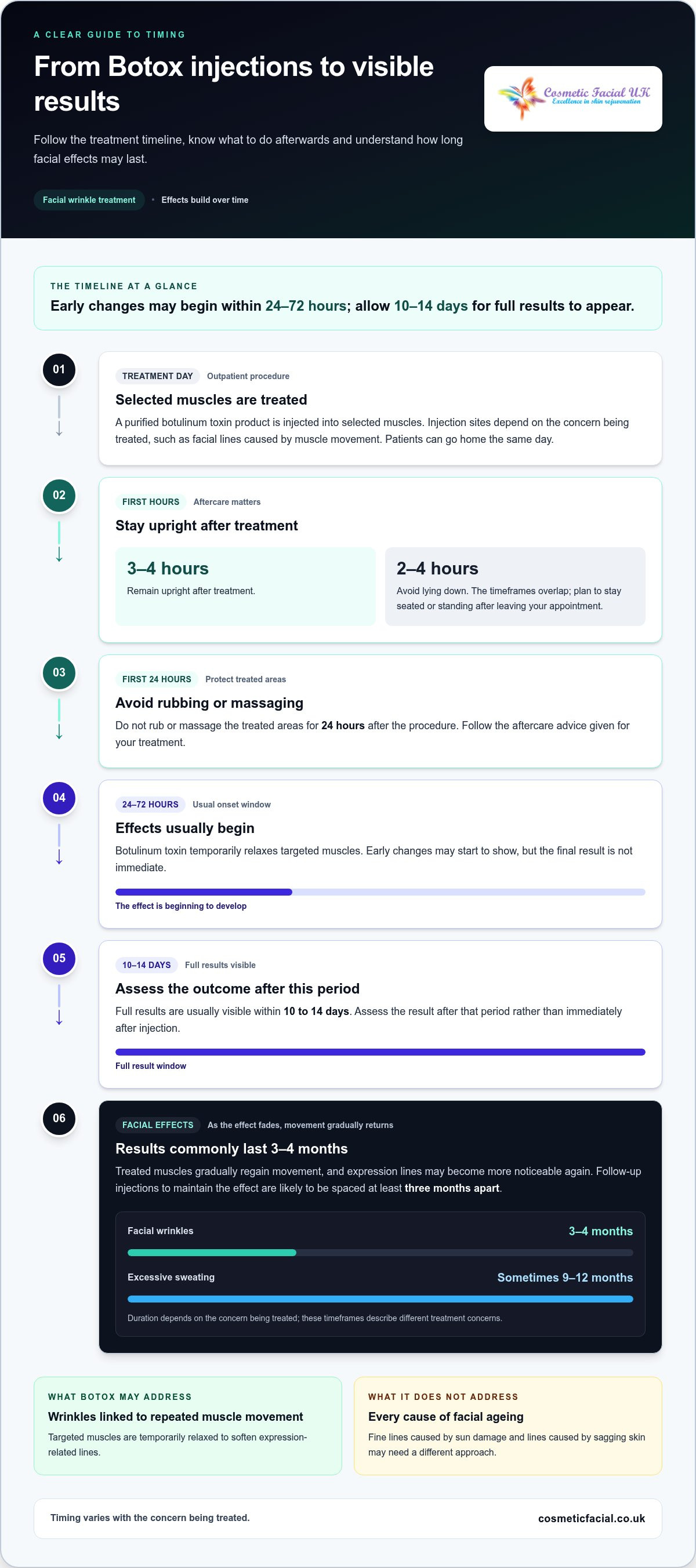
A Botox facial usually begins to take effect within 24-72 hours, with full results visible within 10 to 14 days. The effect commonly lasts 3 to 4 months, depending on the concern being treated. This gives you a useful timeframe for judging the result and considering when maintenance may be appropriate.
It’s understandable to want natural-looking results and to know how long they may last before choosing a treatment. Botox and dermal fillers address facial changes differently: Botox temporarily relaxes muscles to soften expression-related wrinkles, while fillers add volume and help retain moisture.
This article explains what to expect as Botox takes effect, why results vary and how its duration compares with dermal fillers. It also describes which facial lines Botox may address, helping you decide whether it suits your concerns.
Key Takeaways
- Effects usually begin within 24-72 hours, with full results visible within 10 to 14 days.
- Facial results commonly last 3 to 4 months, though duration depends on the concern being treated.
- Botox addresses wrinkles linked to muscle movement; sun damage and sagging skin require a different approach.
- Understand the aftercare guidance, including avoiding rubbing or massaging treated areas for 24 hours.
- Botox temporarily relaxes muscles, whereas dermal fillers add volume, so the treatments address different concerns.
Cosmetic treatment of facial wrinkles
Botulinum toxin can soften facial lines caused by repeated muscle movement. Effects usually begin within 24-72 hours, with full results visible within 10 to 14 days.
Wrinkle treatment areas and limitations
Wrinkle treatment targets facial muscles whose repeated contractions create expression lines. Injection sites depend on which muscles contribute to the lines, including muscles around the eyebrows. Botox may soften wrinkles caused by muscle movement, but it does not address every cause of facial ageing.
A Botox facial may soften wrinkles linked to muscle movement, but it cannot address every facial concern. It does not improve fine lines caused by sun damage or lines caused by sagging skin. For example, a line caused by loose skin may remain even when nearby muscles move less. Identifying the cause helps set realistic expectations.
Botox facials and anti-wrinkle injections
“Botox facial” is a broad, informal phrase, while anti-wrinkle injections describes injections that relax targeted muscles. Botox is a brand name for a botulinum toxin product. The terms may refer to similar cosmetic treatments, but they do not precisely describe every procedure.
The distinction matters because a facial treatment can refer to different approaches. Ask which product and treatment area are being discussed rather than relying on the label alone. Botulinum toxin is also used for concerns beyond facial lines, including excessive sweating, where the intended effect differs from cosmetic wrinkle reduction.
Treatment frequency and duration
For facial wrinkles, effects commonly last 3 to 4 months, depending on the problem being treated. As the effect fades, treated muscles gradually regain movement, and expression lines may become more noticeable again. Full results are visible within 10 to 14 days, so assess the outcome after that period rather than immediately after injection.
Follow-up injections to maintain the effect are likely to be spaced at least three months apart. Too frequent or excessive doses may contribute to treatment resistance through antibody formation. The duration is different for excessive sweating: effects can sometimes last 9-12 months. The treatment concern therefore affects how long results may persist.
Risks and side effects
Localised discomfort and bruising can occur after botulinum toxin injections. Side effects are usually mild and improve within a day or two. Treatment may also make existing facial asymmetry more noticeable, affecting how evenly the face appears at rest or during expression.
Upper eyelid drooping after injections above the eyebrows is reported at a frequency of 1 in 100. People with neuromuscular disorders, such as myasthenia gravis, should avoid treatment. Other contraindications include certain muscle relaxants, aminoglycosides, pregnancy or breastfeeding, infection or inflammation at the injection site, and bleeding disorders. These factors affect whether treatment is suitable.
Injection procedure and product types
Botulinum toxin injections are an outpatient procedure, so patients can go home the same day. A purified botulinum toxin product is injected into selected muscles. The product and injection sites depend on the concern being treated, such as facial lines caused by muscle movement.
Before injections, discuss the treatment area and the result you hope to achieve. This helps distinguish a muscle-related wrinkle from a concern that needs another approach. Planned injection points should correspond to the muscles contributing to visible lines. The discussion also gives you an opportunity to describe your priorities and relevant health circumstances.
The procedure involves injecting small amounts of product into selected areas. Localised discomfort and bruising can occur. Sensation varies between people and injection sites, so treatment around the forehead may feel different from treatment around the eyes. Consider these local effects when planning your appointment.
Botulinum toxin is a prescription medicine and should be used under the care of a licensed, skilled healthcare provider. The practitioner’s assessment matters because facial muscles work together. Changing movement in one area, for example, can affect the appearance of nearby areas. Treatment planning considers the pattern of movement, not simply the presence of a line.
Appointment length varies according to the area being treated, the number and placement of injections, and the assessment required. The injection stage is only one part of the visit; discussing your concern and planned treatment also takes time. As the procedure is outpatient, patients can leave afterwards.
Different purified botulinum toxin products are used for injections, but they are not necessarily interchangeable, nor are all treatment plans the same. The product selected must suit the intended treatment and be administered by an appropriately skilled healthcare provider. Tell the practitioner about previous botulinum toxin treatment, as this can inform clinical planning.
Patients can generally resume normal activities immediately after injections. However, localised bruising or discomfort may still be visible or felt, so consider this when arranging work or social plans. An appointment just before an important event, for example, may leave little time for bruising to settle. Follow the aftercare advice given for your treatment.
Questions about the injection method, product and treatment area are useful parts of an informed discussion. For information about facial aesthetic treatments, review the relevant treatment details before deciding whether injections match your concern.
Aftercare
Aftercare includes specific restrictions during the first hours following botulinum toxin injections. Remain upright for three to four hours after treatment and avoid lying down for two to four hours. The timeframes overlap; in practice, plan to stay seated or standing after leaving your appointment.
Do not rub or massage treated areas for 24 hours after the procedure. This applies to everyday contact as well as deliberate pressure, such as facial massage. If skincare is part of your routine, handle the treated skin gently and avoid massaging the injection points during that first day.
The timing matters when arranging your day. For example, avoid scheduling a facial massage or another treatment involving pressure on the area within 24 hours. Keep the first few hours free from plans that require lying down. These steps make the aftercare period easier to follow without changing your usual schedule for longer than advised.
You can usually return to work and most activities immediately after treatment, unless your healthcare provider advises otherwise. For example, you can generally continue an office-based workday. Resuming normal activity does not remove the separate restrictions on rubbing treated areas or lying down during the stated timeframes.
Needle entry can cause localised discomfort or bruising, and side effects are usually mild, improving within a day or two. When planning around an event, visible bruising may matter more than time away from work. A smoother appearance develops later, so your face immediately after treatment does not show the full effect.
Use the first 24 hours as the main reference point for protecting the treated areas. Avoid pressure from rubbing, massage or a facial treatment during that period. For the first three to four hours, remain upright; this also covers the shorter two-to-four-hour instruction not to lie down. Follow any different advice given for your treatment.
Aftercare is therefore a set of time-specific actions, not a prolonged recovery routine. Work and most activities can resume immediately, while pressure on injection sites should wait for 24 hours. The first hours require attention to posture, and the next day requires care around the treated skin. This distinction helps you plan practical tasks without confusing activity guidance with skin-contact guidance.
How botulinum toxin works
Botulinum toxin temporarily reduces muscle activity where it is injected. In cosmetic treatment, this can soften wrinkles created by repeated muscle contractions. The effect is local to the targeted muscles, rather than a general change to facial skin. Reducing movement in a specific area may soften expression lines there, for example, but will not remove lines caused by sun damage.
The difference between muscle movement and skin condition helps explain what treatment can achieve. Botulinum toxin does not add volume, change skin texture or lift sagging skin. A line caused by repeated expressions has a different cause from one linked to sun damage. Identifying the cause helps match treatment to your concern and avoid expecting one injection to address every visible change.
Its effects develop after treatment rather than appearing instantly. The toxin usually starts to take effect within 24-72 hours, with full results visible within 10 to 14 days. This gradual change reflects the time needed for muscle activity to reduce. The appearance of a treated area may therefore change over that period, rather than showing the complete result immediately after injection.
Botulinum toxin also has medical uses beyond cosmetic wrinkle treatment. For chronic migraine, injections are used mainly for people experiencing headaches on 15 or more days a month. In this context, the treatment addresses a medical condition, rather than expression lines. Botulinum toxin injections can also treat excessive sweating; the intended effect is to reduce sweating in the treated area.
The history of botulinum toxin treatment includes distinct uses. Botulinum toxin was first used to weaken overactive eye muscles in 1978. It was first used cosmetically to reduce facial wrinkles caused by muscle contraction in 1990. These examples show why the same type of treatment can have different purposes, depending on the condition and the area being treated.
For cosmetic treatment, the practitioner focuses on the muscles contributing to your lines. The pattern of movement matters: a wrinkle that appears during expression may respond differently from a line visible when your face is still. Treatment planning considers the specific concern and its cause, rather than treating every facial line alike.
Duration also depends on the treatment purpose. Effects on facial wrinkles commonly last 3 to 4 months, whilst effects for excessive sweating can sometimes last 9-12 months. These different timeframes reflect the concern being treated. They also show why a result observed in one treatment area should not be assumed to predict duration elsewhere.
Botox compared with dermal fillers
Botox injections and dermal fillers address facial concerns in different ways. Botulinum toxin temporarily reduces muscle activity, helping soften wrinkles caused by repeated expressions. Dermal fillers add volume and help retain moisture. The distinction is central: one changes muscle movement, while the other provides volume. The more suitable approach depends on the cause of your concern.
Start by considering the change you want to address. A line that appears when you raise your eyebrows or frown is linked to muscle contraction, so reducing that movement may soften it. A hollow area or one that appears to lack volume is a different concern. Fillers can add volume; botulinum toxin cannot replace it.
These treatments are not interchangeable just because both involve injections. They address different features, so choosing by treatment name alone can lead to mismatched expectations. Start by describing your concern clearly: for example, whether you notice a crease during expression, reduced facial volume, or both. This helps focus the discussion on the relevant treatment effect.
- Expression-related lines: botulinum toxin targets muscle activity contributing to the wrinkle.
- Reduced volume: dermal fillers add volume and help retain moisture.
- More than one concern: separate each concern by its cause before considering a treatment approach.
Duration is another point of difference to discuss, without assuming the two treatments follow the same timeline. The effects of botulinum toxin on facial wrinkles commonly last 3 to 4 months, depending on the problem treated. The result depends on the selected treatment and concern; a timeframe for one approach should not be applied to the other.
Your routine may also shape your decision. Patients generally resume normal activities immediately after botulinum toxin injections, although aftercare instructions still apply. Your goal matters too: someone concerned about movement-related forehead lines is seeking a different effect from someone wanting added facial volume.
The key is to match treatment to the cause of your concern. Muscle movement points towards botulinum toxin; a need for added volume points towards dermal fillers. If you have both movement-related lines and volume concerns, describe them separately during treatment planning. This keeps expectations aligned with what each treatment does, rather than treating the two as alternatives with identical results.
Cosmetic Facial: Botox Treatment
Cosmetic Facial offers Botox Treatment for people considering injections to address expression-related facial wrinkles in London. It may suit you if your concern is linked to muscle movement rather than sun damage or sagging skin. Discussing your goals can help clarify whether Botox matches the lines you want to soften and what results to expect.
If your main concern is facial volume rather than muscle movement, dermal fillers work differently and may be more relevant. Understanding the distinction helps you focus on the treatment approach that addresses your concern, rather than choosing by name alone.
Contact Cosmetic Facial in London to discuss Botox Treatment and your facial concerns.
Choose your next step with clarity
Before deciding on a botox facial, consider what you want to change and how you want your face to look in motion. Notice whether a line appears mainly when you frown or raise your eyebrows, for example, or whether your concern is facial volume. This gives you a clearer starting point for discussing treatment goals.
It can also help to describe what a natural result means to you. You may prefer to retain visible expression, soften a particular line or explore another approach. Sharing these priorities supports a focused conversation about whether treatment suits your concern and what outcome is realistic.
There’s no need to rush your decision. Use what you’ve learned to prepare questions about the treatment approach, expected changes and aftercare. A considered discussion can help you decide whether to proceed or take more time.
With clear priorities and informed guidance, you can choose your next step with confidence.
Frequently Asked Questions
How long do the results last?
Results for facial wrinkles commonly last 3 to 4 months, depending on the concern treated. As the effect fades, muscle movement returns and expression lines may become more visible. For example, a forehead line may gradually reappear during frowning. Effects can wear off within three to six months after treatment. The duration for facial wrinkles differs from treatment for excessive sweating, where effects can sometimes last 9-12 months.
What is Botox face rejuvenation treatment?
Botox face rejuvenation is a cosmetic treatment using botulinum toxin injections to soften wrinkles caused by facial muscle contraction. It temporarily reduces activity in selected muscles, rather than adding volume or changing skin texture. For example, it may suit someone concerned about a line that appears with repeated facial expressions. A botox facial is not a general skin-resurfacing treatment, so the cause of the concern matters.
What is Botox?
Botox is a brand name for a botulinum toxin product used in injections. Botulinum toxin temporarily reduces activity in targeted muscles; its effect depends on where it is injected and the condition being treated. The same type of medicine is used for cosmetic concerns and some medical treatments, including chronic migraine and excessive sweating. These are different uses, with distinct treatment aims and assessment needs.
What does the treatment involve?
Treatment involves injecting botulinum toxin into selected areas after discussing your concern and intended result. Injection points are chosen to target relevant muscle activity. Localised discomfort or bruising can occur. Tell the healthcare provider if you have had botulinum toxin injections within the past four months, as this can inform treatment planning. The procedure is outpatient, and you can go home afterwards.
What happens after my treatment?
Most people can return to work and usual activities immediately, unless their healthcare provider advises otherwise. Stay upright for three to four hours after treatment, and avoid lying down for two to four hours. Don’t rub or massage the treated areas for 24 hours. For example, postpone a facial massage until that period has passed. Localised bruising or discomfort may occur, and side effects are usually mild.
What parts of the body does Botox facial treat?
A cosmetic Botox facial treats selected facial muscles associated with expression lines. Injection locations depend on the wrinkle and the muscles contributing to it, rather than covering the whole face. Treatment does not address every facial concern: it cannot improve lines caused by sun damage or sagging skin. Botulinum toxin is also used separately for excessive sweating, but that is not a facial wrinkle treatment.
What are the contraindications for treatment?
Botulinum toxin injections are contraindicated for people with neuromuscular disorders such as myasthenia gravis, bleeding disorders, or infection or inflammation at the injection site. Pregnancy and breastfeeding are also contraindications. Certain medicines, including muscle relaxants and aminoglycosides, can make treatment unsuitable. Before treatment, tell the healthcare provider about your medical conditions and medicines, including any botulinum toxin injections within the past four months.
What are the limitations?
Botulinum toxin works on muscle activity, so it will not correct every line or facial change. It does not improve fine lines caused by sun damage or lines caused by sagging skin, and it does not add volume. Existing facial asymmetry may also become more noticeable after treatment. If a line remains visible when your face is relaxed, for example, its cause may not be muscle contraction alone.
Disclaimer
All content on cosmetic Facial website, including blogs, graphics, logos, images, and software, is the property of CosmeticFacial UK or its content suppliers and is protected by applicable copyright laws. Unauthorized use, reproduction, distribution, or modification of any content without prior written permission is strictly prohibited.


