


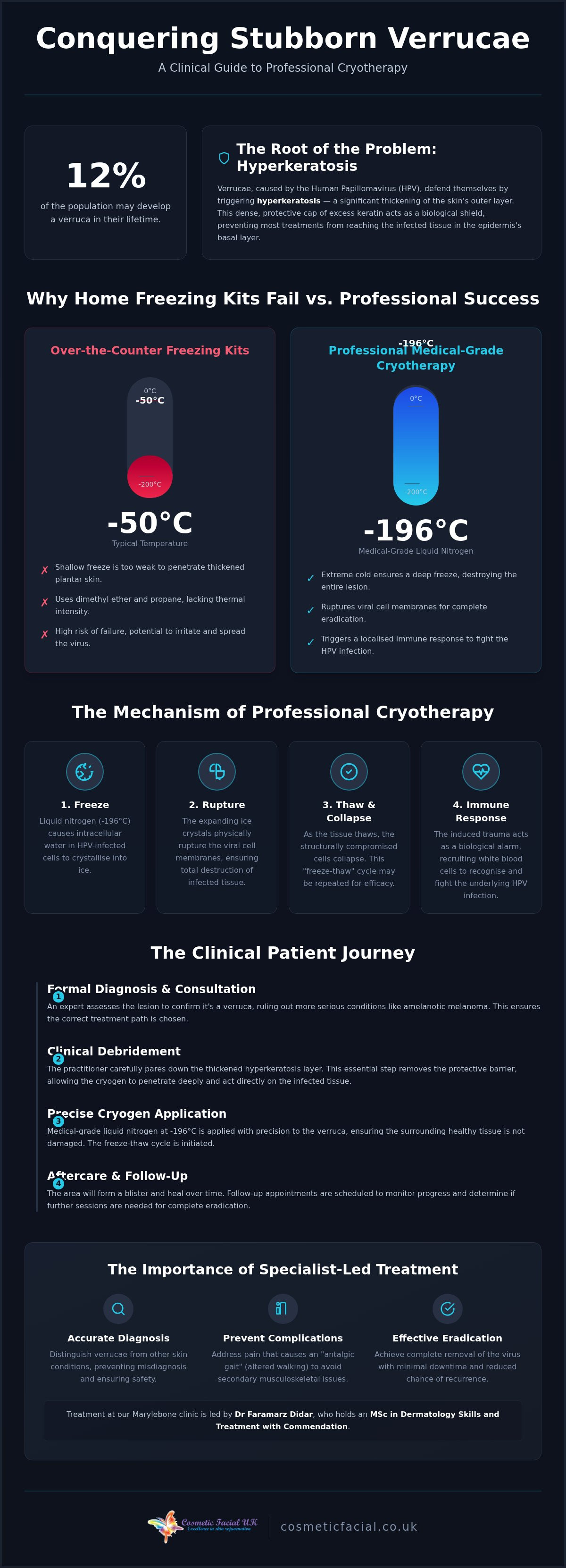
While as many as 12% of the population may develop a verruca at some point, the persistence of these lesions often leads to significant physical discomfort and emotional self-consciousness. If you've found that over-the-counter freezing kits have failed to produce results, you aren't alone. These retail products often lack the thermal intensity required to penetrate thickened skin. Seeking professional cryotherapy for verruca removal London ensures that you receive a medical-grade application of liquid nitrogen; this is administered at temperatures reaching -196°C to trigger a systemic immune response.
It's understandable to feel frustrated when a stubborn lesion impacts your ability to walk or exercise without pain. This clinical guide details the efficacy of specialist-led treatments at our Marylebone clinic, led by Dr Faramarz Didar, who holds an MSc in Dermatology Skills and Treatment with Commendation. You'll discover the biological mechanism behind cryosurgery, the necessity of a formal diagnosis to rule out more complex skin conditions, and the protocol for achieving complete eradication with minimal downtime. By moving beyond domestic treatments, you can finally address the root of the viral infection under expert clinical supervision.
Key Takeaways
- Understand why the thickened hyperkeratosis layer of verruca plantaris often resists over-the-counter treatments and necessitates professional clinical intervention.
- Learn how medical-grade liquid nitrogen utilised at -196°C employs the freeze-thaw cycle to rupture viral cell membranes and trigger an immune response.
- Discover why professional cryotherapy for verruca removal london remains the clinical gold standard for stubborn lesions when compared to salicylic acid or laser therapy.
- Explore the procedural steps of the patient journey, including the importance of clinical debridement and precise cryogen application.
- Gain insight into the advantages of seeking treatment at a Marylebone clinic led by a practitioner with an MSc in Dermatology Skills and Treatment.
Understanding Verrucae: Why Stubborn Lesions Require Clinical Intervention
Verruca Plantaris is a stubborn viral infection that colonises the basal layer of the epidermis. These lesions are caused by the Human Papillomavirus (HPV) and are highly contagious amongst families, particularly through contact in communal environments like bathrooms or changing rooms. Unlike other skin conditions, Plantar warts (verrucae) are difficult to treat because the virus effectively evades the body's immune system by remaining within the skin's upper layers.
The primary obstacle to successful treatment is a biological defence mechanism known as hyperkeratosis. This is a significant thickening of the stratum corneum, which is the skin's outermost layer. The body produces this excess keratin in response to the viral infection, creating a dense, protective cap over the lesion. Most over-the-counter topical acids or freezing pens cannot penetrate this barrier. This creates a barrier. If the treatment fails to reach the infected tissue at the base of the epidermis, the virus remains active.
A verruca transitions from a cosmetic nuisance to a medical priority when it causes an antalgic gait, which is a change in walking pattern to avoid discomfort. This compensatory behaviour can lead to secondary musculoskeletal issues in the ankles, knees, or hips. When a lesion begins to interfere with daily mobility or starts to spread into "mosaic" clusters, professional intervention is necessary to prevent long-term complications.
The Plantar Wart vs. The Common Wart
While common warts typically grow outward as raised nodules, verrucae are subject to the constant pressure of weight-bearing. This downward force flattens the lesion and pushes it deep into the dermis. A tell-tale diagnostic feature is the presence of small black pinpricks within the lesion. These aren't "seeds", but rather thrombosed capillaries drawn toward the surface by the virus. A professional consultation is essential to distinguish these from more serious conditions like amelanotic melanoma.
Why Home Freezing Kits Often Fail
The thermodynamic limitations of retail products are the main reason patients eventually seek cryotherapy for verruca removal london. High-street kits typically utilise dimethyl ether and propane to reach temperatures around -50°C. Whilst this may suffice for superficial common warts, it's rarely cold enough to overcome the thermal mass of a thickened plantar lesion. The freeze is too shallow.
In contrast, medical-grade liquid nitrogen reaches -196°C. This extreme temperature is necessary to ensure a complete kill of the infected cells. If the freeze is too shallow, it can cause peripheral irritation that encourages the virus to spread. Professional cryotherapy for verruca removal london provides the precision required to destroy the lesion without damaging the surrounding healthy tissue.
The Mechanism of Cryotherapy: How Liquid Nitrogen Eradicates Verrucae
Professional cryotherapy for verruca removal london utilises medical-grade liquid nitrogen in a strictly controlled environment to achieve rapid tissue destruction. Unlike high-street alternatives, clinical liquid nitrogen is stored in vacuum-insulated flasks and applied via specialised canisters. This ensures the substance remains at its boiling point of -196°C until the moment of contact. This medical-grade approach is distinct from the aerosol-based canisters found in pharmacies, which cannot maintain the necessary thermal stability. The primary mechanism of action is the "freeze-thaw" cycle. As the liquid nitrogen is applied, it causes the intracellular water within the HPV-infected cells to crystallise into ice. These crystals expand and physically rupture the viral cell membranes. This ensures total destruction.
When the tissue thaws, the damaged cells collapse. This cycle is often repeated during a single session to maximise the depth of the "kill zone". Beyond direct destruction, the process triggers a localised inflammatory response. Because the HPV virus is adept at hiding from the body's natural defences, this induced trauma acts as a biological "alarm". It recruits white blood cells to the area, which helps the body recognise and fight the underlying infection more effectively. Whilst NHS treatment for verrucas is often the first point of enquiry, many local trusts have restricted access to these services, making private clinical care a necessary route for many patients.
The Clinical Advantage of Liquid Nitrogen Spray
The open spray technique is generally preferred over contact probes for plantar lesions. A cryospray canister allows the practitioner to create a precise "ice ball" that extends 2-3mm beyond the visible margin of the verruca. This lateral spread is essential for ensuring that the root of the infection, which often sits deeper than the surface callus, is fully treated. Cryoablation is widely regarded as the gold standard for the non-surgical removal of benign skin lesions.
Specialist-Led Precision in Marylebone
When performing cryotherapy for verruca removal london, Dr Didar utilises dermoscopy to perform a high-magnification assessment of the lesion's vascular patterns before treatment begins. This allows for a more accurate determination of the lesion's depth and boundaries. By customising the freeze duration based on the specific thickness of the skin and the size of the verruca, we can maximise efficacy whilst protecting the surrounding healthy dermis. For more information on our Dermatology Services at Cosmetic Facial, you can review our comprehensive range of skin health assessments. If you're struggling with a persistent lesion, it may be time to consult a clinical expert at our Marylebone centre.
Professional Cryotherapy vs. Alternative Clinical Treatments
Selecting the appropriate intervention for a plantar lesion requires an understanding of how different modalities interact with the skin's physiology. While various options exist, professional cryotherapy for verruca removal london is frequently selected for its ability to provide rapid results compared to long-term topical applications. According to the clinical guidelines for wart treatment, the choice often depends on the patient's age, the lesion's location, and previous treatment history.
Salicylic acid remains a common alternative, but it functions as a keratolytic agent that gradually dissolves the infected skin. This process requires daily application and meticulous filing over several months. In contrast, cryotherapy is a periodic clinical procedure that achieves cell destruction in seconds. For adults, whose spontaneous resolution rates are lower than those seen in children, the more aggressive approach of liquid nitrogen is often more cost-effective. It reduces the total number of clinical visits required to achieve clearance. It's a more efficient path to recovery.
Cryotherapy vs. Laser Therapy
The primary difference between these two advanced modalities lies in their thermal mechanism. Cryotherapy employs extreme cold to rupture cells, whereas Laser Treatments at Cosmetic Facial use light energy to create thermal coagulation. Lasers target the blood supply of the verruca to starve the lesion. Whilst laser therapy can be highly effective for deep, resistant warts, cryotherapy typically involves less immediate post-procedural discomfort for most patients. Healing after cryosurgery involves the formation of a small blister, which eventually dries into a scab and falls away within two weeks.
When to Consider Chemical Peels
Professional-strength Skin Peels and Resurfacing agents are sometimes used as an adjunct to cryotherapy. For multi-year verrucae that have developed an exceptionally thick hyperkeratotic cap, a salicylic or lactic acid peel can soften the tissue. This allows the liquid nitrogen to penetrate more deeply during a subsequent session. We often recommend this combined approach for mosaic verrucae, where multiple small lesions are clustered together over a large surface area. This ensures the virus is attacked both chemically and physically. This is why cryotherapy for verruca removal london remains the preferred choice for those with persistent lesions.
The Patient Journey: What to Expect During and After Treatment
The clinical process of cryotherapy for verruca removal london begins with a thorough assessment to confirm the diagnosis and evaluate the lesion's vascularity. This is followed by debridement, which involves the mechanical paring down of the overlying hyperkeratotic tissue, commonly known as a callus, using a sterile blade. This step is vital because it removes the dead skin barrier that would otherwise insulate the virus from the liquid nitrogen. By exposing the active viral tissue, we ensure the cryogen can reach the necessary depth to induce cell death. Without this preparation, the treatment remains superficial and is significantly less likely to succeed.
Once prepared, the liquid nitrogen is applied. Patients typically experience a sharp, stinging sensation or a feeling of intense cold that transitions into a dull ache as the tissue begins to freeze. This discomfort is temporary and usually subsides within a few minutes of the procedure finishing. Immediately following the application, the area will appear white, which then turns red as the tissue thaws. Over the next 10-14 days, the treated tissue will darken and form a dry scab. This is the natural healing cycle where the body sheds the destroyed viral cells and replaces them with healthy epithelium.
Preparation and Consultation
During your Private Dermatologist Consultation London, we review your medical history to ensure patient safety. Cryotherapy isn't always suitable for individuals with significant peripheral vascular disease or Raynaud's phenomenon, as these conditions affect the skin's ability to heal after thermal trauma. Most verrucae require 2-4 sessions for complete resolution. These appointments are typically spaced three to four weeks apart to allow the skin to regenerate between treatments.
Aftercare and Activity
Effective aftercare is essential for preventing secondary infection and ensuring the best clinical outcome. If a blister forms, our clinical advice is that you don't pop it; the intact skin acts as a natural sterile dressing for the underlying wound. If it becomes painful or ruptures spontaneously, it should be kept clean and covered with a dry dressing. London gym-goers and swimmers should wait until any blistering has resolved and the skin is intact before returning to communal facilities. This hygiene protocol protects both the patient's healing tissue and the wider public from viral shedding.
Why Choose Cosmetic Facial for Cryotherapy in London?
Cosmetic Facial provides a clinical environment dedicated to dermatological excellence. Choosing cryotherapy for verruca removal london at our Marylebone clinic ensures that your treatment is overseen by a practitioner with significant academic credentials. Dr Faramarz Didar (GMC registration 5200505) holds an MSc in Dermatology Skills and Treatment with Commendation from the University of Hertfordshire. This level of academic distinction is rare amongst aesthetic doctors in London and reflects a commitment to evidence-based clinical practice. Our clinic operates to rigorous standards to ensure patient safety and professional care within a composed, medical setting.
The clinic's location in Marylebone offers a discreet and professional environment for patients seeking specialist care. It's easily accessible for those residing or working in the West End and Central London. Unlike retail environments or non-specialist salons, we provide a thorough clinical assessment prior to any intervention. This ensures that every lesion is correctly diagnosed before treatment begins. We prioritise clinical integrity over showmanship, providing our patients with the reassurance that they are in capable, experienced hands.
Specialist Expertise: Dr Faramarz Didar
Dr Didar's expertise is further supported by a Postgraduate Diploma in Non-Surgical Facial Aesthetics from the University of Central Lancashire (UCLan). His diagnostic precision is informed by his attendance at the World Congress of Dermoscopy in Vienna; this training is essential for accurately identifying complex lesion patterns that may mimic common verrucae. Additionally, his advanced surgical dermatology training in Modena, Italy, provides the technical foundation required for precise cryosurgery. This international training ensures that every application of liquid nitrogen is performed with a deep understanding of tissue depth and viral pathology. It's this level of specialist training that allows for the successful treatment of stubborn, multi-year lesions.
A Comprehensive Approach to Skin Health
Our clinic offers more than isolated procedures. Patients benefit from a holistic view of skin health, where a verruca assessment can be integrated into broader dermatological concerns. This may include mole checks, skin cancer screenings, or facial rejuvenation. Seeing a GP-qualified specialist for your verruca means that your general health and circulatory status are always considered part of the treatment plan. We believe that professional skin care should be thorough and unhurried. If you're seeking a clinical solution for a persistent lesion, you may Book Your Cryotherapy Consultation in Marylebone through our dedicated dermatology service page.
Resolving Persistent Plantar Lesions with Clinical Expertise
Professional intervention remains the most reliable pathway for eradicating stubborn plantar warts that have resisted retail freezing methods. By utilising medical-grade liquid nitrogen, cryotherapy for verruca removal london achieves a depth of tissue destruction that triggers a genuine systemic immune response. This clinical approach is led by Dr Faramarz Didar, who holds an MSc in Dermatology with Commendation. It prioritises diagnostic precision and patient safety. Our Marylebone clinic provides a structured environment where the paring down of hyperkeratotic tissue and the controlled application of cryogens ensure the root of the infection is addressed. Most patients find that moving beyond high-street kits is the essential step toward lasting relief.
While persistent lesions can cause significant discomfort and impact daily mobility, a series of specialist-led treatments can achieve complete resolution. You'll receive care in a setting that values intellectual honesty and clinical integrity. We invite you to take the first step toward clear skin in our professional Marylebone centre.
We look forward to assisting you in restoring your skin health and comfort through our advanced dermatological services.
Frequently Asked Questions
Is cryotherapy painful for verruca removal?
Patients typically experience a sharp stinging or biting sensation during the application of liquid nitrogen. This discomfort is temporary and generally subsides within minutes of the procedure concluding. Whilst the treatment is intense due to the -196°C temperature required for cell destruction, most adults tolerate the sensation well without anaesthesia. If you have a low pain threshold, we can discuss management strategies during your initial clinical assessment at our Marylebone centre.
How many sessions of cryotherapy will I need for a verruca?
Most patients require between two and four sessions of cryotherapy for verruca removal london to achieve complete resolution of the lesion. These appointments are usually scheduled at three to four week intervals. This timeframe allows the skin's inflammatory response to subside and new healthy tissue to form. Stubborn or larger mosaic verrucae may necessitate additional sessions or a combination of treatments to ensure the underlying HPV infection is fully eradicated.
Can I walk normally after verruca freezing?
Most individuals can resume normal walking immediately after the treatment, although the area may feel tender for 24 to 48 hours. If a blister forms on a weight-bearing part of the foot, you might experience slight discomfort during high-impact activities. We recommend wearing comfortable, cushioned footwear to minimise pressure on the site. You should avoid strenuous sports or swimming until any blistering has resolved and the skin is intact. Once you return to your regular exercise regime, it is important to ensure your biomechanics are supported; for instance, cyclists may wish to learn more about Professional Bike Fitting Services to prevent any secondary strain.
Clinical success rates for cryotherapy for verruca removal london range from 14% to 77.8% depending on the specific treatment protocol used. A meta-analysis has reported an average cure rate of approximately 45.61% for standard applications. Success is significantly improved when the procedure is performed by a specialist who can ensure adequate freeze depth. At our clinic, we use dermoscopy to monitor progress and adjust the freeze duration to maximise the probability of clearance.
Will cryotherapy leave a scar on my foot?
The risk of permanent scarring on the sole of the foot is minimal because the skin in this region is significantly thicker than on other body parts. While a temporary blister or pigment change may occur during the 10-14 day healing cycle, these effects typically resolve without long-term marks. Following the prescribed clinical aftercare, such as not picking the scab or popping blisters, is essential to ensure the skin heals smoothly and correctly.
Can cryotherapy be used for children with verrucae?
Cryotherapy is a safe and common treatment for children, though the stinging sensation may be challenging for younger patients with lower pain thresholds. The NHS estimates that two-thirds of childhood verrucae resolve spontaneously within two years, but clinical intervention is often sought if the lesion causes pain or spreads. We provide teenager skin services and can adapt the treatment intensity to ensure the procedure is as comfortable as possible for younger individuals.
What happens if the verruca comes back after cryotherapy?
If a verruca recurs, we perform a secondary clinical assessment to determine if a more aggressive freeze or a combination therapy is required. Recurrence happens because the HPV virus can sometimes remain dormant in the surrounding tissues. In such cases, we might integrate professional-strength skin peels to soften the hyperkeratosis before repeating the cryotherapy. This multi-modal approach helps to alert the immune system and target the viral cells from multiple biological angles.
Do I need a GP referral for verruca removal at your London clinic?
You don't need a GP referral to access our private dermatology services in Marylebone. As a private clinic led by Dr Faramarz Didar, who is a GP-qualified specialist with an MSc in Dermatology, we can perform the initial diagnosis and treatment during the same patient journey. This provides a convenient alternative for patients who find that NHS funding for benign skin lesions is no longer routinely available in their local area.
Disclaimer
All content on cosmetic Facial website, including blogs, graphics, logos, images, and software, is the property of CosmeticFacial UK or its content suppliers and is protected by applicable copyright laws. Unauthorized use, reproduction, distribution, or modification of any content without prior written permission is strictly prohibited.


