


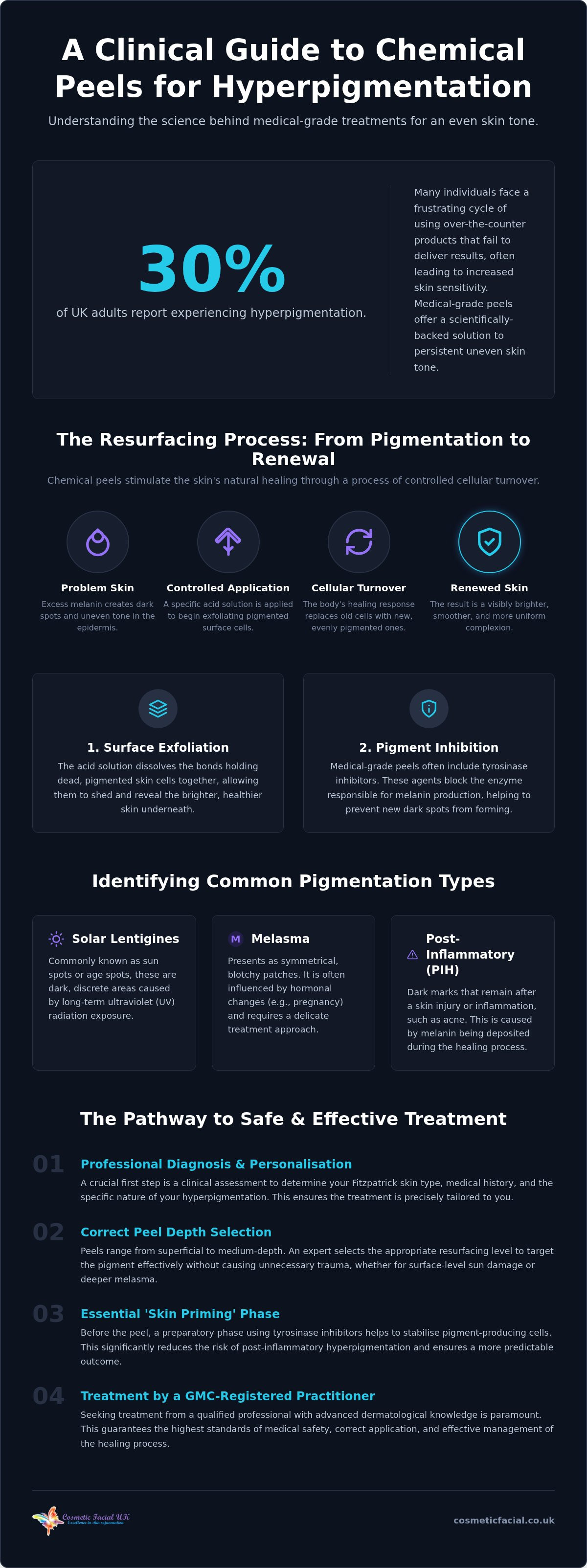
Approximately 30% of adults in the UK report experiencing some form of hyperpigmentation, a statistic that reflects the widespread frustration with persistent uneven skin tone. Many individuals spend years experimenting with over-the-counter brightening serums that fail to deliver visible results, often leading to a cycle of disappointment and heightened skin sensitivity. If you are seeking a chemical peel for hyperpigmentation london offers a wealth of options, yet the complexity of acid concentrations and the risk of post-inflammatory hyperpigmentation require a cautious, medical approach.
We understand the anxiety that comes with choosing a resurfacing treatment, particularly the fear of scarring or permanent texture changes from incorrect application. This 2026 guide provides a comprehensive overview of how medical-grade acids interact with melanin and explains the new licensing regulations governing practitioners in England. You will learn how a personalised treatment roadmap, delivered under the supervision of a GMC-registered professional like Dr Faramarz Didar, can safely address melasma and sun damage. We will move through the biological mechanisms of chemical peels, the importance of clinical oversight, and the specific protocols used to ensure predictable, professional outcomes.
Key Takeaways
- Understand the biological mechanism of controlled injury and how it stimulates cellular turnover to address systemic melanin overproduction.
- Identify the clinical protocols necessary when selecting a chemical peel for hyperpigmentation london, ensuring the treatment is matched to your specific Fitzpatrick skin type and history.
- Learn the clinical differences between superficial and medium-depth peels and how to select the appropriate resurfacing level for melasma or sun damage.
- Recognise the importance of the "skin priming" phase and the use of tyrosinase inhibitors to stabilise pigment-producing cells before clinical intervention.
- Establish the value of seeking treatment from a GMC-registered practitioner with advanced dermatological qualifications to ensure the highest standards of medical safety and efficacy.
Understanding Hyperpigmentation and the Role of Chemical Peels
Hyperpigmentation occurs when melanocytes, the cells responsible for skin pigment, produce an excess of melanin in specific areas. This biological response results in uneven patches or dark spots that can affect one's confidence. A professional chemical peel for hyperpigmentation london addresses these concerns through a process of controlled injury. By applying specific acidic solutions, the practitioner induces a managed exfoliation of the epidermis, which triggers the body's natural healing response. This stimulation accelerates cell turnover, allowing new, evenly pigmented skin cells to reach the surface more rapidly.
To better understand the biological process of resurfacing and how it affects skin tone, watch this helpful video:
Living in an urban environment presents unique challenges for skin health. London residents frequently encounter environmental stressors such as nitrogen dioxide from traffic pollution and particulate matter, which can exacerbate oxidative stress and trigger pigmentary disorders. These factors, combined with cumulative UV exposure and hormonal fluctuations, necessitate more intensive interventions than standard high-street facials. Medical-grade peels utilise higher concentrations of active ingredients and lower pH levels to reach deeper dermal layers, providing a level of correction that superficial cosmetic treatments cannot achieve.
Common Types of Pigmentation Treated in London
Identifying the specific nature of the pigment is essential for a successful outcome. The most frequent conditions managed in a clinical setting include:
- Solar Lentigines: These are discrete, darkened areas caused by chronic ultraviolet radiation exposure, commonly referred to as sun spots or age spots.
- Melasma: This condition presents as symmetrical, blotchy patches, often influenced by hormonal changes during pregnancy or through contraceptive use. It requires a delicate approach to avoid triggering further inflammation.
- Post-Inflammatory Hyperpigmentation (PIH): This type follows a skin injury or inflammatory condition, such as acne. Understanding Hyperpigmentation of this nature is vital, as the dark marks represent melanin deposited in the skin during the inflammatory healing process.
How Chemical Exfoliation Targets Melanin
The efficacy of a chemical peel lies in its dual-action approach. The acid solution breaks the desmosomes, the bonds between skin cells, allowing the shedding of pigmented cells from the stratum corneum. This physical removal reveals the brighter, more uniform layers beneath. Many medical-grade formulations also incorporate tyrosinase inhibitors. Tyrosinase is the enzyme responsible for the first step in melanin production; by inhibiting its activity, the peel helps prevent the formation of new pigment during the regenerative phase. A thorough clinical skin analysis is always the first step, as this ensures the acid profile and concentration are precisely calibrated to the patient's skin type and the depth of the pigment.
The Science of Skin Resurfacing: How Acids Target Pigment
The efficacy of a chemical peel for hyperpigmentation london depends on the precise chemical interaction between the acid and the epidermal layers. Whilst many patients focus on the specific name of the acid, the concentration and pH level are the actual determinants of clinical success. A lower pH increases the "free acid" content, making the solution more potent; even at lower concentrations, a low pH can lead to deeper penetration. Understanding these variables is essential for achieving a predictable result without causing unnecessary trauma to the melanocytes. For those new to these procedures, the Mayo Clinic provides a comprehensive overview of chemical peels that details the general classifications of light, medium, and deep resurfacing.
Alpha Hydroxy Acids (AHAs), such as glycolic and lactic acid, are the primary tools for addressing epidermal discolouration. Glycolic acid, derived from sugar cane, possesses the smallest molecular size amongst AHAs, allowing it to penetrate deeply and stimulate collagen production whilst exfoliating surface pigment. Lactic acid offers a gentler alternative for the sensitive skin often found in London's urban environment. Its larger molecular structure ensures slower penetration and inherent hydrating properties. Conversely, Beta Hydroxy Acids (BHAs), specifically salicylic acid, are lipophilic. This means they're oil-soluble and can penetrate the sebum in pores, making them the preferred choice for treating post-inflammatory hyperpigmentation associated with acne.
For more stubborn, dermal-level pigment, Trichloroacetic Acid (TCA) remains the gold standard. TCA works by coagulating skin proteins, leading to a more significant regenerative response. It's highly effective for solar lentigines and deeper texture issues that don't respond to milder AHAs. Because TCA can reach the papillary dermis, it must be administered with clinical precision to avoid the risk of scarring or further pigmentary changes.
AHA vs BHA: Which is Better for Your Skin Tone?
The choice between these acids depends on your underlying skin physiology. Glycolic acid is excellent for robust skin requiring deep penetration and significant brightening. Lactic acid is better suited for those with a compromised skin barrier or naturally dry skin. Salicylic acid is indispensable for patients with oily or acne-prone skin, as it clears the follicular debris that often leads to dark marks. A professional skin peel assessment can determine which acid profile will yield the most effective results for your specific concerns.
Advanced Depigmenting Agents in Peels
Modern clinical peels often utilise a combination of acids to target pigment through multiple biological pathways. Kojic acid and Azelaic acid are frequently included for their natural brightening capabilities and their ability to even out skin tone without the aggression of higher-percentage acids. Tyrosinase inhibitors are the key to preventing pigment relapse. By combining these agents, we achieve a synergistic effect that treats existing spots whilst preventing future discolouration. If you're considering a structured approach to skin health, you might find it beneficial to consult with a clinical expert at our Marylebone clinic.
Choosing the Right Depth: Peels for Melasma, Sun Damage, and PIH
Selecting the correct depth for a chemical peel for hyperpigmentation london is a clinical decision that balances the need for efficacy with the necessity of skin safety. Superficial peels, often termed "lunchtime" treatments, utilise mild Alpha Hydroxy Acids (AHAs) or Beta Hydroxy Acids (BHAs) to exfoliate the outermost layer of the epidermis. These are suitable for addressing minor dullness and very light sun spots with minimal downtime. Medium-depth peels reach the papillary dermis, typically employing Trichloroacetic acid (TCA) or higher concentrations of Glycolic acid. These provide significant correction for texture and more ingrained pigment. Deep peels are reserved for severe cases of photo-ageing; these require extensive clinical oversight due to the depth of tissue coagulation and the associated recovery time.
A significant risk in chemical resurfacing is rebound hyperpigmentation, particularly in patients with darker skin tones, often classified as Fitzpatrick types IV through VI. If an inappropriately deep peel is selected, the resulting inflammation can stimulate melanocytes to produce even more pigment, worsening the original condition. This underscores the importance of a doctor-led consultation to assess the skin's threshold before beginning a treatment programme. Correct depth selection ensures that the pigment is targeted without triggering the inflammatory cascade that leads to secondary darkening.
Why Melasma Requires a Specialised Approach
Melasma is a complex, chronic condition that responds poorly to heat. Whilst some laser treatments can inadvertently trigger a flare-up by heating the dermal layers and stimulating melanocytes, chemical peels offer a non-thermal alternative. We utilise a "slow and low" protocol, where gentler acids are used over multiple sessions to gradually suppress pigment production without causing the intense inflammation that leads to relapse. You can learn more about our specialised skin peels and how they are calibrated for hormonal pigmentation.
Treating Sun Damage and Age Spots
Solar lentigines, or age spots, are often more resilient than epidermal melasma and require targeted TCA or Glycolic concentrations to break down the localised melanin clusters. Patients typically require a course of 3 to 6 sessions to achieve clear, even skin, depending on the depth of the sun damage. Maintenance is equally vital; integrating these treatments into a broader strategy of facial rejuvenation ensures that the results are sustained against the ongoing effects of UV exposure and urban pollutants. This comprehensive approach helps to maintain a uniform complexion whilst improving overall skin health.
Preparing for Your Treatment: The London Skin Protocol
Achieving an optimal result from a chemical peel for hyperpigmentation london starts weeks before you enter the clinic. We implement a mandatory "Skin Priming" phase, typically lasting 14 to 28 days. During this period, patients use topical tyrosinase inhibitors to stabilise melanocyte activity. This preparation reduces the risk of post-inflammatory hyperpigmentation (PIH) by ensuring that pigment-producing cells aren't in a hyper-reactive state when the acid is applied. It's a critical step for all skin types, but particularly for those with darker complexions or a history of melasma.
Living in the capital introduces specific environmental variables that can compromise your treatment outcome. London's hard water contains high concentrations of calcium and magnesium, which can leave a mineral film on the skin, potentially unevenly buffering the peel's acidity. Similarly, the constant transition between cold outdoor air and dry central heating causes transepidermal water loss, weakening the skin barrier. Sun protection remains non-negotiable; even on overcast days, UV levels in the city can be high enough to trigger melanin synthesis during the vulnerable post-peel period.
Book a comprehensive skin analysis in Marylebone
The Impact of Urban Pollution on Pigmentation
Research indicates that particulate matter, specifically PM2.5 from traffic emissions, can penetrate the skin and generate oxidative stress. This process activates signalling pathways that lead to the formation of dark spots and uneven tone. We recommend a double-cleansing protocol to ensure all urban pollutants are removed before treatment begins. Antioxidant support is vital whilst the skin barrier is compromised to neutralise free radicals and support the healing process.
Clinical Aftercare Essentials
Post-treatment care focuses on two main pillars: hydration and occlusion. Initially, lightweight hyaluronic acid serums provide deep hydration without clogging pores. As the peeling begins, usually on day three, thicker occlusive balms help to trap moisture and protect the new skin. You should monitor for healthy peeling, which appears as dry, flaky skin, rather than adverse reactions like blistering or intense heat. For a detailed breakdown of what's normal during recovery, visit our FAQ page.
Your day-by-day recovery following a chemical peel for hyperpigmentation london follows a predictable pattern. Days one and two usually involve mild redness and a "tight" sensation. By day three, the exfoliation process typically begins around the mouth and nose, spreading outwards. By day seven, the peeling is mostly complete, revealing a brighter and more uniform complexion. It's essential not to pick or pull at the peeling skin, as this can lead to permanent scarring or secondary pigmentation issues.
Expert Chemical Peels at Cosmetic Facial Marylebone
Choosing a clinic for a chemical peel for hyperpigmentation london requires careful consideration of the practitioner's medical credentials and the clinic's clinical environment. At Cosmetic Facial, our Marylebone-based practice prioritises patient safety through a doctor-led model. Every treatment plan is personally overseen by Dr Faramarz Didar, who holds an MSc in Dermatology Skills and Treatment with Commendation from the University of Hertfordshire. This advanced academic background ensures that the selection of acid concentrations and pH levels is based on a deep understanding of cutaneous biology rather than standardised corporate protocols. We reject the "one-size-fits-all" approach, preferring to formulate bespoke solutions that respect the unique threshold of each patient's skin barrier.
Located in the centre of Marylebone, the clinic offers a discreet and professional environment for Central London patients. The focus is on achieving measurable clinical outcomes whilst maintaining the highest standards of dermatological care. By operating within a medical framework, we can offer higher-grade resurfacing treatments that are restricted to healthcare professionals, providing a level of efficacy that high-street providers cannot legally match. This clinical oversight is particularly vital when administering the medium-depth peels necessary for stubborn dermal pigment.
The Consultation Process with Dr Didar
The journey toward clearer skin begins with a comprehensive dermatological assessment. Dr Didar performs an advanced skin analysis to determine the precise depth of the pigment, whether it's epidermal, dermal, or mixed. This diagnostic phase is essential for selecting the correct acid profile and avoiding the risks of rebound pigmentation discussed in previous sections. During this session, we review your full medical history and any previous aesthetic interventions, such as Botox or laser therapies. Our commitment is to provide natural-looking, refreshed results that align with your long-term skin health goals, ensuring that any downtime is managed and predictable.
Combining Peels with Other Aesthetic Treatments
Chemical resurfacing is often most effective when integrated into a broader strategy of facial rejuvenation. Whilst peels address surface irregularities and pigment, they can be strategically paired with Dermal Fillers to restore volume and refine facial contours. Additionally, we often recommend mesotherapy or specialised skin nutrition treatments to support the skin's regenerative capacity from within. This multi-layered approach ensures that the skin is not only brighter but also structurally supported and well-nourished. We aim to provide a comprehensive treatment roadmap that addresses both the visible signs of sun damage and the underlying health of the cutaneous tissue.
Advancing Your Skin Health Strategy in London
Achieving a significant reduction in stubborn discolouration through a chemical peel for hyperpigmentation london requires a synthesis of advanced acid profiles and precise clinical application. We've explored how medical-grade resurfacing targets melanin at its source, provided it's administered within a controlled, doctor-led environment. Dr Faramarz Didar, who holds an MSc in Dermatology with Commendation and is GMC registered (5200505), ensures every protocol is calibrated to the specific biological needs of your skin. This clinical rigour is essential for navigating the complexities of melasma and urban-induced sun damage whilst maintaining the integrity of the cutaneous barrier.
By following a structured London skin protocol that includes tyrosinase inhibition and professional aftercare, you can achieve predictable, natural-looking results. Expert care makes the difference. Our Marylebone clinic specialises in these bespoke, medical-grade aesthetic interventions, providing a discreet setting for your transformation. Establishing a clear treatment roadmap under expert guidance is the most effective way to restore a uniform, radiant complexion.
We look forward to supporting your journey toward healthier, more resilient skin and helping you maintain long-term radiance in the city.
Frequently Asked Questions
Is a chemical peel for hyperpigmentation painful?
Patients typically experience a sensation of warmth or tingling rather than acute pain. During a chemical peel for hyperpigmentation london, the acidic solution interacts with the epidermis to stimulate resurfacing. Whilst superficial peels are generally well tolerated with minimal discomfort, medium-depth treatments may induce a more intense heat sensation for several minutes. We manage this through precise application techniques and post-procedure cooling protocols to ensure the experience remains comfortable and clinically controlled.
How long does the peeling process last after a medium-depth peel?
The visible exfoliation phase following a medium-depth peel generally lasts between five and seven days. Most patients notice the skin beginning to shed around the third day, typically starting in areas of high facial movement such as the mouth and nose. It's essential to allow this process to occur naturally without manual interference. By the end of the first week, the shedding phase concludes, revealing a more uniform and rejuvenated skin layer beneath.
Can I have a chemical peel if I have a darker skin tone (Fitzpatrick IV-VI)?
Individuals with Fitzpatrick skin types IV to VI can safely undergo chemical resurfacing provided the protocol is medically supervised. Darker skin tones require a meticulous priming phase using tyrosinase inhibitors for at least two to four weeks before the procedure. This preparation stabilises the melanocytes and significantly reduces the risk of post-inflammatory hyperpigmentation. Dr Didar specialises in adjusting acid concentrations to ensure efficacy whilst prioritising the safety of melanin-rich skin.
How many sessions will I need to see a significant reduction in pigmentation?
Most patients require a series of three to six sessions to achieve a significant reduction in visible pigmentation. Whilst a single treatment can improve skin radiance and texture, cumulative sessions are necessary to address deeper dermal pigment or chronic melasma. These appointments are typically spaced four to six weeks apart to allow for full epidermal regeneration. The exact number of treatments depends on the depth of the pigment and the patient's individual healing response.
What is the difference between a chemical peel and laser for pigmentation?
Chemical peels utilise acidic solutions to facilitate exfoliation, whereas laser treatments employ concentrated light energy to target melanin or water in the skin. Peels are often the preferred choice for melasma because they don't generate the intense heat that can sometimes trigger a pigmentary relapse. Conversely, lasers may be more suitable for isolated, discrete sun spots. A clinical assessment is required to determine which modality best suits your specific pigment profile and skin health goals.
Will my hyperpigmentation return after the treatment?
Hyperpigmentation can return if the underlying triggers, such as ultraviolet radiation or hormonal fluctuations, are not effectively managed. Treatment successfully removes existing pigment, but it doesn't alter the skin's biological tendency to produce melanin in response to injury or sun exposure. Consistent use of high-factor SPF and maintenance treatments are essential to sustain results. We provide comprehensive long-term care plans to help patients protect their investment in their skin health and appearance.
Can I wear makeup immediately after a superficial peel in London?
You can usually apply mineral makeup immediately after a superficial peel, though we recommend waiting 24 hours if possible. For Londoners returning to work or social engagements, mineral-based products are preferred because they don't clog pores or contain the synthetic fragrances that might irritate newly exfoliated skin. However, following a medium-depth peel, makeup should be avoided for several days until the initial healing phase is complete and the skin barrier has stabilised.
Is Dr Didar a registered medical doctor?
Dr Faramarz Didar is a fully registered medical doctor with the General Medical Council, holding GMC reference number 5200505. In addition to his primary medical qualifications, he has earned an MSc in Dermatology Skills and Treatment with Commendation. This combination of medical registration and advanced training ensures that every chemical peel for hyperpigmentation london performed at our Marylebone clinic is conducted under the highest standards of professional, clinical, and academic expertise.
Disclaimer
All content on cosmetic Facial website, including blogs, graphics, logos, images, and software, is the property of CosmeticFacial UK or its content suppliers and is protected by applicable copyright laws. Unauthorized use, reproduction, distribution, or modification of any content without prior written permission is strictly prohibited.


