


Chin filler can refine chin projection, length, shape and symmetry without surgery. For non-surgical chin augmentation in London, treatment commonly uses hyaluronic acid or calcium hydroxylapatite dermal filler, and an appointment takes between 20 and 30 minutes. The amount used depends on the changes being considered and the person’s facial proportions.
It’s understandable to want a clearer picture of the treatment before deciding whether it suits you. This guide explains how chin fillers work, who may be suitable and how treatment can be combined with other facial procedures. It also covers appointment time, treatment quantities and what to expect from the process.
You’ll find practical guidance on filler versus surgical augmentation, how a practitioner assesses the chin and lower face, and what can shape a treatment plan. The aim is to help you understand the options and consider the next step with realistic expectations.
Key Takeaways
- Understand how chin filler differs from surgical augmentation, including what recovery and aftercare may involve.
- Learn how hyaluronic acid and other biocompatible fillers can support changes to chin projection, shape and symmetry.
- See what to consider when planning chin treatment alongside other facial procedures.
- Find out why the amount of filler is tailored to facial proportions and treatment goals, and what to expect from appointment time.
- Explore the factors that help determine whether chin filler may suit your features and expectations.
What Is Chin Augmentation?
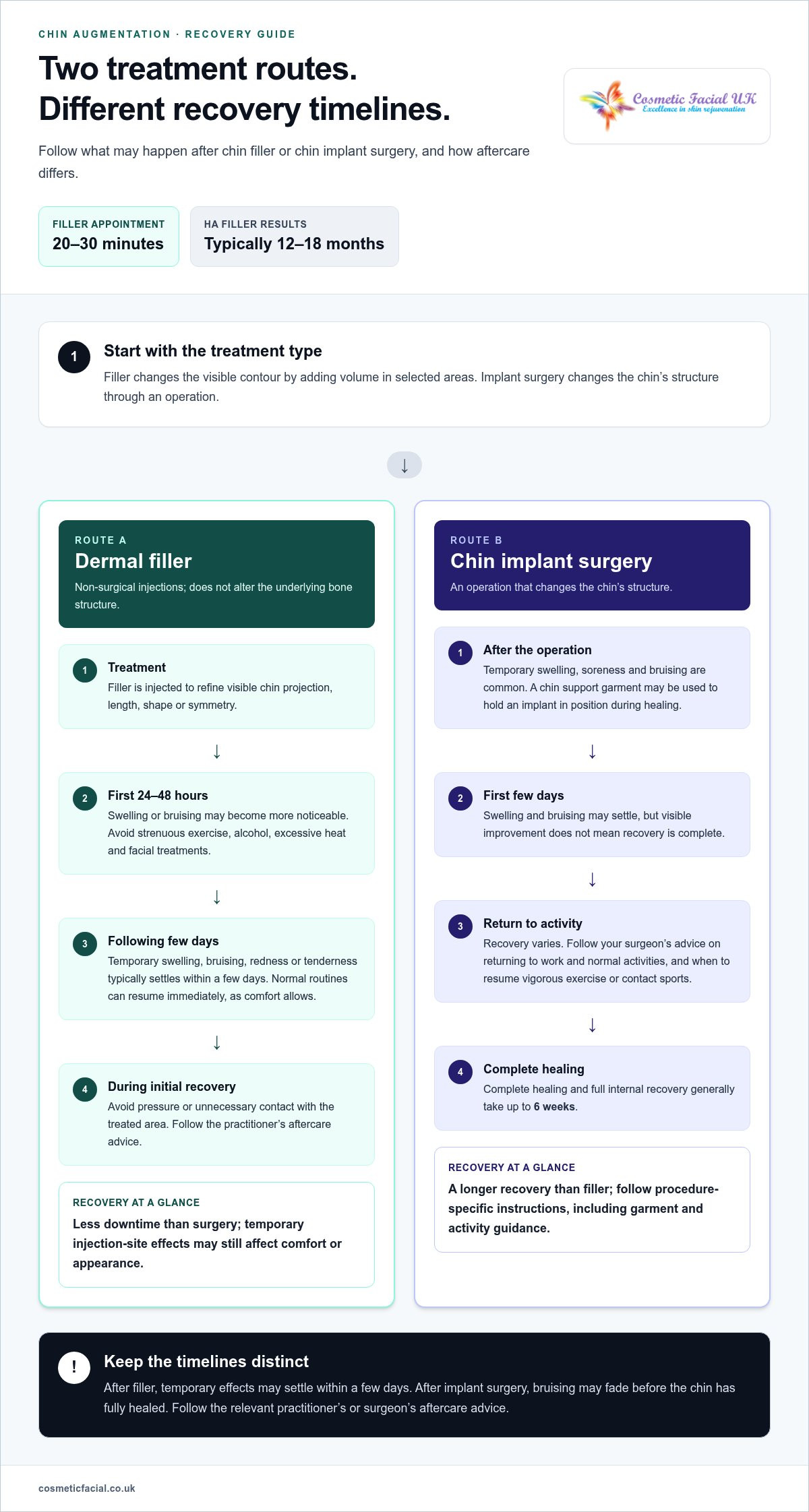
Chin augmentation changes the chin’s projection, length or shape to adjust its relationship with the surrounding facial structure. The term includes surgical procedures, such as implants, and non-surgical treatment using dermal filler. The methods differ: filler is injected to change the visible contour, while implant surgery changes the chin’s structure through an operation.
Chin fillers can cause temporary swelling, bruising, redness and tenderness around the injection site. These are recognised side effects; most people report mild discomfort during treatment. Swelling or bruising may become more noticeable during the first 24 to 48 hours, then typically resolves within a few days.
Filler treatment generally has less downtime than surgery. People can resume normal routines immediately after chin filler treatment, although temporary swelling or bruising may affect comfort or appearance. Most people return to normal activities within a few days. Avoid strenuous exercise, alcohol, excessive heat and facial treatments during the first 24 to 48 hours after treatment.
- First 24 to 48 hours: Expect possible swelling or bruising, and avoid strenuous activity and excessive heat.
- Following few days: Temporary injection-site effects typically settle, while normal activities can resume.
- Aftercare: Avoid pressure or unnecessary contact with the treated area during the initial recovery period.
Surgical chin augmentation involves a longer recovery. Temporary swelling, soreness and bruising are common, and a chin support garment may be used to hold an implant in position during healing. Recovery varies, so follow your surgeon’s advice about returning to work and normal activities and when to resume vigorous exercise or contact sports. Complete healing and full internal recovery generally take up to 6 weeks.
Swelling and bruising after chin implant surgery may settle within a few days, but that does not mean recovery is complete. Follow the procedure-specific aftercare instructions, including guidance on any support garment and activity. Visible bruising can fade before the chin has fully healed.
When considering non-surgical chin augmentation in London with Cosmetic Facial, distinguish everyday activity from strenuous exertion when planning recovery. You may be able to return to your usual routine after filler, but follow the practitioner’s advice about activities that increase heat or pressure around the treatment area. Filler and implant surgery have different aftercare needs and recovery timelines.
What Are Chin Fillers?
Chin fillers are injectable dermal products used to adjust projection, length, shape or symmetry without an operation. The product, your facial profile and the change you want all affect which approach may be suitable.
Filler Materials and Types
Hyaluronic acid (HA) is commonly used for chin correction. It is a substance naturally present in the body, formulated as a gel for injection. Firmer, higher-density HA gels can provide structural support when added projection is the aim. Calcium hydroxylapatite is another type of dermal filler used for chin augmentation.
“Biocompatible” describes how a material interacts with the body, but the term alone does not identify its formulation or suitability. Discuss the specific filler, its intended use and how it relates to your chin structure. A subtle profile adjustment may call for a different plan from a change to chin length or jawline balance.
Before treatment, prepare an account of previous filler procedures, relevant medical history and your priorities. Explain what you hope to change, such as your side-profile projection or front-facing symmetry. This gives the practitioner useful context when discussing product choice, placement and realistic goals.
UK regulation of cosmetic fillers involves considerations about both the product and the practitioner. A “biocompatible” description alone does not establish that a filler is appropriate. Discuss the product being used and the practitioner’s qualifications before treatment.
Non-Surgical Filler Treatment
Chin augmentation is an umbrella term for procedures that alter chin shape or projection. Chin filler is one non-surgical option. It uses injections rather than an implant operation, so it does not alter the underlying bone structure. Instead, it adds volume in selected areas to refine the visible contour.
The distinction matters when deciding what change to pursue. Filler can address definition and proportion, but it isn’t the same procedure as surgical chin augmentation. HA chin filler results typically last 12 to 18 months before gradually breaking down. The precise duration depends on the filler and the person treated.
For an appointment in London, look for a practitioner who clearly explains their relevant training, experience and the proposed product. Ask how they assess your profile, discuss bruising and other possible side effects, and explain aftercare. A sound consultation gives you time to consider the plan without pressure to proceed.
If you’re comparing facial treatment options, review the available facial treatment information alongside your individual goals.
Combining chin augmentation with other procedures
Chin augmentation can be considered alongside other facial procedures when planning overall facial contour. First identify the concern each procedure addresses, such as chin projection, nasal profile or lip volume. A combined plan should account for how each change affects facial proportions, recovery and treatment sequence.
For example, someone considering chin filler and nose reshaping may want to assess both features in profile. Chin projection can influence how prominent the nose appears, so the plan should consider their relationship rather than assess each feature in isolation. Lip augmentation addresses a different area and should be discussed in the context of the whole face.
Combining procedures does not mean every treatment should happen at once. The practitioner considers the method, treatment area, recovery needs and intended result for each procedure. A consultation can clarify which concern to address first, whether treatments should be staged, and how progress will be reviewed before considering another procedure.
Surgical chin augmentation uses an implant to alter chin structure. Chin implant surgery may be performed under local anaesthesia with sedation; surgical chin augmentation is also commonly performed under general anaesthesia as a daycase. The approach depends on the operation. These distinctions matter when planning chin surgery alongside another facial procedure, as anaesthesia and recovery need to account for the full surgical plan.
For chin implant surgery, the incision is made either beneath the chin or inside the mouth. Incision location is one practical part of the surgical discussion, alongside implant placement and the intended facial contour. If another procedure is proposed, the surgeon considers how its operative approach fits into the overall plan.
- Non-surgical treatment: Dermal filler changes visible contour without implant surgery. It may be discussed alongside other filler procedures, such as nose reshaping or lip augmentation.
- Surgical treatment: An implant changes chin structure and involves an operation, anaesthesia and surgical recovery.
- Combined planning: Each procedure needs a defined purpose, treatment sequence and recovery plan.
These methods are not interchangeable. Filler can refine projection and contour, while an implant is a surgical option for structural change. Suitability depends on the anatomical concern and the extent of change sought. A focused consultation should compare the methods, explain their different recovery needs and establish whether one procedure or a staged approach better addresses the facial balance you want.
Before agreeing to combined cosmetic treatment, discuss previous procedures, current priorities and the expected recovery from each step. For example, someone considering an implant alongside another facial operation needs a plan covering incision care and overall recovery. Clear sequencing helps distinguish each procedure’s effect and supports considered decisions about further treatment.
Treatment quantities and appointment duration
A chin filler appointment takes between 20 and 30 minutes to complete. The amount used depends on the chin’s starting structure, the desired change and how the chin relates to the rest of the face.
Chin fillers are generally accessed through private clinics in London. NHS treatment is based on clinical need rather than a request for cosmetic change alone, so elective chin filler is not a routine NHS treatment.
During an appointment, the practitioner assesses your chin and discusses the appearance you want to address. The plan may focus on projection, length, shape or symmetry. The proposed quantity should relate to that specific goal, not a standard amount for everyone.
The suitable amount of filler also depends on facial proportions. Someone seeking a subtle side-profile adjustment may need a different plan from someone wanting a more defined chin. The practitioner considers the jawline and surrounding features before recommending placement and quantity.
A single treatment is listed for chin filler, but this does not establish a universal dose. The quantity is tailored to the treatment plan and the product used. Dermal fillers may last 6-24 months, depending on the filler and the patient; chin filler results typically last 12 to 18 months before gradually breaking down.
- Assessment: Discuss the feature you want to change, such as chin projection or symmetry.
- Planning: Relate the proposed quantity to your anatomy and aesthetic objective.
- Injection: The treatment is carried out during an appointment lasting between 20 and 30 minutes.
Most people report mild discomfort during chin filler treatment. A topical anaesthetic can help reduce discomfort from injections. Before proceeding, the practitioner should explain the proposed treatment, possible side effects and aftercare so you understand what the appointment involves.
Recovery after chin filler is generally shorter than after surgery. Normal routines can resume immediately, although swelling or bruising may become more noticeable during the first 24 to 48 hours. These effects typically resolve within a few days. Avoid strenuous exercise, alcohol, excessive heat and facial treatments during the first 24 to 48 hours.
Pricing depends on the case and is provided after a quote request. Relevant factors include the type and amount of filler, the treatment area and the complexity of the plan. A consultation helps clarify what is proposed before you decide whether to proceed.
Chin filler may be discussed alongside another cosmetic treatment if it addresses a separate concern and fits the overall facial plan. For example, someone considering chin and lip filler should discuss the goals for each area and how the treatments relate. Consider suitability, quantity and sequence together rather than assuming both procedures belong in one appointment.
Chin augmentation candidates and suitability
Suitability for chin filler depends on the feature you want to address, your facial structure and the change you seek. Someone concerned about limited chin projection may have different goals from someone seeking greater symmetry. The assessment should relate your requested change to the chin, jawline and surrounding features.
Start by describing the specific view or feature that concerns you. Explain whether you want more definition in profile, a change to chin length or greater balance from the front. These details help the practitioner assess whether added volume could address your concern and what degree of change may remain proportionate.
Realistic expectations are an important part of planning. Dermal filler adds volume beneath the skin, so it can change the visible contour but not the underlying bone. Someone seeking a structural change comparable to an implant is considering a different procedure. Understanding this distinction helps match the method to the intended result.
A clinic consultation should cover previous cosmetic treatments, the proposed filler, placement, possible side effects and aftercare. Share relevant medical history and mention any previous filler in your chin or nearby areas. This helps the practitioner assess your facial structure and plan treatment, rather than focusing only on the amount of volume requested.
Suitability also depends on whether the desired result fits the rest of your face. Chin projection can affect the lower face in profile, while the jawline and lips contribute to overall balance. If you are considering more than one procedure, describe each goal separately. The practitioner can then discuss whether the treatments address distinct concerns or need different planning.
- Define the goal: Identify whether projection, length, shape or symmetry is your main concern.
- Discuss the method: Understand how filler differs from an implant and what each can change.
- Plan aftercare: Consider the temporary swelling or bruising that may follow injections, and allow for recovery guidance.
You should be able to understand the proposed plan before deciding. Ask for an explanation of the product, intended placement, expected recovery and possible complications. A considered discussion also gives you the opportunity to raise concerns about discomfort, previous treatment or the degree of change you want.
Chin filler is not the right method for every goal. If the desired change involves the underlying structure, filler’s volume-based effect may not address it. Matching the procedure to the concern is central: the assessment should consider anatomy, facial proportions, expectations and aftercare together.
Cosmetic Facial: Botox Treatment
Cosmetic Facial offers Botox Treatment for people considering aesthetic treatment beyond chin projection or contour. Botox Treatment is distinct from chin filler, which adds volume to change the chin’s visible shape. If your concern relates to another facial feature, a discussion can help clarify which treatment is relevant to your goal.
Consider Botox Treatment only for a concern it is intended to address, not as a substitute for chin augmentation. Understanding the distinction helps keep your treatment aims clear and avoids combining procedures without a defined reason. Cosmetic Facial also offers HIFU Face Lift for those exploring a separate approach to facial rejuvenation.
For information about Botox Treatment or to discuss your treatment options, contact Cosmetic Facial or visit cosmeticfacial.co.uk.
Consider your next step with clarity
If you are considering non-surgical chin augmentation in London, start by turning a general preference into a clear treatment objective. Consider which feature you want to address, what degree of change feels appropriate and what questions you have about the process. These priorities can shape a focused discussion about your options.
A consultation is an opportunity to explore how your facial proportions influence the plan, understand the proposed approach and raise concerns before deciding. You can clarify what the treatment is designed to change and whether that aligns with your expectations. Take the time you need: being informed is part of making a considered choice.
If you are ready to discuss your options, contact Cosmetic Facial to take the next step.
Approach the decision at your own pace, with your priorities clearly in view.
Frequently Asked Questions
How should I prepare for a dermal filler treatment session?
Prepare by noting your medical history, allergies, current medicines and any previous filler treatments. Bring these details to the consultation and describe the change you want in specific terms, such as a more defined side profile. This keeps the discussion focused on your goals and relevant personal information. You can also write down questions about the product, placement and aftercare so you can consider the plan before deciding.
What are the options?
The main options are non-surgical dermal filler and surgical chin augmentation. Filler adds volume beneath the skin to change visible contour; surgery can alter the chin’s structure, for example with an implant. Fat transfer is another surgical approach. The right comparison depends on whether you want a subtle change in appearance or a more structural result, as well as the procedures and recovery involved.
When will I see final results?
Allow a week or two after chin filler to assess its full effect. Early changes may be visible sooner, but temporary swelling can affect how the chin looks immediately after treatment. Review the appearance once the swelling has settled rather than judging the result on the day. If you have concerns about the result or symmetry, discuss them at a follow-up appointment before considering further treatment.
Who is suitable?
Chin filler may suit adults seeking changes to projection, shape, length or symmetry, provided the goal matches what filler can change. Someone wanting a modest profile adjustment may be seeking a different outcome from someone looking for structural change. Discuss your medical history, previous treatments and expectations during assessment. Clear goals help establish whether filler is appropriate for your concern.
What is non-surgical chin augmentation and how does it work?
Non-surgical chin augmentation uses injectable dermal filler to add volume and refine the chin’s visible contour. A practitioner assesses the chin in relation to the face, then plans where filler could address the requested change. Hyaluronic acid gel is commonly used for projection and shape. The approach changes soft-tissue contour, not the underlying bone, so it differs from an implant operation.
Which non-surgical chin augmentation treatments are available in London?
For non-surgical chin augmentation in London, the principal option is chin treatment with dermal filler, commonly hyaluronic acid gel. Cosmetic Facial offers Dermal Fillers. A consultation can focus on whether your concern is projection, chin length, shape or symmetry, and how filler could address it. Surgical implants are a separate option, not a non-surgical filler treatment, and involve a different procedure.
How much does chin filler cost in London, UK?
The price depends on the case and is provided after a quote request. Factors include the type and quantity of filler, the complexity of the planned correction and whether treatment involves more than one area. A consultation clarifies the proposed treatment before you decide. There is no single figure for every patient, because the amount required depends on the individual chin structure and intended change.
How long do chin fillers last and how often are top-ups needed?
Chin filler results typically last 12 to 18 months before gradually breaking down. There is no fixed top-up interval that suits everyone: the timing depends on how the filler changes over time and the appearance you want to maintain. Consider reassessment as the effect fades, rather than scheduling additional filler automatically. This allows the next decision to reflect your current facial appearance and treatment goals.
Disclaimer
All content on cosmetic Facial website, including blogs, graphics, logos, images, and software, is the property of CosmeticFacial UK or its content suppliers and is protected by applicable copyright laws. Unauthorized use, reproduction, distribution, or modification of any content without prior written permission is strictly prohibited.


