


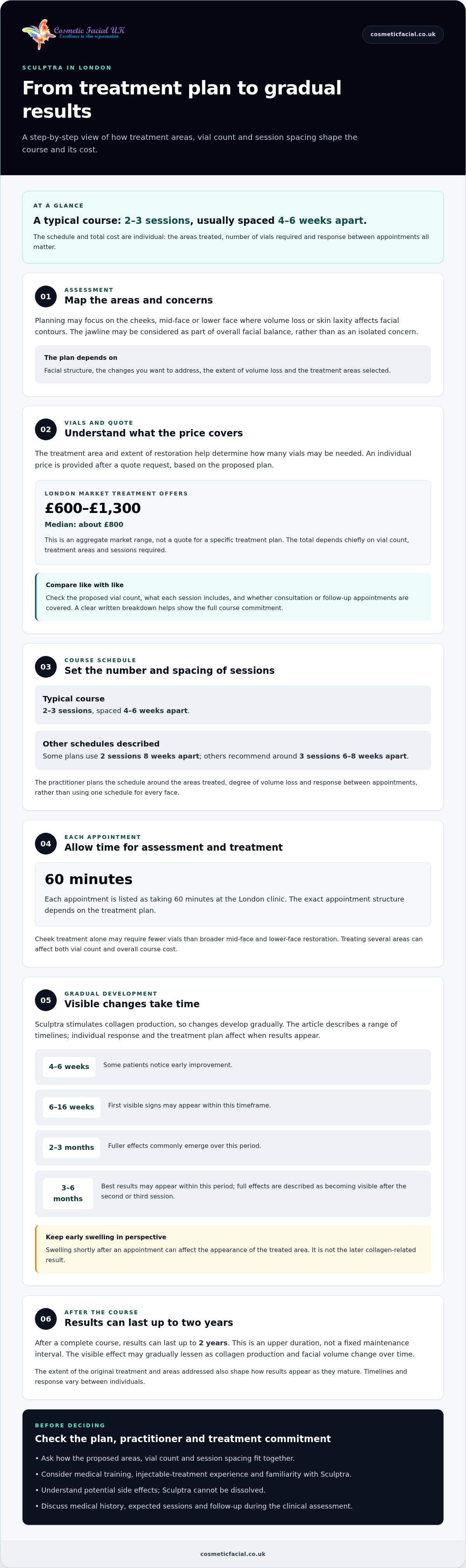
The number of vials, rather than one fixed fee, is central to Sculptra cost in London. Sculptra may be used to treat the cheeks and broader mid-face or lower face. A typical course involves two to three sessions, spaced four to six weeks apart. The treatment price depends on your individual plan and is provided after a quote request. The main cost factors are the areas treated and the number of vials required.
Vial pricing matters because the treatment area and extent of facial restoration affect how many vials may be needed. This guide explains how those factors shape a treatment plan, what to expect from session spacing and gradual results, and which risks to consider before deciding. It also outlines how a clinical assessment can help determine whether Sculptra suits your concerns, so you can weigh the likely treatment commitment alongside the price.
Key Takeaways
- Sculptra can be used for the cheeks and broader mid-face or lower-face restoration; the treatment area helps determine the number of vials needed.
- A typical course involves two to three sessions, spaced four to six weeks apart, with results developing gradually.
- Results can last up to two years following a complete course, although the treatment plan and response vary between individuals.
- Compare treatment plans by considering the vial count and what each session includes, rather than looking at a headline price alone.
- Understand potential side effects before treatment, including the fact that Sculptra cannot be dissolved.
Which areas can be treated with Sculptra?
Sculptra can address volume loss across the cheeks, mid-face and lower face. Treatment planning focuses on areas where reduced support or skin laxity affects facial contours. Cheek treatment may be planned on its own or alongside broader mid-face and lower-face restoration. The jawline may also be considered as part of overall facial balance, rather than treated as an isolated concern. The precise areas depend on facial structure and the changes you want to address.
Sculptra works gradually, unlike treatments that create immediate visible volume. Its poly-L-lactic acid stimulates collagen production, with changes developing as the body responds. Some patients notice early improvement after four to six weeks, while first visible signs may take six to sixteen weeks. Timing varies with the treatment plan and individual response. Initial swelling can also affect the appearance of the treated area shortly after an appointment, so do not confuse it with the later collagen-related result.
Results continue to develop after those early changes. Improvements may become noticeable within about six weeks, but fuller effects commonly emerge over two to three months. The best results may appear three to six months after treatment begins, and full effects are described as becoming visible after the second or third session. Timelines vary: someone having cheek treatment alone may notice changes differently from someone receiving broader facial restoration. A medical doctor can assess the treatment area and explain how the planned sessions relate to the expected timeline.
After a complete course, results can last up to two years. This is an upper duration, not a fixed maintenance interval for everyone. Collagen production and facial volume change over time, so the visible effect may gradually lessen. The extent of the original treatment and the areas addressed also shape how results appear as they mature. Rather than assuming a specific top-up date, consider how your face changes after the course and review those changes during a follow-up assessment.
For a practical assessment, note the areas that concern you, such as cheek volume or lower-face contours, and share those priorities during your appointment. Ask how the proposed plan addresses each area, when changes may become visible, and how long results from the complete course may last. A suitable plan should account for gradual development rather than promise an immediate transformation. This helps set realistic expectations for the treatment timeline and future maintenance.
Number and spacing of treatment sessions
A typical Sculptra course involves two to three sessions, spaced four to six weeks apart. Some plans use two sessions eight weeks apart, while others recommend around three sessions six to eight weeks apart. The schedule depends on the areas treated, the degree of volume loss and the response between appointments. A practitioner uses consultation findings to plan the course instead of applying one schedule to every face.
Each appointment is listed as taking 60 minutes at the London clinic. This gives time for assessment and treatment, although the exact appointment structure depends on the plan. Cheek treatment alone may require fewer vials than broader mid-face and lower-face restoration. Treating several areas can therefore affect both the number of sessions and the overall course cost. Ask for the proposed areas, vial count and session spacing to be set out together.
London market offers for Sculptra treatment typically range from £600 to £1,300, with a median of about £800. This is an aggregate market range, not a quoted fee for a particular treatment plan. The total depends chiefly on the number of vials, areas treated and sessions required. Sculptra pricing can also be compared with dermal fillers by considering the treatment approach: Sculptra is administered as a course, while filler plans depend on the product and areas being treated. The prices are not directly comparable without matching the treatment goals and scope.
Practitioner qualifications matter because facial anatomy, injection technique and product preparation influence treatment planning. Look for medical training, relevant injectable-treatment experience and familiarity with Sculptra. During your consultation, discuss the intended facial areas, medical history, expected session plan and follow-up. These points help you assess whether the proposed approach is clear and suited to your goals.
London clinic prices may differ in what they include, so establish whether the quote covers consultation and follow-up appointments before proceeding. Finance and payment plans also vary by clinic. Include payment timing and any separately charged appointments in your budget. A clear written breakdown helps you understand the full course commitment rather than judging the cost from one session alone.
To prepare for consultation, list the areas you want assessed and ask how vial numbers relate to each stage. You can also review Sculptra treatment planning before discussing a personalised course.
How much does Sculptra cost in London, and how many vials will you need?
London market offers for Sculptra treatment typically range from £600 to £1,300, with a median of about £800. This is an aggregate market range, not a clinic’s individual quote. The amount you pay depends on the treatment plan, including the number of vials, areas treated and sessions required. A quote request is needed for an individual price, with the planned treatment and vial requirement shaping the cost.
Sculptra contains poly-L-lactic acid, which stimulates the body’s collagen production. Collagen helps support the skin’s structure, so increased production can gradually improve volume and facial contour. This differs from dermal fillers, which add volume directly at the injection site. Sculptra treatment therefore develops progressively as the body responds, rather than delivering the full collagen-related effect immediately after injection.
The number of vials depends on the extent of volume loss and the facial areas included. Most first courses use two vials, but this is a starting reference, not a prescription for everyone. A plan for one area, such as the cheeks, may require fewer vials than full mid-face and lower-face restoration. The latter typically requires two to three times more vials than treatment of one area.
Age can provide context, but it does not determine vial requirements on its own. People in their thirties may typically need one to two vials when bone resorption is minimal and skin laxity is slight. People in their forties often need about three vials, while those in their fifties and beyond might need four to six for comprehensive treatment. Facial structure, degree of volume loss and treatment goals remain important factors.
Vial quantity also affects the total course cost because a plan may involve multiple sessions. For example, using two vials across a course does not mean both must be administered at one appointment. The practitioner considers the areas being treated and intended progression when planning each session. Ask for the proposed vial count and how it relates to your facial concerns.
To assess a quote, compare the treatment areas, total vials and number of sessions included. Clarify whether consultation and follow-up appointments are part of the quoted plan. A lower total may reflect a narrower treatment area or fewer vials, rather than an equivalent course. This breakdown helps you compare like-for-like plans and understand how the proposed treatment scope relates to collagen stimulation.
Is Sculptra safe, and what are the potential risks or side effects?
Sculptra is an injectable treatment containing poly-L-lactic acid, and its effects develop gradually. As with any injectable procedure, understanding the possible risks and aftercare is part of deciding whether it suits your goals. One reported complication is the formation of nodules beneath the skin. The reported rate is about 0.4% of Sculptra cases. This figure describes reported cases, not an individual’s personal likelihood, and it does not remove the need to discuss risks before treatment.
One important consideration is that Sculptra cannot be dissolved. This distinguishes it from certain hyaluronic acid dermal fillers, which can be dissolved using an enzyme. The two treatments therefore involve different risk-management considerations. If you want a result that can be adjusted immediately, discuss that preference before choosing a product. Sculptra’s gradual collagen stimulation also means the final appearance develops over time, rather than being assessed solely on the day of injection.
Suitability depends on the concern being treated and the outcome you want. Sculptra may be considered for gradual improvement in facial volume, while someone seeking immediate volume may have different priorities. An assessment should cover your medical history, the facial areas involved, previous injectable treatments and expectations. Share relevant health information and any previous reactions to injectables with the practitioner. These details help shape a treatment plan and establish whether another approach may better match your goals.
Aftercare is an important part of the procedure. The recommended “5-5-5” massage means massaging the treated area for five minutes, five times daily, for five days following treatment. Follow the specific instructions provided for your treatment rather than applying pressure differently or skipping the advised routine. Facials, peels and microneedling should be avoided for one to two weeks after treatment. These steps are practical considerations to discuss before scheduling your appointment.
Before proceeding, ask the practitioner to explain how Sculptra’s gradual action relates to your intended result, which risks apply to the proposed treatment areas, and what symptoms need review. Confirm the treatment and aftercare instructions in writing, including the massage schedule and temporary restrictions. If you have concerns after an injectable procedure, contact the treating practitioner promptly for advice. Clear expectations are especially important because the product cannot be dissolved and changes do not appear all at once.
People considering Sculptra should weigh its gradual development, the possibility of nodules and the fact that the product cannot be dissolved. A careful discussion of medical history, treatment goals and aftercare helps consider these factors together. The decision is not simply about whether a treatment is described as safe. It is about understanding its specific risks and deciding whether its profile and timeline fit your priorities.
Sculptra price per vial in London
London pricing is easier to assess when the vial count and treatment plan are considered together. The aggregate market range for Sculptra treatment is £600 to £1,300, with a median of about £800. This is a market reference, not an individual clinic’s fee or a guaranteed per-vial price. A price per vial alone cannot show the total commitment if treatment involves several vials or sessions.
The price for an individual plan depends on the areas treated, the number of vials and the sessions required. Pricing is provided after a quote request, with those treatment details shaping the cost. Ask whether a quoted amount applies to one vial, one appointment or the complete course. These are different measures, and confusing them can make two aesthetic treatment plans seem more comparable than they are.
Vial requirements depend on the extent of volume loss and the areas being addressed. A plan for one area, such as the cheeks, differs from broader facial treatment. More extensive treatment may require more vials, increasing the total cost even if the per-vial rate appears lower. Because collagen stimulation is gradual, the course may also include appointments spaced weeks apart. Assess the complete plan rather than one visit.
For a useful comparison, write down the details of each proposed plan:
- Vial count: record how many vials are included across the course.
- Treatment scope: note the facial areas and concerns covered.
- Appointment plan: check the number of sessions and their spacing.
- Included care: establish whether consultation and follow-up are part of the quoted amount.
This makes it possible to compare equivalent treatment plans instead of headline figures. A lower total may reflect fewer vials, a smaller treatment area or fewer sessions. Conversely, a higher total may include broader facial treatment. Ask the practitioner to explain how each element contributes to the plan, and discuss whether its gradual approach suits your priorities and budget.
Location can influence clinic prices, but the quoted treatment details are essential for understanding differences. Compare the same treatment areas and vial count across estimates. Check that each estimate describes the full course, rather than comparing one appointment with a multi-session plan. This puts Sculptra cost in London in context without treating a general market figure as your personal price.
Before deciding, ask for the vial count, treatment areas, session schedule and included appointments to be itemised. This breakdown clarifies what the total covers and how the plan addresses volume loss. It also gives you a practical basis for discussing gradual results and treatment priorities during an aesthetic consultation.
Cosmetic Facial: Botox Treatment
Cosmetic Facial offers Botox Treatment for readers considering an option other than gradual volume restoration with Sculptra. The treatments address different concerns, so the relevant choice depends on whether your priority is facial volume or expression-related lines. Discussing your goals can help clarify which approach is more appropriate for the concern you want to address.
If your main concern is volume loss, the information above can help you understand Sculptra treatment areas, vial requirements and its gradual timeline. If you are exploring Botox Treatment instead, consider whether your concerns relate to facial movement and discuss suitability before proceeding. Cosmetic Facial also offers HIFU Face Lift for those considering a different facial treatment approach.
For further information, contact Cosmetic Facial or visit cosmeticfacial.co.uk.
Make your next step an informed one
Understanding Sculptra cost in London is only one part of deciding whether treatment suits your priorities. Consider what you want to address, how gradual change fits your expectations and what questions you have about the proposed plan. A focused discussion can help clarify your priorities before you decide.
Cosmetic Facial offers Sculptra Treatment at its Marylebone practice in London and can discuss whether it aligns with your concerns. If you are exploring different approaches, the clinic also offers Botox Treatment, HIFU Face Lift and IPL Hair Removal Treatment. These services address different needs, so start with the concern you want to discuss.
Take the time you need to make a considered choice, guided by your goals and comfort.
Frequently Asked Questions
Where can I have Sculptra in Kensington?
Cosmetic Facial offers Sculptra Treatment at its Marylebone practice in London, rather than at a stated Kensington address. If you are based in Kensington, contact the clinic to discuss attending in Marylebone and the treatment areas you want assessed. A consultation can help establish whether Sculptra fits your goals. Bring details of previous injectable treatments and relevant medical history for a focused discussion.
Does it hurt?
Sculptra involves injections, which can cause brief discomfort at the treatment site. Sensations vary between people and treatment areas. Before the procedure, tell the practitioner about previous experiences with injectable treatments and any concerns about discomfort. You can also discuss what to expect during the appointment and the aftercare instructions, so you know how to care for the treated area afterwards.
How long does Sculptra last?
Results can last up to two years after a complete course. This describes a potential duration, not a set point when everyone needs further treatment. To assess changes, take photographs in consistent lighting before treatment and at intervals afterwards. Comparing them can help you see how facial contours change as the result develops and discuss maintenance if your goals change.
How long does Sculptra take to work?
Early changes may become noticeable after four to six weeks, while the best results may appear three to six months after treatment begins. The effect develops progressively, rather than all at once. To monitor changes, take photographs in consistent lighting and note when each session took place. This gives you a clearer record to discuss at follow-up than day-to-day impressions.
What is the average cost of Sculptra in London?
The London market reference for Sculptra treatment is £600 to £1,300, with a median of about £800. These figures describe aggregate market offers, not a fixed fee from Cosmetic Facial or a guaranteed cost for an individual course. Your treatment total depends on the areas addressed, vial count and sessions. Compare complete plans, including which appointments and follow-up care are covered.
How much does Sculptra cost per vial in London clinics?
There is no single per-vial rate that applies across London clinics. A vial price is useful only alongside the number of vials planned, the treatment areas and the full course structure. A quote for one appointment may not represent the total course cost. For budgeting, ask for a breakdown of vial quantity and sessions, then compare plans covering equivalent areas and treatment stages.
How many Sculptra vials are typically needed per treatment?
Two vials are a common starting point for a first course, but the amount depends on the areas treated and the degree of volume loss. As a general guide, people in their thirties may need one to two vials, while those in their forties often need about three. Comprehensive treatment for people in their fifties and beyond may involve four to six vials.
Which London clinics offer Sculptra and what are their prices?
Cosmetic Facial offers Sculptra Treatment at its Marylebone practice in London. The market reference for treatment offers is £600 to £1,300, with a median of about £800, but this is not a price list for individual clinics. A tailored quote depends on the planned areas, vial count and sessions. Compare those details when reviewing prices, rather than relying on a headline figure alone.
Disclaimer
All content on cosmetic Facial website, including blogs, graphics, logos, images, and software, is the property of CosmeticFacial UK or its content suppliers and is protected by applicable copyright laws. Unauthorized use, reproduction, distribution, or modification of any content without prior written permission is strictly prohibited.


