


Could a small skin growth be something other than a skin tag? Correct identification should come before any decision about skin tag removal london, because other lesions can look similar. If you’re concerned about discomfort, marks or healing, or whether the growth’s size and location affect treatment, a clinical assessment can help clarify the next step.
This guide explains when an assessment is appropriate, what may inform removal and what to expect when arranging treatment in London. At Cosmetic Facial’s Marylebone clinic, assessment is an important first step in skin tag removal. Dr Faramarz Didar holds an MSc in Dermatology Skills and Treatment with Commendation, awarded in 2015.
You’ll learn about the main considerations involved in professional removal, why attempting to remove a growth yourself can carry risks, and how to arrange an assessment. Understanding the process can help you make an informed decision without assuming every growth or treatment plan is the same.
Key Takeaways
- Skin growths can resemble one another, so seek clinical assessment rather than trying to identify a tag from appearance alone.
- For skin tag removal london, suitability depends on the diagnosis, size, location, symptoms and your reason for considering treatment.
- Removal approaches vary. An assessment helps determine which option may be appropriate for the individual growth.
- Before your appointment, note any changes or symptoms, and follow the clinician’s tailored aftercare advice.
- Don’t cut, tie or freeze a growth at home, or apply unverified products, as these approaches can cause harm.
Skin Tag Removal in London: What Needs to Be Assessed First?
A small raised growth may seem straightforward to identify, especially if it sits where clothing or jewellery rubs. But appearance alone cannot establish what a lesion is, and that distinction matters before removal is considered. If you’re researching skin tag removal london, it helps to know that an assessment considers more than size and position: it establishes whether the growth is consistent with a skin tag and whether removal is appropriate.
General information: A skin tag is a small, usually benign growth of skin that may be soft and attached by a narrow stalk. This description is not an individual diagnosis. A clinician should assess a particular growth if its identity is uncertain or it has changed or become troublesome.
What does a skin tag typically look like?
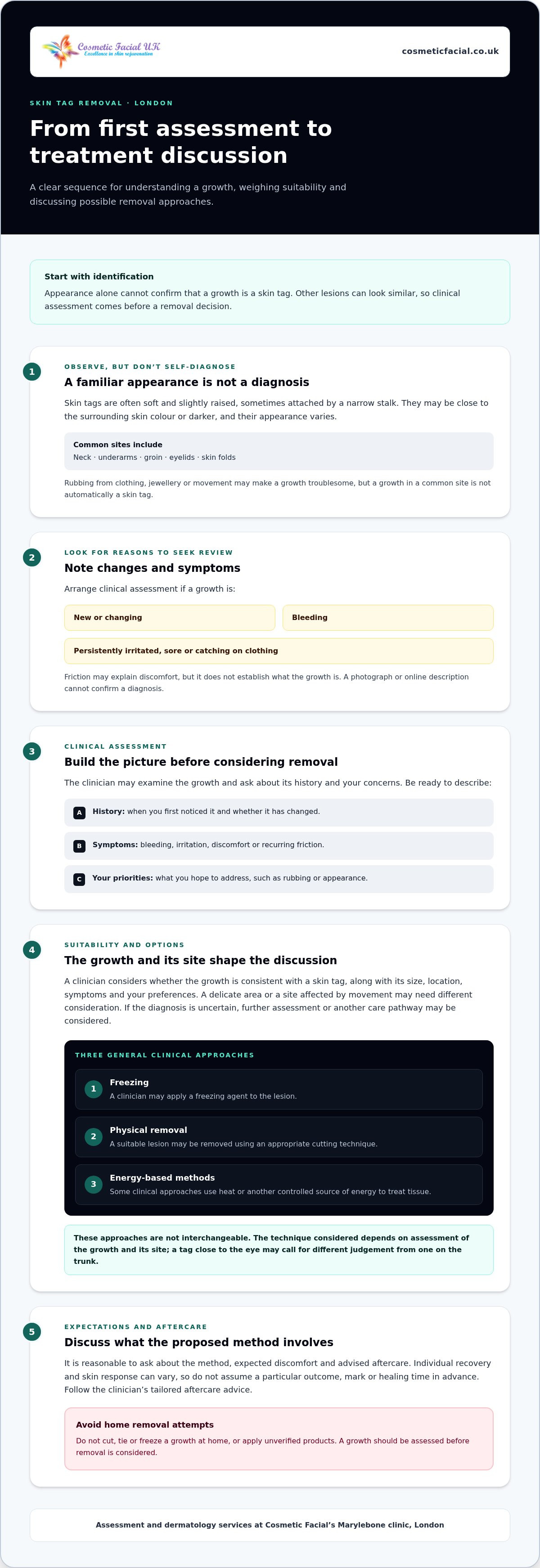
Skin tags are often soft and slightly raised, sometimes hanging from the skin by a narrow stalk. They may be close to the surrounding skin colour or darker, and their size and appearance vary. Common sites include the neck, underarms, groin, eyelids and skin folds, where clothing, jewellery or movement may cause rubbing. A growth in one of these places is not automatically a skin tag.
Other skin lesions can look similar, and a photograph or online description cannot confirm a diagnosis. The Skin tag overview provides general information, but cannot identify an individual lesion. Clinical judgement takes account of the growth itself and its history, rather than relying on one feature such as colour or shape.
When should a London clinician assess a skin growth?
Arrange a clinical assessment if a growth is new, changing, bleeding or persistently irritated. Friction may explain why a lesion feels sore or catches on clothing, but it does not confirm what the lesion is. If you’re unsure whether it is a skin tag, mole or another type of growth, seek a clinician’s review before considering removal.
Appearance alone cannot reliably identify every skin growth. This matters particularly when a lesion’s appearance or symptoms change. Removal decisions depend first on identifying what is being assessed. If it is not clearly a skin tag, a clinician can consider whether further assessment is needed rather than treating it based on resemblance alone.
Assessment connects identification to the next decision. The clinician considers whether the growth appears consistent with a skin tag, where it is located, whether it causes symptoms and what concerns you about it. These details help distinguish a request driven mainly by friction or appearance from a growth that needs review because it is changing or uncertain. The treatment options and their suitability can then be discussed on an informed basis.
How Skin Tag Removal Is Considered: Assessment and Treatment Approaches
Removal is not determined by appearance alone. A clinician considers whether the growth is consistent with a skin tag, its location and size, any symptoms, and why you would like it removed. Someone whose tag catches on clothing may have different priorities from someone concerned about its appearance. These details help shape a discussion about whether removal is suitable and what approach may be considered.
What may a removal consultation cover?
The clinician may examine the growth and ask when you first noticed it, whether it has changed, and whether it has caused bleeding, irritation or discomfort. Be ready to describe any recurring friction and explain what you hope to address. This context supports an individual assessment rather than a decision based on one feature in isolation.
Treatment suitability depends on both the growth and its location. A small tag in an area where skin is delicate or movement causes rubbing may call for different considerations from a growth elsewhere. If the diagnosis is uncertain, removal may not be the immediate next step. Further clinical assessment or another care pathway may be considered. Cosmetic Facial provides skin tag removal and dermatology services at its Marylebone clinic in London.
How do removal approaches differ?
Professional removal can involve different clinical approaches. These are general examples, not a promise that a particular technique will be recommended or used for an individual growth:
- Freezing: A clinician may apply a freezing agent to the lesion. Whether this is appropriate depends on assessment of the growth and its site.
- Physical removal: A clinician may remove a suitable lesion using an appropriate cutting technique.
- Energy-based methods: Some clinical approaches use heat or another controlled source of energy to treat tissue.
These approaches are not interchangeable, and the name of a technique alone does not establish its suitability. The clinician weighs the likely diagnosis and physical characteristics of the lesion against its position and your preferences. For example, a tag close to the eye may require different judgement from one on the trunk, while a larger growth may need separate consideration from a smaller one. Use the consultation to discuss these factors and what to expect from the recommended approach.
It’s reasonable to ask what the proposed method involves, what discomfort may be expected, and what aftercare is advised. Individual recovery and skin response can vary, so don’t assume a particular outcome, mark or healing time in advance. For an assessment and a discussion of skin tag removal london options, you can arrange an appointment at Cosmetic Facial’s Marylebone clinic.
Choosing Skin Tag Removal in London: Compare Suitability, Site and Expectations
Once a growth has been assessed, the decision about removal depends on more than whether it is visible or bothersome. A clinician considers the diagnosis, position, size and symptoms, then discusses why you’re seeking treatment. This helps distinguish a cosmetic preference from a concern such as repeated irritation or bleeding. Either can prompt an assessment, but they do not automatically lead to the same recommendation.
| Factor | What it may mean for the discussion |
|---|---|
| Location | Friction-prone areas may be repeatedly irritated; facial and eyelid growths need particular care because of their position. |
| Size | The dimensions and shape of the growth contribute to assessing its suitability for treatment. |
| Symptoms | Bleeding, persistent soreness or irritation should be discussed as part of the assessment. |
| Diagnosis | If the growth’s identity is uncertain, establishing what it is takes priority over removal. |
| Reason for removal | Appearance concerns and symptoms are different considerations, and both can be explained to the clinician. |
Does the location of a skin tag affect the discussion?
Skin folds, underarms and areas touched by collars or jewellery can be subject to regular rubbing, which may make a growth uncomfortable or persistently irritated. A facial or eyelid growth also merits careful assessment because of its sensitive position. Location informs the discussion, but does not determine a removal method or predict an outcome by itself.
For people considering skin tag removal london, location also matters when planning an appointment. Cosmetic Facial provides skin tag removal and dermatology services at its Marylebone clinic in London. Consider the clinic’s location when arranging your visit, while keeping clinical assessment, rather than convenience alone, central to a treatment decision.
What expectations are realistic before removal?
A consultation helps set expectations around suitability, procedure and healing. The clinician can explain the proposed approach, possible marks, aftercare and any limitations relevant to the growth and its site. Skin responses vary, so a particular cosmetic result, the absence of scarring or recurrence, or complete removal cannot be guaranteed. Discussing these uncertainties beforehand helps you decide whether the potential benefits fit your priorities.
Describe what concerns you most, whether that is repeated catching on clothing, discomfort or the appearance of a visible growth. If the main reason is cosmetic, say so. If the lesion bleeds or is persistently irritated, explain when this happens. Clear information allows the clinician to consider your priorities alongside the assessment, rather than treating location or appearance as the only deciding factor.
Preparing for Skin Tag Removal and Aftercare
If you’re researching skin tag removal london, preparation is a chance to give the clinician a clear picture of the growth and your health. The appointment should begin with assessment and discussion, rather than assuming removal before the lesion and its suitability have been considered. Advice about the procedure and aftercare can then be tailored to the approach recommended for you.
Before the appointment
Note when you first noticed the growth and whether you’ve observed changes, bleeding or irritation. It may help to describe how often symptoms occur and whether clothing or movement aggravates them. Share relevant medical history and current medicines with the clinician, including anything you think could affect treatment or healing.
Use the consultation to discuss your concerns and ask what the proposed procedure involves. The clinician can explain whether treatment is appropriate and outline the relevant aftercare before proceeding.
During the appointment
The clinician can assess the growth, review the information you’ve provided and discuss the next step. If treatment is suitable, ask about the procedure, possible skin changes and the instructions you’ll need to follow afterwards. If the diagnosis or suitability needs further consideration, removal may not be the immediate next step. You should have an opportunity to understand the advice before making a decision.
Don’t try to remove a skin growth at home. Cutting, tying or freezing it, or applying unverified products, can cause bleeding, infection or scarring and may delay appropriate assessment. Even if a growth resembles one you’ve had before, don’t assume it is the same. Leave it in place until a clinician has assessed it and discussed suitable care.
After treatment
Aftercare depends on the procedure performed and your individual response, so there is no single healing schedule that applies to everyone. Follow the specific instructions provided by the clinician rather than relying on general advice or copying another person’s routine. Temporary skin changes may occur, but their nature and duration can vary with the treatment and the individual.
- Follow the clinician’s instructions for caring for the treated area.
- Avoid picking at or attempting to remove any remaining tissue yourself.
- Seek advice from a qualified clinician if symptoms worsen or you notice an unexpected change.
Before leaving, make sure you understand the aftercare guidance and know where to direct any concerns. If you’re unsure about an instruction, ask for clarification rather than guessing. Following the advice supports an informed recovery, but individual healing and cosmetic results cannot be guaranteed.
Arrange Skin Tag Removal in Marylebone, London
If you’re searching for skin tag removal london, the next step is an appointment focused on assessment, not an assumption that every growth should be treated. Cosmetic Facial provides skin tag removal and dermatology services at its Marylebone clinic. At an appointment, you can discuss the growth, its location and any symptoms, then learn whether removal may be suitable following clinical assessment.
What does a first appointment help establish?
The first appointment helps the clinician assess whether the growth appears to be a skin tag and consider the appropriate next step. Explain when you noticed it, whether it has changed or caused irritation, and what concerns you about its appearance or position. This context makes the discussion relevant to your priorities.
Dr Faramarz Didar holds an MSc in Dermatology Skills and Treatment with Commendation, awarded in 2015. This qualification is relevant to the clinic’s dermatology services and provides useful context when arranging an assessment. The consultation can address questions about suitability and options without assuming a particular removal technique or outcome before the growth has been assessed.
How can London patients take the next step?
Cosmetic Facial is located in Marylebone, London. Consider the clinic’s location when arranging your appointment and allow time to explain your concerns clearly. You can book online or by telephone. Briefly explain that you’re seeking assessment of a possible skin tag and note any symptoms or changes, so the purpose of your visit is clear.
At the appointment, raise any concerns about the growth’s site, discomfort, bleeding or cosmetic appearance. The clinician can assess it and discuss whether removal is appropriate, along with relevant considerations for the proposed treatment. An assessment does not guarantee that removal will be recommended or that treatment will take place during the same visit. The decision depends on the individual growth and clinical judgement.
Choosing a London clinic is not only a matter of distance. A clear appointment route and a discussion that begins with assessment can help you understand the next step before deciding about treatment. Cosmetic Facial’s Marylebone clinic offers a local setting for skin tag removal and dermatology assessment.
Take the Next Step with a Clear Assessment
Deciding whether to remove a skin growth can feel easier once you have a clear clinical view of what it is and which options may suit it. If you’re considering skin tag removal london, an appointment gives you space to discuss your priorities, including symptoms, the growth’s position and your expectations. Suitability and the approach should be considered individually, without assuming a particular outcome in advance.
Cosmetic Facial provides skin tag removal and dermatology services in Marylebone. Dr Faramarz Didar holds an MSc in Dermatology Skills and Treatment with Commendation, a relevant qualification for a service that begins with assessment. Use the appointment to raise questions and understand the next step before making a decision.
A considered decision starts with an informed conversation. Arrange an appointment at Cosmetic Facial’s Marylebone clinic when you’re ready to have the growth assessed.
Frequently Asked Questions
Are skin tags contagious?
No. Skin tags are not contagious and cannot be passed through touching or close contact. If someone in your household has one, ordinary contact does not spread it. The more relevant issue is identification, as a different lesion may resemble a skin tag. If a growth changes, bleeds or becomes painful, don’t assume it is harmless based on another person’s experience. Arrange an assessment with a qualified clinician.
Can pregnancy cause skin tags?
Skin tags may appear or become more noticeable during hormonal changes, including pregnancy, but this does not confirm the identity of a new growth. If you notice a lesion changing or causing symptoms, discuss it with a clinician and mention your pregnancy. Don’t try to remove it yourself or use over-the-counter removal products. An assessment can help determine what the growth may be and whether any action is appropriate.
Are skin tags linked to diabetes?
Some studies have reported an association between skin tags and metabolic conditions, but a skin tag cannot diagnose diabetes. A clinician would consider your overall health and any symptoms rather than drawing a conclusion from a growth alone. If you’re concerned about diabetes, or have symptoms such as increased thirst or unexplained tiredness, speak to an appropriate healthcare professional about whether further assessment is needed.
Can a skin tag grow back after removal?
A treated tag may not return at the same site, but new tags can develop elsewhere over time. Removal does not prevent new growths, and recurrence varies between individuals. If a growth reappears, note whether it is in precisely the same place and whether its appearance has changed. Don’t assume it is the original tag: a qualified clinician can assess it and advise on the appropriate next step.
Is skin tag removal available on the NHS?
Removal for cosmetic reasons is not routinely provided by the NHS, although clinical circumstances and local arrangements can differ. If a growth is repeatedly traumatised, bleeds or becomes infected, a GP or another clinician can advise whether medical assessment or another care pathway is appropriate. People researching skin tag removal london for cosmetic reasons may consider private care, where treatment should follow an assessment of the growth and its suitability.
Can skin tags be removed from the eyelid?
A growth on or near the eyelid needs careful clinical assessment before removal is considered. Its position is sensitive, and a lesion that looks like a skin tag may be something else. Don’t cut, tie or freeze it, or use a product intended for other areas of skin. A clinician can assess what the growth may be and discuss whether removal is suitable and which options may be appropriate.
Disclaimer
All content on cosmetic Facial website, including blogs, graphics, logos, images, and software, is the property of CosmeticFacial UK or its content suppliers and is protected by applicable copyright laws. Unauthorized use, reproduction, distribution, or modification of any content without prior written permission is strictly prohibited.


