


The assumption that surgical intervention remains the only viable path to correcting significant abdominal skin laxity is increasingly outdated in modern clinical practice. Many individuals find that even dedicated physical training cannot resolve the structural breakdown of collagen fibres that leads to a crepey or loose appearance. When researching the radiofrequency for stomach tightening cost uk, it's essential to understand that this technology functions as a catalyst for long-term dermal restructuring rather than a temporary superficial fix. This clinical approach offers a sophisticated method for those seeking to restore abdominal firmness without the inherent risks and lengthy recovery periods associated with invasive surgery.
This 2026 guide details the biological mechanisms of radiofrequency energy, specifically how controlled thermal delivery triggers fibroblast activity and subsequent skin contraction. You'll learn about the various factors that determine the overall investment, including the technology utilised and the necessity of cumulative treatment sessions. We'll also address the evolving regulatory environment in the United Kingdom, ensuring you're equipped to select a qualified practitioner. By the end of this article, you'll have a clear, professional perspective on the procedure expectations, the science of the T-Shape 2 system, and the practical financial considerations involved in achieving a firmer abdominal profile.
Key Takeaways
- Understand how radiofrequency energy induces controlled thermal damage to stimulate immediate collagen contraction and long-term dermal restructuring.
- Examine the primary variables influencing the radiofrequency for stomach tightening cost uk, ranging from clinic location to the sophistication of the technology utilised.
- Gain insight into the patient journey, including necessary preparation protocols and the typical physical sensations experienced during a stomach tightening session.
- Learn how to navigate the 2026 UK regulatory landscape to ensure your body contouring treatment is performed by a registered and accredited professional.
- Evaluate the clinical advantages of multi-modal systems like T-Shape 2 for addressing abdominal laxity within a medical-led environment.
What is Radiofrequency for Stomach Tightening?
Radiofrequency (RF) is a non-invasive, energy-based aesthetic procedure designed to induce structural changes within the skin without disrupting the epidermis. Unlike laser treatments, which rely on light absorption by specific chromophores such as melanin or haemoglobin, RF is chromophore-independent. This technical distinction allows Radio-frequency skin tightening to be performed safely on all skin types, as the energy is delivered through tissue resistance rather than pigment absorption. The primary objective of this treatment is the amelioration of skin laxity and the refinement of "crepey" abdominal texture, a common concern where the skin appears thin and finely wrinkled.
Patients often confuse skin tightening with fat reduction. Whilst some advanced multi-modal systems like the T-Shape 2 incorporate vacuum and laser technology to assist in body contouring, the fundamental role of radiofrequency is dermal restructuring. It addresses the "envelope" of the body rather than the volume of adipose tissue. For those investigating the radiofrequency for stomach tightening cost uk, it's vital to identify whether the concern is excess subcutaneous fat or a loss of dermal elasticity, as these require different clinical protocols. If fat reduction is the primary goal, you can explore weight management at VIGORY Center for expert guidance on body optimization. RF is a targeted response to the biological breakdown of the skin's support structure.
Targeting Abdominal Skin Laxity
The stomach is particularly susceptible to dermal stretching due to significant physiological changes. Pregnancy and substantial weight fluctuations often extend the collagen and elastin fibres beyond their biological elastic limit, resulting in persistent sagging that exercise cannot rectify. Ideal candidates for RF intervention typically present with mild-to-moderate laxity. It's a precise solution for post-natal recovery or for individuals who have achieved their target weight but remain dissatisfied with the textural quality of their abdominal skin. It isn't a substitute for a surgical tummy tuck but serves as a powerful alternative for those seeking to avoid general anaesthesia.
RF vs. Other Tightening Modalities
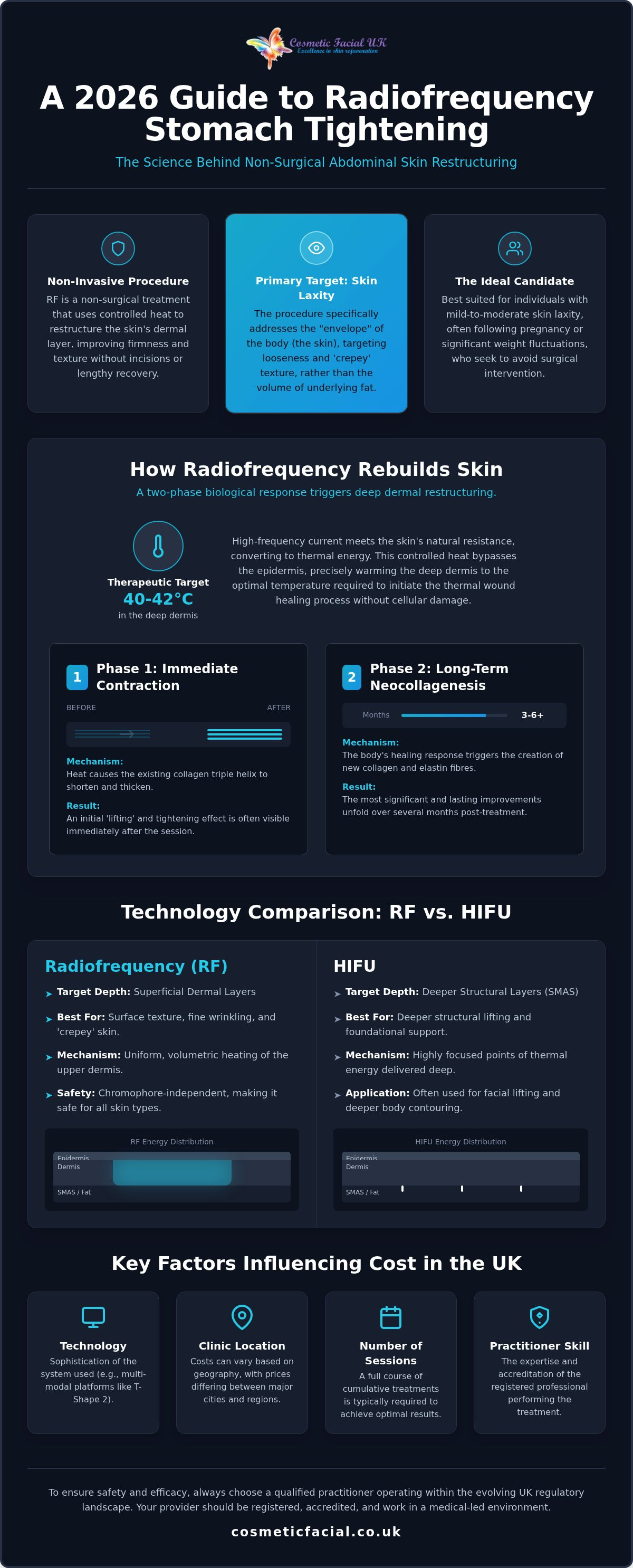
When evaluating non-surgical options, patients frequently compare RF with High-Intensity Focused Ultrasound (HIFU). While both are energy-based, they target different depths. HIFU typically reaches the deeper structural layers, including the SMAS, whereas RF is often preferred for treating the more superficial dermal layers to improve surface texture. A detailed analysis of these differences is available in our HIFU Body Sculpting London guide. In clinical practice, RF is the gold standard for treating the fine, superficial wrinkling associated with aged or overstretched abdominal skin. It provides a more uniform heating of the upper dermis compared to the focal points of ultrasound.
The Science: How Radiofrequency Restructures the Dermis
The clinical efficacy of radiofrequency relies on the principle of volumetric heating within the dermal layers. As the device delivers high-frequency electrical current into the tissue, the natural resistance of the skin converts this energy into thermal heat. This process targets the deep dermis while bypassing the epidermis, ensuring the skin's surface remains protected from thermal injury. To trigger a biological response, the tissue must reach a therapeutic window of 40-42°C. Maintaining this precise temperature is vital; it's the threshold required to initiate "thermal wound healing" without causing cellular necrosis.
When investigating the radiofrequency for stomach tightening cost uk, it's helpful to understand that the treatment produces results through a two-stage biological timeline. The initial phase involves the immediate contraction of existing collagen fibres. The heat causes the collagen triple helix to shorten and thicken, which often results in a visible "lifting" effect immediately following the session. However, the most significant improvements occur during the second phase: neocollagenesis. This is the long-term production of new collagen and elastin fibres, a process that continues for several months after the treatment programme concludes.
The Role of Collagen and Elastin
Collagen and elastin are the primary structural proteins responsible for the tensile strength and elasticity of the abdominal skin. Over time, or following significant physical expansion such as pregnancy, these protein scaffolds become fragmented and depleted. Radiofrequency energy stimulates fibroblast cells to synthesise fresh Type I and Type III collagen. Because the human collagen maturation cycle takes approximately 90 days, patients typically observe the most refined results three months after their final session. For a detailed assessment of your skin's current structural integrity, you may wish to consult with a clinical expert at our Marylebone centre.
Bipolar vs. Multipolar Radiofrequency
The method of energy delivery significantly impacts the uniformity of the results. Bipolar systems pass energy between two electrodes, which is effective for smaller, shallower areas. In contrast, multipolar systems utilise multiple electrodes to create a complex, intersecting web of energy. This configuration is particularly advantageous for the stomach, as it allows for deeper, more consistent heating across a larger surface area. Modern multipolar technology incorporates integrated temperature sensors, providing a high safety profile by ensuring the energy delivery remains within the optimal therapeutic range throughout the procedure.
Radiofrequency for Stomach Tightening Cost UK: Key Factors
Determining the radiofrequency for stomach tightening cost uk requires an assessment of several clinical and operational variables. Prices aren't standardised because the complexity of dermal laxity varies significantly between patients. A primary factor is the geographic location of the facility. Clinics situated in premium London districts, such as Marylebone, typically maintain higher operational standards and invest in more advanced, medically graded technology. For instance, the T-Shape 2 system provides multi-modal benefits that basic, entry-level RF machines cannot replicate, influencing the final investment required for a successful outcome.
Variables Affecting Your Investment
The surface area of the abdomen is considerably larger than facial zones, requiring longer session times and higher energy output. This naturally influences the per-session rate. The clinical background of the individual performing the procedure is also paramount. A private dermatologist consultation ensures that the treatment plan is medically sound and tailored to your specific skin thickness and degree of laxity. Some advanced protocols also combine RF with vacuum suction or LED therapy to enhance lymphatic drainage, which may adjust the total investment while improving the overall contouring effect.
The Cost of Maintenance vs. Surgery
While a surgical abdominoplasty, or tummy tuck, is a one-off procedure, it involves a substantial financial outlay, general anaesthesia, and weeks of recovery. In contrast, radiofrequency is a non-invasive alternative with zero downtime, allowing working professionals to return to their routine immediately. Most practitioners recommend an initial course of 6 to 8 treatments to achieve optimal results. Many clinics offer structured packages for these courses, which provide a more cost-effective route than booking individual sessions. Periodic maintenance treatments, typically performed every 6 to 12 months, help preserve the structural integrity of the newly formed collagen scaffold without the risks associated with invasive surgery.
What to Expect: The Patient Journey and Results
The patient journey begins with a clinical assessment to ensure the abdominal tissue is suitable for energy-based restructuring. On the day of the procedure, preparation is minimal. Patients are advised to arrive with the treatment area free from topical creams, oils, or self-tanning products, as these can interfere with energy delivery. Maintaining high levels of systemic hydration in the 24 hours prior to the appointment is beneficial; well-hydrated tissue conducts radiofrequency energy more efficiently, which can enhance the overall efficacy of the session. When evaluating the radiofrequency for stomach tightening cost uk, patients should consider these preparatory steps as part of a professional, results-oriented protocol.
The Procedure Step-by-Step
The clinical process is methodical and designed for both safety and comfort. Once the patient is positioned, the practitioner performs the following steps:
- Cleansing: The abdominal skin is thoroughly cleansed to remove surface impurities.
- Gel Application: A specialised conductive gel is applied to the stomach. This medium facilitates the smooth glide of the handpiece and ensures consistent energy transfer into the dermis.
- Thermal Delivery: The clinician moves the RF handpiece in continuous, rhythmic motions. This technique prevents "hot spots" and allows the temperature to build gradually.
- Temperature Monitoring: Integrated sensors or external infrared thermometers are used to monitor the skin's surface temperature in real-time, ensuring it remains within the 40-42°C therapeutic window.
The sensation is frequently compared to a "hot stone massage." While the heat is perceptible and must reach a specific intensity to trigger collagen contraction, the procedure is generally well-tolerated without the need for topical anaesthesia. The clinician will adjust the energy output based on real-time feedback and skin response.
Book a clinical skin assessment
Recovery and Longevity
One of the primary advantages of this technology is the absence of downtime. Whilst mild erythema, or redness, is common immediately following the session, this typically subsides within a few hours. Patients can resume their normal professional and physical activities immediately. Post-treatment care focuses on maintaining the skin's moisture barrier; practitioners recommend using a high-quality moisturiser and avoiding extreme heat, such as saunas or very hot baths, for 48 hours.
The longevity of the tightening effect depends on the individual's biological response and lifestyle factors. While the initial collagen contraction provides an immediate improvement, the structural benefits of neocollagenesis peak at approximately three months. To preserve abdominal firmness, maintenance sessions are typically recommended at six to twelve-month intervals. It's essential to manage expectations: radiofrequency is highly effective for skin laxity and texture but it's not a treatment for significant fat deposits or underlying muscle separation. A consistent approach to nutrition and hydration will further support the long-term integrity of the dermal scaffold.
Choosing a Specialist Clinic in London for Body Contouring
Selecting a clinic for energy-based body contouring requires a meticulous evaluation of medical credentials and facility standards. In the United Kingdom, the 2026 regulatory environment has placed a renewed emphasis on practitioner accreditation and clinical accountability. When researching the radiofrequency for stomach tightening cost uk, the value of Care Quality Commission (CQC) registration cannot be overstated. This certification ensures that the clinic adheres to rigorous safety protocols and maintains medical-grade equipment. Selecting a facility with medical oversight provides an additional layer of security, as energy-based devices must be calibrated precisely to avoid adverse thermal effects.
A practitioner's expertise in facial rejuvenation often translates directly into superior body contouring results. The biological principles of dermal restructuring remain consistent across different anatomical zones. A specialist who understands the nuances of collagen synthesis and skin thickness on the face is uniquely qualified to manage the complexities of abdominal laxity. This anatomical knowledge is particularly beneficial when utilising advanced multi-modal platforms like the T-Shape 2, which are frequently available in premier London clinics to address both texture and contour simultaneously.
Clinical Excellence with Dr Faramarz Didar
At Cosmetic Facial, treatments are overseen by Dr Faramarz Didar, who holds an MSc in Dermatology with Commendation from the University of Hertfordshire. His background as a GP-qualified specialist allows for a comprehensive medical assessment that goes beyond surface-level aesthetics. This level of expertise is critical when determining the radiofrequency for stomach tightening cost uk, as a medical professional can accurately identify the most effective energy parameters for your specific skin type and laxity grade. For a deeper analysis of the technology used in our Marylebone centre, please refer to our T-Shape Cellulite Treatment London pillar.
Consultation and Personalised Planning
A bespoke treatment plan is the foundation of successful abdominal skin tightening. During an initial visit, the clinician must assess skin quality, the degree of dermal fragmentation, and the thickness of the subcutaneous fat layer. This granular assessment ensures that the radiofrequency energy reaches the target depth without over-treating the tissue. Reviewing a clinic's before and after gallery for stomach-specific results is a vital step in this process. It provides tangible evidence of the practitioner's ability to manage large-area laxity and deliver a firmer, more contoured abdominal profile.
Achieving Long-Term Abdominal Firmness
Achieving a firmer abdominal profile in 2026 no longer necessitates the risks associated with invasive surgery. The clinical evidence supports radiofrequency as a primary modality for inducing neocollagenesis and correcting dermal laxity. By understanding that results are cumulative and biologically driven, patients can make informed decisions about their body contouring journey.
The radiofrequency for stomach tightening cost uk is a reflection of the clinical environment, the practitioner's medical qualifications, and the precision of the technology utilised. At our Marylebone clinic, Dr Faramarz Didar (MSc Dermatology) oversees every protocol. He ensures that advanced systems like T-Shape 2 deliver optimal thermal energy to the deep dermis. This medical-led approach prioritises safety.
Investing in the health and structural integrity of your skin is a long-term commitment. With a structured treatment programme and professional guidance, it's possible to restore abdominal firmness and confidence through the science of dermal restructuring.
Frequently Asked Questions
Is radiofrequency stomach tightening painful?
Radiofrequency stomach tightening is generally not considered painful. Most patients describe the sensation as a deep, warming feeling similar to a hot stone massage. While the clinician must reach a specific thermal threshold to trigger collagen contraction, the energy delivery is controlled and rhythmic to ensure comfort. Any intense heat is temporary, and the practitioner can adjust the settings immediately if the patient feels any discomfort during the procedure.
How many sessions of RF are needed for the stomach?
Patients usually require a course of 6 to 8 sessions to see optimal results on the abdominal area. Because the collagen maturation cycle takes time, these appointments are typically scheduled at weekly or fortnightly intervals. This cumulative approach ensures that each session builds upon the previous one, gradually restructuring the dermis. Following the initial programme, many individuals opt for maintenance sessions every six months to preserve abdominal firmness.
Can radiofrequency tighten skin after pregnancy?
Radiofrequency is highly effective for addressing the skin laxity that often persists after pregnancy. It specifically targets the overstretched collagen fibres in the dermis, encouraging them to contract and thicken over time. However, it's essential to wait until the body has fully recovered post-childbirth before commencing treatment. A clinical assessment is necessary to ensure there is no significant muscle separation, known as diastasis recti, which radiofrequency energy cannot correct.
Is RF stomach tightening better than a tummy tuck?
The choice between radiofrequency and a tummy tuck depends on the severity of the skin laxity and the patient's tolerance for downtime. Radiofrequency is a non-surgical alternative that involves no incisions or anaesthesia, making it ideal for mild-to-moderate sagging. Conversely, an abdominoplasty is a major surgical procedure required for removing large amounts of excess skin. Radiofrequency offers a "zero downtime" solution for those prioritising skin texture and dermal thickness.
What is the average cost of radiofrequency skin tightening in the UK?
The radiofrequency for stomach tightening cost uk typically ranges from £125 to £250 per session for a high-quality treatment in a London clinic. While entry-level prices may start around £100, the final investment depends on whether you're booking a single session or a discounted course of six. Medically led clinics using professional machines, which can cost up to £90,000, ensure the energy levels are sufficient to produce measurable dermal results.
Can I lose weight with radiofrequency stomach treatments?
Radiofrequency is not a weight loss treatment and shouldn't be used as a substitute for diet and exercise. Its primary function is to tighten the skin envelope and improve surface texture. While some multi-modal systems, such as T-Shape 2, may assist with localised fat reduction through combined technologies, the radiofrequency component specifically targets dermal proteins. It's most effective for individuals who are already at or near their target weight.
How long do radiofrequency stomach tightening results last?
Results from a full course of radiofrequency typically remain visible for six to twelve months. The longevity depends on the individual's natural ageing process and lifestyle factors, such as UV exposure and hydration levels. Because the treatment stimulates the production of natural collagen, the results will eventually diminish as those fibres degrade over time. Annual maintenance sessions are generally recommended to sustain the structural integrity and firmness of the abdominal skin scaffold.
Are there any side effects to RF body treatments?
Side effects from radiofrequency body treatments are minimal and typically transient. The most common response is mild erythema, or redness, in the treated area, which usually subsides within a few hours. Some patients may experience slight swelling or sensitivity for twenty-four to forty-eight hours. Serious complications are extremely rare in a clinical setting where practitioners use integrated temperature sensors and follow strict medical safety protocols to protect the epidermis.
Disclaimer
All content on cosmetic Facial website, including blogs, graphics, logos, images, and software, is the property of CosmeticFacial UK or its content suppliers and is protected by applicable copyright laws. Unauthorized use, reproduction, distribution, or modification of any content without prior written permission is strictly prohibited.


