


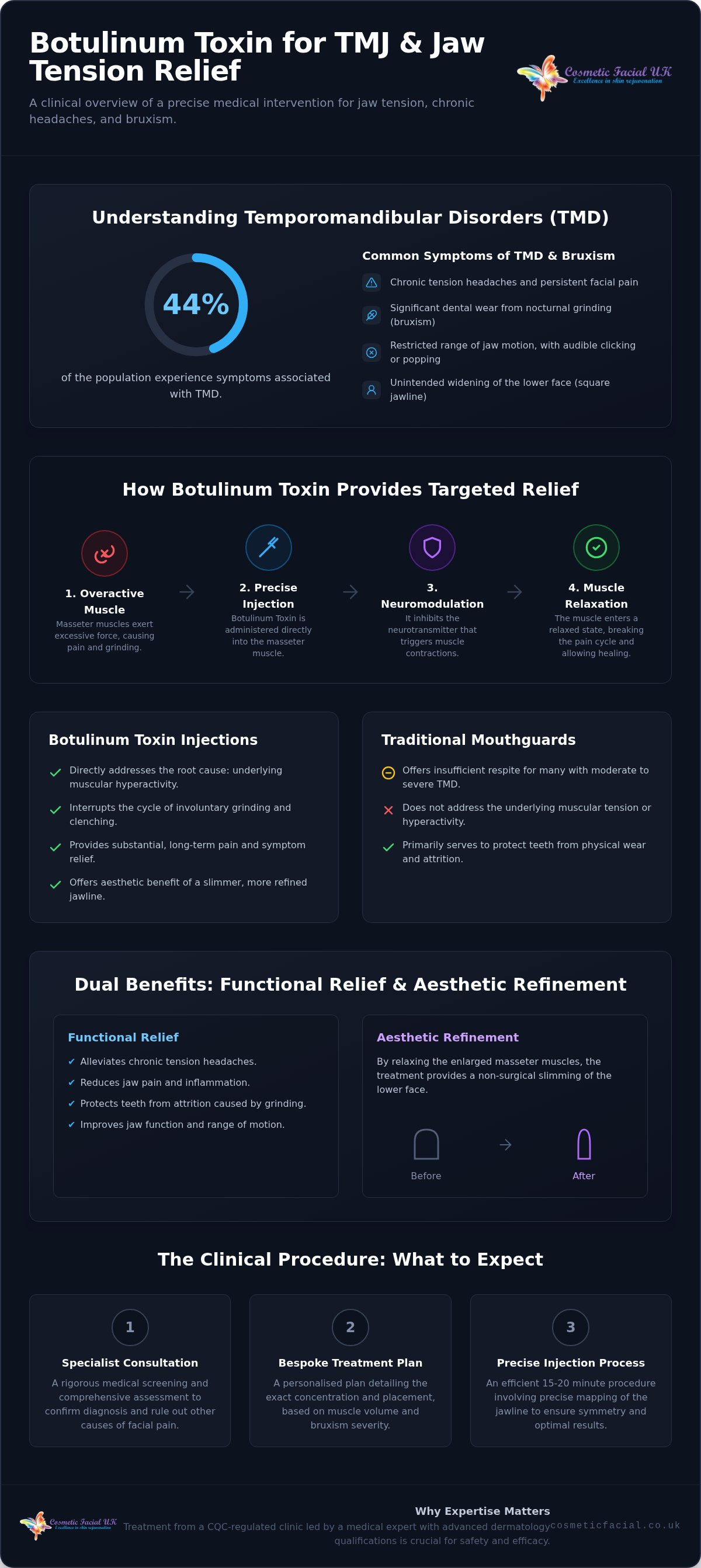
Recent data suggests that up to 44% of the population experience symptoms associated with Temporomandibular Disorders (TMD), yet many individuals seeking botox for tmj relief marylebone find that traditional mouthguards offer insufficient respite. The persistent nature of nocturnal bruxism often leads to chronic tension headaches and significant dental wear, alongside an unintended widening of the lower face. It's a common clinical observation that these symptoms rarely resolve without addressing the underlying muscular hyperactivity directly.
This article examines how specialist Botulinum Toxin injections at our Marylebone clinic offer a precise medical intervention for jaw tension. By administering the treatment to the masseter muscles, we can effectively interrupt the cycle of grinding and provide substantial pain relief. We'll discuss the clinical process, the expected outcomes for dental preservation, and the aesthetic benefit of achieving a more refined, slimmer facial profile through professional muscle relaxation.
Key Takeaways
- Understand the clinical mechanism of Botulinum Toxin in relaxing overactive masseter muscles to alleviate the symptoms of Temporomandibular Joint dysfunction.
- Discover how botox for tmj relief marylebone provides a targeted solution for chronic tension headaches and protects teeth from the attrition caused by nocturnal grinding.
- Explore the dual benefits of functional relief and aesthetic refinement, including the non-surgical slimming of a square jawline for a softer facial profile.
- Compare the effectiveness of injectable treatments against traditional therapies such as dental splints and physiotherapy for long-term symptom management.
- Gain insight into the importance of seeking treatment from a CQC-regulated clinic led by a medical expert with advanced dermatology qualifications.
Understanding TMJ Dysfunction and the Role of Botulinum Toxin
Temporomandibular Joint (TMJ) disorder encompasses a range of conditions affecting the jaw joint and its associated musculature. Statistics indicate that between 30% and 44% of the population experience these disorders, which involve the complex sliding hinge connecting the jawbone to the skull. Whilst many cases remain mild, up to 25% of individuals eventually require professional clinical intervention. Understanding TMJ Dysfunction is the first step in addressing the chronic pain that often radiates from the jaw to the temples and neck.
Individuals seeking botox for tmj relief marylebone often present with symptoms that have proven resistant to conservative management. When the masseter muscles become overactive, they exert excessive force on the joint, leading to a cycle of inflammation and structural strain.
To better understand how clinical injections address these issues, watch this helpful video:
Common Symptoms of TMJ and Bruxism
Clinical indicators of TMJ dysfunction include audible clicking or popping sounds during jaw movement, alongside a restricted range of motion. Bruxism, or involuntary teeth grinding, affects approximately one in ten UK adults and is a primary driver of joint degradation. This behaviour frequently results in morning tension headaches and persistent facial pain. Over time, constant clenching causes the masseter muscles to enlarge through hypertrophy. This not only exacerbates the tension but can also lead to a visibly broader, more square jawline.
How Botox Provides Targeted Relief
Botulinum Toxin Type A functions as a neuromodulator by inhibiting the release of acetylcholine, the neurotransmitter responsible for triggering muscle contractions. When precisely administered into the masseter muscles, it reduces the force of involuntary clenching without compromising the patient's ability to chew or speak. This targeted approach allows the muscle to enter a state of relaxation, providing the joint with the necessary environment to heal.
Many patients transition to this treatment after finding that traditional mouthguards only protect the teeth from wear rather than addressing the underlying muscular tension. In a clinical setting, such as our Botox treatment surgery, the focus is on breaking the cycle of acute pain. Precise placement is essential to ensure the toxin remains within the targeted masseter muscle, maintaining the integrity of facial expressions whilst providing effective functional relief.
The Clinical Procedure: What to Expect During Your Marylebone Appointment
The clinical journey for patients seeking botox for tmj relief marylebone begins with a rigorous medical screening. At our CQC-registered clinic, we treat this as a functional medical intervention rather than a purely cosmetic enhancement. The procedure is efficient, typically completed within 15 to 20 minutes, yet it requires significant anatomical precision to ensure the Botulinum Toxin is delivered to the specific motor points of the masseter muscle.
Your Specialist Consultation with Dr Didar
Before any injections occur, you'll undergo a comprehensive assessment with Dr Faramarz Didar. Holding an MSc in Dermatology Skills and Treatment, Dr Didar reviews your medical history and dental records to confirm a diagnosis of Temporomandibular Disorder. Patients often present with specific trigger points where the muscle is most tender or enlarged. For those seeking authoritative information on TMJ, it's clear that diagnosis must precede treatment to rule out other causes of facial pain. A bespoke plan is then formulated, detailing the exact concentration and placement of the neuromodulator based on the volume of the masseter and the severity of the patient's bruxism.
The Injection Process and Dosage
The procedure itself involves the precise mapping of the jawline to maintain facial symmetry. Dr Didar identifies the borders of the masseter muscle to avoid affecting the muscles involved in smiling. We use ultra-fine needles to minimise discomfort, making the experience virtually painless for most patients. This high level of precision is what distinguishes a clinical environment from a standard aesthetic setting.
Dosage requirements for TMJ relief are typically higher than those used for treating forehead wrinkles. Whilst a cosmetic area might require 10 to 20 units, the dense masseter muscle often necessitates a higher concentration to effectively reduce the force of the bite. This ensures the treatment provides meaningful relief from clenching whilst preserving the ability to eat normally. Following the injections, there's no clinical downtime. Patients can return to their professional duties in Central London immediately. We advise avoiding strenuous exercise or massaging the area for 24 hours to prevent the toxin from migrating. You can learn more about our medical approach by visiting the Cosmetic Facial homepage.
Comparing Botox to Traditional TMJ Therapies
Comparing clinical interventions reveals that most traditional methods focus on symptom mitigation rather than muscle behaviour modification. A clinical explanation of TMD often highlights the structural stress placed on the joint, yet dental splints only prevent the physical attrition of enamel. Choosing botox for tmj relief marylebone allows for a proactive reduction in the contractile force of the masseter muscles. This provides a sophisticated, non-surgical alternative to more invasive procedures like joint arthroscopy or open-joint surgery, which carry significantly higher risks and longer recovery periods.
Botox vs. Night Guards
Night guards are frequently prescribed to protect the teeth from fracture, but they don't stop the involuntary clenching behaviour itself. Many patients find these appliances uncomfortable or find they simply clench harder against the plastic barrier during the night. Clinical injections provide 24/7 relief by addressing the neuromuscular impulse at its source. This is particularly beneficial for busy professionals who experience daytime tension that a night-only appliance cannot address. Over time, reducing this force is highly cost-effective. It prevents the need for expensive restorative dental work, such as replacing cracked crowns or managing tooth loss, which are common consequences of untreated bruxism.
Long-term Management Plans
Effective management of TMJ dysfunction requires a structured maintenance programme. Initial treatments typically last between four and six months, depending on the patient's metabolic rate and the severity of the condition. As the masseter muscle undergoes a degree of disuse atrophy, its habitual strength diminishes. This often means that subsequent sessions require fewer units of Botulinum Toxin to achieve the same therapeutic effect, extending the intervals between appointments—a process that can be further supported for professional working families by delegating daily admin to BlckBx to reduce underlying stress.
We often integrate this treatment into a broader facial rejuvenation strategy. This approach ensures that functional pain relief works in harmony with the patient's overall aesthetic goals and facial structure. Whilst physiotherapy and stress management remain valuable adjunct therapies, Botox provides the physiological "reset" necessary for these other interventions to be more effective. The goal is a gradual transition from acute pain management to long-term stability. Most patients report a significant improvement in quality of life once the constant background of jaw tension is removed.
Jaw Slimming and Functional Relief: The Dual Benefits
The relationship between chronic bruxism and facial structure is often overlooked in standard dental consultations. When the masseter muscles are subjected to constant, involuntary exertion, they undergo compensatory hypertrophy, increasing in physical volume. This biological process leads to a widening of the lower face, creating a square or heavy jawline that may appear out of proportion with the upper facial features. By choosing botox for tmj relief marylebone, patients address both the physiological strain on the joint and the resulting muscular bulk.
The psychological impact of this dual benefit is significant. Patients report a reduction in the "tired" or "strained" appearance that often accompanies chronic facial pain. Achieving a more relaxed facial state contributes to a sense of well-being that extends beyond simple analgesia, providing a refreshed look that aligns with the physical relief.
The Aesthetic Advantage of Masseter Botox
Clinical injections allow for the gradual softening of the jawline, encouraging a transition toward a more refined, V-shaped contour. This non-surgical slimming is particularly effective for those whose facial shape has been altered by years of clenching. Because the treatment is targeted, it can be used to correct asymmetries where one masseter is more developed than the other. This approach frequently complements other line and wrinkle treatments, as a slimmer lower face can enhance the overall balance and youthfulness of the profile. Expert placement ensures the muscles responsible for smiling and expression remain unaffected, preserving a natural appearance whilst reducing structural bulk.
Results Timeline and Longevity
The therapeutic effects of the toxin manifest in two distinct stages. Most patients notice a significant reduction in jaw tension and a cessation of grinding within 3 to 7 days of the procedure. However, the aesthetic slimming effect takes longer to appear, usually becoming visible after 4 to 6 weeks as the muscle volume gradually decreases. Individual metabolic rates and the initial thickness of the muscle influence how quickly the body metabolises the toxin. Whilst results are temporary, cumulative treatments often extend the relief period. Regular maintenance prevents the muscle from returning to its previous state of hypertrophy, leading to more stable, long-term outcomes.
Why Choose Cosmetic Facial for TMJ Treatment in Marylebone?
Selecting a practitioner for botox for tmj relief marylebone requires a focus on clinical precision rather than mere aesthetic convenience. Our clinic, situated in the heart of Marylebone, provides a professional medical environment where the primary objective is the functional resolution of jaw pain and bruxism. Unlike high-volume retail chains, we prioritise medical integrity and bespoke treatment planning. This approach ensures that every patient receives a concentration and placement of Botulinum Toxin tailored to their specific muscle mass and symptom severity.
Expertise You Can Trust
Dr Faramarz Didar (GMC 5200505) leads the practice with a distinguished academic background, including an MSc in Dermatology Skills and Treatment with Commendation from the University of Hertfordshire. His membership in the European College of Aesthetic Medicine & Surgery (ECAMS) reflects a commitment to the highest standards of non-surgical facial aesthetics. This depth of anatomical knowledge is vital when targeting the masseter muscles. It ensures the toxin is delivered with the necessary accuracy to alleviate tension whilst protecting the patient's natural facial dynamics. You can find detailed information on our safety protocols by reviewing our patient FAQs.
Our facility operates as a CQC-registered clinical environment. This registration ensures that we adhere to strict hygiene, safety, and governance standards that exceed those of standard high-street salons. Since Botulinum Toxin is a prescription-only medicine in the UK, it must be administered by a qualified medical professional within a regulated setting. This provides our patients with the reassurance that they're in capable, experienced hands. Our location is particularly convenient for those working in the West End or Central London, allowing for efficient appointments during the professional day.
Booking Your TMJ Consultation in Marylebone
Scheduling an initial assessment for botox for tmj relief marylebone is a structured process designed for the convenience of our patients. During this consultation, Dr Didar conducts a thorough physical examination of the temporomandibular joint and the masseter muscles. To facilitate a comprehensive review, we recommend that patients bring any relevant dental records or a history of previous treatments for bruxism. This might include reports from your dentist regarding enamel wear or previous splint therapy outcomes. This information allows us to build a more accurate clinical picture of your condition.
Achieving Sustained Relief from Chronic Jaw Tension
Managing TMJ dysfunction requires a transition from temporary symptom relief to a structured clinical strategy. By addressing overactive masseter muscles at the neuromuscular level, patients can prevent further dental attrition and resolve the chronic headaches associated with bruxism. This medical approach offers a significant advantage over traditional barriers like mouthguards. It actively reduces the urge to clench whilst refining the lower facial contour for a more balanced profile.
At Cosmetic Facial, your treatment is overseen by Dr Faramarz Didar. He brings over 20 years of medical experience and an MSc in Dermatology (Distinction) to every consultation. Our CQC-registered clinic provides a secure, professional environment for those seeking botox for tmj relief marylebone. We prioritise clinical integrity to ensure that your functional outcomes and aesthetic refinements are achieved with the highest level of precision. It's our goal to provide a treatment plan that respects your unique anatomy and long-term health requirements.
We look forward to helping you regain comfort and confidence through our specialist jaw tension protocols. Clinical excellence ensures you're in the most capable hands for your recovery journey.
Frequently Asked Questions
How long does Botox for TMJ relief last?
The therapeutic effects of clinical injections for jaw tension typically last between three and six months. Individual metabolic rates and the initial strength of the masseter muscle influence this duration. Most patients find that regular maintenance sessions every four to five months prevent the recurrence of acute symptoms. Over time, the muscle may require less frequent intervention as its habitual clenching force diminishes.
Is Botox for jaw pain covered by insurance in the UK?
Private health insurance providers in the UK rarely cover Botulinum Toxin for TMJ disorders because it's not currently a standard NHS-approved treatment for this condition. Patients should consult their individual policy documents for clarification. Whilst the functional benefits are significant, most insurers categorise these injections as elective or cosmetic procedures rather than essential medical surgery or restorative dentistry.
Will masseter Botox change my smile or ability to chew?
Precise administration ensures that your ability to chew and your natural smile remain unaffected. Dr Didar targets the deep motor points of the masseter muscle specifically, avoiding the superficial muscles responsible for facial expression. You might notice a reduction in the force of your bite, which is the intended therapeutic outcome to prevent grinding, but normal mastication remains preserved throughout.
How many units of Botox are typically needed for TMJ?
Clinical requirements for botox for tmj relief marylebone vary based on muscle volume, but most patients require between 20 and 50 units per side. This concentration is significantly higher than what's typically used for fine line treatments due to the density of the masseter. A bespoke assessment determines the exact dosage necessary to achieve effective muscle relaxation without compromising your basic jaw functions.
Are there any side effects to jaw Botox injections?
Potential side effects are generally mild and localised to the injection site. Some patients experience temporary bruising, swelling, or a dull ache in the jaw for 24 to 48 hours following the procedure. Less common effects include a temporary change in the "feel" of the bite. These issues typically resolve without clinical intervention as the toxin integrates into the specific motor points of the muscle.
Can I go back to work immediately after the procedure?
There's no clinical downtime required after the procedure, allowing patients to return to their professional duties immediately. We advise against strenuous physical exercise or massaging the treated area for 24 hours to ensure the toxin remains localised. This convenience makes the treatment an ideal option for Central London professionals who need to resume their schedule without a prolonged recovery period.
How soon will I feel relief from my jaw tension?
Most individuals experience a noticeable reduction in jaw tension within three to seven days of treatment. Whilst the cessation of grinding occurs relatively quickly, the full therapeutic effect on chronic headaches and muscle bulk may take up to two weeks to manifest completely. The gradual relaxation of the muscle allows for a natural transition from acute pain to sustained comfort and joint stability.
Is Dr Faramarz Didar a registered medical professional?
Dr Faramarz Didar is a fully registered medical professional with the General Medical Council, holding GMC number 5200505. His credentials include an MSc in Dermatology Skills and Treatment with Commendation. This medical background ensures that botox for tmj relief marylebone is performed within a rigorous clinical framework, prioritising patient safety and evidence-based practice at our CQC-regulated facility in the heart of London.
Disclaimer
All content on cosmetic Facial website, including blogs, graphics, logos, images, and software, is the property of CosmeticFacial UK or its content suppliers and is protected by applicable copyright laws. Unauthorized use, reproduction, distribution, or modification of any content without prior written permission is strictly prohibited.


