


The effectiveness of a non-surgical aesthetic intervention often depends more on the clinical precision of its application than the marketing behind the device. Whilst many individuals seek solutions for stubborn adipose tissue, achieving a refined silhouette requires a sophisticated understanding of tissue biology and energy delivery. It's understandable to feel frustrated when disciplined exercise fails to resolve localised fat or the skin laxity that often accompanies the ageing process. For those investigating hifu body sculpting london, the primary difficulty is often discerning which technology offers the most robust clinical outcomes amidst a crowded market of competing claims.
This article offers a methodical comparison between High-Intensity Focused Ultrasound and other prominent non-surgical contouring treatments utilised in London clinics. You'll discover how HIFU facilitates targeted fat reduction whilst simultaneously promoting dermal tightening through thermal coagulation. We will evaluate the specific mechanisms of action, the expected physiological responses, and how these procedures fit into a schedule with no required recovery period. This analysis provides the technical clarity necessary to choose a treatment protocol that addresses both fat volume and skin structural integrity.
Key Takeaways
- Learn why High-Intensity Focused Ultrasound is unique amongst non-surgical treatments for its ability to induce fat cell necrosis whilst simultaneously tightening the skin.
- Understand the physiological differences between HIFU, T-Shape, and Cryolipolysis to determine which method best aligns with your specific contouring objectives.
- Identify the most effective anatomical applications for hifu body sculpting london, particularly concerning the abdomen, flanks, and the brachial region of the arms.
- Recognise the necessity of a clinical framework for body contouring where a specialist's understanding of dermatology ensures optimal tissue response and safety.
- Preview the structured treatment journey at our Marylebone clinic, which prioritises bespoke marking and precise energy delivery to achieve symmetrical, targeted results.
Understanding HIFU Body Sculpting in London’s Aesthetic Market
High-Intensity Focused Ultrasound has established itself as a primary modality for non-invasive fat reduction within the capital's aesthetic landscape. Unlike superficial treatments that focus primarily on the epidermal layer, High-Intensity Focused Ultrasound operates by directing concentrated energy deep into the subcutaneous tissue. This precision allows for the destruction of adipocytes, or fat cells, without compromising the integrity of the surrounding skin or vascular structures. For many patients, hifu body sculpting london represents a transition toward medical-grade technology that prioritises biological outcomes over temporary surface improvements.
The growing preference for this technology amongst Londoners stems from its profile as a non-surgical alternative to invasive liposuction. Traditional surgery involves significant risks, including general anaesthesia and lengthy recovery periods. HIFU offers a targeted approach that requires no scalpels or sutures. Because the energy passes through the skin surface without causing damage, there's no downtime. This allows individuals to return to their professional and social commitments immediately following their session in Marylebone.
The Science of Ultrasound Fat Reduction
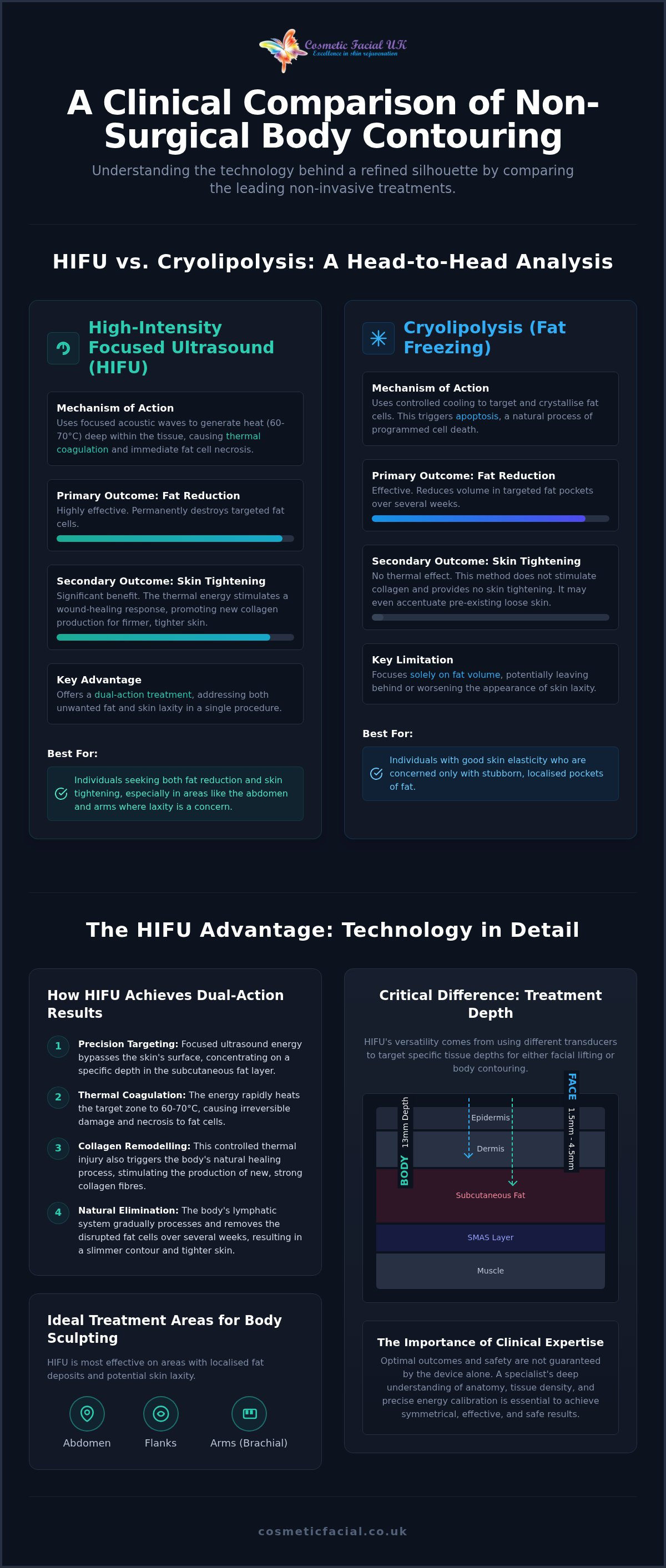
HIFU technology utilises focused acoustic waves to generate rapid thermal increases at a specific depth. When the temperature within the targeted fat layer reaches a threshold of approximately 60 to 70 degrees Celsius, it induces thermal coagulation. This precise heating results in the immediate necrosis of fat cells. When undergoing hifu body sculpting london, the treatment also stimulates the production of new collagen fibres. This dual action ensures that the skin contracts and tightens as the underlying fat volume decreases. Once the adipocytes are disrupted, the body’s natural inflammatory response is triggered. Macrophages then transport the cellular debris through the lymphatic system to be processed by the liver and excreted. This metabolic pathway ensures that the fat reduction is permanent for the treated cells, provided a stable weight is maintained.
HIFU Body vs HIFU Face: Key Differences
A critical distinction exists between facial and body applications of ultrasound energy. Facial treatments typically focus on the SMAS (Superficial Muscular Aponeurotic System) layer at depths of 1.5mm to 4.5mm to achieve a lifting effect. In contrast, body contouring requires specialised transducers capable of reaching 13mm to penetrate the thicker subcutaneous fat deposits found on the abdomen, flanks, or thighs. These deeper applications necessitate higher energy concentrations to achieve effective fat cell disruption. It's essential to choose a clinic where treatment is overseen by medical professionals, such as those at Cosmetic Facial, to ensure that these technical parameters are calibrated correctly for the specific anatomical site and tissue density of the patient.
HIFU vs CoolSculpting vs T-Shape: Which Body Contouring Method Wins?
Selecting an appropriate modality for non-invasive contouring requires a nuanced understanding of how different energies interact with human tissue. While several technologies are available across the capital, hifu body sculpting london remains distinct due to its ability to address two primary concerns simultaneously: adipose volume and dermal laxity. In contrast, other popular methods often focus on a single biological pathway, which may lead to incomplete aesthetic results for certain patients.
Cryolipolysis, commonly referred to as fat freezing, utilises controlled cooling to induce apoptosis in fat cells. Whilst effective for volume reduction, it provides no thermal stimulation to the dermis. This lack of heat means that patients with pre-existing skin laxity might find that the reduction in fat actually accentuates loose skin. High-Intensity Focused Ultrasound avoids this issue by creating thermal coagulation points that trigger a wound-healing response, resulting in firmer tissue. For those seeking a comprehensive result, the dual-action nature of ultrasound energy provides a significant clinical advantage.
Comparing Results: Fat Loss and Skin Tightening
The choice between technologies often depends on the specific condition of the treatment area. HIFU is particularly advantageous for the abdomen or upper arms, where skin tightening is as vital as fat reduction. However, for areas where cellulite is the primary concern, such as the posterior thighs, a multi-modal approach like T-Shape 2 may be more appropriate. T-Shape 2 combines radiofrequency with vacuum-assisted massage to improve microcirculation and lymphatic drainage, effectively smoothing the skin's surface. A clinical consultation is necessary to determine which technology aligns with your physiological requirements.
Treatment Experience and Timelines
The treatment experience varies significantly between these modalities. A session of hifu body sculpting london in our Marylebone clinic typically lasts between 30 and 90 minutes, depending on the surface area of the target zone. One of the primary benefits of HIFU over purely radiofrequency-based treatments is the frequency of visits; HIFU often achieves significant results in just one to three sessions, whereas RF protocols typically require a course of eight to ten weekly appointments.
Patients must understand that results are not instantaneous. The biological process of fat cell necrosis and subsequent lymphatic clearance takes time. While some initial tightening may be visible, the most significant improvements generally manifest between 8 and 12 weeks post-treatment. This window allows the body to process the disrupted adipocytes and for the new collagen matrix to mature fully. This methodical progression ensures that the final contour appears natural and remains stable over time.
Identifying the Ideal Areas for HIFU Body Sculpting
Clinical efficacy in non-surgical contouring is heavily dependent on selecting anatomical sites with appropriate tissue characteristics. While High-Intensity Focused Ultrasound is a versatile modality, its results are most predictable in regions where subcutaneous fat is accompanied by a degree of dermal laxity. In our Marylebone practice, the most frequent applications for hifu body sculpting london involve the midsection and the extremities. These areas often harbour persistent fat deposits that don't respond to conventional weight loss methods, requiring a more targeted energy-based intervention. A thorough clinical assessment ensures that the patient has sufficient adipose tissue to safely receive the focused energy, as the technology requires a minimum thickness to avoid impacting underlying muscular structures.
Targeting Stubborn Abdominal Fat
The abdominal region is uniquely suited to ultrasound energy due to the depth of the adipose layer. HIFU transducers are calibrated to reach 13mm, allowing the thermal energy to penetrate the thickest part of the fat deposit without affecting the skin surface. This induces a "shrink-wrap" effect, where the skin contracts as the underlying fat cells undergo necrosis. This dual benefit is particularly useful for addressing the post-pregnancy "tummy pouch", where skin elasticity has been compromised alongside the accumulation of localised fat. View our body sculpting gallery to see the clinical outcomes achieved for patients focusing on abdominal refinement.
Sculpting the Arms and Thighs
Treating the limbs requires a high degree of precision to ensure symmetrical results and avoid contour irregularities. The upper arms, often referred to as the "bingo wing" area, present a specific challenge where skin tightening is just as important as fat reduction. HIFU is often a superior choice for this area compared to fat-freezing alone, as it provides the necessary thermal stimulation to firm the skin. Similarly, the inner and outer thighs can be contoured to reduce circumference and improve the overall silhouette. By focusing energy at precise depths, we can address stubborn fat pockets whilst simultaneously improving the structural integrity of the skin, leading to a smoother and more toned appearance across the lower body. This method is particularly effective for individuals who have noticed a loss of firmness in their thighs following significant weight loss or as a natural consequence of the ageing process.
The Clinical Journey: What to Expect During Your Marylebone Treatment
The transition from clinical theory to physical results requires a structured protocol delivered within a medical environment. At our Marylebone clinic, the process for hifu body sculpting london is designed to ensure both patient safety and the precision of energy delivery. This methodical approach allows for the systematic destruction of adipose tissue whilst maintaining the health of the surrounding dermal structures. Each stage of the journey is overseen by professionals who understand the biological complexities of ultrasound technology.
- Step 1: Clinical Consultation. A thorough assessment of your medical history and tissue characteristics is essential. We evaluate the thickness of the subcutaneous fat layer to confirm suitability for the 13mm depth settings.
- Step 2: Anatomical Marking. Precision is vital for achieving a symmetrical silhouette. The treatment area is carefully mapped out with surgical markers to guide the systematic delivery of ultrasound energy.
- Step 3: Energy Delivery. After applying a conductive ultrasound gel, the specialist moves the transducer over the marked zones. You may feel a brief sensation of heat as the acoustic waves reach the targeted fat cells.
- Step 4: Post-Treatment Review. Once the session concludes, we provide a detailed aftercare programme designed to support your body’s metabolic processing of the disrupted adipocytes.
Preparing for Your Sculpting Session
Success starts before you arrive at our Marylebone centre. Optimal hydration is the most critical preparation factor. We recommend increasing your water intake for 24 to 48 hours prior to your appointment. This is because the lymphatic system requires adequate fluid levels to efficiently transport and process the lipids released during the treatment. On the day of your session, wear loose, comfortable clothing that allows easy access to the treatment area. If you're also considering treatments for skin texture or cellulite, you may find it helpful to read our T-Shape Body Contouring Guide to understand how different technologies can be integrated into a broader aesthetic plan.
Aftercare and Maximising Your Results
The weeks following your hifu body sculpting london session are when the biological transformation occurs. To assist the lymphatic system, we advise engaging in light physical activity, such as walking, which stimulates circulation and aids in the removal of cellular debris. It's also prudent to support your liver function by maintaining a balanced diet and limiting alcohol consumption whilst the lipids are being processed. For the first 48 hours, avoid heat treatments, including saunas, steam rooms, or excessively hot baths, to prevent unnecessary inflammation in the treated zone.
Book a clinical assessment at our Marylebone clinic
Why Clinical Expertise is Vital for Non-Surgical Body Contouring
The London aesthetic market is saturated with various contouring options, yet the distinction between a salon-based beauty treatment and a medical procedure is often overlooked. High-Intensity Focused Ultrasound is a potent technology that requires precise calibration based on individual tissue density and anatomical structure. For hifu body sculpting london, the efficacy of the treatment is inextricably linked to the expertise of the practitioner. Clinical oversight ensures that energy levels are high enough to induce fat cell necrosis without causing thermal damage to the dermis or underlying vascular structures. Choosing a medical environment over a high-street salon ensures that your treatment is dictated by biological suitability rather than sales targets.
Operating within a CQC-registered environment provides a framework of safety and hygiene standards that unregulated establishments are not required to meet. CQC registration confirms that our clinic adheres to stringent protocols regarding equipment maintenance, practitioner training, and emergency preparedness. This clinical rigour extends to the consultation phase, where we determine the most appropriate energy-based device for your specific concerns. We don't believe in a one-size-fits-all approach; instead, we develop bespoke protocols that may combine HIFU with other modalities like T-Shape 2 to address both fat volume and surface texture effectively. This level of accountability is vital for patients who prioritise their health alongside their aesthetic goals.
The Role of the Medical Director
Our clinic is led by Dr Faramarz Didar, whose MSc in Dermatology Skills and Treatment informs every aesthetic protocol we deliver. This advanced training allows for a more sophisticated interpretation of tissue response, ensuring that the inflammatory process triggered by HIFU is managed correctly to promote collagen synthesis. Dr Didar’s expertise allows for the identification of subtle contraindications that a less experienced practitioner might overlook, such as specific skin conditions or historical scar tissue that could affect energy absorption. The presence of a GMC-registered doctor ensures that your suitability is assessed through a medical lens, prioritising your long-term skin health over immediate gains. Comprehensive medical oversight effectively mitigates the risk of paradoxical adipose hyperplasia, a rare but significant adverse reaction where the treated fat tissue undergoes unexpected expansion rather than reduction.
Book Your Consultation at Cosmetic Facial
The journey toward a more sculpted physique begins with a professional skin and body analysis at our Marylebone clinic. During this initial meeting, our specialists will evaluate your subcutaneous fat thickness and skin elasticity to confirm that hifu body sculpting london is the most effective pathway for your goals. We provide a transparent overview of the expected outcomes and the biological timeline required for results to manifest. You can arrange your clinical consultation by contacting our team via telephone or through our digital booking platform. This structured approach ensures that every patient receives a treatment plan that's both safe and clinically indicated for their specific anatomy.
Advancing Your Body Contouring Strategy with Clinical Precision
Achieving a refined physique through non-surgical means requires a sophisticated understanding of how focused energy interacts with subcutaneous tissue. High-Intensity Focused Ultrasound offers a distinct clinical advantage by addressing both adipose volume and dermal laxity within a single treatment protocol. This dual-action mechanism distinguishes it from singular modalities like cryolipolysis, which may leave skin laxity unaddressed. The integration of advanced systems such as T-Shape 2 alongside HIFU allows for a bespoke approach that targets diverse concerns, from persistent fat deposits to surface irregularities.
The success of hifu body sculpting london is predicated on medical expertise; it's a process that requires a thorough understanding of dermatology to ensure safety and optimal tissue response. At our CQC-registered clinic in Marylebone, every procedure is overseen by Dr Faramarz Didar, whose MSc in Dermatology ensures that skin health remains the priority throughout the contouring journey. This clinical framework provides the reassurance that your aesthetic goals are being managed by knowledgeable authorities using the latest energy-based technology.
We invite you to begin your transformation through a structured, professional assessment of your physiological needs.
Frequently Asked Questions
Is HIFU body sculpting painful?
Most patients describe the sensation as a deep, localised heat or a slight tingling during the delivery of ultrasound waves. It isn't typically classified as painful, though some discomfort may be felt over bony prominences or areas with thinner adipose tissue. We can adjust the energy settings during the procedure to ensure it remains tolerable whilst maintaining clinical effectiveness. No anaesthesia or numbing agents are required for this non-invasive protocol.
How many sessions of HIFU body contouring will I need?
Clinical protocols for hifu body sculpting london typically involve between one and three sessions per targeted area. The exact number depends on the volume of subcutaneous fat and the patient's desired level of contouring. During your initial consultation in Marylebone, we will assess your tissue density to establish a bespoke timeline that allows for optimal biological response and lymphatic clearance between treatments.
How long do the results of HIFU body sculpting last?
The results of ultrasound-induced fat necrosis are considered long-term because the disrupted adipocytes are permanently removed by the lymphatic system. However, the remaining fat cells in the area can still expand if a significant weight gain occurs. To maintain the sculpted silhouette, it's essential to adhere to a stable lifestyle. The skin-tightening effects typically persist for twelve to eighteen months before natural ageing processes resume.
What is the difference between HIFU and CoolSculpting?
HIFU utilises thermal energy to destroy fat cells and simultaneously stimulate collagen, whereas CoolSculpting uses cryolipolysis to freeze fat without affecting skin laxity. This makes ultrasound a more comprehensive choice for patients who require both volume reduction and tissue firming. Focused ultrasound energy also reaches deeper layers more precisely than suction-based cooling applicators, which primarily target the most superficial fat deposits.
Can I return to work immediately after a HIFU body treatment in London?
Yes, you can resume your professional and social activities immediately following your session. There is no recovery period or downtime associated with this technology because the ultrasound energy passes through the epidermis without causing surface damage. Some patients might experience mild erythema, or redness, or slight tenderness in the treated zone, but these symptoms typically resolve within a few hours of the treatment.
Is HIFU body sculpting suitable for everyone?
HIFU is not a weight-loss solution and is unsuitable for individuals with a high BMI or those with very little subcutaneous fat. A minimum fat depth of 13mm is generally required to ensure the energy is delivered safely into the adipose layer. It's also contraindicated for pregnant women, individuals with pacemakers, or those with active skin infections and metallic implants in the target area.
How much does HIFU body sculpting cost in London?
The investment for hifu body sculpting london varies depending on the dimensions of the anatomical area being treated and the number of sessions required to achieve the clinical objective. Larger areas like the abdomen require more time and energy delivery than smaller zones like the upper arms or flanks. We provide a clear fee structure during the bespoke consultation once the treatment parameters have been defined.
When will I see the final results from my HIFU treatment?
Final results are typically visible between eight and twelve weeks after the procedure. This duration is necessary for the body’s lymphatic system to process and excrete the necrotic fat cells effectively. Simultaneously, the new collagen matrix stimulated by the thermal energy takes several months to mature fully, leading to a gradual and natural-looking improvement in both body contour and skin firmness.
Disclaimer
All content on cosmetic Facial website, including blogs, graphics, logos, images, and software, is the property of CosmeticFacial UK or its content suppliers and is protected by applicable copyright laws. Unauthorized use, reproduction, distribution, or modification of any content without prior written permission is strictly prohibited.


