


Natural-looking lip enhancement is usually a question of proportion, not simply adding volume. For lip enhancement in London, hyaluronic acid filler is used to add hydration and volume to the lips, with results often lasting 6-8 months depending on the product, metabolism and lifestyle. The aim is to consider how the lips relate to your facial features, rather than treat volume as the only measure of a successful result.
If you’re considering lip enhancement in London, it’s reasonable to want a clear idea of the likely shape and how long results may last before deciding on treatment. This article explains what lip filler is, how an anatomy-led consultation can guide the approach, and what to expect from the appointment, early results and settling period. It also covers factors that influence longevity, so you can understand why results vary and what a natural-looking outcome can involve.
Key Takeaways
- Hyaluronic acid filler adds hydration and volume, while the product, metabolism and lifestyle can influence how long results last.
- An anatomy-led consultation helps shape a treatment plan around lip proportions and the outcome you want, rather than volume alone.
- Early swelling can affect how the lips look; allow time for the result to settle before judging the final shape.
- Understand how appointment timing, recovery and a review can fit into your plans before deciding on treatment.
- A measured approach can help avoid overfilling and keep the result in proportion with your facial features.
Hyaluronic acid fillers and expected longevity
Hyaluronic acid filler adds hydration and volume, but a natural result depends on how those changes suit your facial proportions. The amount used, its placement and your treatment goal all influence the final shape.
Filler type and expected longevity
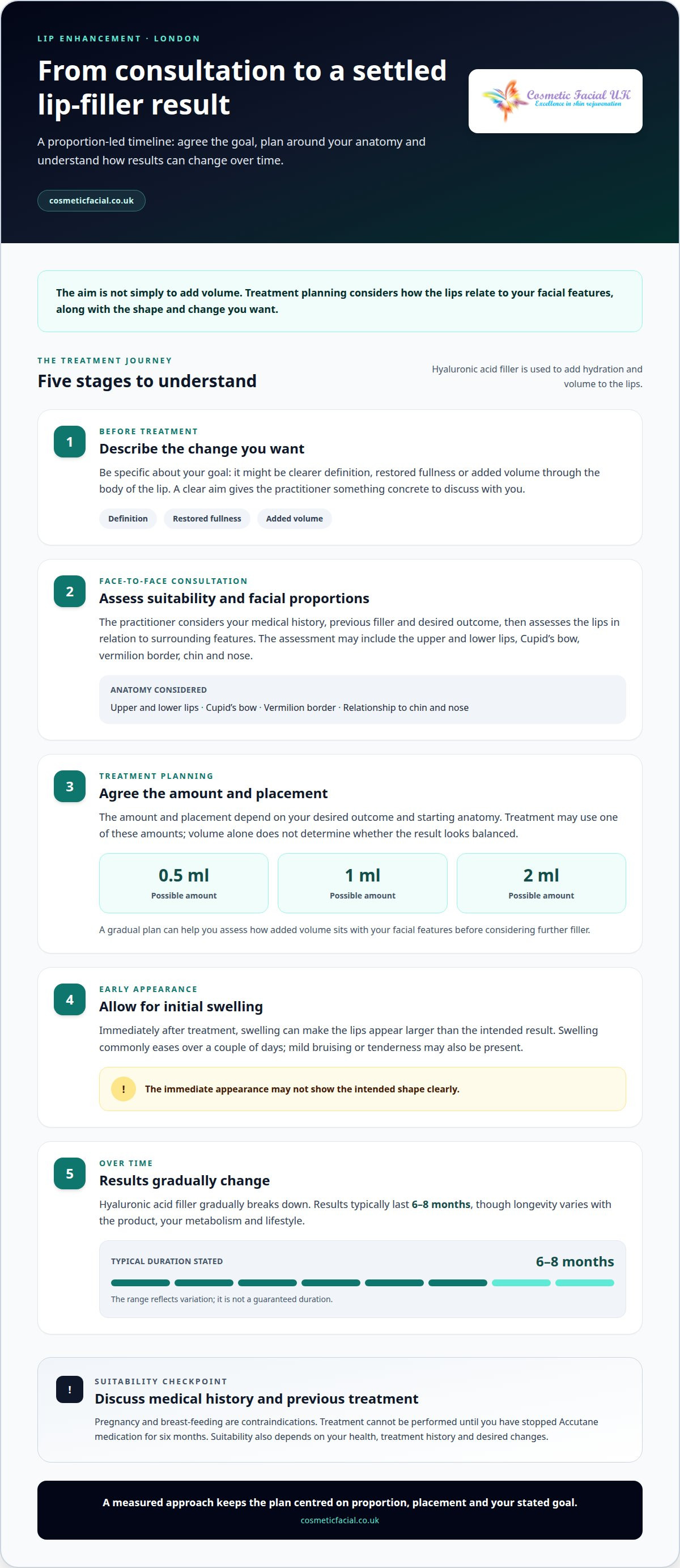
Hyaluronic acid is a substance used in dermal fillers to add hydration and volume to the lips. Depending on the desired outcome, treatment may use 0.5 ml, 1 ml or 2 ml. Results typically last 6-8 months, although the product, metabolism and lifestyle can affect how quickly the filler breaks down. The volume alone does not determine whether the result looks balanced.
Suitability for lip filler
Suitability depends on your health, treatment history and desired changes. Pregnancy and breast-feeding are contraindications, and treatment cannot be performed until you have stopped Accutane medication for six months. A clear goal, such as adding definition or restoring volume, helps guide a tailored plan and gives the practitioner a basis for discussing whether filler is appropriate.
Before treatment, ask to review the practitioner’s relevant qualifications, professional registration and indemnity insurance. Confirm that the person performing the injections is the same person whose credentials and insurance you have reviewed.
UK requirements for lip enhancement relate to professional practice, the supply and use of medicines, and the safe provision of cosmetic treatment. Requirements depend on the practitioner’s role and the product used, so ask how consent, product information and aftercare are handled before proceeding.
For lip enhancement in London, hyaluronic acid dermal filler is one available injectable treatment. It can add volume, improve definition or restore fullness. The approach should reflect the change you want, rather than assume that more filler is better.
Filler migration describes product moving beyond the intended treatment area, which can affect the lip border or surrounding tissue. If excess hyaluronic acid filler needs correction, an enzyme can be used to dissolve it. This option applies to hyaluronic acid filler, not every type of dermal filler.
Common questions include how much filler is needed and how long it lasts. The amount depends on the desired shape, while longevity varies with the product, metabolism and lifestyle. A gradual plan can help you assess how added volume sits with your facial features before considering further filler.
Consultation and anatomy-led treatment approach
A face-to-face consultation assesses suitability and connects your goals with your lip anatomy. The practitioner considers the lip border, surrounding features and the changes you want.
Suitability assessment
A suitability assessment considers your medical history, previous filler and the outcome you hope to achieve. Someone seeking clearer definition, for example, may need a different plan from someone seeking more central volume. Sharing details of previous treatment helps the practitioner account for existing product and discuss the limits of further enhancement.
Facial anatomy provides the framework for treatment planning. The practitioner can assess the upper and lower lips, Cupid’s bow, vermilion border and how the mouth relates to the chin and nose. These features help identify where definition or balance may be improved. A change in one area can affect the appearance of the whole mouth.
Describe your preferred result clearly at the consultation. “More defined” might mean a sharper border, while “fuller” might mean added volume through the body of the lip. These examples give the practitioner specific aims to discuss, rather than relying on a vague request for larger lips. A tailored plan should reflect your starting anatomy and priorities.
The assessment should establish whether your expectations match what filler can achieve. If your priority is a substantial change in facial proportions, the practitioner can explain how lip filler relates to that goal. The discussion should cover the proposed areas, intended shape and reasons for the approach, so you understand what treatment is designed to address.
Patient care and consultation experience
A useful consultation gives you time to explain your concerns and understand the proposed plan. You should feel comfortable discussing previous procedures, sensitivities and any uncertainty about the result. Clear explanations of the treatment area, likely changes and aftercare help make consent informed and specific to your circumstances.
Before treatment, the practitioner should discuss the plan with you and answer questions about shape, symmetry and the lip border. For example, if you want a defined Cupid’s bow without a pronounced outline, say so directly. This gives you and the practitioner a shared reference point for the intended result.
A face-to-face appointment also allows the practitioner to assess your lips directly, rather than relying only on photographs. If you are considering treatment, explore lip filler treatment options as a next step in understanding the approach.
Results and how long they last
Lip filler results change as initial swelling settles and the hyaluronic acid gradually breaks down. Assessing the shape at the right stage gives a more useful view of the outcome.
Before-and-after results
Before-and-after photographs can show how treatment changes lip definition, volume and facial balance. Compare images taken from similar angles and with similar expressions, and note when the after photograph was taken. An example of an M-shaped lip treatment was photographed six months after treatment, illustrating how a later image can show a settled result.
Immediately after treatment, swelling can make lips appear larger than the intended result. Swelling commonly eases over a couple of days, while mild bruising or tenderness may also affect the early appearance. These temporary changes can make a subtle enhancement look more pronounced at first. Avoid judging symmetry or final volume from the first day alone.
The final result settles within two weeks. During this period, the lips can look different from day to day as swelling reduces and tissue adjusts. To assess progress, compare the shape after this settling period with your original treatment goal, rather than focusing on the immediate post-treatment appearance.
For a fair before-and-after comparison, look at the outline as well as fullness. A more defined vermilion border, for example, can create a visible change without a large increase in volume. Lighting, facial expression and camera distance can alter how lips appear in photographs, so consistent images provide a clearer comparison.
Duration of results
Published estimates for visible lip filler results vary: some state 4-5 months, whilst others give 6-8 months. The product, metabolism and lifestyle contribute to this difference. Rather than treating one duration as a fixed expiry date, consider how your lips change over time and whether the remaining shape still meets your aesthetic goals.
As hyaluronic acid breaks down, added volume gradually diminishes. The change is not necessarily sudden, and the lips may retain some definition as fullness reduces. Someone seeking a subtle border enhancement, for example, may notice a different change from someone whose goal was increased volume.
A review in 2-4 weeks can assess the settled shape and whether further product is appropriate. This timing separates early swelling from the more stable result, helping the practitioner evaluate symmetry, definition and volume. It also provides an opportunity to discuss how the result is developing against the original plan.
Longevity is best understood as a range, not a guaranteed duration. The product used, individual metabolism and lifestyle all influence how long the visible change remains. Tracking the result at the two-week settling point and again over subsequent months can help you understand your own pattern.
Treatment time and number of sessions
A lip filler appointment can last up to 1 hour, including preparation and treatment. The amount used and the review appointment help determine the treatment plan.
In central or Greater London, including Knightsbridge, assess a clinic by its face-to-face consultation process, practitioner qualifications and insurance. A consultation should explain the proposed procedure, intended volume and aftercare before you decide whether to proceed.
At the appointment, topical numbing cream is applied before treatment, and lip filler injections contain local anaesthetic. The practitioner then places filler according to the agreed plan, considering where added volume may restore definition or create a more balanced shape. The procedure is non-surgical, but injections still require careful assessment and clear consent.
Preparation can affect comfort and the chance of bruising. Reduce alcohol intake for at least 24 hours before treatment, and avoid sun beds, waxing, electrolysis and laser for at least 48 hours beforehand. Tell the practitioner about medicines, previous filler and any history of cold sores during consultation, so these details can inform planning.
After treatment, tenderness, swelling and bruising can occur. For the first 24 hours, avoid exercise, alcohol and salty foods; avoid intense heat during that period too. Facials, facial massage and treatments that put pressure on the lips should be avoided for the first week. These steps help you plan recovery around work and social commitments.
Allow for a review in 2-4 weeks. This gives the practitioner an opportunity to assess the settled shape and decide whether additional product is appropriate. Further treatment is not automatic: the review considers the result, remaining volume and your original goal. A staged approach can help avoid adding more filler before the initial treatment has settled.
Treatment tiers are not simply a choice between fixed amounts. The plan depends on your existing lip shape, desired change and how much product is appropriate. The price depends on the case and is given after a quote request. Relevant factors include the treatment plan and amount of filler required.
For a Knightsbridge appointment or another London location, discuss during your consultation how the practitioner plans to manage numbing, treatment, aftercare and review. These details help you understand the procedure and organise your schedule, particularly if you have work or social plans soon afterwards.
Natural-looking enhancement and avoiding overfilling
A natural-looking lip is defined by proportion, not volume alone. The treatment plan should connect your preferred shape with your existing facial features.
Start with one specific goal, such as clearer definition or modest fullness. “A more defined upper lip” gives the practitioner a clearer direction than “make my lips bigger”. This distinction matters because adding volume may not address your concern. Someone seeking a sharper border, for example, may need a different approach from someone hoping to restore overall fullness.
Review your whole facial profile, not only your lips. The upper and lower lip, vermilion border, chin and nose influence how the mouth appears in balance. A defined border can change the impression of shape without making the lips look substantially larger. Describe both the change you want and what you want to preserve.
Agree on a conservative starting plan before hyaluronic acid is injected. Discuss the areas to treat, the intended effect and whether a staged approach suits your goal. A gradual plan makes it easier to assess how added volume relates to your features before considering further treatment. It also gives you and the practitioner a shared reference for reviewing the result.
Do not use the immediate post-treatment appearance as the final measure of shape. Swelling can temporarily increase apparent volume, so an early look may not reflect the settled result. Assess definition and balance after the settling period instead. Compare the outcome with your stated goal, such as a clearer Cupid’s bow or a subtle increase in fullness.
Overfilling is not simply a matter of using a particular amount. It can happen when a plan prioritises added volume over proportion, or when more product is considered before the existing result has settled. At review, assess the lip outline, facial balance and whether the change already meets your goal. Further filler should have a clear purpose, rather than being added automatically.
Use reference images to clarify the features you like, not as templates for copying someone else’s lips. Different lip anatomy means the same shape may look different across faces. Explain what appeals to you in an image, such as a soft border or balanced fullness. The practitioner can then discuss how that preference relates to your facial structure.
Define success before treatment: name the feature you want changed, the result you want to retain and the point at which you would stop. This keeps the cosmetic objective specific and helps prevent “more” becoming the default measure of improvement. A natural-looking result should remain recognisably yours, with the chosen change visible but proportionate.
Cosmetic Facial
Cosmetic Facial provides lip augmentation and can help you consider your aesthetic goals and the treatment approach that may suit them. Personalised care from qualified specialists gives you the opportunity to discuss your desired result, including whether subtle definition or added volume is your priority. This can help you make a considered decision rather than treating more product as the default next step.
If you are weighing up treatment after learning about shape, settling time and longevity, contact Cosmetic Facial to discuss your questions and next steps. Appointments can be booked online or by phone.
Make your next step a considered one
Before deciding on treatment, identify what a successful change would mean to you and what you would prefer to keep unchanged. This gives your discussion a practical focus, from your priorities to the boundaries that matter to you. You might also note questions about the treatment approach or how a proposed result relates to your features.
Considering lip enhancement in London is a personal decision, and clarifying your preferences can make the next conversation more useful. Discuss your goals with Cosmetic Facial and consider whether treatment feels right for you, without treating the decision as urgent.
A considered choice begins with a clear understanding of what matters to you. Take the next step when you feel ready.
Frequently Asked Questions
What is lip filler?
Lip filler is an injectable gel, commonly made with hyaluronic acid, used to change lip volume or definition. Hyaluronic acid attracts and holds water, contributing to a hydrated appearance. Treatment can focus on the lip border, for example, rather than creating fullness throughout the lips. The consultation establishes the area and shape being considered, so “filler” describes the material, not one fixed result.
Are there any side effects?
Yes. Tenderness, swelling and bruising are recognised temporary reactions after lip filler injections. Swelling commonly occurs during the first 48 hours, and mild injection-related reactions often settle within a few days. The early appearance can therefore differ from the settled result. Plan treatment around your commitments, and contact the treating practitioner promptly if a reaction concerns you or is worsening rather than settling.
Can filler migrate or cause unwanted changes?
Filler migration means product has moved beyond its intended area, potentially changing the lip outline or surrounding appearance. Unwanted fullness can also result when the amount or placement does not suit the intended shape. Hyaluronic acid filler can be dissolved with an enzyme when correction is needed. Assessment should identify the material and location before corrective treatment is planned.
How long will the effects of treatment last?
Hyaluronic acid lip filler results commonly last around 6-8 months. The product used, individual metabolism and lifestyle influence how long visible fullness remains. The change fades as the body breaks down the filler, rather than ending on a specific date. For instance, you might notice definition reducing gradually before deciding whether the remaining effect still matches your preferences.
Is the treatment painful?
Lip filler involves injections, so some discomfort is possible. Topical numbing cream is applied before treatment, and the injections contain local anaesthetic. These measures are intended to reduce discomfort during the procedure. Tell the practitioner if you are anxious about needles or have previously found injections difficult, so your concerns can be addressed before treatment begins.
When will I see the results?
You will see an immediate change after injection, but it is not the settled result. Swelling can make the lips appear fuller at first and commonly eases over the following days. The final shape settles within two weeks. To assess symmetry or definition, compare the settled appearance with your original goal rather than relying on photographs taken straight after treatment.
Will I look like I have had work done after the treatment?
A treatment plan can prioritise proportionate definition or modest fullness instead of a dramatic change. Focusing on the lip border, for example, can create a more defined appearance without aiming for maximum volume. Swelling immediately after injections can make the result look more pronounced, so the settled shape is a better guide. Discuss the features you want to preserve as well as those you want to change.
What techniques are used during the lip augmentation procedure?
Lip augmentation uses dermal filler injections, with placement guided by the treatment goal and lip anatomy. The practitioner can target areas such as the border for definition or the body of the lips for added volume. The technique and amount form part of the agreed plan, rather than following a standard pattern for every patient. Ask which areas are being treated and what change each placement is intended to create.
Disclaimer
All content on cosmetic Facial website, including blogs, graphics, logos, images, and software, is the property of CosmeticFacial UK or its content suppliers and is protected by applicable copyright laws. Unauthorized use, reproduction, distribution, or modification of any content without prior written permission is strictly prohibited.


