


If you’re unsure what not to do after HIFU treatment, conflicting advice about exercise, heat or skincare can make ordinary decisions feel uncertain. Clear aftercare should help you make sensible choices without avoiding everyday activities unnecessarily.
Aftercare can depend on the treatment area, your skin and your clinician’s protocol, so general advice shouldn’t replace the instructions you were given. This checklist covers activities and skincare choices to ask about, what isn’t automatically off-limits, and how to approach returning to your usual routine.
You’ll also find guidance on monitoring changes and deciding when to contact your treating clinician. Follow your personalised instructions, avoid unnecessary restrictions and seek advice if you’re concerned about how your skin is responding.
Key Takeaways
- Use your treating clinician’s written advice to guide what not to do after HIFU treatment. Aftercare can vary by treatment area and individual response.
- Ask whether heat, vigorous exercise or potentially irritating skincare needs adjusting, and confirm any recommended timeframes with your clinician.
- Don’t assume you must avoid washing your face, wearing make-up or sleeping in a particular position. Ask what applies to your treatment.
- Monitor how the treated area changes and contact your provider if a reaction concerns you or you’re unsure whether it needs advice.
- Before treatment, ask about suitability, the area being treated, aftercare and how to contact your provider with questions.
What not to do after HIFU treatment
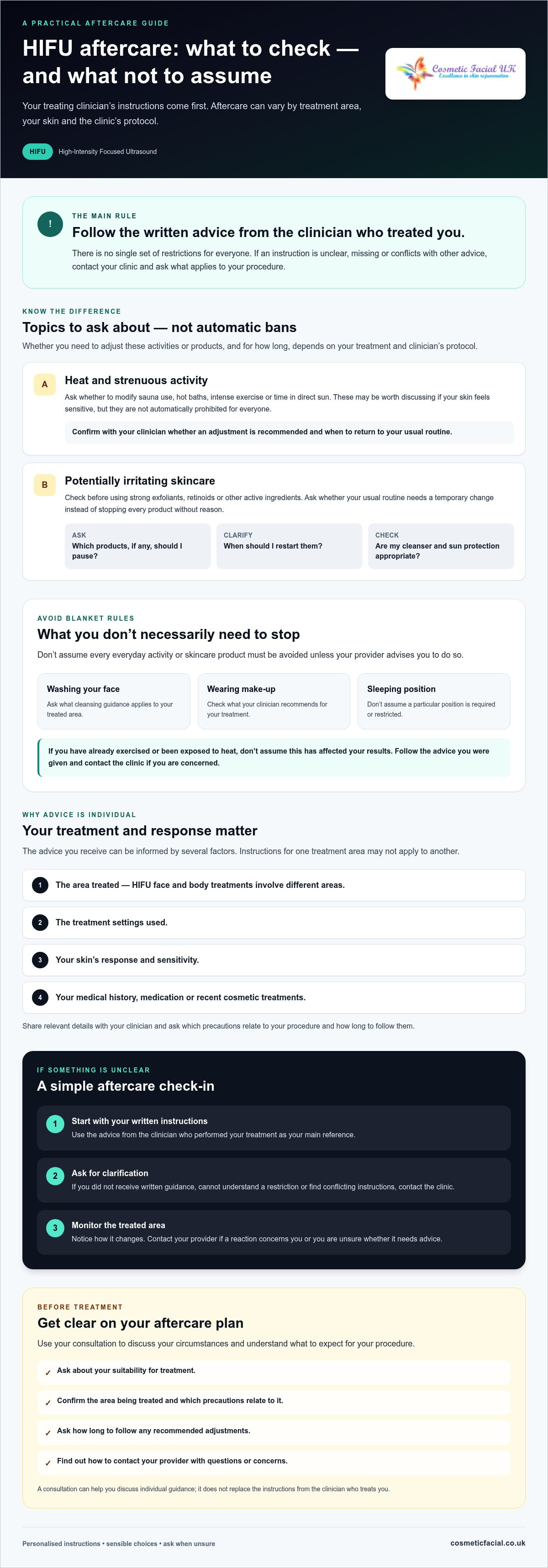
There isn’t one set of restrictions that applies to everyone after HIFU. Rather than automatically cancelling exercise, changing your whole skincare routine or avoiding normal activities, check what your clinician recommends for the area treated. If an instruction is unclear, ask what it means in practice and how long it applies.
HIFU Aftercare: Follow Your Clinician's Instructions
Use the written aftercare advice from the clinician who performed your HIFU treatment. Protocols can vary, so a general online checklist cannot account for the area treated, the settings used or your individual response.
HIFU, or High-Intensity Focused Ultrasound (HIFU), uses focused ultrasound energy. Aftercare relates to the specific procedure and how your skin responds, rather than to one set of rules for every patient.
HIFU aftercare means following guidance for caring for the treated area after focused ultrasound treatment. It may include comfort measures, such as avoiding products that irritate your skin, as well as specific instructions from your clinician. These are not automatically strict prohibitions for everyone. Don’t assume every activity or skincare product must be avoided unless your provider has advised you to do so.
Why HIFU aftercare can vary between patients
The treated area, treatment settings, your skin’s response and your medical history can all inform the advice you receive. HIFU face and body treatments involve different areas, so don’t assume instructions for one apply to the other. Before treatment, ask which precautions relate to your procedure and how long to follow them.
This is especially useful if you have an existing skin concern, take medication or have recently had another cosmetic treatment. Share relevant details with your clinician, then ask them to clarify any advice that is difficult to fit around your routine.
Which instructions should take priority?
Use your treating provider’s written instructions as your main reference, rather than applying generic advice about what not to do after HIFU treatment. If you didn’t receive written guidance, can’t understand a restriction or find conflicting instructions, contact the clinic. Your treating clinician can confirm what applies to your procedure.
If you’re considering treatment, ask about suitability, the area to be treated and the aftercare plan before proceeding. Cosmetic Facial offers HIFU treatments in London, including non-surgical facelift information. A consultation gives you an opportunity to discuss individual guidance, but it doesn’t replace the instructions given by the clinician who treats you.
What to avoid after HIFU: heat, strenuous activity, and skin irritation
Heat, strenuous exercise and potentially irritating skincare are sensible topics to check with your treating clinician after HIFU. Whether you need to adjust them, and for how long, depends on your treatment and the clinic’s protocol. A precaution is guidance for your circumstances, not proof that an activity will damage your results.
Post-treatment restrictions should be individualised because the treated area, your skin’s sensitivity and your clinician’s protocol can affect what is appropriate. If you’re checking what not to do after HIFU treatment, use your own aftercare instructions rather than a fixed timeline from a general checklist.
Should you avoid heat or exercise after HIFU?
Ask your provider whether to modify activities such as using a sauna, taking a hot bath, doing intense exercise or spending time in direct sun. These may be relevant to discuss if your skin feels sensitive, but they aren’t automatically prohibited for everyone. Your clinician can clarify whether an adjustment is recommended for your treatment and when you can return to your routine.
If you’ve already exercised or been exposed to heat, don’t assume this has affected your results. Follow the advice you were given and contact the clinic if you’re concerned about a reaction or unsure what to do next.
Which skincare choices may irritate treated skin?
Check before using products that can irritate the skin, including strong exfoliants, retinoids or other active ingredients. Ask whether your usual routine needs a temporary change instead of stopping every product without reason. Follow your clinician’s guidance on cleansing and sun protection for the treated area.
- Ask which products to pause, if any, and when to restart them.
- Check whether your usual cleanser and sun protection are appropriate after your procedure.
- Seek clarification before adding a new active skincare product while the area is sensitive.
Specific advice is more useful than blanket rules. To learn more about Cosmetic Facial’s London clinic, visit its HIFU treatment information and ask the treating clinician which precautions apply to your planned treatment.
HIFU Aftercare Myths: What You Don't Need to Stop
After HIFU, it’s easy to mistake a precaution for a rule that applies to everyone. Advice about make-up, washing, sleep position and everyday activities should be considered alongside your specific treatment and your clinician’s instructions. General guidance cannot assess your skin remotely or replace personalised advice from your provider.
A precaution is a recommendation for a particular situation, not a universal restriction for every person after HIFU. If you’re unsure what not to do after HIFU treatment, ask your clinician which changes are relevant to you.
| Common concern | What is known | What to confirm with your clinician |
|---|---|---|
| Washing your face | There isn’t enough information here to say everyone must avoid washing after treatment. | When to cleanse and whether to handle any sensitive area differently. |
| Wearing make-up | Make-up isn’t automatically prohibited for every patient. | Whether your skin or treatment area calls for a temporary adjustment. |
| Sleeping position | A specific position isn’t a universal requirement based on the information available. | Whether you need to avoid pressure on a treated area. |
| Returning to routine | Everyday activities don’t necessarily need to stop across the board. | Whether any activity should be modified for your procedure. |
Do you need to avoid make-up, washing, or normal daily activities?
Ask your provider whether your treatment requires changes to your usual routine. If the area feels sensitive, gentle handling may be more comfortable, but follow the clinic’s directions on cleansing and products. Don’t assume that washing your face, applying make-up or sleeping as usual will harm your results, and don’t treat general guidance as clearance for your individual case.
Can you book another facial or aesthetic treatment straight away?
Tell any practitioner you’re considering seeing that you’ve recently had HIFU, particularly before booking a peel or another energy-based procedure. Appropriate timing depends on the area treated, the procedure planned and the practitioner’s assessment. Don’t assume treatments can be combined or scheduled close together without checking first.
Cosmetic Facial’s information about skin peel treatments provides background on that separate treatment, but it isn’t a recommendation to combine it with HIFU. Ask the relevant practitioner to assess the sequence for your circumstances.
HIFU Aftercare Checklist: Monitoring and Seeking Help
A simple checklist can help you follow your aftercare without trying to diagnose a reaction yourself. Your treating clinician’s instructions remain the main reference. If you’re uncertain about what not to do after HIFU treatment, ask the provider who knows which area was treated and how the procedure was performed.
- Follow instructions: Keep the written aftercare advice accessible and follow it for the treatment you received. Contact the clinic if anything is missing or unclear.
- Keep the area comfortable: Use only the cleansing, skincare and comfort measures your clinician has said are suitable. Don’t add treatments or products to the area based on guesswork.
- Monitor changes: Notice how the treated area feels and looks in relation to the guidance you were given. If something concerns you, record when it began and whether it is improving, persisting or worsening.
- Ask for help: Contact your treating provider about unexpected, persistent or worsening changes, or whenever you’re worried about your response.
What changes should you monitor after HIFU?
There is no single symptom list that can confirm what is expected for every HIFU treatment. Your clinician should explain which temporary responses, if any, may occur in your case and what changes warrant follow-up. Experiences vary, and a symptom’s meaning can depend on the treatment area and your circumstances.
If you notice a change that concerns you, make a note of when it started and how it has changed. A brief record can help the treating provider understand the timing and progression. Don’t rely on an online checklist to identify or rule out a complication.
When should you contact the clinic or seek urgent advice?
Contact the treating clinic if a response is unexpected, persists, worsens or worries you. Explain what has changed, when it began and whether it is getting better or worse. The clinician can advise whether you need an assessment; this article cannot assess your skin remotely.
For severe or rapidly worsening symptoms, seek urgent medical advice rather than waiting for a routine reply from the clinic. In the UK, contact NHS 111 for urgent medical help when it isn’t a life-threatening emergency. Call 999 or go to A&E for a life-threatening emergency.
Cosmetic Facial’s HIFU and treatment FAQs may provide relevant clinic information, but follow-up about your own symptoms should come from an appropriate clinician.
Planning HIFU in London: get aftercare guidance before treatment
Before agreeing to HIFU, make sure you understand the proposed treatment and how to get advice afterwards. A consultation is an opportunity to discuss your suitability, the area being treated and the aftercare plan. It can help you make an informed decision, but it can’t guarantee a particular outcome.
Questions to ask at a HIFU consultation
Raise any relevant medical history, skin concerns and other treatments you’ve had or are planning. Ask for instructions specific to the procedure, rather than relying on generic advice about what not to do after HIFU treatment. Useful questions include:
- Is HIFU appropriate for me, and which area would be treated?
- Which activities or skincare products, if any, should I adjust afterwards, and for how long?
- What responses might I notice, and which changes should prompt me to contact the clinic?
- How should I get in touch if I have a concern after treatment?
- Do any planned skin treatments need to be postponed or reviewed first?
Ask for the aftercare advice in writing, including any specific instructions for your treated area. If you use active skincare or have booked another procedure, mention the details so the practitioner can consider them in context.
How to find individual HIFU guidance in London
The practitioner carrying out your treatment is best placed to tailor advice to the area, procedure and your circumstances. Before proceeding, check their relevant qualifications and current professional status, and make sure you know who will perform the treatment and who to contact with follow-up questions. A consultation should give you a clear opportunity to discuss suitability and aftercare, without implying that results are assured.
Cosmetic Facial offers HIFU face-lift and body treatments at its London clinic. If you’re comparing options, review the treatment information and use your consultation to clarify what the procedure involves and what follow-up guidance is available. The clinician’s instructions after treatment should remain your reference for day-to-day decisions.
Explore Cosmetic Facial’s non-surgical facelift information
Make your HIFU aftercare plan clear
The key to understanding what not to do after HIFU treatment is to follow the written advice provided for your procedure, rather than treating general checklists as universal rules. Ask which activities or skincare choices need adjusting, what changes to monitor and how to contact your treating clinician if you’re concerned. This helps you take sensible precautions without putting everyday routines on hold unnecessarily.
Cosmetic Facial offers HIFU face and body treatments in London. A consultation can help you discuss suitability and receive individual guidance, without guaranteeing a particular result.
With clear instructions and a way to ask follow-up questions, you can approach aftercare with greater confidence and return to your routine appropriately.
Frequently Asked Questions
What should you avoid immediately after HIFU treatment?
Follow the written aftercare instructions from the clinician who performed your treatment, as restrictions and timing can vary. Heat exposure, strenuous exercise and potentially irritating skincare are worth checking with them, but they aren’t automatically prohibited for everyone. Don’t assume an activity has damaged your results if you’ve already done it. If advice is missing or unclear, contact the treating clinic before changing your routine.
How long should you avoid exercise after HIFU?
There isn’t one exercise-free period that applies to every HIFU patient. Ask your treating clinician whether your procedure calls for a temporary adjustment, particularly for vigorous activity that makes you hot or sweaty, and when to resume your usual routine. Their advice may depend on your treatment area and skin response. If exercise makes the treated area uncomfortable, stop and contact the clinic for individual guidance.
Can you wear make-up after HIFU?
Make-up isn’t automatically off-limits after HIFU, but ask your provider whether your treatment requires a change to your routine. Their advice may depend on the treated area and how your skin feels. If the skin is sensitive, avoid rubbing or applying products that cause discomfort, and follow the clinic’s instructions about application and removal. Contact the provider if you’re unsure whether a particular product is suitable.
Can you wash your face after HIFU?
Washing your face isn’t universally prohibited after HIFU, but follow the cleansing advice given for your procedure. Ask your clinician when to wash and whether to handle any area differently. If cleansing is permitted, gentle handling may be more comfortable if your skin feels sensitive; avoid scrubbing or introducing products unless they’ve been recommended. Contact the treating clinic if the instructions are unclear or washing causes a concerning reaction.
Is redness or tenderness normal after HIFU?
Some people may experience temporary redness or tenderness, but these reactions aren’t guaranteed and can’t be assessed accurately through a general FAQ. Ask your clinician which responses may be expected after your specific treatment and how long to monitor them. Note when a change began and whether it is improving, persisting or worsening. Contact the provider if you’re worried, or if the reaction is unexpected or getting worse.
When should you contact a clinician after HIFU?
Contact the treating clinic about unexpected, persistent or worsening symptoms, or whenever you’re concerned about your response. Explain when the change began and how it has developed. For severe or rapidly worsening symptoms, seek urgent medical advice rather than waiting for a routine reply. In the UK, use NHS 111 for urgent help that isn’t life-threatening; call 999 or go to A&E in a life-threatening emergency.
Can you have another facial treatment after HIFU?
Check with a suitably qualified practitioner before scheduling another facial or aesthetic procedure after HIFU. Tell them when and where you were treated, and disclose any symptoms or skin changes. The appropriate sequence depends on the area, the type of treatment planned and a practitioner’s assessment. Don’t assume a peel or another energy-based procedure can be done straight away; ask whether it should be postponed or reviewed first.
Disclaimer
All content on cosmetic Facial website, including blogs, graphics, logos, images, and software, is the property of CosmeticFacial UK or its content suppliers and is protected by applicable copyright laws. Unauthorized use, reproduction, distribution, or modification of any content without prior written permission is strictly prohibited.


