


Breakouts that settle, then return along the jawline before a period, can suggest a hormonal pattern, but they don’t confirm a diagnosis. If you’re looking for how to treat hormonal acne in adults uk, start by noting what the spots look like, when they appear and whether anything else may be contributing.
If over-the-counter products haven’t brought lasting control, questions about prescription treatments, side effects and when to seek advice are understandable. A healthcare professional can assess your skin and medical history, then discuss options suited to your circumstances.
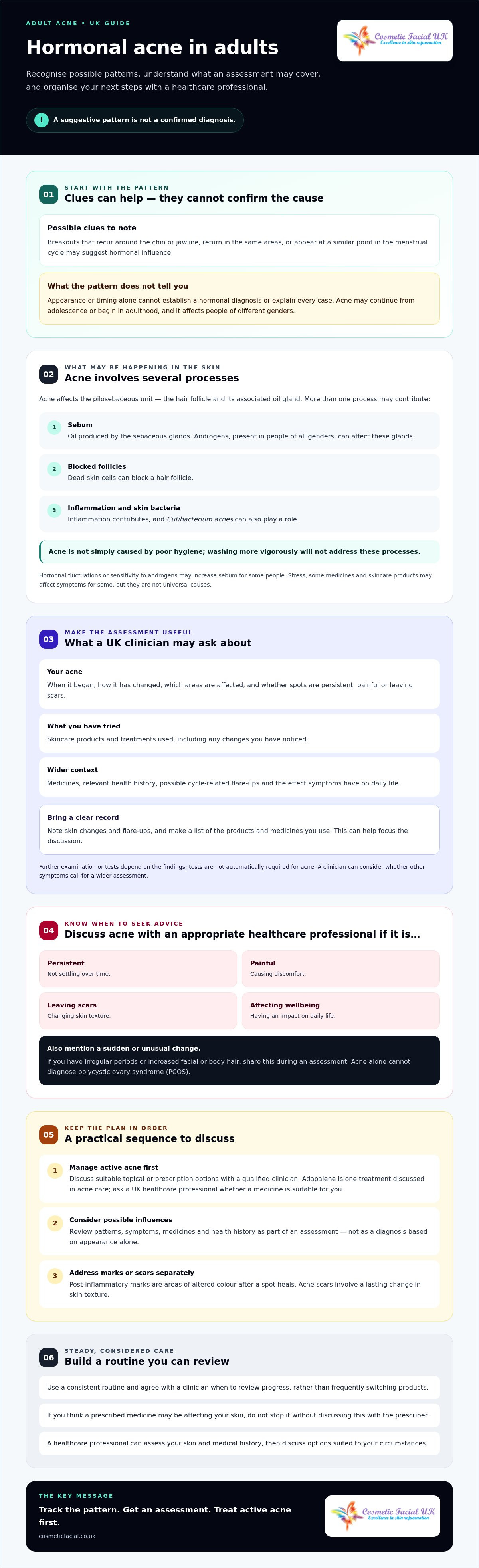
This guide explains why adult acne may follow hormonal patterns, what a UK clinician may assess and which treatments you could discuss. It also sets out a practical order of priorities: manage active acne first, consider possible hormonal influences as part of an assessment, then address post-acne marks or scars separately. A suggestive pattern is not the same as a confirmed diagnosis.
Key Takeaways
- Recurring lower-face breakouts may point to hormonal influences, but their pattern alone can’t confirm the cause.
- Understand how to treat hormonal acne in adults uk by learning which topical and prescription options to discuss with a qualified clinician.
- Keep a record of changes in your skin, the products and medicines you use, and any symptoms that may be relevant.
- Use a consistent routine and agree with a clinician when to review progress instead of frequently switching products.
- Compare NHS and private routes for assessment, including the acne treatment and dermatology services available in Marylebone, London.
Treating Adult Hormonal Acne: Recognise the Pattern
“Hormonal acne” is a common way to describe acne that may be influenced by hormonal activity, rather than a diagnosis in itself. Spots around the chin or jaw, or breakouts that recur at a similar point in the menstrual cycle, can be useful clues. Neither pattern proves hormones are the cause. Acne may continue from adolescence or begin in adulthood, and it affects people of different genders.
Acne involves sebum, blocked hair follicles and inflammation. Hormones can affect these processes, but other factors may also contribute. A general overview of acne pathophysiology can provide background. A clinician can consider how it relates to your symptoms and health history. “Suspected hormonal influence” describes a possible pattern; confirming a diagnosis requires assessment, not appearance alone.
Adapalene is one treatment discussed in acne care. This video explains its use, but it isn’t a personalised treatment recommendation. Ask a UK healthcare professional whether a medicine is suitable for you.
What adult hormonal acne can look and feel like
Inflamed spots may feel tender, recur in the same areas or leave discolouration after they settle. If you menstruate, noting whether flare-ups happen at a particular point in your cycle may help a clinician understand the pattern. It remains a clue, not a diagnosis. Active spots are current inflammation. Post-inflammatory marks are areas of altered colour left after a spot heals, while acne scars involve a lasting change in skin texture.
When breakouts may need a medical assessment
Seek advice from an appropriate healthcare professional if acne is persistent, painful, leaving scars or affecting your wellbeing. A sudden or unusual change, particularly alongside other symptoms, is also worth discussing. Acne alone cannot diagnose polycystic ovary syndrome (PCOS). If you also have symptoms such as irregular periods or increased facial or body hair, mention them during an assessment. If you’re researching how to treat hormonal acne in adults uk, a clinician can help consider whether the pattern may have a hormonal influence and discuss suitable next steps.
Why hormonal acne develops and what a UK clinician may assess
Acne affects the pilosebaceous unit, the hair follicle and its associated oil gland. Increased sebum, dead skin cells blocking the follicle and inflammation all contribute. The skin bacterium Cutibacterium acnes can also play a role. Acne isn’t simply caused by poor hygiene, and washing more vigorously won’t address these processes.
Hormones, sebum and recurring breakouts
Androgens are hormones present in people of all genders. They can affect the sebaceous glands, which produce sebum, the natural oil that helps protect the skin. In some people, hormonal fluctuations or sensitivity to androgens may increase sebum production and contribute to acne. This is one possible influence, not a complete explanation for every case.
Stress, some medicines and skincare products may affect symptoms for some people, but they aren’t universal causes. Don’t stop a prescribed medicine without discussing it with the prescriber. If you menstruate, note whether flare-ups coincide with particular points in your cycle. This can provide context during an assessment, but timing alone can’t identify the cause.
A breakout pattern can suggest hormonal influence, but it cannot establish a hormonal diagnosis on its own.
What an assessment may consider
A healthcare professional may ask when the acne began, how it has changed, which areas are affected and what treatments or skincare you’ve tried. They may also ask about medicines, relevant health history and the effect of symptoms on daily life. Bring a list of products and medicines, along with notes on flare-ups, to make the discussion more focused.
Further examination or tests depend on the findings. Tests aren’t automatically required for acne. If other symptoms suggest that a wider hormonal or health assessment may be appropriate, the clinician can consider them in context rather than drawing conclusions from spots alone. This helps distinguish a possible contributing factor from a confirmed underlying condition.
If you’re researching how to treat hormonal acne in adults uk, understanding possible contributors can help you have a more focused conversation about care. The NHS acne treatment options page provides UK guidance on acne care and seeking help. The next section covers treatments to discuss with a clinician. For those considering private care, Cosmetic Facial’s clinic information outlines its acne treatment and dermatology services in Marylebone, London.
Which treatments for adult hormonal acne may be considered?
Treatment depends on acne severity, skin type, medical history and personal circumstances. A lower-face pattern doesn’t automatically mean hormonal medication is needed. The aim is to manage active spots with an appropriate plan, then review its effect and tolerability with a clinician. No single option suits everyone.
Topical and prescription options to discuss
NICE guideline NG198 recommends a 12-week first-line course for acne, often using a combination treatment such as topical adapalene with benzoyl peroxide. These ingredients target different aspects of acne, but may cause dryness, irritation or increased sensitivity. Azelaic acid may be another option to discuss, depending on your skin and circumstances. The NHS treatment guidelines for acne explain the UK care pathway. A clinician can advise which options are suitable for you.
For more extensive or persistent acne, a clinician may consider prescription treatment. Oral antibiotics are generally used alongside topical treatment rather than alone, to reduce the risk of antibiotic resistance. Hormonal options may also be appropriate for some people. Spironolactone is used off-label for acne in the UK, which means acne isn’t its licensed indication. Discuss suitability and any monitoring with the prescriber. The combined contraceptive pill may be considered for some patients following an individual assessment.
Tell the clinician if you’re pregnant, trying to conceive or breastfeeding before starting treatment. Some medicines, including topical retinoids, aren’t suitable during pregnancy or when planning pregnancy. Advice can vary by medicine and circumstances. Don’t start, stop or change prescribed treatment without professional guidance. Ask what side effects to look out for and when your response should be reviewed.
Where clinic treatments fit, and where they do not
Peels, lasers and microneedling may be discussed in selected situations, but shouldn’t be treated as substitutes for medical control of active acne. A clinical assessment can help establish whether a procedure is appropriate, taking account of current inflammation, skin characteristics and treatment history. It may be more appropriate to address active breakouts first.
Post-acne marks and scars are different concerns. A mark may be a temporary change in skin colour after inflammation, while an established scar involves a lasting change in skin texture. Procedures intended to improve scarring address a different concern from treatments used to control active spots, and suitability requires assessment. When considering how to treat hormonal acne in adults uk, manage active acne first, then discuss any residual scarring separately.
Building an Adult Acne Plan and Knowing When to Review
A practical plan helps you identify what may be helping and gives a clinician useful information. Keep your routine simple, record changes and seek advice if acne persists or worsens. Avoid changing several products at once, as this can make it harder to tell whether irritation is from a product or the acne itself.
A manageable skincare routine alongside treatment
Consider a gentle cleanser, a non-comedogenic moisturiser and daytime sun protection as basic routine measures. Introduce new products cautiously, follow their instructions and any clinician’s guidance, and avoid harsh scrubbing or layering several active ingredients without advice. If a product causes marked irritation, check with a healthcare professional rather than adding more products to counter it.
A brief record can make a consultation more focused. Note when breakouts occur, which areas are affected, what you’ve applied and whether symptoms or marks change. Include prescription and non-prescription medicines. Mention if you’re pregnant, trying to conceive or breastfeeding when discussing treatment suitability.
Reviewing progress and seeking further help
Acne treatments need consistent use to assess their effect, and some can initially irritate the skin. Agree with the prescriber how and when to review your response. Ask what to do if symptoms worsen or side effects develop. NICE recommends a 12-week course for many first-line acne treatments. This is a treatment-course recommendation, not a guarantee of improvement or a reason to wait if your acne is causing concern.
Arrange clinical advice if acne is painful, persistent, worsening or forming scars. Discuss its effect on your confidence, mood or daily life too. Significant distress deserves attention alongside physical symptoms. If you have an urgent or severe health concern, use NHS 111 for urgent advice. Call 999 or go to A&E for a life-threatening emergency.
For a considered next step, organise your notes about symptoms and products, then seek an assessment suited to your needs. Cosmetic Facial is a private clinic in Marylebone, London, with acne treatment and dermatology consultations listed among its services. When arranging care, confirm the clinic’s current assessment scope and what the appointment involves.
Where to seek adult hormonal acne care in London
For persistent acne, you can speak to your GP about assessment and treatment through the NHS. Depending on your symptoms and response to treatment, they may discuss suitable medicines or whether referral to a specialist is appropriate. Private assessment is another route, but it isn’t the right choice for everyone. Consider your needs, the type of care offered and how follow-up will be arranged.
Choosing an appropriate acne consultation
Before arranging an appointment, check who will assess you, their relevant qualifications and what the consultation includes. Ask how treatment decisions and follow-up are managed, particularly if you may need prescription medicines or have questions about pregnancy, trying to conceive or breastfeeding. A private consultation doesn’t guarantee a particular diagnosis, prescription or outcome.
To make the discussion more useful, bring a timeline of when your acne began and how it changes, a list of skincare products and medicines, and any relevant health questions. Note treatments you’ve already tried and how your skin responded. If comparing private options, clarify whether the service provides medical assessment, aesthetic treatment or both. These distinctions matter when considering how to treat hormonal acne in adults uk.
What Cosmetic Facial can offer in Marylebone
Cosmetic Facial is a private aesthetic and medical skin clinic in Marylebone, London. Acne treatment and dermatology consultations are listed among its services. If considering this route, confirm the current assessment scope, who would be involved and how appointments and follow-up work. These details can help you decide whether the service suits your needs.
Cosmetic Facial’s profile records Dr Faramarz Didar’s MSc in Dermatology Skills and Treatment with Commendation. Check the practitioner’s current role and relevant details when enquiring. An assessment can help clarify possible next steps, without promising a diagnosis or results.
Take the next step towards a clearer acne plan
Recurring breakouts can suggest hormonal influences, but their timing or location can’t confirm the cause. A clinical assessment can help consider possible contributing factors and identify treatment options suited to your skin, health history and circumstances.
For how to treat hormonal acne in adults uk, keep the priorities clear: use a consistent, suitable approach for active acne, review your response with a healthcare professional, and consider post-acne marks or established scars separately. Recording symptoms, products and medicines can make that discussion more focused.
NHS care and private assessment are different routes, and the right choice depends on your needs. Cosmetic Facial is a private clinic in Marylebone, London, listing acne treatment and dermatology consultations among its services. Check the current assessment scope and practitioner details when enquiring. No particular diagnosis or result can be assumed.
With clear information and appropriate guidance, you can make considered decisions about your next steps.
Frequently Asked Questions
Can hormonal acne start in adulthood?
Yes, acne can first develop in adulthood or continue after adolescence. Hormonal changes may contribute for some people, but adult acne can have several influences, including medicines and skincare products. Breakouts on the lower face or recurring flare-ups may be useful details to record, but they don’t establish a hormonal cause. If acne is persistent, painful or leaving scars, discuss it with a GP or another appropriate healthcare professional.
How do I know whether my acne is hormonal?
You can’t confirm a hormonal cause from the appearance or timing of spots alone. Acne along the chin or jaw, or flare-ups linked to the menstrual cycle, may suggest a pattern for a clinician to consider. Keep a record of when breakouts occur, affected areas, medicines and products you use. A healthcare professional can assess your symptoms and health history. Acne alone cannot diagnose a condition such as polycystic ovary syndrome.
What is the best treatment for hormonal acne in adults in the UK?
There isn’t one best treatment for everyone. A clinician may consider topical options such as adapalene with benzoyl peroxide, or other treatments, according to acne severity, health history and suitability. For some people, prescription medicines, including hormonal treatments, may be discussed. NICE recommends a 12-week course of first-line treatment for acne, with review. To understand how to treat hormonal acne in adults uk, seek guidance on benefits, risks and monitoring for your circumstances.
Can hormonal acne be treated during pregnancy or whilst trying to conceive?
Some acne medicines aren’t suitable during pregnancy or when trying to conceive, so tell your GP, dermatologist or prescriber before starting or continuing treatment. Topical retinoids and oral isotretinoin should be avoided in pregnancy. Advice also applies when planning pregnancy. If you’re breastfeeding, mention this too, as suitability depends on the specific medicine. Don’t stop or change prescribed treatment without seeking advice from the clinician responsible for your care.
How long can adult acne treatment take to show an effect?
Improvement may take several weeks, and acne treatment needs consistent use to assess its effect. NICE recommends a 12-week course for many first-line treatments, followed by review, though the response varies between individuals and treatment plans. Some products can cause irritation, particularly when first introduced. Follow the instructions provided and contact your clinician if symptoms worsen, side effects concern you or you’re unsure whether to continue.
When should I see a GP or dermatologist about adult acne?
Seek clinical advice if acne is persistent, painful, worsening, leaving scars or affecting your mood and daily life. A GP can assess symptoms and discuss treatment or whether referral is appropriate. In London, you can use NHS routes or consider a private dermatology consultation, depending on your needs. Bring a list of products and medicines tried, a symptom timeline and any relevant health questions to make the assessment more useful.
Can laser treatment or chemical peels treat active hormonal acne?
Laser treatment and chemical peels shouldn’t be assumed to replace care for active acne. Whether a clinic procedure is suitable depends on the skin and clinical assessment. Procedures may be considered for selected concerns, including some established acne scarring, which differs from active inflamed spots or temporary post-acne marks. Discuss the aim, limitations and risks of any procedure with a suitably qualified professional, and clarify how active acne will be managed.
Disclaimer
All content on cosmetic Facial website, including blogs, graphics, logos, images, and software, is the property of CosmeticFacial UK or its content suppliers and is protected by applicable copyright laws. Unauthorized use, reproduction, distribution, or modification of any content without prior written permission is strictly prohibited.


