


Peeling skin is not a stage to accelerate by hand. These skin peel aftercare essentials start with avoiding makeup for at least 48 hours and leaving loose flakes alone; there is no single 24-, 48- or 72-hour rule that suits every peel and recovery.
It’s understandable to want flaking to finish quickly, especially when you’re planning to return to your usual routine. However, picking or pulling at the skin can disrupt recovery. Gentle care is safer than trying to speed up the shedding process.
This article explains when to resume makeup, how to cleanse and moisturise, and how to protect healing skin from sunlight. It also considers aftercare for different skin tones: for pigment-prone skin, the British Association of Dermatologists recommends broad-spectrum SPF 30 or above and sun avoidance. The aim is a clear, practical routine that supports recovery without adding unnecessary irritation.
Key Takeaways
- Wash with lukewarm water and a mild cleanser, then pat the skin dry rather than rubbing it.
- Choose a gentle moisturiser and pause retinol, acids and abrasive exfoliants while the skin is recovering.
- Limit sun exposure during healing and keep protection in your daily routine, including when indoors near windows.
- Aftercare should account for how your skin responds; pigment-prone skin needs particular care to reduce the risk of discolouration.
- Seek advice from your practitioner about severe swelling, persistent pain, blistering or signs of infection.
1. Can You Wear Make-up After a Skin Peel?
Wait until your skin has settled before applying make-up, and follow your practitioner’s advice. The skin peel aftercare essentials begin with allowing the skin to recover without extra friction. Because peel depth and skin response differ, this is a practical minimum, not a universal rule. Follow your practitioner’s specific instructions if they require a longer pause. When make-up resumes, choose a light mineral-based product and apply it gently. Avoid make-up while skin remains raw, irritated or actively peeling.
At-home peel products and professional chemical peels can differ in formulation and depth, so their aftercare may differ too. Use the product instructions for an at-home peel, and don’t repeat an application or add other active products during recovery. After a professional peel, follow the treating practitioner’s tailored advice; mastering the complexities of varying peel depths and tailored post-treatment care is central to professional skincare and esthetics training at institutions such as 5T Beauty Academy. There is no single 24-, 48- or 72-hour timetable for every peel. These skin peel aftercare essentials should be adapted to the treatment and the skin’s response.
In the UK, follow the treating practitioner’s instructions; there is no universal rule requiring everyone to resume make-up or activities at the same time. Avoid strenuous exercise and activities causing heavy sweating for 24-48 hours after a chemical peel. Avoid swimming pools, hot tubs and saunas for at least a week after a skin peel. Avoid heat until the skin shows signs of recovery, including steam rooms, which also expose skin to heat.
Keep heavy creams, oils and active ingredients away from healing skin until it has recovered. This includes retinol, acids, strong vitamin C, benzoyl peroxide and physical exfoliants, which may irritate skin that is already sensitive after treatment. Don’t use them to remove peeling faster. Flaking may appear within a week, and loose skin should shed naturally. Picking, pulling or scrubbing can injure the skin and increase the risk of scarring.
If the area feels itchy or tight, don’t scratch or peel it. Keep your routine gentle and follow your practitioner’s instructions. Dryness, tightness and mild sensitivity can occur during recovery. Redness or flaking alone doesn’t mean you should exfoliate. Avoid applying make-up over peeling patches, as applying and removing it can add friction. If make-up catches on flakes, leave the area bare until the skin settles.
Seek prompt advice from your practitioner if symptoms are severe or worsening. Warning signs include severe swelling, persistent pain, blistering, signs of infection or excessive redness lasting longer than expected. These symptoms need attention, not further product experimentation. If you suspect a burn or allergic reaction, stop applying products and seek medical advice, particularly if discomfort or swelling is significant.
2. Gentle cleansing and moisturising
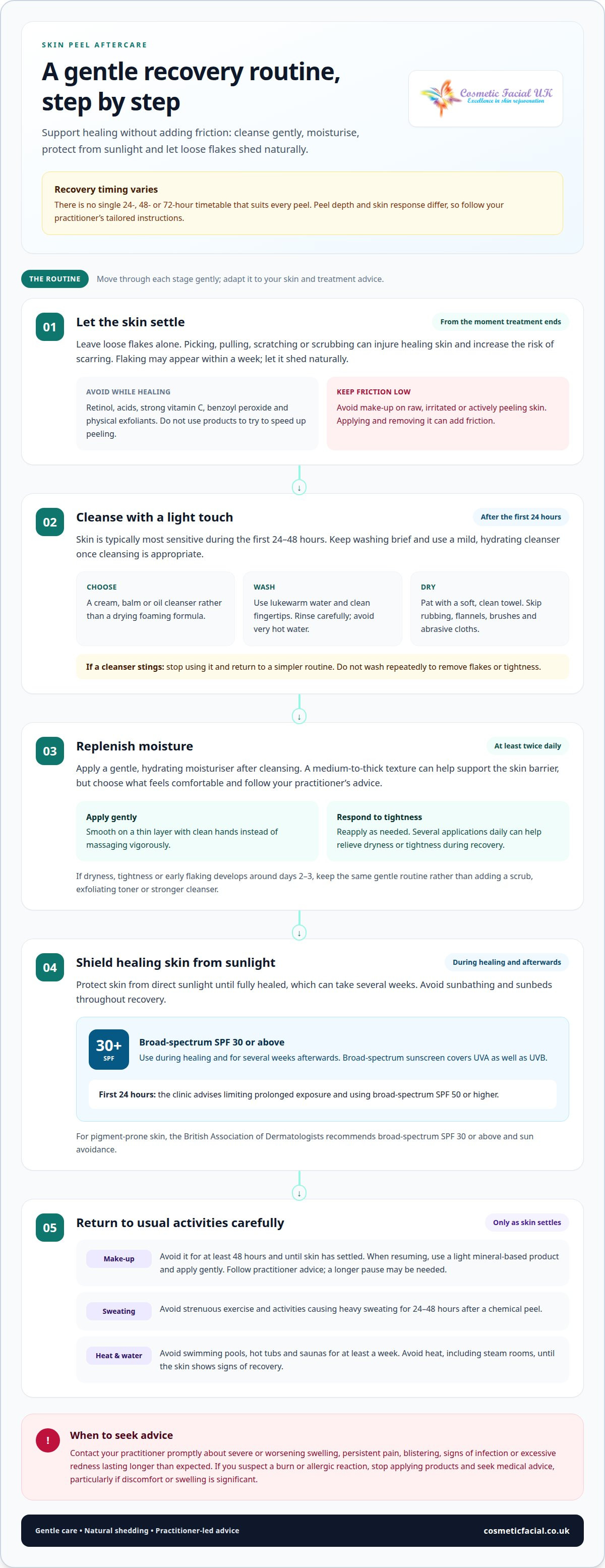
After the first 24 hours, use a mild, hydrating cleanser to wash the treated area. Choose a cream, balm or oil cleanser rather than a foaming formula that may leave skin feeling dry. Use lukewarm water and clean fingertips, moving gently without scrubbing. Rinse carefully, then pat the skin dry with a soft, clean towel. Avoid flannels, cleansing brushes and abrasive cloths, which can add friction to sensitive skin.
During the first 24 to 48 hours, skin is typically at its most sensitive. Keep each wash brief and avoid very hot water, which may feel uncomfortable. If a cleanser stings, stop using it and return to a simpler routine. Don’t cleanse repeatedly to remove flakes or tightness. A gentle wash removes surface residue; rubbing or frequent washing can increase irritation instead.
After cleansing, apply a gentle, hydrating moisturiser at least twice daily. A medium-to-thick texture can help reinforce the skin barrier after a peel. Smooth on a thin layer with clean hands rather than massaging vigorously. If your face feels tight between applications, apply moisturiser again as needed. During recovery, using it several times daily can help relieve dryness or tightness.
For sensitive skin, choose a simple ingredient list and avoid products containing acids or acne treatments. Retinoids and exfoliating ingredients can be too stimulating while the skin heals. Avoid heavy creams and oils if your practitioner advises against them or if they make the treated area uncomfortable. A rich texture isn’t automatically suitable for everyone, so let comfort and your practitioner’s instructions guide your choice.
On days 2-3 after a peel, dryness, tightness or early flaking may develop. Don’t try to correct these changes with a scrub, exfoliating toner or stronger cleanser. Keep using the same gentle routine instead. If a familiar product suddenly causes burning or increased redness, pause it rather than layering another product over the area. This makes it easier to identify what may be irritating your skin.
When cleansing and moisturising, avoid pulling at visible flakes. Let them lift naturally, and use a light touch around tender areas—particularly near the eyes, where pre-existing sensitivities like ocular rosacea demand especially gentle, eye-safe care. Follow the clinic’s aftercare instructions if they differ from general skincare advice, because the peel type and your skin’s response affect the routine. A consistent cleanser-and-moisturiser routine supports the skin barrier without adding unnecessary friction or active ingredients.
3. Sun protection after a peel
After a chemical peel, protect healing skin from direct sunlight until it has fully healed. This can take several weeks, so avoid sunbathing and sunbeds throughout recovery. Use broad-spectrum sunscreen with at least SPF 30 during healing and for several weeks afterwards. During the first 24 hours, the clinic advises limiting prolonged exposure and using broad-spectrum SPF 50 or higher.
Choose a broad-spectrum sunscreen labelled SPF 30 or above, and apply it as part of your morning routine. SPF describes protection against UVB, while broad-spectrum products also cover UVA. Both matter after a peel because ultraviolet exposure can aggravate sensitivity and contribute to pigmentation changes. Follow your practitioner’s instructions if they specify a different product or application routine for your treatment.
Sun protection matters even when the sky is cloudy or you spend much of the day indoors. Ultraviolet rays can pass through window glass, so prolonged time beside a bright window still counts as exposure. For pigment-prone skin, the British Association of Dermatologists recommends broad-spectrum SPF 30 or above and sun avoidance. This is particularly relevant if uneven pigmentation is already a concern.
Reduce exposure as well as applying sunscreen. Choose shade, cover treated areas with clothing and avoid deliberate tanning while skin remains vulnerable. A hat can protect facial skin during necessary outdoor trips. These measures complement sunscreen rather than replacing it. If you cannot avoid being outdoors, use broad-spectrum SPF 30 or higher on exposed skin, following the product directions and your practitioner’s advice.
Keep your sunscreen routine simple during recovery. A product that feels comfortable on intact skin may sting after treatment, and unsuitable products can cause irritation or discolouration. Avoid trying new active ingredients while your skin is sensitive. If sunscreen causes marked discomfort, stop applying it to the affected area and ask your practitioner about suitable protection. Don’t leave healing skin exposed while deciding what to use.
Continue protection beyond the first few days. Peeling may occur within a week, but visible flaking ending does not necessarily mean the skin has fully healed. Keep using broad-spectrum SPF 30 or higher during healing and for several weeks following the peel. There is no single number of days that fits every person, because the duration depends on the peel and the skin’s recovery.
Make sun protection part of daily post-peel care, not just sunny-day care. Consistent sunscreen, less direct exposure and physical coverage help limit avoidable ultraviolet exposure while the skin recovers. If you’re prone to pigmentation, the British Association of Dermatologists’ advice makes sun avoidance and broad-spectrum protection especially relevant.
4. Immediate post-peel care
After a chemical peel, keep skincare simple during the first 24-48 hours and follow your treating practitioner’s instructions. The routine depends on peel type and any solution left on the skin. Avoid adding new serums, creams or home treatments during early recovery. If your instructions say to keep the treated area dry, follow them rather than washing it. The skin peel treatment information can help you understand the treatment context.
For a general skin peel, avoid wetting the treated area for the first 24 hours. After that, use gentle cleansing as directed, rather than assuming every peel follows the same schedule. A Perfect Peel has specific instructions: leave its solution on the skin for at least 6 hours before washing. That product-specific timing illustrates why general aftercare advice must not replace instructions for your treatment.
When washing is permitted, use cool water and pat the area dry with a clean towel. Don’t rub, scrub or use a cleansing brush. Cool water may soothe post-peel sensations, while warm or hot water can feel less comfortable. Keep washing brief and avoid repeatedly washing your face to relieve tightness. This reduces unnecessary friction as the skin barrier recovers.
Be cautious with post-peel towelettes. Using a wipe can encourage rubbing, while an exfoliating or acid-based towelette may add ingredients that irritate healing skin. Don’t use one unless your treating practitioner has included it in your instructions. The same applies to cleansing pads and other leave-on products: follow your aftercare plan before applying them.
Redness, warmth, tightness or sensitivity can occur during the first 24 hours. Mild swelling and tightness may also appear on days 1-2 after a chemical peel. Keep the routine uncomplicated rather than layering products over uncomfortable skin. Avoid picking at any visible flakes, since pulling at peeling skin can cause injury and increase the risk of scarring.
During the first 24-48 hours, avoid at-home LED red light after a Perfect Peel. More generally, don’t add devices or treatments without practitioner guidance. Avoid heat and heavy sweating until the skin shows signs of recovery. If a product causes persistent stinging or burning, stop using it and seek advice instead of trying another active ingredient.
Contact your practitioner about severe swelling, persistent pain, blistering, signs of infection or excessive redness lasting longer than expected. Mild tightness is different from persistent pain, and a worsening reaction needs attention. Keep any follow-up appointment as instructed so your practitioner can assess recovery and advise when to resume your usual skincare routine.
5. Aftercare for different skin tones
Aftercare should reflect how your skin responds, not assumptions based only on its colour. A tendency towards pigmentation is especially relevant after a chemical peel, because ultraviolet exposure can contribute to hyperpigmentation. Tell your practitioner if you’ve previously developed dark marks after irritation or sun exposure. This helps them tailor advice to your recovery and identify changes worth monitoring.
For pigment-prone skin, the British Association of Dermatologists recommends broad-spectrum SPF 30 or above and sun avoidance. Apply sunscreen as directed and reduce direct exposure during healing. A hat and shade add practical protection outdoors. This matters in the UK as well as during travel: cloudy conditions don’t remove the need to follow your post-peel sun-protection routine.
Keep your skincare routine consistent while your skin heals. A mild cleanser, gentle moisturiser and sunscreen are more appropriate than introducing several unfamiliar products. For example, don’t add a brightening serum, exfoliating toner and retinoid together to address uneven tone. Active ingredients can irritate recovering skin, making it harder to assess new redness, dryness or pigmentation.
Compare changes with your skin’s usual appearance. If you notice a new dark patch, persistent redness or increasing sensitivity, note when it appeared and which products you used. Share these details with your practitioner rather than treating the area with an extra peel or scrub. Take a careful approach to pigmentation concerns: friction and strong skincare ingredients can add irritation during recovery.
Skin tone alone doesn’t determine how a chemical peel will feel or how quickly healing will progress. Peel depth, sensitivity, previous reactions and the condition of your skin all matter. A superficial peel and a deeper peel have different recovery needs. Follow the instructions for your treatment, and don’t copy someone else’s routine simply because their complexion looks similar.
Keep chemical peel aftercare simple until your skin has healed. Avoid picking at flakes, and don’t use retinoids, acids or physical exfoliants until your practitioner says they’re suitable again. If dryness develops, use the gentle moisturiser recommended for your routine rather than layering several new products. This limits unnecessary irritation and makes it easier to notice meaningful changes during healing.
If you’re prone to pigmentation, prioritise sun avoidance, broad-spectrum sunscreen and a low-irritation skincare routine throughout recovery.
Cosmetic Facial: Skin Peels
Cosmetic Facial offers Skin Peels in London for people considering professional treatment or seeking guidance on skincare options. Discussing your skin concerns, current routine and previous reactions can help determine whether a peel may be suitable and what aftercare to follow. This is especially relevant if you’re prone to pigmentation or have experienced irritation from active ingredients.
For ongoing care, Cosmetic Facial also offers Retail Skincare Products. If you’re considering a peel, or have questions about maintaining your routine after treatment, explore the skin peel treatment information and discuss your needs with the clinic.
Contact Cosmetic Facial to discuss your skin peel questions.
Make your next skincare decision with care
Use these skin peel aftercare essentials as a starting point, not as a reason to change several products at once. Before treatment, consider how your regular skincare fits around recovery, including products you use for acne, pigmentation or dryness. A clear routine makes it easier to avoid unnecessary changes while your skin settles.
It can also help to note how your skin responds to familiar products and which concerns you want to address. This gives you a clearer basis for discussing a peel and its aftercare with a practitioner. The aim is to choose a considered next step that suits your skin, rather than rushing into a new treatment or routine.
With a thoughtful plan and consistent care, you can make skincare decisions with greater confidence.
Frequently Asked Questions
Can You Speed Up the Peeling Process?
No. Let loose skin shed naturally instead of pulling, scrubbing or using an exfoliant to speed up flaking. For example, don’t use tweezers or a cleansing brush on a stubborn patch. Mechanical removal can injure the recovering skin surface. Peeling is part of the skin’s response to treatment, not a sign that you need to remove flakes yourself. Continue your aftercare routine and let recovery progress without forced exfoliation.
Can You Wear Makeup After a Skin Peel?
Wait at least 48 hours before applying makeup, and follow any longer interval given for your specific peel. The clinic’s advice allows 24 to 72 hours without makeup, reflecting differences between treatments and recovery. If the skin still feels raw or visibly irritated after that period, postpone application. When makeup resumes, choose a light mineral-based formula and avoid rubbing it into flaky areas or using it to conceal active peeling.
How Can Aftercare Differ Between Skin Tones?
Aftercare should account for your history of pigmentation as well as your skin’s current response. If irritation has previously left dark marks, mention this before treatment and monitor new discolouration during recovery. For pigment-prone skin, the British Association of Dermatologists recommends broad-spectrum SPF 30 or above and sun avoidance. Avoid trying to treat a new dark patch with acids or another peel while the skin is still recovering.
What Does the Skin Peel Recovery Timeline Look Like?
Recovery often begins with redness, warmth or sensitivity during days 1-3, followed by peeling that can occur within the first week. The American Academy of Dermatology gives approximate healing periods of one to seven days for refreshing peels, seven to 14 days for medium peels and 14 to 21 days for deep peels. These are healing estimates, not a timetable for restarting every product or activity.
When Can You Restart Retinol and Other Active Ingredients?
Restart retinol only after your skin has healed and your treating practitioner says it’s safe. The same caution applies to strong vitamin C, AHAs, BHAs, benzoyl peroxide and physical exfoliants. Don’t rely on the calendar alone: ongoing redness, tightness or flaking indicates that your skin is still recovering. Reintroducing several strong products together can make it difficult to identify the cause of irritation.
Which moisturisers and cleansers are safe to use after a chemical peel?
Choose a mild, hydrating cleanser and a gentle moisturiser without acids or acne-treatment ingredients. After the initial 24 hours, cleanse with lukewarm water and light fingertip movements. A balm, cream or oil cleanser can be less drying than a foaming formula. Apply moisturiser at least twice daily, using a medium-to-thick texture if comfortable. Avoid scrubs, cleansing brushes and products that sting during application.
Which skincare ingredients should you avoid after a peel, and for how long?
Pause retinol, strong vitamin C, AHAs, BHAs, benzoyl peroxide and physical exfoliants during recovery. Keep them paused until your skin has healed and your practitioner says they’re safe to resume. For separate exfoliation after a peel, allow three to four days; after a light chemical peel, wait at least three days before exfoliating. These intervals don’t override longer treatment-specific instructions or ongoing irritation.
How long does peeling and redness usually last after a superficial, medium or deep peel?
Peeling after a superficial chemical peel typically lasts three to seven days. Healing estimates differ by depth: the American Academy of Dermatology gives one to seven days for refreshing peels, seven to 14 days for medium peels and 14 to 21 days for deep peels. Redness and flaking don’t necessarily end together. Report severe or persistent symptoms, blistering or signs of infection to your practitioner.
Disclaimer
All content on cosmetic Facial website, including blogs, graphics, logos, images, and software, is the property of CosmeticFacial UK or its content suppliers and is protected by applicable copyright laws. Unauthorized use, reproduction, distribution, or modification of any content without prior written permission is strictly prohibited.


