


A chemical peel for sun damage in London may improve the appearance of uneven pigmentation and skin texture, but suitability depends on your skin and the peel’s strength. The cost depends on the peel selected, the treatment area and whether a course is recommended. Cosmetic Facial provides a personalised quote after discussing your treatment needs.
It’s sensible to understand what treatment involves before deciding, especially because recovery and sun protection are part of the process. Peels vary in depth, affecting both the skin’s response and the time needed to recover.
This guide explains how chemical peels may help with sun damage, which skin concerns or conditions can affect suitability, and what aftercare involves. It also outlines the factors that shape pricing in London, so you can understand the considerations before deciding whether a peel may suit you.
Key Takeaways
- Peel depth and formulation influence how treatment may address uneven pigmentation and skin texture, as well as the recovery involved.
- Skin conditions such as rosacea, eczema, active cold sores or sunburn can affect suitability; skin tone and sensitivity also matter when selecting a peel.
- Plan for careful aftercare, including daily SPF and avoiding picking or pulling at peeling skin.
- London prices depend on the peel, treatment area and whether a course is recommended, so understand these factors when considering a quote.
- Learn what to discuss when considering Skin Peels at Cosmetic Facial as a possible next step for sun-damaged skin.
HOW DO CHEMICAL PEELS WORK?
Chemical peels use acids to exfoliate the outer skin and improve the appearance of pigmentation and texture. The peel’s depth and formulation, together with your skin’s condition, shape the treatment and likely recovery.
Exfoliation and Skin Renewal
During treatment, an acidic solution loosens and removes surface skin cells, encouraging renewal as the treated skin heals. Fruit and other natural acids may help blend pigmentation, improve texture and promote regeneration. The effect depends on the peel’s formulation and depth, not simply the word “chemical”. Dermatologists have used chemical peels for decades to improve skin tone, texture and clarity.
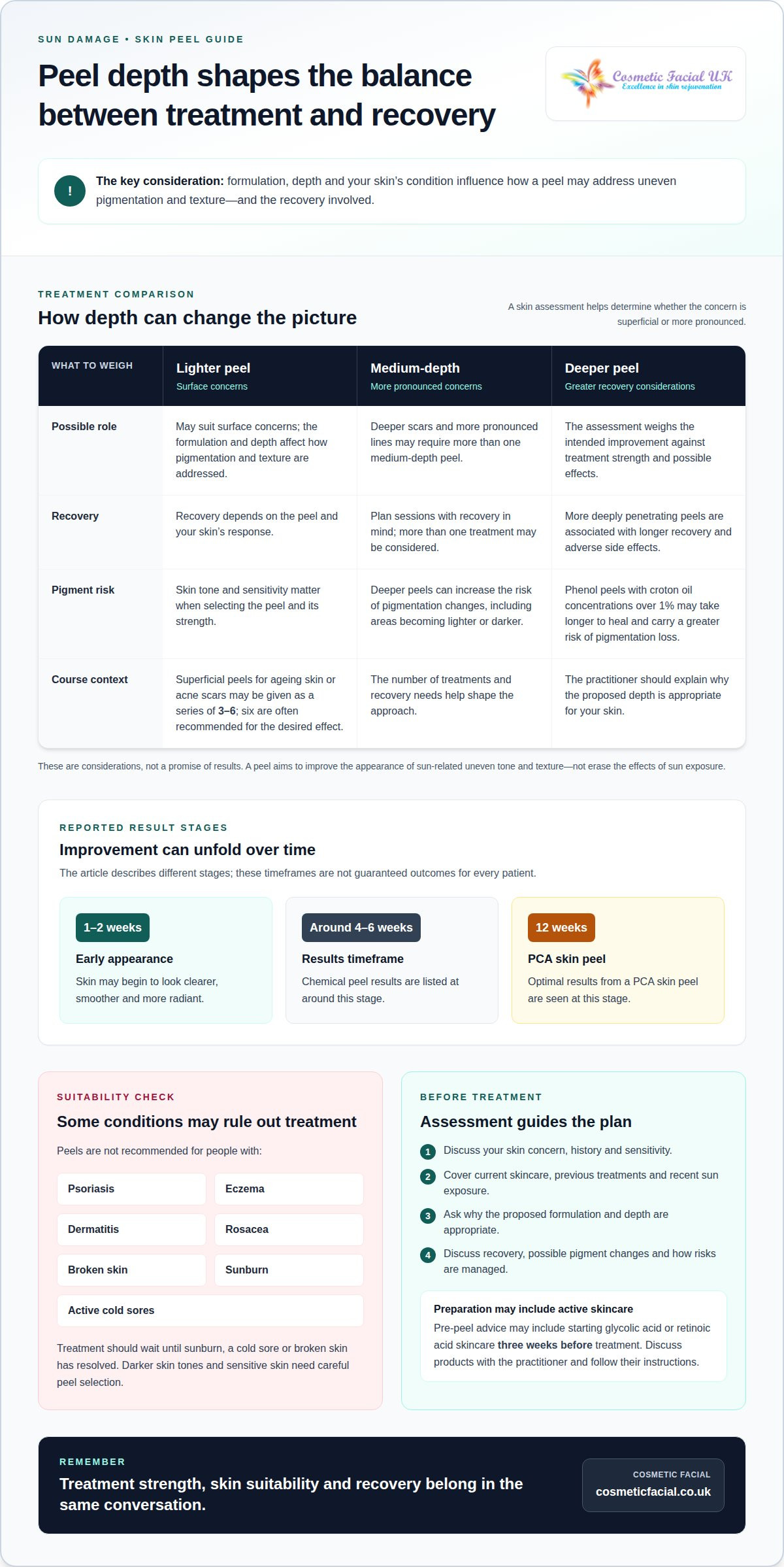
Skin may begin to look clearer, smoother and more radiant within 1 to 2 weeks. Results can continue to develop: chemical peel results are listed at around four to six weeks, with optimal results from a PCA skin peel seen at 12 weeks. These timeframes describe different stages, not a guaranteed outcome for every patient.
UK requirements depend on the treatment and setting; a peel’s name alone does not establish a practitioner’s qualifications. Clinical oversight should reflect the peel’s depth and risks, with your skin history considered before treatment.
Assessment and Peel Selection
A skin assessment helps determine whether pigmentation is superficial or more pronounced, and whether sensitivity or an existing condition affects the approach. The practitioner considers skin tone, current skincare, previous treatments and recent sun exposure before selecting a formulation and strength. A lighter peel may suit surface concerns, while stronger treatment calls for careful consideration of recovery and possible effects.
London clinics offer chemical peels, but a treatment menu alone does not indicate a practitioner’s qualifications. Ask about the person carrying out the treatment, their relevant training, and how they assess suitability and manage risks. The assessment should explain the proposed peel and why its depth is appropriate.
Peels can cause redness, swelling and peeling as skin responds. More deeply penetrating peels are associated with longer recovery and adverse side effects. Phenol peels with croton oil concentrations over 1% may take longer to heal and carry a greater risk of pigmentation loss. Changes in pigmentation are particularly relevant when selecting a peel for uneven tone, so skin tone and the formulation both matter.
For sun-related pigmentation, the aim is to improve the appearance of uneven tone and texture, not to erase the effects of sun exposure. Chemical peel results can be immediate, with gradual improvement after each session. The assessment should also consider whether the concern is suitable for a peel or needs a different approach. A patient can then weigh the intended result against treatment strength, recovery and the risk of pigment changes.
Suitability and skin conditions that may rule out treatment
A chemical peel may improve the appearance of sun spots, uneven tone and some fine lines. Suitability depends on skin condition, tone and sensitivity, as well as the peel’s depth. A consultation should identify active skin problems before treatment is planned, because applying an exfoliating solution to inflamed or damaged skin can aggravate it.
Peels are not recommended for people with psoriasis, eczema, dermatitis, rosacea, broken skin, sunburn or active cold sores. Treatment should wait until sunburn, a cold sore or broken skin has resolved; ongoing conditions also need consideration before proceeding. For darker skin tones or sensitive skin, the peel type and strength require careful selection. This matters because deeper peels can increase the risk of pigmentation changes, including areas becoming lighter or darker.
Preparation is part of the treatment plan. Pre-peel advice may include starting glycolic acid or retinoic acid skincare three weeks before the procedure. These active ingredients affect the skin, so discuss your current products during the consultation and follow clear instructions on what to use before treatment. Mention recent sun exposure too, since irritated or sunburnt skin is not suitable for a peel.
A consultation should connect your concern with a suitable peel and a practical recovery plan. For example, the clinician may assess whether visible sun spots are the main concern, or whether uneven texture and fine lines also need attention. Chemical peels may improve the appearance of these concerns, but the depth and number of treatments shape the approach. Superficial peels for ageing skin or acne scars may be given as a series of three to six; six peels are often recommended for the desired effect.
A peel appointment typically takes 30 to 45 minutes, depending on the peel and treatment area. London pricing depends on the peel, area treated and whether a course is recommended; the price is provided after a quote request. Deeper scars and more pronounced lines may require more than one medium-depth peel, with recovery considered when planning sessions.
For a skin assessment, the useful next step is to discuss the concern, skin history and current skincare routine. The skin treatment information can help you understand the available treatment context before that discussion.
Aftercare and sun protection
After a chemical peel, the skin’s barrier needs time to recover. Daily sun protection and gentle skincare support healing, while direct sunlight can aggravate treated skin. Follow the practitioner’s instructions for cleansing, moisturising and SPF, since the right routine depends on the peel and your skin’s response. Avoid picking or pulling at flakes, even when peeling changes the skin’s appearance.
Sun protection is central to aftercare, particularly when treating sun damage. Apply full-spectrum sunscreen with SPF 30 or higher every day, and avoid direct sunlight where possible. Reapply sunscreen as directed on its packaging, especially during time outdoors. A hat and shade can also help limit exposure. These steps matter during recovery, when newly treated skin may be more vulnerable to sunlight and pigmentation changes.
For the first 24 to 48 hours, aftercare advice may include avoiding direct sun, exfoliating products, retinoids, heat and intense exercise. Heat from a sauna or strenuous activity can make redness more noticeable. Avoid makeup for at least 24 hours, and leave active skincare ingredients aside for at least a week. These timings are general guidance; use the practitioner’s instructions for your particular peel.
- Cleanse gently, following the practitioner’s advice rather than scrubbing treated skin.
- Apply moisturiser as advised to support comfort while the skin heals.
- Use daily SPF 30 or higher and limit direct sun exposure.
- Do not force peeling or remove flakes, as this can interrupt healing and increase infection risk.
Recovery varies with peel depth. A superficial peel commonly takes five to seven days for full recovery, while a medium-depth peel may take seven to 14 days to heal. Redness and swelling after a superficial treatment usually fade within 48 hours. After a medium peel, these effects can take five to ten days to settle. Light flaking may appear three to seven days after treatment.
Deeper treatment needs more recovery time. Redness, swelling and peeling after a deep peel can last two to three weeks, and complete healing may take several weeks to a few months. New skin should develop within two weeks, but its appearance may continue to change as healing progresses. Plan around this period rather than expecting your skin to look settled immediately.
As your skin sheds, avoid using scrubs or retinoids to speed the process. Pulling at peeling skin can disrupt healing and contribute to post-inflammatory hyperpigmentation. If redness, swelling or peeling differs from the aftercare instructions, follow the practitioner’s advice. Consistent sun protection remains important after recovery, helping protect the skin and maintain the effect of treatment.
Chemical peels for sun damage and pigmentation
Chemical peels may improve the appearance of sun-related pigmentation, uneven tone and texture. The selected acid and peel depth influence how treatment acts on the skin.
Peel Types and Acids
Formulations may use glycolic acid or other fruit acids to encourage exfoliation and skin renewal. Lactic and salicylic acid peels are also options to discuss during assessment, alongside trichloroacetic acid (TCA) and phenol peels. These names alone do not determine suitability: concentration, depth, skin tone and the pigmentation being treated all affect selection.
Pigment-balancing approaches aim to even the appearance of discolouration, rather than remove its underlying cause. Phenol-croton oil peels require particular care: concentrations over 1% may take longer to heal and carry a greater risk of pigmentation loss. Ask how the proposed formulation relates to your skin concern and expected recovery.
Choosing Peel Strength or Depth
No single strength suits every sun-damaged complexion. A superficial peel may be considered for surface pigmentation and texture, while a medium or deep peel involves greater treatment intensity and recovery. Skin tone and sensitivity matter, because a peel selected without considering them can increase the risk of unwanted pigment changes.
The assessment should match the treatment area and concern to the peel, then explain the likely peeling and recovery. Discuss fine lines, stubborn patches and previous reactions before choosing a stronger option.
Peels work by applying an acidic solution that exfoliates treated skin. The solution is typically left on for 3 to 6 minutes, depending on the treatment approach. As the skin heals, its appearance may become smoother, with gradual improvement after sessions. More intensive treatment is not automatically more appropriate for persistent pigmentation.
For stubborn pigmentation, TCA and phenol are options to discuss in relation to depth, formulation and pigment-change risks. Phenol-croton oil concentration is especially relevant, since levels over 1% may involve longer healing and greater risk of pigment loss. A treatment plan should weigh the intended change against the skin’s capacity to recover.
Glycolic and lactic acid peels, salicylic acid formulations and pigment-balancing peels represent different approaches. Their names alone do not establish which is best for sun spots or uneven tone. The clinician should consider whether your concern is pigmentation, rough texture, fine lines or a combination, then explain why the selected peel fits.
Peels, IPL, laser treatments and microneedling use different methods, so they are not interchangeable. IPL and laser use light-based energy, while microneedling uses controlled skin punctures; a peel uses an applied chemical solution. The appropriate option depends on your concern, skin characteristics and acceptable recovery. Discuss how each method addresses your specific pigmentation before deciding.
Chemical peel prices in London
There is no single London price that describes every chemical peel. For a chemical peel for sun damage in London, a quote depends on the case, including the peel selected, treatment area and whether a course is recommended. Compare the full treatment plan, not a headline figure detached from your skin concerns, skin type and expected recovery.
Peel formulation and depth affect the treatment being priced. A superficial peel for uneven texture is not the same procedure as a deeper peel for more pronounced concerns. The area treated also matters: treating a limited area differs from treating the full face. Your quote should describe the proposed peel and treatment area so you can understand what the fee covers.
Session planning affects the overall amount you may need to budget. A single treatment and a course are different commitments, even when each session addresses the same concern. Ask for the proposed number of sessions and the total course cost in your quote, rather than comparing one session’s price with another clinic’s course price. This gives you a clearer view of the complete plan.
The price for a chemical peel depends on your case and is provided after a quote request, with the peel type, treatment area and recommended number of sessions shaping the cost. For example, a plan for pigmentation across the cheeks may differ from one addressing both pigmentation and texture across a wider area. The quote should reflect the treatment proposed for your concerns.
Check that London quotes describe comparable treatments. One clinic’s “peel” may refer to a different formulation or depth from another’s, so the treatment name alone is not enough. Compare the peel type, area and whether the quoted amount covers one session or a course. If the plan changes after assessment, the cost may change to reflect the revised treatment. For a chemical peel for sun damage in London, compare the proposed treatment details rather than relying on the name alone.
Include recovery and aftercare in your budget planning, too. A peel may require changes to your usual skincare routine, particularly around active ingredients and sun protection. Don’t assume products or follow-up are included in a treatment fee; your written quote should make clear what is included. This helps prevent unexpected expenses and keeps the comparison focused on the full treatment plan.
Before requesting a quote from Cosmetic Facial, note your skin concern, the areas you want treated and any previous peel experience. These details help shape an appropriate estimate without treating a general London price as a personal recommendation. Focus on the complete plan: formulation, treatment area, session structure and recovery, rather than a low starting figure alone.
Cosmetic Facial: Skin Peels
Cosmetic Facial offers Skin Peels for people considering treatment for sun-related pigmentation, uneven tone or changes in skin texture. Discuss your skin concerns, current skincare and treatment expectations with the clinic, so suitability and the appropriate approach can be considered in context. Peel depth and recovery are important parts of that decision, particularly if you have sensitive skin or a history of pigmentation changes.
If you are weighing a peel against another option, explain which areas concern you and how much recovery time you can accommodate. This helps focus the discussion on whether Skin Peels fit your needs, rather than assuming one treatment suits every skin type.
Contact Cosmetic Facial to discuss Skin Peels and your treatment considerations.
Choose a next step that fits your skin goals
If you are considering a chemical peel for sun damage in London, first decide what matters most: addressing visible pigmentation, improving texture, or understanding whether treatment suits your skin. A discussion with Cosmetic Facial can connect that priority with a realistic treatment plan, rather than choosing a peel based on price or name alone. Be ready to explain your skin concerns, relevant skin history and the recovery time you can accommodate.
Cosmetic Facial offers Skin Peels, alongside Botox Treatment, HIFU Face Lift and IPL Hair Removal Treatment. These treatments address different concerns, so the relevant next step is to discuss whether a peel is appropriate for your skin goals. Contact Cosmetic Facial to discuss your concerns and arrange your next step.
A considered discussion can help you approach your next step with greater clarity.
Frequently Asked Questions
What are the different types of chemical peel?
Chemical peels differ by their active ingredients and depth of treatment. Commonly discussed acids include glycolic, lactic, salicylic and trichloroacetic acid (TCA); phenol peels are another option. Peels are also described as superficial, medium or deep, according to how far they affect the skin. The formulation and depth are selected to suit your concern, skin characteristics and recovery considerations.
Where on my body can I have a skin peel?
Agree on the treatment area as part of your assessment, rather than assuming the peel includes a particular body site. For sun-related pigmentation and texture concerns, the discussion often focuses on facial skin. Tell the practitioner which areas concern you, such as the cheeks or forehead, and whether you have treated them before. The chosen peel and its instructions need to suit the area being treated.
What should I expect from your treatment?
A chemical peel appointment typically takes around 30 to 45 minutes, depending on the peel and treatment area. The practitioner applies the selected solution as part of the planned treatment. Light and medium peels are generally well tolerated, and anaesthetic is usually not required. Your skin may feel different during recovery, so follow the specific aftercare instructions you receive and allow time for the expected skin response.
Can I wear makeup before and after treatment?
After treatment, avoid makeup for at least 24 hours. This gives the treated skin time before you apply cosmetic products. For the appointment itself, follow the preparation instructions provided for your peel, as requirements can vary with the treatment plan. If you use foundation, concealer or other products on the area, mention them during your consultation so the practitioner can advise how they fit with your skincare routine.
Do I need to prepare anything before or after treatment?
Preparation and aftercare depend on your peel, so follow the practitioner’s instructions rather than changing your routine independently. Some pre-treatment advice recommends avoiding sun exposure for two weeks before a peel. Tell the practitioner about your current skincare, recent sun exposure and any products containing active ingredients. After treatment, follow the cleansing, moisturising and sun-protection routine advised for your skin.
I am not peeling. Has something gone wrong?
Not necessarily. Visible flaking varies with the peel’s formulation and depth, so the absence of obvious peeling alone does not show that treatment has failed. Some peels produce little visible shedding, while others cause more noticeable flaking. Assess your skin in line with the expected recovery and results discussed with your practitioner. Don’t scrub or use stronger products to try to force peeling.
What is glycolic acid good for?
Glycolic acid is used in chemical peel formulations to exfoliate the skin. It may be considered for concerns such as uneven pigmentation or texture. The strength and approach still need to suit your skin type and sensitivity; the ingredient name alone does not tell you whether it is appropriate. Discuss your current skincare products before treatment, especially if your routine already includes active ingredients.
What types of chemical peels treat sun damage and pigmentation?
Options discussed for pigmentation include glycolic and other fruit-acid peels, lactic acid, TCA, phenol and pigment-balancing formulations. The appropriate option depends on the pigmentation, skin tone, sensitivity and intended treatment depth. Stronger formulations are not automatically preferable: phenol-croton oil peels above 1% may take longer to heal and carry a greater risk of pigmentation loss. The treatment choice should account for those risks.
Disclaimer
All content on cosmetic Facial website, including blogs, graphics, logos, images, and software, is the property of CosmeticFacial UK or its content suppliers and is protected by applicable copyright laws. Unauthorized use, reproduction, distribution, or modification of any content without prior written permission is strictly prohibited.


