


Looking for guidance on reducing swelling after lip fillers? A fuller-looking or slightly uneven lip in the first few days doesn’t automatically mean the filler has settled incorrectly. Swelling is a common part of recovery, and its appearance can change as it develops and subsides.
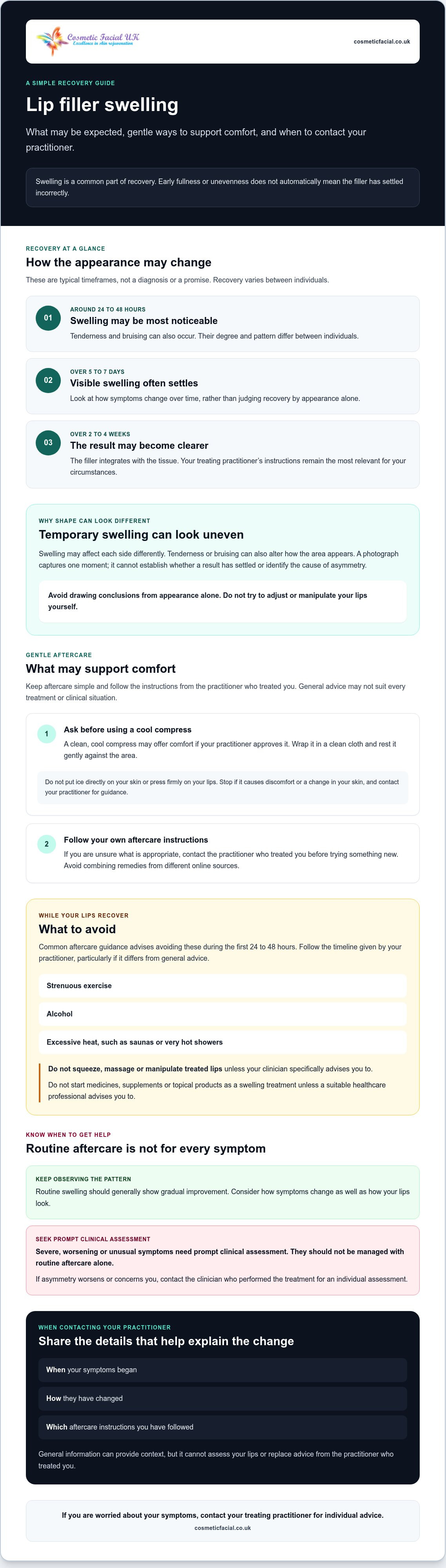
It’s understandable to feel uncertain about what’s normal, particularly when online aftercare advice varies. Swelling often peaks around 24 to 48 hours after treatment, with most visible swelling settling within 5 to 7 days. The final result may take 2 to 4 weeks to become clear. These are typical timeframes, not a diagnosis, so consider how symptoms change as well as how your lips look.
This guide explains which gentle measures may support comfort, what to avoid while your lips recover and when to seek prompt clinical assessment. It also covers why temporary swelling or asymmetry can change over time, and why you shouldn’t try to correct or manipulate the treated area yourself. If you’re worried about your symptoms, contact the practitioner responsible for your treatment for individual advice.
Key Takeaways
- Reducing swelling after lip fillers starts with gentle, low-risk aftercare. Check with your practitioner about using a cool compress and follow their specific instructions.
- Early tenderness, bruising and swelling can vary. Look at how symptoms change over time rather than judging recovery by appearance alone.
- Avoid squeezing or massaging treated lips unless your clinician advises it. Don’t rely on unprescribed medicines or products as swelling cures.
- Severe, worsening or unusual symptoms need prompt clinical assessment. They should not be managed with routine aftercare alone.
- When contacting your injector, share when symptoms began, how they have changed and which aftercare instructions you have followed.
Reducing swelling after lip fillers: what is expected?
Swelling is a possible response to lip-filler injections. The lips may react to the treatment, and tissue can be affected by the injection process. Tenderness and bruising can also occur, but their degree and pattern differ between individuals. An overview of lip augmentation procedures describes swelling and bruising among possible side effects. It cannot predict how any one person will recover.
Online guidance can help explain general patterns, but it can’t assess your lips or replace advice from the practitioner who treated you. Your practitioner knows the details of your procedure and can give instructions relevant to your clinical circumstances. Use general information as context, not as a personal assessment.
The video below discusses swelling after lip filler. Treat it as general information, not a substitute for your injector’s advice.
How long can lip-filler swelling last?
Swelling may be most noticeable around 24 to 48 hours after treatment, with visible swelling often settling over 5 to 7 days. The result may take 2 to 4 weeks to become clearer as the filler integrates with the tissue. These are typical timeframes, not a promise or a substitute for your treating practitioner’s instructions. Recovery varies between individuals and with the procedure and other clinical circumstances. Follow the specific advice you were given. If symptoms are not improving as expected, contact your practitioner.
Why can lips look uneven while they are swollen?
Swelling may not affect both sides of the lips equally, making their shape look temporarily uneven. Tenderness or bruising can also alter how the area appears. A photograph captures one moment; it cannot establish whether a result has settled or identify the cause of asymmetry. Avoid drawing conclusions from appearance alone or trying to adjust your lips yourself. If the asymmetry worsens or concerns you, contact the clinician who performed the treatment for an individual assessment.
Routine swelling should generally show gradual improvement. Severe, worsening or unusual symptoms need clinical review, not reassurance from an online comparison. The pattern of symptoms matters as much as appearance. If a change worries you, contact your treating practitioner for personalised advice.
What may help reduce swelling after lip fillers safely?
For reducing swelling after lip fillers, keep aftercare simple and follow the instructions from your treating practitioner. General advice may not suit every treatment or clinical situation, so avoid combining remedies from different online sources. If you’re unsure what is appropriate, contact the practitioner who treated you before trying something new.
Ask your treating practitioner what to do rather than relying on an online remedy. This is particularly important if you have an existing health condition, take medicines or have noticed a change that concerns you.
Using a cool compress after lip filler
A clean, cool compress may offer comfort. If your practitioner has approved one, wrap it in a clean cloth and rest it gently against the area. Don’t put ice directly on your skin or press firmly on your lips. Longer or more frequent application is not necessarily helpful, and a suitable schedule depends on your clinician’s advice. Stop if the compress causes discomfort or a change in your skin, and contact your practitioner for guidance.
Everyday choices that may affect recovery
Common aftercare guidance advises avoiding strenuous exercise, alcohol and excessive heat, such as saunas or very hot showers, during the first 24 to 48 hours. This is general guidance, not an individual prescription. Follow the timeline your practitioner gives you, particularly if it differs from advice you have found online. Avoid unnecessary pressure on your lips, and don’t massage or manipulate them unless your clinician specifically instructs you to do so.
Some online recommendations, including particular foods, supplements or topical products, are presented as ways to reduce swelling. They may not be suitable for your individual circumstances. Don’t start medicines, supplements or products as a swelling treatment unless a suitable healthcare professional advises you to. The US Food and Drug Administration’s FDA safety guidelines on dermal fillers discuss filler risks and precautions. They are general information, not a replacement for UK clinical advice or your practitioner’s aftercare plan.
For general clinic information, see Cosmetic Facial’s treatment aftercare FAQs. If you’re considering lip augmentation in Marylebone, you can also read about the clinic’s aesthetic treatments. If symptoms worsen or you’re concerned, contact your treating practitioner for an individual assessment rather than trying additional remedies.
Normal swelling or complication? When to seek help
The direction of change matters. Swelling that is gradually improving, without new or escalating symptoms, may fit a routine recovery pattern. Severe pain, worsening swelling or unusual changes should not be managed simply by continuing routine aftercare. General information, including this dermal fillers overview, can explain possible risks but cannot determine what is causing your symptoms.
If you develop sudden visual symptoms after filler treatment, seek emergency care immediately. Don’t wait for an online reply or routine appointment.
Which symptoms should prompt contact with your injector?
Contact the practitioner who treated you promptly if swelling is getting worse rather than settling, pain is increasing, or you notice an unexpected change in the treated area. Skin becoming unusually pale, mottled, dusky or blue also warrants urgent clinical advice. These signs do not establish a diagnosis, but they should not be dismissed or treated at home without assessment.
An online article cannot assess the colour, temperature or circulation of your lips, or determine whether an individual symptom is serious. Don’t massage the area, apply unprescribed products or attempt other self-treatment while waiting for advice. Explain when the change began, how it has progressed and when the filler was administered.
When is swelling an emergency?
Sudden changes in vision, severe pain or concerning skin colour changes after filler need urgent professional assessment. If you have sudden visual symptoms or feel seriously unwell, call 999 or attend A&E. For an urgent concern that is not immediately life-threatening, contact NHS 111 for advice about the appropriate service. Don’t delay emergency help while trying to reach the practitioner or waiting for a routine appointment.
By contrast, a mild change in appearance that is stable or improving, without severe pain or other unusual symptoms, may be suitable to discuss with your injector through their usual contact route. If you’re uncertain about the urgency, seek clinical advice rather than relying on photographs or comparing your lips with online examples. Cosmetic clinics do not replace emergency services, so use NHS urgent or emergency care when symptoms require it.
What to avoid while your lips recover
In the days after treatment, don’t try to correct swelling or shape by squeezing, rubbing or otherwise manipulating your lips. Pressure may irritate the treated area, and advice about massage depends on the clinical situation. A technique suggested online may not be suitable for your lips or the filler placement. If you’re unsure what is appropriate, ask the practitioner who treated you before touching or applying anything to the area.
Should you massage swollen lips after filler?
Don’t massage a lump or uneven area unless your injector has assessed it and specifically advised you to do so. Firm pressure or attempts to reshape the filler without personalised guidance aren’t a safe substitute for clinical assessment. If an area feels unusual, is getting more noticeable or concerns you, contact your treating practitioner and explain what you have noticed. They can advise whether an assessment is needed.
Why online swelling remedies need caution
Claims that particular medicines, supplements or topical products will reduce swelling may not be supported by reliable evidence for your circumstances. Products applied to recently treated skin can also cause irritation, while medicines and supplements may have risks or interact with other treatments or health conditions. Don’t start, stop or change a medicine to manage swelling without speaking to a qualified healthcare professional. If you already take prescribed medication, ask your clinician before making any changes.
Be cautious with intense heat, including saunas and very hot showers, and avoid other measures intended to speed recovery unless your practitioner confirms they’re appropriate. General aftercare advice may not account for your procedure, medical history or the symptoms you’re experiencing. Follow one personalised plan rather than combining several online suggestions in the hope of reducing swelling after lip fillers.
For further background, read Cosmetic Facial’s clinical guide to dermal fillers. It can provide general information about treatment, but it can’t assess a new lump, worsening discomfort or another change in your lips. Contact your treating clinician for individual advice, and seek urgent medical help if symptoms are severe or rapidly worsening.
Explore dermal filler treatment information at Cosmetic Facial.
Getting personalised lip-filler aftercare in London
If swelling or another change is concerning you, take a clear approach: note what you are experiencing, contact the practitioner who performed your treatment, then follow their tailored advice. Keep track of when symptoms began and whether they are improving, unchanged or worsening. This helps the clinician understand the change and advise whether an assessment is appropriate.
What to tell a practitioner about post-filler swelling
When you make contact, share the date of treatment, when the swelling or other symptom appeared and how it has changed. Describe any tenderness, bruising, pain or change in skin colour, and mention any aftercare instructions you have already followed. If you know the filler details, include them, but don’t delay contacting a clinician if you don’t.
Tell the practitioner about relevant medicines, allergies and health conditions. They may ask for photographs to understand what has changed, but images can’t replace an in-person clinical assessment where one is needed. Don’t massage the area or try another remedy while waiting for advice unless your clinician has instructed you to.
How to arrange a clinical consultation in Marylebone
Cosmetic Facial is an aesthetic and medical clinic in Marylebone, London, offering dermal fillers and lip augmentation. If you’re seeking advice about treatment or recovery, check directly with the clinic whether it is appropriate for your circumstances and what assessment may be needed. When symptoms or recovery are concerning, an individual clinical assessment is more useful than relying on general online guidance.
Consultations at an aesthetic clinic are not emergency services. For sudden visual symptoms, severe pain or another potentially urgent change, seek appropriate immediate medical care rather than waiting for a routine appointment or an online response. For urgent concerns that are not immediately life-threatening, contact NHS 111 or the appropriate NHS service for guidance.
For general information about the clinic and its treatments, explore its services. A published dermal-filler guide can also be a useful educational resource, but follow the advice of your own treating practitioner for individual aftercare.
Explore Cosmetic Facial’s services.
Take a considered approach to your recovery
Swelling and tenderness can vary after lip fillers, so focus on how symptoms change rather than judging your result from appearance alone. For reducing swelling after lip fillers, stick to gentle measures approved by your practitioner and avoid squeezing, massaging or applying unprescribed remedies.
If symptoms worsen, pain increases or you notice an unusual change, contact the practitioner who treated you and explain when it began and how it has progressed. Online guidance cannot assess your lips. Sudden visual symptoms or other severe signs need urgent medical attention, not a wait for a routine reply.
Cosmetic Facial is based in Marylebone, London, and offers dermal fillers and lip augmentation. If you’re considering treatment or need an individual clinical assessment, explore the clinic’s services.
With clear, personalised advice, you can make informed decisions about recovery and know when to seek further help.
Frequently Asked Questions
How long does swelling last after lip fillers?
Swelling often peaks around 24 to 48 hours after treatment, with most visible swelling settling within 5 to 7 days. The final result may take 2 to 4 weeks to become clearer. These are typical timeframes, not a guarantee: recovery can vary with the individual, treatment and clinical circumstances. Follow your treating practitioner’s aftercare instructions, and contact them if swelling is worsening or not following the pattern they described.
Is swelling normal after lip fillers?
Yes, some swelling can occur after lip fillers, and mild tenderness or bruising may also develop. The amount and pattern differ between individuals, and temporary unevenness can happen if swelling affects the lips differently. Consider symptoms in context and follow how they change over time, rather than judging by appearance alone. Contact your injector if swelling is getting worse, pain increases or another unexpected change concerns you.
How can I reduce swelling after lip fillers?
For reducing swelling after lip fillers, follow your practitioner’s aftercare plan and keep measures gentle. If they approve, a clean, cool compress wrapped in cloth may provide comfort. Don’t press firmly or apply ice directly to your skin. General guidance commonly advises avoiding strenuous exercise, alcohol and excessive heat soon after treatment, but follow your injector’s specific instructions. Don’t massage your lips or try unverified remedies without clinical advice.
Can I put ice on my lips after filler?
Don’t place ice directly on your lips. If your treating practitioner says a cold compress is suitable, wrap it in a clean cloth and apply it gently, without pressing on the treated area. Avoid following a fixed schedule unless your practitioner has advised one for your situation. Stop if you notice discomfort or a change in your skin, and contact the clinic that treated you for guidance.
Can I massage my lips to reduce swelling after filler?
Don’t massage or squeeze your lips to reduce swelling unless your treating practitioner specifically advises it. Whether massage is appropriate depends on the clinical situation, and firm pressure or attempts to reshape filler without an assessment may irritate the area. If you notice a lump or unevenness that concerns you, contact your injector and describe what you can feel or see. Avoid trying to correct it yourself.
When should I seek medical help for swelling after lip fillers?
Contact your injector promptly if swelling worsens, pain increases or you notice an unusual change in skin colour. Severe pain or pale, dusky or blue skin needs urgent clinical assessment. Sudden visual symptoms require emergency care immediately: call 999 or attend A&E, and don’t wait for an online reply. For an urgent concern that isn’t immediately life-threatening, contact NHS 111 or your treating practitioner for guidance.
Can I take antihistamines or painkillers for lip-filler swelling?
Ask your treating practitioner, GP or pharmacist before taking an antihistamine or painkiller specifically for post-filler swelling. The appropriate choice can depend on your health, allergies, other medicines and the symptoms you’re experiencing. Don’t start, stop or change prescribed medication based on online advice, and don’t assume a medicine will treat the cause of swelling. If symptoms are severe or worsening, seek clinical assessment rather than masking them.
Disclaimer
All content on cosmetic Facial website, including blogs, graphics, logos, images, and software, is the property of CosmeticFacial UK or its content suppliers and is protected by applicable copyright laws. Unauthorized use, reproduction, distribution, or modification of any content without prior written permission is strictly prohibited.


