


A good Botox decision starts with whether treatment is suitable for you, not with a promise to erase every line. If you’re considering Botox, it’s understandable to want clear answers about what may change, how long results could last and whether your expression will still look natural.
This guide explains how botulinum toxin works, how it’s used cosmetically and what to consider when weighing potential benefits against risks. It also sets out what a UK consultation involves, including the importance of discussing your health, expectations and who will prescribe and administer treatment.
Botox is a prescription-only medicine in the UK, and a face-to-face assessment with a qualified prescriber is required before it can be supplied. A consultation is an opportunity to ask about suitability, practitioner qualifications, possible side effects and realistic outcomes, without feeling pressured to proceed. The sections ahead cover the treatment process, when results may appear and how long they can last, as well as questions that can help you make an informed decision.
Key Takeaways
- Learn how Botox differs from botulinum toxin medicines generally, and how cosmetic injections temporarily affect selected facial muscles.
- Understand why suitability depends on your health history, goals and individual response, rather than a one-size-fits-all result.
- Know which potential risks and concerns, including an overly restricted expression, to raise with your treating professional.
- Prepare for an appointment by considering what to discuss, and make sure assessment and consent come before treatment.
- Use a practical checklist to assess your next steps, whether you’re considering treatment at a Marylebone clinic or elsewhere.
What is Botox, and what does it do to facial muscles?
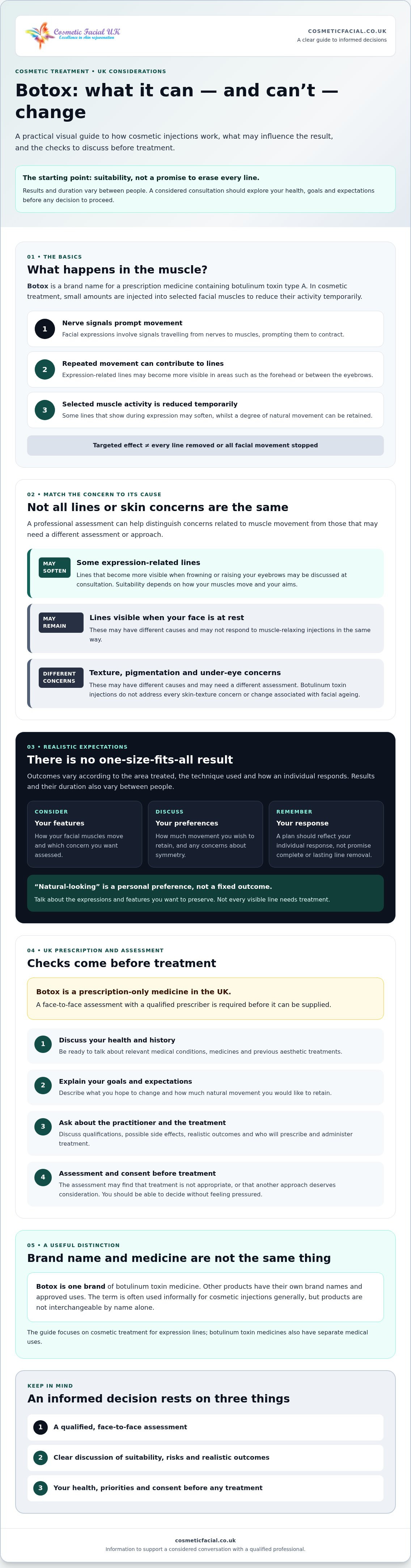
Botox is a brand name for a prescription medicine containing botulinum toxin type A. Botulinum toxin medicines are used in both cosmetic and medical treatment. In cosmetic treatment, small amounts are injected into selected facial muscles to reduce their activity temporarily. The aim is to soften certain expression lines while retaining a degree of natural movement. Results and duration vary between people.
Understanding how the treatment works can clarify what it may and may not address. Facial expressions involve signals travelling from nerves to muscles, prompting them to contract. Repeated movement can contribute to lines forming in areas such as the forehead or between the eyebrows.
This video offers a further explanation of the treatment and what to expect:
How does Botox affect expression lines?
Botulinum toxin temporarily interrupts the nerve signals that prompt a treated muscle to contract. With less activity in a selected muscle, some lines that become more visible during expression may soften. The effect is targeted: it won’t remove every line or stop all facial movement. The result depends on factors such as the treatment area, technique and individual response.
Lines that remain visible when your face is at rest, changes in skin texture, pigmentation and under-eye concerns may have different causes. They may not respond to muscle-relaxing injections in the same way. A professional assessment can help identify what is contributing to the concern and whether another approach is more appropriate.
Botox medicine, cosmetic treatment and medical uses
Botox is one brand of botulinum toxin medicine, and other products have their own brand names and approved uses. The term is often used informally for cosmetic injections generally, but products aren’t interchangeable by name alone. For a broader scientific overview of botulinum toxin, including its mechanism and uses, consult the linked reference.
This section focuses on cosmetic treatment for expression lines, rather than the separate medical uses of these medicines. For a broader look at treatment options in the UK, see our Botox in London guide. Any decision about treatment should follow an individual assessment and include realistic expectations about what it can change.
Who may be suitable for Botox, and what results are realistic?
Whether Botox is suitable depends on more than the line you want to soften. An appropriately qualified professional should assess your health history, facial movement and treatment goals before recommending a course of action. Be ready to discuss relevant medical conditions, medicines, previous aesthetic treatments and what you hope to change. The assessment may conclude that treatment isn’t appropriate, or that another approach deserves consideration.
There isn’t a standard plan that suits everyone. Outcomes vary according to the area treated, the technique used and how an individual responds. A consultation should help establish what change is realistic for your features, rather than create an expectation of complete or lasting line removal.
Which facial concerns might a consultation assess?
Expression-related lines, such as those that become more visible when frowning or raising your eyebrows, may be discussed. The practitioner can assess how your muscles move and whether reducing activity in a selected area could suit your aims. Lines visible when your face is at rest may remain, even if movement-related lines soften.
Botulinum toxin injections don’t address every skin texture concern or change associated with facial ageing. A clinician can help distinguish concerns related to muscle movement from those that may need a different assessment or treatment. These options aren’t automatically interchangeable.
What does a natural-looking result mean?
“Natural-looking” is a personal preference, not a fixed outcome. Discuss how much movement you wish to retain, whether you’re concerned about facial symmetry and which features you want to preserve. A considered plan takes your expressions and priorities into account. It shouldn’t assume every visible line needs treatment.
For a related overview of the clinic’s approach, see its line and wrinkle treatment information. The US FDA Medication Guide for Botox provides information on the medicine’s labelled uses and warnings. It isn’t a substitute for UK-specific advice from your treating professional.
If you’re considering treatment in Marylebone, you can learn more about Cosmetic Facial and its services before deciding whether to seek an individual assessment.
Is Botox safe, and what risks should you understand?
Botox treatment can cause side effects, so an individual assessment is important before deciding whether to proceed. Some people worry about a frozen appearance. Excessively restricted movement may not match your preferences, so discuss how much expression you want to retain and how the proposed treatment could affect it. No cosmetic injection is risk-free. Suitability depends on your health as well as the area being considered.
Before assessment, tell the treating professional about relevant health conditions, medicines, allergies, previous injections and any reactions to earlier treatment. Ask them to explain the potential benefits and risks for your circumstances, and what alternatives might be appropriate. Don’t proceed if you feel your concerns haven’t been addressed or you’re being pressured.
What risks and side effects should patients discuss?
Possible effects include temporary pain, swelling or bruising around an injection site, headache and changes such as a drooping eyelid. The likelihood and significance of effects vary. The Mayo Clinic’s Botox overview provides patient information on procedure-related risks, but it isn’t a substitute for advice based on your health and the product being considered.
Rarely, botulinum toxin effects can spread beyond the injection area. In July 2026, the UK Medicines and Healthcare products Regulatory Agency strengthened warnings about this risk. Seek immediate medical help if you develop difficulty breathing, swallowing or speaking after treatment. Raise any unexpected or worrying symptoms promptly with a healthcare professional, even if they aren’t listed here.
How can you assess a Botox provider in London?
Check the current qualifications and relevant experience of both the person assessing you and the person who will administer the injections. Ask who is responsible for your care and what training they have in the treatment area. Don’t assume that a prescriber and injector are the same person. Ask how assessment, prescribing and administration are arranged, and verify the answers before proceeding.
A careful consultation should allow time for questions and informed consent. Consider asking:
- What product is being proposed, and what product information can I review?
- What result is realistic for me, and what movement might remain?
- What side effects should I watch for, and whom should I contact if I’m concerned?
- What follow-up or support is available if a complication occurs?
In the UK, prescribing, administration and advertising guidance can depend on the circumstances and current rules. Ask the clinic to explain its arrangements rather than relying on assumptions about regulatory status. If you’re researching local options, read about Cosmetic Facial, a Marylebone clinic offering Botox treatment, and consider what you’d want to clarify during an assessment.
What happens before, during and after a Botox appointment?
An appointment should begin with an assessment, not an assumption that treatment will go ahead. In the UK, botulinum toxin is a prescription-only medicine, and a face-to-face assessment with a qualified prescriber is required before it can be supplied. The consultation gives you time to discuss your concerns, understand the proposed approach and decide whether you want to proceed.
What should you discuss at a Botox consultation?
Describe the facial changes you’ve noticed and what you hope treatment might achieve. Mention previous cosmetic procedures or injections, relevant health conditions, medicines and any past reactions. This information helps the professional assess your suitability and consider whether treatment is appropriate for you.
Ask which areas are being considered, what limitations to expect, which risks are relevant to your circumstances and who would administer the treatment. Check that the plan reflects your preferences, including how much facial movement you want to retain. You should have a clear opportunity to ask questions and give informed consent before treatment begins. Choosing not to proceed, or taking more time to decide, is a valid outcome of the consultation.
What should you expect during and after treatment?
If you decide to go ahead, the treating professional should explain the planned procedure and answer any remaining questions before proceeding. The exact approach depends on the assessment and treatment plan, so don’t assume that another person’s experience will be the same as yours.
Results aren’t necessarily immediate, and the timing and degree of change vary between individuals. Ask what to expect for your treatment area and when the professional recommends reviewing the result. General aftercare information shouldn’t replace advice tailored to your treatment. Follow the instructions you’re given, and check with the treating professional before relying on online guidance about activities or restrictions.
Before leaving, make sure you know how to contact the clinic with questions or concerns and what support is available if you experience an unexpected effect. If you’re unsure about anything afterwards, seek advice rather than trying to manage a concern based on assumptions.
Considering Botox in Marylebone? Choose your next step carefully
Deciding whether to pursue Botox treatment is a personal choice. Before contacting a clinic, clarify what you’d like to change and what you want to preserve, such as natural movement or a particular facial expression. A useful next step is gathering information, not committing to treatment.
Cosmetic Facial is an aesthetic and medical skin clinic in Marylebone, London, offering Botox treatment and personalised care. Before making an appointment, check the current consultation arrangements and who would assess and administer treatment. Practitioner qualifications and responsibilities should be clear and relevant to the procedure. Past credentials alone don’t confirm current registration or treatment role.
Questions to ask before deciding on treatment
Use a consultation to establish whether the proposed approach fits your concern and expectations. Consider asking:
- Who will assess me, prescribe the medicine and administer the treatment, and how can I check their current qualifications?
- What outcome is realistic for my facial features, and what lines or changes may not respond?
- What are the relevant risks, and how will they be explained before I give consent?
- What aftercare instructions will I receive, and who should I contact if I have a concern afterwards?
Look for clear, individual answers rather than guarantees. You should have time to consider the information, understand the proposed plan and decide freely whether to proceed. If the explanation is unclear, you feel rushed or the expected result sounds certain, pause and seek clarification. Choosing not to have treatment is also a valid decision.
How to explore treatment information in Marylebone
For a broader overview of options, read the Botox in London treatment guide. Use it to prepare questions before deciding whether a consultation is appropriate. Confirm current booking methods and appointment details directly with the clinic, as arrangements may change.
A considered decision rests on clear goals, verified practitioner information, informed consent and expectations that reflect what treatment can realistically achieve. Take the time you need before deciding on a next step.
Make an informed choice about your next step
Botox can temporarily soften selected expression lines, but it won’t address every skin concern, and results differ between individuals. Suitability depends on your health, goals and a professional assessment. A careful decision also means understanding possible risks, asking who will assess and administer treatment, and agreeing to proceed only when you feel informed and comfortable.
Cosmetic Facial offers Botox treatment at its Marylebone, London clinic, with personalised care from qualified specialists. Before making a decision, check the practitioner’s current qualifications and role, and use a consultation to discuss realistic outcomes and any concerns. There’s no need to rush: gathering information or deciding that treatment isn’t right for you are both reasonable next steps.
Take the time you need to weigh your options. A considered choice, based on clear information and your own priorities, is a positive outcome in itself.
Frequently Asked Questions
What is Botox and how does it work?
Botox is a brand of medicine containing botulinum toxin type A. In cosmetic treatment, it’s injected into selected muscles to temporarily reduce the nerve signals that cause them to contract. This can soften some lines linked to repeated facial expressions, such as frown lines. It doesn’t treat every type of wrinkle or skin concern, and the effect depends on the area treated and the individual.
How long does Botox last?
The effects are temporary, and there isn’t a set duration that applies to everyone. How long they last can depend on the treatment area, the amount used, the technique and your individual response. Ask the treating professional what may be realistic for your circumstances and whether a review is appropriate. Don’t assume another person’s experience will predict your results.
Is Botox safe when administered by a qualified professional?
No medical treatment is entirely risk-free. A qualified professional should assess your suitability, explain relevant risks and answer questions before you decide. In the UK, botulinum toxin is a prescription-only medicine, and a face-to-face assessment with a qualified prescriber is required before it can be supplied. Ask who will assess, prescribe and administer treatment, and seek medical help promptly for serious symptoms such as difficulty breathing, swallowing or speaking.
Can Botox make your face look frozen?
Botox can reduce movement in the muscles treated, so an overly restricted appearance is a concern to discuss rather than dismiss. Your preferences, facial movement and the proposed treatment plan should inform the assessment. Explain how much expression you want to retain and ask what limitations are realistic. A practitioner should discuss the intended outcome without promising that every line will disappear or movement will be unchanged.
Who should not have Botox treatment?
There isn’t one answer that applies to every person, so disclose health conditions, medicines, allergies, pregnancy or breastfeeding, and previous reactions to the prescriber. These factors may mean treatment is unsuitable or should be deferred, and the prescriber can assess your circumstances. In England, cosmetic botulinum toxin treatment must not be administered to anyone under 18, except where a doctor approves it for a clinical medical need.
What happens during a Botox consultation?
A consultation should assess your health history, facial concern and desired change before any decision to proceed. The prescriber should explain suitability, the proposed treatment, expected limitations and relevant risks, and give you an opportunity to ask questions. You should understand who will administer the medicine and what aftercare advice applies. Consent comes before treatment, and you can decide not to proceed or take more time to consider.
How soon can you see results after Botox?
Results aren’t usually immediate. The change develops over time, but when it becomes noticeable and how it progresses can vary between people and treatment areas. Ask your treating professional what timing to expect for your specific plan and whether a review is recommended. If you have concerns after treatment, contact the clinician for advice rather than judging the result against someone else’s experience.
Disclaimer
All content on cosmetic Facial website, including blogs, graphics, logos, images, and software, is the property of CosmeticFacial UK or its content suppliers and is protected by applicable copyright laws. Unauthorized use, reproduction, distribution, or modification of any content without prior written permission is strictly prohibited.


