


The final aesthetic success of fractional CO2 laser resurfacing is determined less by the laser technology itself and more by the precise biological events that occur during the subsequent fortnight. It is entirely natural to feel a sense of trepidation when observing the initial intensity of erythema and oedema that accompanies such a transformative clinical intervention. You might worry about the safety of your skincare regime or the risk of permanent marking if the healing process does not appear to follow a linear path.
This clinical guide provides a definitive, consultant-led roadmap for your recovery from co2 laser treatment day by day, ensuring you understand exactly how to manage the inflammatory phase and protect your investment in your skin's health. We have structured this timeline to replace uncertainty with clinical predictability, offering clear instructions on reducing redness whilst supporting the skin's natural repair mechanisms. We will examine the immediate post-operative window, the critical peeling stage, and the long-term collagen remodelling process that eventually reveals a refined, rejuvenated complexion. By following this structured programme, you can move through each stage of the healing journey with the confidence that you are in capable, experienced hands.
Key Takeaways
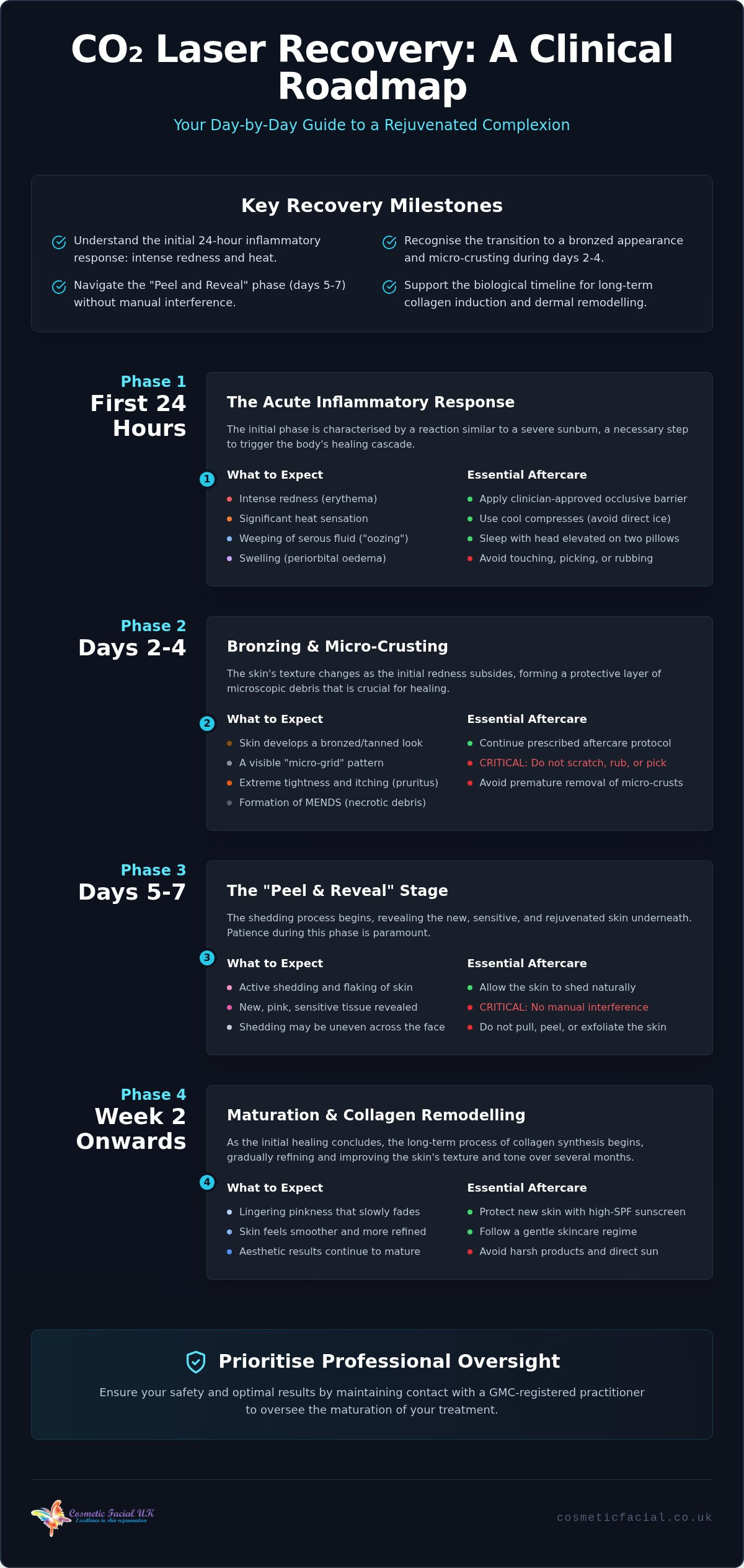
- Understand the immediate inflammatory response, including intense erythema and heat sensations, which typically persist for the first 24 hours post-procedure.
- Identify the transition from redness to a bronzed appearance and micro-crusting during days two to four as the fractional micro-grid begins the healing process.
- Navigate the "Peel and Reveal" phase between days five and seven, ensuring the active shedding process is managed without manual interference to protect new, sensitive tissue.
- Utilise this clinical roadmap to monitor your recovery from co2 laser treatment day by day, supporting the biological timeline of collagen induction and dermal remodelling.
- Ensure patient safety by maintaining contact with a GMC-registered practitioner to oversee the maturation of your aesthetic results and mitigate risks.
Immediate Post-Treatment: What to Expect in the First 24 Hours
The first 24 hours of your recovery from co2 laser treatment day by day represent the most acute phase of the inflammatory response. Immediately following the procedure, the skin exhibits intense erythema, or redness, accompanied by a significant sensation of heat. This reaction is a direct result of the controlled thermal energy delivered into the dermis to stimulate collagen synthesis. Most patients describe the feeling as comparable to a severe sunburn, which typically persists for four to six hours whilst the skin begins to cool. This initial stage is a necessary component of facial rejuvenation, triggering the body's natural healing cascade.
During this window, you may observe a process often referred to as "oozing". This involves the weeping of serous fluid from the microscopic fractional channels created by the laser beams. It's a normal biological response as the tissue begins to seal. To manage this and prevent dehydration of the vulnerable tissue, the application of a clinician-approved occlusive barrier is essential. This layer protects the skin from environmental irritants whilst maintaining the moisture levels required for efficient cellular repair and preventing transepidermal water loss.
The First 4 Hours: Managing Thermal Energy
Managing the residual thermal energy is the primary objective during the first four hours. You may apply clean, cool compresses to the treated area to alleviate discomfort, however, you must avoid direct contact with ice or frozen packs. Excessive cold can cause vasoconstriction and potentially damage the compromised skin barrier or cause an ice burn. It's vital that you don't touch or pick at the face amongst potential contaminants to prevent secondary infection. Many patients find relief using sterile thermal water sprays; these provide a fine mist of hydration that cools the dermis without the need for physical contact.
Sleeping and Initial Drainage
As you conclude the first day, your focus shifts to managing periorbital oedema, which is the swelling around the eyes and mid-face. We recommend sleeping with your head elevated on at least two pillows. This position uses gravity to encourage lymphatic drainage and minimise the accumulation of fluid in the facial tissues. Ensure you use a fresh, clean silk or cotton pillowcase to reduce friction against the skin surface. You must avoid any strenuous activity or heavy lifting during this period. Increased blood flow and physical exertion can exacerbate swelling and prolong the initial inflammatory phase of your recovery from co2 laser treatment day by day.
Days 2 to 4: Managing the Bronzing and Micro-Crusting Phase
As you progress through the recovery from co2 laser treatment day by day, the initial erythema begins to subside, giving way to a distinct textural change. By the second day, the skin typically displays a "micro-grid" pattern. This is a visual representation of the fractional laser columns where the thermal energy was precisely delivered to the tissue. As the inflammatory response matures, the treated area transitions from a vivid red to a bronzed or tanned appearance. This change indicates that the superficial layers of the epidermis are beginning to dry and prepare for shedding, a process that is vital for successful dermal remodelling.
Patients often report a sensation of extreme tightness during this phase. As the skin dehydrates slightly to form protective micro-crusts, it can feel restricted and uncomfortable. This is frequently accompanied by pruritus, or itching, which can be intense. It's imperative that you resist the temptation to scratch, rub, or pick at these micro-crusts. Premature removal of this debris can lead to post-inflammatory hyperpigmentation or, in rare cases, permanent scarring. Monitoring your recovery from co2 laser treatment day by day allows you to recognise these textural shifts as progress rather than complications, ensuring you remain committed to the prescribed aftercare protocol for optimal facial rejuvenation results.
The Formation of MENDS (Microscopic Epidermal Necrotic Debris)
MENDS, or Microscopic Epidermal Necrotic Debris, are the clinical byproduct of fractional resurfacing. As the skin heals from the deeper layers upwards, it expels damaged tissue through the surface. This process creates a texture often described as feeling like sandpaper, which typically peaks around day three. It's a positive sign of cellular turnover and the initiation of the dermal repair cycle. During this window, you must maintain a constant, thin layer of clinician-approved emollient. This facilitates re-epithelialisation by keeping the MENDS soft and allowing them to shed naturally without trauma to the underlying new skin.
Daily Cleansing Protocol
Hygiene remains paramount during this transition. We recommend a "splash wash" technique twice daily using tepid water and a gentle, non-foaming cleanser. Avoid direct water pressure from a showerhead; instead, cup your hands to move water gently onto the face. Pat the skin dry with a sterile gauze rather than rubbing with a towel. It's vital to identify the difference between normal healing and signs of secondary infection, such as pustules, yellow crusting, or increasing warmth. Consulting a qualified dermatology professional ensures your recovery remains on a safe clinical trajectory.
Days 5 to 7: The "Peel and Reveal" Stage
The transition into the fifth day marks the onset of the active shedding phase, a critical milestone in your recovery from co2 laser treatment day by day. During this window, the bronzed, micro-crusted epidermis begins to flake away in a process that often starts around the mouth and nose where facial movement is most frequent. This shedding reveals the "new" skin beneath, which typically presents with a residual pink hue. This colouration is a sign of increased blood flow to the area as the body continues its intensive repair work and should be viewed as a positive indicator of the healing process.
Whilst the initial thermal heat from the procedure has dissipated, the fresh tissue remains highly sensitive. The skin's barrier function is still being restored, which means you may experience a lingering tenderness or a "tight" sensation as the new cells consolidate. It's at this stage that we recommend transitioning to a more comprehensive hydration routine. Whilst you continue to use clinician-approved emollients, you may now incorporate lighter, hyaluronic acid-based serums that provide deep hydration without the heavy occlusive feel of the earlier days. This support is vital for maintaining the elasticity of the maturing tissue.
Navigating the Shedding Process
It's imperative that you allow the skin to fall off naturally. You must resist any urge to assist the process by peeling or rubbing the flaking areas. Forcing the skin to shed prematurely exposes the underlying tissue before it's biologically ready, which significantly increases the risk of post-inflammatory hyperpigmentation (PIH) or persistent redness. You should strictly avoid all chemical or physical exfoliants, including retinols, acids, or scrubs, during this delicate week. To encourage shedding safely, maintain your gentle, moisture-based cleansing routine; the natural lubrication from your cleanser and emollient will allow the debris to detach when the new barrier is sufficiently formed.
Sun Protection and Environmental Shielding
The "new" skin revealed during this stage is at its highest risk for UV damage because it lacks a fully matured melanin defence. The absolute necessity of a broad-spectrum SPF 50 cannot be overstated, and you must apply it even if you intend to stay indoors, as UVA rays penetrate through standard window glass. Protecting this vulnerable layer is essential for ensuring that the long-term improvements in skin texture and tone are not compromised by solar lentigines or darkening. For those undergoing treatment for specific concerns, such as the protocols outlined in our guide to Fractional CO2 Laser for Acne Scars, strict adherence to UV shielding is the primary factor in achieving a successful clinical outcome. This diligent protection ensures your recovery from co2 laser treatment day by day leads to the refined, clear results you expect.
Week 2 to Month 3: Protecting Your New Skin and Maturing Results
As you move beyond the first week, the visible signs of your recovery from co2 laser treatment day by day shift from active shedding to tissue maturation. The residual pinkness, or erythema, typically persists for several weeks as the underlying vasculature supports the healing process. This colouration gradually transitions to your natural skin tone over the first month, though deeper clinical interventions may require a longer duration for full vascular resolution. It's during this stage that the skin's texture begins to feel significantly smoother, even whilst the deeper biological work continues beneath the surface.
Resuming active skincare ingredients requires precise clinical guidance to avoid inflammatory setbacks. Potent antioxidants like Vitamin C or cellular turnover accelerators such as Retinol should generally be avoided until at least week four, or until the epidermal barrier is confirmed to be fully intact. Reintroducing these actives too early can cause unnecessary irritation and compromise the newly formed tissue. We schedule regular follow-up appointments at our Marylebone clinic during this window to assess your progress and confirm when your skin is sufficiently resilient for advanced topical formulations.
Collagen Remodelling: The Invisible Recovery
Whilst the surface appears healed, the deeper dermal layers are undergoing significant structural changes. The controlled thermal injury stimulates fibroblasts to produce new collagen and elastin fibres, a process that continues for up to 90 days post-procedure. Monitoring your recovery from co2 laser treatment day by day ensures that you don't mistake temporary oedema for final results. It's common for patients to notice an initial "glow" or plumpness in the first fortnight, however, this is often due to residual swelling rather than permanent structural change. True dermal remodelling takes time to manifest. Supporting this biological work with a high-protein diet and consistent hydration is essential for providing the building blocks required for optimal tissue repair.
Resuming Normal Activities
Most patients can return to the gym approximately 14 days after treatment, once the risk of sweat-induced irritation and bacterial infection has diminished. However, you should avoid heat-based environments like saunas or steam rooms for at least four to six weeks to prevent exacerbating residual erythema. If you wish to camouflage lingering redness, mineral make-up is usually safe to apply from the second week onwards, provided the skin is no longer flaking. This period is also an ideal time to discuss complementary maintenance through facial rejuvenation treatments that support the longevity of your laser results.
Professional Aftercare and Clinical Support in Marylebone
The successful management of your recovery from co2 laser treatment day by day requires more than just adherence to a list of instructions; it necessitates professional oversight from a qualified medical practitioner. At Cosmetic Facial, your treatment and subsequent healing are supervised by Dr Faramarz Didar, who holds an MSc in Dermatology Skills and Treatment with Commendation from the University of Hertfordshire. His GMC registration (5200505) ensures that your care meets the highest clinical safety standards. This level of expertise ensures that every stage of your dermal repair is monitored against rigorous medical benchmarks. Choosing a centrally located Marylebone clinic provides the added benefit of accessible, in-person support should you require emergency assessment or specific adjustments to your post-laser protocol. We view your recovery as a supervised medical journey rather than a solo DIY process, providing the reassurance that you're in capable, experienced hands throughout the healing window.
The Cosmetic Facial Aftercare Checklist
To ensure the integrity of the new tissue and to prevent complications, we have established several non-negotiable Golden Rules. The following checklist serves as a reference for your daily routine, as adherence to these steps minimises the risk of secondary complications and ensures the skin heals with a uniform texture and tone. Following this protocol is essential for a predictable recovery from co2 laser treatment day by day.
- Apply occlusive ointment: Reapply a thin layer of clinician-approved ointment every 2 to 4 hours during the first few days to keep the skin moist and prevent the formation of hard crusts.
- Gentle cleansing: Use only tepid water and the specific non-foaming, gentle cleansers provided by the clinic to avoid disrupting the fragile epidermal barrier.
- UV protection: Avoid all direct sun exposure. Once the initial peeling is complete, you must wear high-factor broad-spectrum SPF 50 religiously to prevent post-inflammatory hyperpigmentation.
- No manual interference: You must never pick, peel, or scrub the skin. The debris must detach naturally to protect the underlying tissue during the first 10 days.
When to Contact Your Clinician
Whilst most patients experience a standard inflammatory response, you must be able to recognise signs that require immediate medical intervention. The thermal stress of a laser can occasionally trigger a herpes simplex virus (cold sore) flare-up, even in patients without a recent history of outbreaks. Early administration of antiviral medication is vital in these cases to prevent scarring. You should also contact the clinic if you observe any unusual or increasing pain levels after the first 24 hours, the appearance of yellow, honey-coloured crusting which may indicate a bacterial infection, or redness that begins to spread beyond the original treatment area. Our team is available to provide rapid clinical assessment for any concerns that arise amongst the typical stages of healing.
Advancing Your Dermal Rejuvenation Journey
Successful skin resurfacing is a collaborative process between clinical precision and patient adherence. By understanding your recovery from co2 laser treatment day by day, you can navigate the transition from initial erythema to the final collagen-rich results with total clarity. It's essential to remember that the skin's barrier function requires dedicated time and protection to restore its biological integrity fully. Following the prescribed protocol protects your investment in your skin's future health.
Our Marylebone clinic provides the specialist oversight necessary to manage this complex biological timeline safely. Dr Faramarz Didar, who holds an MSc in Dermatology with Commendation, ensures every patient receives GMC-registered care tailored to their specific skin health needs. This professional support minimises risks whilst maximising the long-term aesthetic outcome of your procedure. Expert guidance is always available. You don't have to navigate the healing process alone.
We look forward to supporting you through every stage of your skin's transformation.
Frequently Asked Questions
How long does the redness last after fractional CO2 laser treatment?
Residual pinkness typically persists for seven to ten days for most patients, though it may last several weeks depending on the intensity of the laser settings used. This erythema is a biological sign of increased vascular activity supporting tissue repair. It usually transitions from a vivid red in the first 48 hours to a softer pink as the epidermal barrier reforms. Patients with sensitive skin types often experience a slightly longer resolution period before their natural tone returns.
Can I go back to work the day after a CO2 laser session?
Returning to work the day after treatment is generally not recommended due to significant swelling and visible micro-crusting. Most patients require five to seven days of social downtime whilst the active peeling phase completes. During the first 48 hours, the skin appears intensely red and requires frequent application of occlusive ointments. This makes professional or social engagements difficult to manage until the initial inflammatory stage subsides and the skin begins to appear more uniform.
What is the best moisturiser to use during CO2 laser recovery?
You should use a sterile, occlusive ointment during the first few days, followed by a fragrance-free, hypoallergenic cream. We provide specific clinician-approved emollients that facilitate re-epithelialisation without causing irritation. Avoid any products containing active acids, retinols, or heavy fragrances during your recovery from co2 laser treatment day by day. Maintaining a constant moisture barrier is essential to prevent the formation of hard crusts and to support cellular repair.
When can I start wearing make-up again after skin resurfacing?
Mineral make-up can typically be reintroduced after seven to ten days, once the skin has finished the active peeling phase. You must wait until the epidermal surface is fully closed to avoid trapping bacteria or causing irritation to the fresh tissue. Traditional liquid foundations should be avoided for at least two weeks. Always use clean brushes or sponges to apply products to the newly revealed skin to maintain clinical hygiene standards and prevent secondary infection.
Is it normal for my skin to itch during the healing process?
Pruritus, or itching, is a common occurrence between days three and five as the skin begins to dry and shed. This sensation indicates that the micro-crusts are detaching and the underlying tissue is maturing. You must resist the urge to scratch, as this can cause premature peeling and lead to scarring. If the discomfort is significant, a sterile thermal water spray can provide temporary relief without compromising the healing process.
How do I protect my skin from the sun after a laser peel in London?
Absolute sun avoidance is required for the first 14 days, followed by the religious application of broad-spectrum SPF 50. Even in London's overcast weather, UVA rays can penetrate clouds and window glass, risking post-inflammatory hyperpigmentation on the vulnerable new skin. We recommend wearing a wide-brimmed hat when outdoors. Continuous UV protection is the most critical factor in ensuring your recovery from co2 laser treatment day by day yields optimal results.
What should I do if I notice a breakout or small white bumps after treatment?
Small white bumps, known as milia, or minor breakouts can occur if the occlusive ointments are applied too thickly or if the skin's natural exfoliation is temporarily disrupted. You should not attempt to squeeze or pick at these lesions. Contact the clinic for a review if you notice pustules or spreading redness, as these may indicate a bacterial infection. We can adjust your skincare regime to a lighter formulation if your pores become congested.
Will the recovery process be different if I am treating deep acne scars?
Treatments for deep acne scars often involve higher energy settings or greater density, which can result in a more prolonged inflammatory phase. Whilst the general timeline remains similar, you may experience more significant oedema and a longer period of residual pinkness. This intensive approach is necessary to reach the deeper dermal layers where scar tissue resides. Dr Didar will provide a personalised recovery map based on the specific depth of your treatment and your skin's response.
Disclaimer
All content on cosmetic Facial website, including blogs, graphics, logos, images, and software, is the property of CosmeticFacial UK or its content suppliers and is protected by applicable copyright laws. Unauthorized use, reproduction, distribution, or modification of any content without prior written permission is strictly prohibited.


