


A radio frequency facial uses energy to heat tissue, but it is not the same as RF microneedling, which delivers energy through fine needles. Understanding that difference can help you compare treatments and ask more useful questions about what a procedure involves and whether it suits your goals.
If you are weighing up what happens during an appointment, what results are realistic or how RF compares with HIFU, start with how each treatment delivers energy. This guide explains the differences and the factors a clinician considers when discussing suitability, without promising a particular outcome.
You’ll learn how non-invasive RF differs from RF microneedling and HIFU, what may shape a treatment plan and what to discuss at a consultation. At Cosmetic Facial in Marylebone, London, a personalised appointment can help you consider radiofrequency treatment alongside the clinic’s wider facial rejuvenation options. Dr Faramarz Didar’s postgraduate training in non-surgical facial aesthetics and MSc in Dermatology Skills and Treatment provide relevant clinical context for that discussion.
Key Takeaways
- A radio frequency facial uses energy to heat tissue; the method and treatment protocol can vary.
- Compare non-needle RF, RF microneedling and HIFU by how energy is delivered and how each relates to your concern.
- Use a consultation to discuss your goals, medical history, skin assessment and realistic expectations.
- Ask about risks, precautions and aftercare for the specific approach being considered.
- At Cosmetic Facial in Marylebone, discuss how radiofrequency treatment fits alongside other facial rejuvenation options.
What Is a Radio Frequency Facial and What Does It Treat?
A radio frequency facial is a non-surgical treatment that applies radiofrequency energy to facial skin to create controlled heating in tissue. People may consider it when they are concerned about skin laxity or texture, or are exploring non-surgical facial rejuvenation. These are reasons to discuss treatment, not a promise of lifting, tightening or a particular change in collagen. A non-needle RF facial delivers energy without needles, unlike RF microneedling. The device, protocol and intended treatment depth can vary, so the name alone does not describe one standard procedure.
The video below is a tutorial about body contouring, as stated in its title, rather than a guide to facial radiofrequency treatment.
How Does Radiofrequency Deliver Energy to Facial Skin?
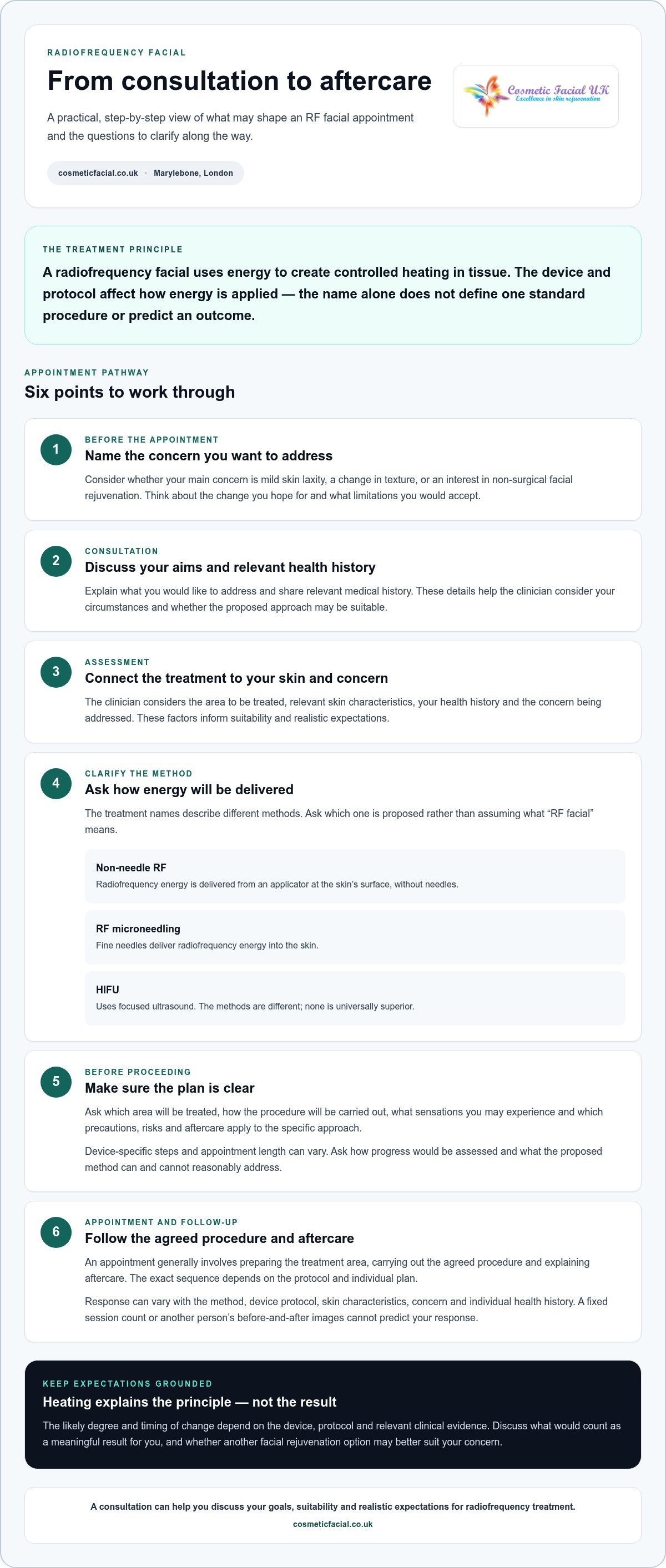
Radiofrequency is a form of energy used in aesthetic treatments to create controlled tissue heating. In a non-needle treatment, energy is delivered from an applicator at the skin’s surface. RF microneedling uses needles to deliver energy into the skin. Device design and the treatment protocol affect how energy is applied and which tissue depth is targeted. Ask which method is being proposed rather than assuming these details from the phrase “RF facial”.
Heating describes the general treatment principle, but it does not tell you the precise biological response, likely degree of change or timing. Those points depend on the device, protocol and relevant clinical evidence. For a broader background, see Radio-frequency skin tightening.
Which Facial Concerns Might Prompt Someone to Consider RF?
You might raise mild skin laxity, changes in texture or an interest in non-surgical facial rejuvenation during a consultation. These are discussion points, not a guarantee that RF is suitable or will produce a particular result. Skin characteristics, medical history, treatment method and your aims all inform the assessment.
Before an appointment, identify the concern you most want to address and how noticeable a change you hope for. Also consider what limitations you would accept. A clinician can discuss whether radiofrequency treatment fits those aims or whether another approach may be more appropriate. You can review the clinic’s facial rejuvenation treatments as part of comparing options.
How a Radio Frequency Facial Works and What Shapes Its Results
A radio frequency facial uses radiofrequency energy to create controlled heating in tissue. That explains the treatment principle, not a guaranteed clinical outcome. The device and protocol determine how energy is delivered, so the treatment name alone cannot tell you the depth, settings or likely response.
An assessment connects the general principle to your circumstances. The clinician considers the concern, the area to be treated, relevant skin characteristics and your health history. These details help inform whether treatment is suitable and what expectations are realistic. When comparing options, ask the clinician to explain the proposed method and why it is being considered for your specific concern.
What Happens During a Typical RF Facial Appointment?
An appointment generally involves discussing your aims and relevant medical history, assessing the skin, preparing the treatment area, carrying out the agreed procedure and explaining aftercare. The exact sequence depends on the protocol and individual plan. Appointment length, device-specific steps and the sensations you may experience can vary, so ask for these details during the consultation rather than assuming they are the same for every RF treatment.
Before proceeding, make sure you understand which area is being treated, how the procedure will be carried out and what aftercare guidance applies. You can also ask what the clinician will use to assess whether the treatment plan remains appropriate. These details give you a clearer basis for deciding whether the proposed approach fits your needs.
What Can Influence the Response to Radiofrequency Treatment?
Response can vary according to the method, device protocol, skin characteristics and concern being addressed, as well as the individual’s health history. A discussion about facial laxity may lead to different considerations from one focused on skin texture. Neither concern guarantees a particular outcome, and the treatment name alone cannot predict the degree or timing of any change.
Discuss what would count as a meaningful result for you, how progress would be reviewed and what the treatment can and cannot reasonably be expected to address. A clinician-led review can help keep expectations proportionate and consider whether another facial rejuvenation option may better suit your concern. Avoid treating a fixed session count, recovery claim or another person’s before-and-after images as a prediction of your own response.
At Cosmetic Facial, a personalised appointment is an opportunity to discuss your goals, suitability and expectations for radiofrequency treatment. To learn more about the clinic and its facial services, visit Cosmetic Facial in Marylebone.
Radio Frequency Facial vs RF Microneedling and HIFU: What Is Different?
These treatments use different methods to deliver energy, so their names are not interchangeable. A non-needle radio frequency facial applies radiofrequency energy without needles. RF microneedling combines radiofrequency with fine needles, while HIFU uses focused ultrasound. None is universally superior. The useful comparison is how each method relates to your concern, skin assessment and treatment aims.
| Treatment | How energy is delivered | What to discuss at assessment |
|---|---|---|
| Non-needle RF | Radiofrequency energy is applied without needles. | The treatment area, device protocol, intended approach and realistic expectations. |
| RF microneedling | Fine needles deliver radiofrequency energy into the skin. | Whether a needle-based procedure is appropriate, and its risks and aftercare. |
| HIFU | Focused ultrasound energy is used instead of radiofrequency. | How this option relates to your aims, suitability and other treatment choices. |
How Does a Non-Needle RF Facial Differ from RF Microneedling?
The defining difference is how energy is delivered. Non-needle RF applies energy from the skin’s surface, whereas RF microneedling uses needles to deliver energy into the skin. This changes the nature of the procedure and the assessment required. Depth, sensation, recovery and outcomes cannot be assumed from the treatment name; they depend on the device and protocol. If you’re considering the needle-based approach, read about RF microneedling in London.
When Might HIFU Enter the Facial Treatment Comparison?
HIFU uses ultrasound energy, so it is distinct from both forms of radiofrequency treatment. These options may come up in discussions about facial rejuvenation, but they do not use interchangeable protocols or promise equivalent effects. Assessment should take account of the area of concern, skin characteristics, health history and the type of change you hope to address. You can explore the clinic’s non-surgical facelift options as part of that comparison.
A comparison of HIFU and radiofrequency for the stomach concerns a different body area, so it should not be used to predict how facial treatment may be selected or what results to expect. A useful consultation focuses on your face and goals, with the clinician explaining the options and relevant considerations for each.
Is a Radio Frequency Facial Suitable for You? Consultation and Safety
There is no single suitability rule for a radio frequency facial. The decision should follow an individual clinical assessment of your concerns, skin, health history and expectations. Use the consultation to understand how the proposed treatment compares with other options, rather than assuming that one energy-based approach suits everyone.
What Should You Discuss at an RF Facial Consultation in London?
Before your appointment, consider what you most want to address and how much change you hope to see. At a Marylebone consultation, the discussion can include:
- Your aims: Describe the concern that matters most and your priorities for treatment.
- Medical history: Share relevant health information, including any changes that may affect treatment planning.
- Skincare and previous treatments: Mention the products you use and any previous aesthetic procedures.
- Skin assessment and options: Discuss whether the proposed approach appears suitable and what alternatives may align with your goals.
This information helps the clinician consider the treatment area and your individual circumstances, then explain realistic expectations. Cosmetic Facial offers personalised appointments in Marylebone, London, where you can discuss your goals, suitability and treatment options. Do not base a decision on the treatment name alone or on another person’s experience: their skin and aims may differ from yours.
What Safety and Aftercare Information Should Be Explained?
Before treatment, ask the clinician to explain the risks and precautions relevant to the specific device and protocol, along with the aftercare you will need to follow. Safety advice can vary with the treatment method, so a general list of contraindications may not apply to the procedure being considered. Make sure you understand what the appointment involves, what to expect afterwards and whom to contact if you have concerns.
Share relevant health or skincare changes before proceeding, and allow time to consider the information provided. If any part of the plan or aftercare is unclear, discuss it with the clinician before treatment. You can also review the clinic’s treatment and appointment FAQs for further information.
Considering a Radiofrequency Facial at Cosmetic Facial in Marylebone
Cosmetic Facial offers radiofrequency treatment at its clinic in Marylebone, London. A personalised appointment connects your skin concern with a focused treatment discussion, rather than treating the name of a procedure as a complete plan. If you are considering a radio frequency facial, ask how the proposed method and protocol relate to your aims and assessment.
Dr Faramarz Didar earned an MSc in Dermatology Skills and Treatment with Commendation in 2015 and completed postgraduate training in non-surgical facial aesthetics in 2013. These qualifications provide relevant context for a discussion about skin and aesthetic treatment. They are not a claim of RF-specific certification.
How Can a Consultation Help Clarify Your Treatment Options?
Start by describing the concern you want to address, the result you hope for and any priorities that matter to you, such as the treatment area or your preference for a non-surgical approach. The clinician can consider these alongside your skin assessment and relevant health history, then explain whether radiofrequency treatment may suit your aims.
Facial rejuvenation includes different treatment categories. They are not interchangeable with RF and may address different concerns. Reviewing the clinic’s facial rejuvenation options can give you a wider context for the conversation. The aim is to compare approaches against your individual priorities, not to assume that a particular procedure is suitable before assessment.
What Should You Expect from an Informed Treatment Decision?
Before deciding, make sure you understand how the proposed treatment is delivered, what response may be realistic for your circumstances and what limitations apply. The explanation should relate to the actual protocol being considered, including relevant risks and aftercare. Ask how the clinician will assess suitability and whether another option may better match your concern. Outcomes and their timing vary, so a treatment plan should not imply a guaranteed result.
A considered decision gives you time to weigh the information, clarify anything you do not understand and decide whether the proposed approach aligns with your goals. A consultation at Cosmetic Facial in Marylebone is an opportunity to discuss suitability, alternatives and protocol-specific expectations before proceeding.
Make Your Next Step an Informed One
A radio frequency facial uses radiofrequency energy, but the treatment method and protocol can vary. It differs from RF microneedling, which uses needles, and HIFU, which uses ultrasound. Comparing these approaches by how they are delivered is a useful starting point. Suitability still depends on your skin, health history and aims.
At Cosmetic Facial in Marylebone, London, a personalised consultation can help you discuss your goals, treatment options and realistic expectations for radiofrequency treatment. Dr Faramarz Didar holds an MSc in Dermatology Skills and Treatment with Commendation, awarded in 2015. This provides relevant clinical context without implying RF-specific certification.
Take time to understand the proposed approach and its limitations. A clear discussion can help you decide whether the treatment aligns with your goals and what to do next.
Frequently Asked Questions
What is a radio frequency facial?
A radio frequency facial is a non-surgical treatment that uses radiofrequency energy to create controlled heating in facial tissue. People may consider it for aesthetic concerns such as skin laxity or texture, but it does not guarantee a specific change. The device and protocol determine how energy is delivered and inform the treatment plan. A consultation helps clarify what the proposed approach involves and whether it matches your aims.
Does a radio frequency facial tighten skin?
A radio frequency facial may be considered by people concerned about skin laxity, but tightening is not guaranteed. Response can differ according to the treatment method, protocol, individual skin characteristics and concern being addressed. A clinician should explain what may be realistic for your circumstances, including the limitations of treatment. Assessment is important before drawing conclusions from general claims or another person’s experience.
Is a radio frequency facial the same as RF microneedling?
No. A non-needle RF facial applies radiofrequency energy without needles, whereas RF microneedling combines radiofrequency with fine needles to deliver energy into the skin. These are distinct treatment methods, with different procedures and assessment considerations. The exact approach depends on the device and protocol. Discuss the proposed method, its potential risks and aftercare with a clinician before deciding.
Is a radio frequency facial painful?
The sensation can vary with the device, protocol and individual. Without knowing the specific treatment method, it is not possible to predict exactly how it will feel. Ask the clinician to describe the sensations you may experience and how comfort is considered during the procedure. The consultation is also the time to discuss concerns about treatment, relevant health history and what to expect during the appointment.
How many radio frequency facial treatments will I need?
There is no universal number of treatments that applies to everyone. The plan depends on the method, your skin assessment, the area and concern being addressed, and your aims. A clinician should explain the proposed schedule and how progress may be reviewed without promising a particular outcome. Avoid relying on a fixed session count unless it has been recommended for your individual plan.
Is a radio frequency facial suitable for every skin type?
No treatment can be assumed to suit every person or skin type. Suitability depends on an individual assessment, including skin characteristics, the area being considered, relevant health history and treatment aims. A clinician should also explain any protocol-specific precautions or contraindications. Share relevant medical and skincare information during the consultation so the proposed approach can be considered in context.
Where can I have a radio frequency facial in London?
Cosmetic Facial offers radiofrequency treatment at its clinic in Marylebone, London. A personalised appointment gives you the opportunity to discuss your concerns, suitability, treatment options and realistic expectations. Dr Faramarz Didar holds an MSc in Dermatology Skills and Treatment with Commendation, awarded in 2015. This is relevant clinical education, not a claim of RF-specific certification. The consultation can clarify the proposed treatment approach for you.
Disclaimer
All content on cosmetic Facial website, including blogs, graphics, logos, images, and software, is the property of CosmeticFacial UK or its content suppliers and is protected by applicable copyright laws. Unauthorized use, reproduction, distribution, or modification of any content without prior written permission is strictly prohibited.


