


Texture changes rarely appear all at once. Microneedling results for textured skin develop gradually: initial improvements may appear 2 to 4 weeks after a session, while collagen activity continues over the following months. Most people need a course of treatments, with sessions spaced several weeks apart to allow the skin to respond.
It’s reasonable to want a clearer idea of what microneedling can change before considering treatment. The outcome depends partly on the concern being treated: pitted acne scars and pigmentation marks have different causes and may respond differently. Microneedling creates controlled channels in the skin, prompting a repair response that can support gradual changes in texture.
This article explains how microneedling works, what results may look like for scars and uneven pigmentation, and why improvement is gradual rather than immediate. It also covers treatment planning, when maintenance or combination treatments may be considered, and what helps determine whether microneedling is appropriate for your skin concern.
Key Takeaways
- Microneedling supports the skin’s repair response, so changes in texture develop progressively rather than appearing immediately.
- Pitted acne scars and pigmentation marks have different underlying causes; identifying which is present helps set realistic treatment goals.
- Rough texture, visible pores and shallow scarring may respond differently, making the skin concern an important part of treatment planning.
- Combining microneedling with another treatment may be considered when a single approach does not address all the concerns.
- Maintenance sessions may help sustain improvement, with timing shaped by the skin’s response and the treatment plan.
Combining microneedling with other treatments
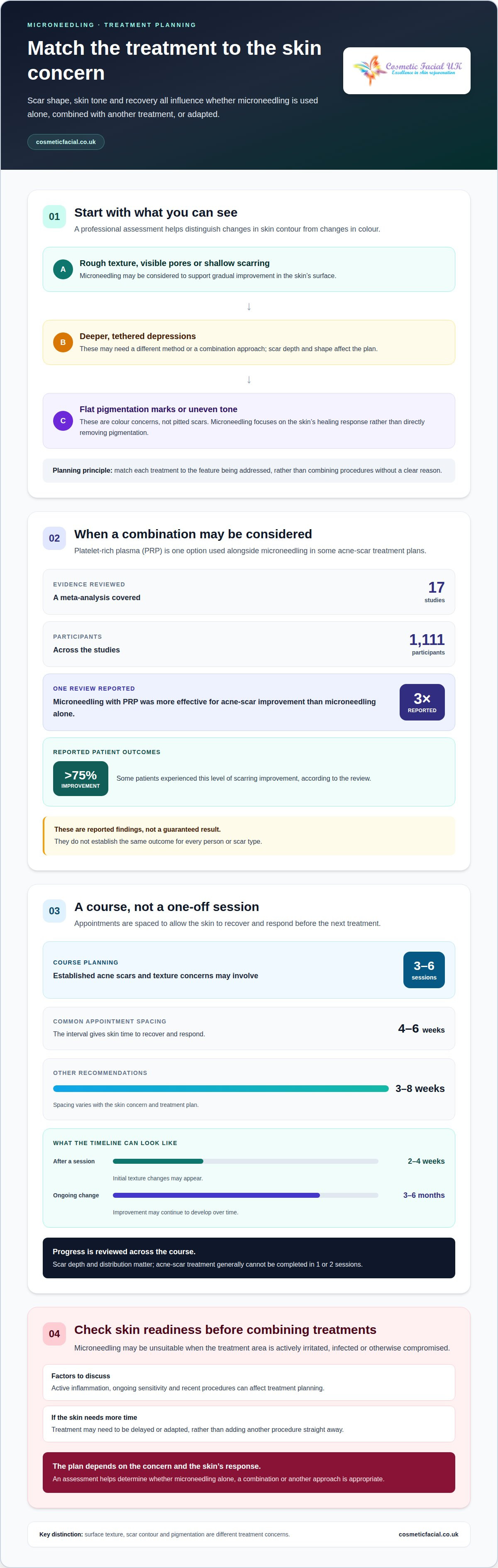
Microneedling can be combined with other treatments when texture, scarring and uneven tone need different approaches. Platelet-rich plasma (PRP) is one example: it is used alongside microneedling in some acne-scar treatment plans. A meta-analysis covered 17 studies and 1,111 participants evaluating this combination. The reported findings suggest PRP may add benefit, but they don’t establish a result for every person or scar type.
One review reported that microneedling with PRP was three times more effective for acne-scar improvement than microneedling alone. It also reported that some patients experienced over 75% improvement in scarring. These figures describe reported outcomes, not a guaranteed result. A professional assessment should distinguish raised or indented scars from flat pigmentation marks before selecting treatments, because colour changes and changes in skin contour are different concerns.
Scar shape also influences the treatment plan. Shallow acne scars and uneven surface texture may be treated with microneedling, while deeper, tethered depressions may need a different method or a combination approach. Pigmentation marks are not pitted scars, so a scar-focused treatment will not necessarily address their colour. The aim is to match each treatment to the feature being treated, rather than combine procedures without a clear reason.
A course is usually planned rather than treated as a single session. For established acne scars and texture concerns, treatment plans may involve 3 to 6 sessions, with appointments commonly spaced 4 to 6 weeks apart. The interval allows the skin to recover and respond before another treatment. Other recommendations place sessions 3 to 8 weeks apart, reflecting differences in skin concern and treatment planning.
Visible texture changes may begin 2 to 4 weeks after a session, while improvements can continue developing over 3 to 6 months. Acne-scar treatment generally cannot be completed in 1 or 2 sessions; the depth and distribution of scarring affect the course. A professional can review progress between appointments and adjust the approach if the main concern is pigmentation, shallow scarring or deeper depressions.
Microneedling may be unsuitable when the skin in the treatment area is actively irritated, infected or otherwise compromised. Active inflammation, ongoing sensitivity and recent procedures also matter when planning a combination, because the skin needs to tolerate each intervention and recover between them. Treatment may need to be delayed or adapted instead of adding another procedure straight away. An assessment helps determine whether microneedling alone, a combination or another approach best addresses the concern.
How Can Microneedling Improve Skin Texture?
Microneedling uses fine needles to create controlled skin stimulation, supporting gradual changes in roughness, pores and shallow acne scars. The treatment’s effect depends on the texture concern being addressed.
Before treatment, a professional reviews your skin and skincare routine, then explains preparation and aftercare. For example, they may advise daily broad-spectrum SPF before and after treatment, avoiding makeup for 24 hours, and pausing active acids and retinoids for 24 to 48 hours afterwards.
Texture and Scar Improvements
Texture improvement means a smoother-looking surface, with less visible roughness, pores or shallow scarring. Some people may notice changes after the first or second treatment, although deeper acne scarring needs a different assessment from mild unevenness. A professional can assess the areas of concern and explain which changes microneedling is intended to address. This helps distinguish a realistic texture goal from changes in colour or scar depth.
Microneedling for Sun Damage and Uneven Texture
Sun damage can affect both skin tone and surface texture, so these concerns need to be assessed separately. Microneedling focuses on stimulating the skin’s healing response rather than directly removing pigmentation. A professional can identify whether roughness, visible pores or colour changes are the main concern before discussing treatment. Chemical peels are another treatment option, but combining approaches requires a considered plan for the skin.
Improving Atrophic Acne Scars
Atrophic acne scars are depressions where the skin appears indented rather than raised. Microneedling may improve their appearance by prompting a repair response, but scar depth and shape affect the treatment plan. A shallow, broad acne scar differs from a deeper, tethered depression. An experienced acne-scar specialist can assess these features and explain whether microneedling suits the pattern of scarring.
Assessment also helps distinguish acne scarring from active breakouts and post-acne marks. A specialist can examine the skin in good light, note where scars sit and discuss your main priority, such as shallow depressions or uneven texture. Understanding microneedling results for textured skin starts with identifying the visible feature you want to address. Treating a flat mark as though it were a pitted scar may not address your concern.
Progress is usually reviewed across a course rather than judged immediately after one appointment. Initial texture changes can appear 2 to 4 weeks after a session, while improvement may continue over 3 to 6 months. Photographs taken under similar lighting can help track changes in pores and scarring between appointments. This gives the practitioner a clearer basis for deciding whether the plan needs adjustment.
During the first week of recovery, skin may feel tighter, drier or lightly textured. Mild redness and sensitivity commonly last a day or two. Follow the practitioner’s aftercare advice, including daily SPF and avoiding makeup for 24 hours. The development of microneedling results for textured skin can be followed through these gradual changes, while aftercare supports the skin’s recovery.
How microneedling stimulates collagen and elastin
Microneedling creates controlled micro-injuries that activate the skin’s repair response. Collagen activity develops over four to six weeks after treatment, while visible changes may continue over several months.
Collagen Stimulation and Uneven Texture
Collagen stimulation is the skin’s response to controlled needle injury, prompting repair beneath the surface. This matters when roughness or shallow irregularities make the skin look uneven. During healing, fibroblasts contribute to collagen production, helping support the skin’s structure. The process develops gradually, so a smoother appearance emerges over time rather than immediately after treatment.
Microneedling creates microscopic channels without removing the entire surface layer. These controlled points of injury signal a repair response in the surrounding tissue. As collagen activity develops over four to six weeks, the skin’s structure can gradually change. That is why the skin’s early appearance does not show the full effect of treatment.
Collagen remodelling continues over several months, which shapes how results are assessed. For example, a shallow depression may look less pronounced as the tissue supporting its edges changes. The response varies with the treatment area and skin concern. A practitioner considers these factors when explaining the expected course and reviewing progress.
Supporting Collagen and Elastin Production
Collagen and elastin are structural proteins that help support firmness and flexibility. Microneedling stimulates a healing response that can encourage their production, which matters when the aim is to improve the skin’s overall appearance. This response occurs beneath the surface, so changes are gradual and depend on the skin’s repair process.
Collagen provides structural support, while elastin helps the skin return to shape after movement. Microneedling does not add either protein directly. Instead, controlled injury prompts a biological response involving repair and remodelling. This explains why treatment aims for gradual improvement, not an instant change in firmness or texture.
After treatment, collagen activity develops over four to six weeks, with further changes possible over several months. A practitioner assesses the skin between appointments and considers whether its response matches the treatment goal. For instance, surface smoothness and fine lines may improve at different rates. These observations help guide decisions about continuing the course.
Skin condition also affects the repair process. Active irritation or a disrupted skin barrier should be considered before microneedling. Following the advised aftercare supports recovery as the skin responds. Daily broad-spectrum SPF is a practical part of care before and after treatment, helping protect the skin during this gradual process.
Differences between pitted scars and pigmentation marks
Pitted scars change the skin’s contour, while pigmentation marks change its colour. For example, an indented acne scar creates a shadow when light falls across the cheek, while a flat brown mark remains level with the surrounding skin. This distinction matters because texture-focused and colour-focused approaches address different features, even when both concerns followed acne.
A clinic assessment can distinguish these concerns by examining the skin from different angles. The practitioner considers whether a mark is depressed, raised or flat, and whether its colour varies across the area. For example, shallow depressions may be considered for microneedling, while flat pigmentation needs a plan focused on discolouration. Treating the wrong feature may leave the main concern unchanged.
Subcision is another option discussed for selected depressed scars. A doctor reports performing subcision with gratifying results since 1995. It is considered separately from microneedling because the treatment approach differs. For a tethered depression, assessment focuses on the scar’s attachment and contour; for a flat mark, the visible issue is colour. The scar’s structure therefore informs which therapy may be relevant.
Body texture also needs an area-specific assessment. A scar on the chest or back differs from a small facial indentation in surface area, skin movement and visibility. A practitioner can map the affected region, note whether scars are raised or depressed, and consider how healing may affect the plan. The device and treatment approach should suit the area and concern.
Sessions are planned around the skin’s response, not simply the number of marks. For example, a plan for several shallow depressions may differ from one for a single deep scar beside flat pigmentation. Microneedling appointments for established textural concerns are generally separated by several weeks, allowing time for healing and review before the next session.
Chemical treatments may be considered for colour concerns, while microneedling targets texture. Combining procedures requires attention to timing and recovery; treating the same area too close together may not give the skin time to settle. A practitioner can explain which concern takes priority, what each treatment aims to change and how progress will be reviewed between sessions.
Before proceeding, clarify the main outcome you want to address: a smoother surface, a less visible depression or more even colour. A practitioner can use this distinction to assess the area and discuss suitable options, including microneedling or subcision for selected scars. This focused conversation keeps treatment planning aligned with the feature that most affects your skin’s appearance.
How long results may last and maintenance sessions
Early changes may appear 2 to 4 weeks after treatment, with further results developing over 3 to 6 months. Results from a single standard session may last 3 to 6 months; duration depends on the treatment course and skin concern.
How Long Results May Last
Result duration describes how long visible improvements remain after treatment, which helps patients plan a course realistically. A single standard microneedling session may produce results lasting 3 to 6 months. That timeframe differs from the period needed to see improvement: early changes can appear within weeks, while collagen remodelling continues for several months.
For example, a smoother facial surface may become noticeable before deeper acne scars show their full response. Skin concern, scar depth and the number of completed sessions all influence how progress appears. A completed series of radiofrequency microneedling treatments has been associated with results lasting 12 to 24 months. This timeframe applies to that treatment type, not automatically to standard microneedling.
Comparing photographs taken in consistent lighting can help track changes between appointments. You may notice gradual differences in texture rather than a sudden change on one day. Reviewing progress after each stage helps distinguish ongoing improvement from a result that has stabilised.
Session Numbers and Spacing
A treatment course is a planned series of appointments, and its length matters because deeper concerns may need more than one session. For acne scars and texture, recommendations commonly range from 3 to 6 sessions. Appointments are often scheduled 4 to 6 weeks apart, giving the skin time to respond between treatments.
Some treatment plans use intervals of 3 to 8 weeks, depending on the concern and the skin’s recovery. For example, a patient with shallow unevenness may follow a different schedule from someone with established, deeper acne scarring. Session spacing should allow the healing process to progress before the next appointment.
Results can emerge in stages. Initial texture changes may appear 2 to 4 weeks after a session, while collagen activity develops over four to six weeks. The overall effect may continue changing for 3 to 6 months. This is why an early review alone may not represent the final result.
Maintenance Sessions
Maintenance sessions are occasional treatments considered after the initial course, helping patients plan longer-term skin care. Some people may have microneedling once a year after their initial treatment. This is not a fixed schedule for everyone: the decision depends on how the skin has responded and whether the original concern has returned.
For instance, someone who has achieved smoother facial texture may choose to review their progress before arranging further treatment. Others may prioritise a new concern, such as deeper scarring, rather than repeat the same plan. The treatment goal should guide any maintenance decision.
Allow time for the full response to develop before judging whether another session is needed. A review after several months can consider changes in texture, the patient’s priorities and the outcome of the completed course. If microneedling results need professional assessment, discuss your skin treatment options.
Cosmetic Facial: Micro-Needling (Dermaroller)
Cosmetic Facial’s Micro-Needling (Dermaroller) offers a professional treatment option for people considering treatment for uneven texture or acne scarring. A personalised assessment relates the concern, such as shallow indentations or roughness, to an appropriate treatment plan and clarifies how progress may develop over time.
Consider treatment when you want professional guidance on whether microneedling suits your skin concern, how sessions may be planned and what aftercare involves. Microneedling may not address every type of pigmentation or scar equally, so discussing your main priority helps shape the conversation and set realistic expectations.
Make your next skin decision with clarity
Before choosing a treatment, identify the change that would matter most in daily life. Is your priority how makeup sits over uneven areas, the visibility of a particular scar or confidence in your skin’s overall appearance? Naming your concern gives a consultation a clear starting point and keeps the discussion focused on your priorities.
It can also help to describe what you have already tried and how your skin responded. This context supports a more useful conversation about whether microneedling fits your goals or whether another approach deserves consideration. A brief note of the outcome you value most can make that discussion more specific, without assuming every visible mark should be treated alike. The most useful view of microneedling results for textured skin is personal: it relates visible change to the feature you wanted to address.
A considered decision is a positive starting point. Your next step can reflect what matters most to you.
Frequently Asked Questions
What is microneedling?
Microneedling is a professional treatment that uses fine needles to create controlled micro-injuries in the skin. This activates a repair response beneath the surface, including collagen production. Practitioners may use it for concerns such as uneven texture, visible pores and acne scarring. It differs from a chemical peel, which uses a chemical solution rather than needles. The treatment depth and approach are selected for the area and concern.
Does Microneedling Help With Rough Skin on the Cheeks?
Microneedling may help improve rough cheek texture, particularly when unevenness relates to shallow acne scars or visible pores. A professional assessment can distinguish these from dryness or active irritation, which may need a different approach before treatment. Rough patches across the cheeks and small indented marks, for example, are not the same concern. Identifying the main cause helps clarify whether microneedling is likely to address the change you want.
How Many Sessions of Microneedling for Enlarged Pores?
A course for enlarged pores may involve 3 to 6 sessions, with the plan shaped by pore visibility and the surrounding skin texture. A study cited in the topic research reported improvement in pore appearance after four sessions, but that finding doesn’t predict an individual result. A practitioner can assess whether pores are the main concern or whether acne scars and general unevenness also need consideration.
Is Microneedling Better Than Chemical Peels for Texture?
Neither treatment is universally better; the choice depends on the concern and how it appears. Microneedling stimulates a repair response for texture, while chemical peels use a solution to treat the skin’s surface. For example, shallow textural irregularities and flat discolouration may call for different treatment goals. A professional can explain the suitability of each approach, including whether combining them is appropriate for your skin.
Is Microneedling Safe for All Skin Types?
Microneedling isn’t automatically suitable for every person or skin condition. Sensitivity, current irritation, infection and the condition of the treatment area affect whether and when treatment can proceed. A practitioner should assess these factors and discuss relevant skincare or recent procedures before planning treatment. For example, treatment may need to wait if the intended area is inflamed or compromised, rather than proceeding before the skin has recovered.
What Causes Uneven Skin Texture?
Uneven texture can result from several skin changes, including acne scarring, enlarged pores, sun damage, dryness and fine lines. These concerns may look similar at first, but their underlying features differ. A shallow depression casts a shadow, whereas a flat mark changes colour without altering the surface. Noting whether the concern is roughness, indentation or discolouration helps a practitioner identify what treatment is intended to improve.
Uneven texture can result from several skin changes, including acne scarring, enlarged pores, sun damage, dryness and fine lines. These concerns may look similar at first, but their underlying features differ. In many cases, recurrent breakouts or texture issues are linked to hormonal shifts, which is why integrated clinics such as Heatley Medical & Skin Care Centre focus on broader women's health assessments alongside skin wellness. A shallow depression casts a shadow, whereas a flat mark changes colour without altering the surface. Noting whether the concern is roughness, indentation or discolouration helps a practitioner identify what treatment is intended to improve.
Microneedling may need to be postponed when the treatment area is actively irritated, infected or compromised. Recent procedures and persistent sensitivity also matter, because the skin needs to recover before further treatment. For example, a practitioner may delay treating an area with active inflammation and reassess it once the skin has settled. The condition of the treatment site, rather than the desire to keep to a particular schedule, guides this decision.
How effective is microneedling for textured skin and acne scars?
Microneedling can improve the appearance of uneven texture and some acne scars, but the response depends on scar depth and shape. Shallow depressions differ from deeper, tethered scars, and pigmentation marks are a separate concern. Treatment aims to improve visible texture rather than remove every scar. A practitioner can assess which features are present and explain how progress will be evaluated across the treatment course.
Disclaimer
All content on cosmetic Facial website, including blogs, graphics, logos, images, and software, is the property of CosmeticFacial UK or its content suppliers and is protected by applicable copyright laws. Unauthorized use, reproduction, distribution, or modification of any content without prior written permission is strictly prohibited.


