


A stronger peel isn’t automatically the better choice for acne scars. For a chemical peel for acne scars in the UK, cost depends on factors such as peel depth, the treatment area and how many sessions are recommended; the price is provided after a quote request. The suitable depth also depends on the type of scarring and your skin’s needs.
It’s understandable to want a clear idea of the likely cost before considering a chemical peel for acne scars. This article explains what can affect the price, how superficial and medium peels differ in their use for acne and acne scarring, and why deeper treatment isn’t suitable for everyone. It also covers skin conditions and medications that may affect suitability, what recovery can involve, and the sun protection and other aftercare that support healing. These points can help you understand what a treatment plan may involve before deciding whether to explore it further.
Key Takeaways
- Peel cost depends on factors such as treatment depth, the area being treated and the number of sessions in the plan.
- Superficial peels may suit pigmentation and early textural changes, while medium peels can be considered for established shallow scarring.
- Skin sensitivity, conditions such as eczema or rosacea, and some medicines can affect whether a peel is suitable.
- Recovery varies by peel depth, so consider redness, peeling and time away from normal activities when planning treatment.
- Sun protection and appropriate aftercare help protect skin as it heals after a peel.
What are chemical peels?
Chemical peels use an acid solution to remove outer skin layers and encourage cell turnover. In the UK, they’re generally accessed privately for acne scarring rather than through routine NHS treatment.
Peels for acne scarring
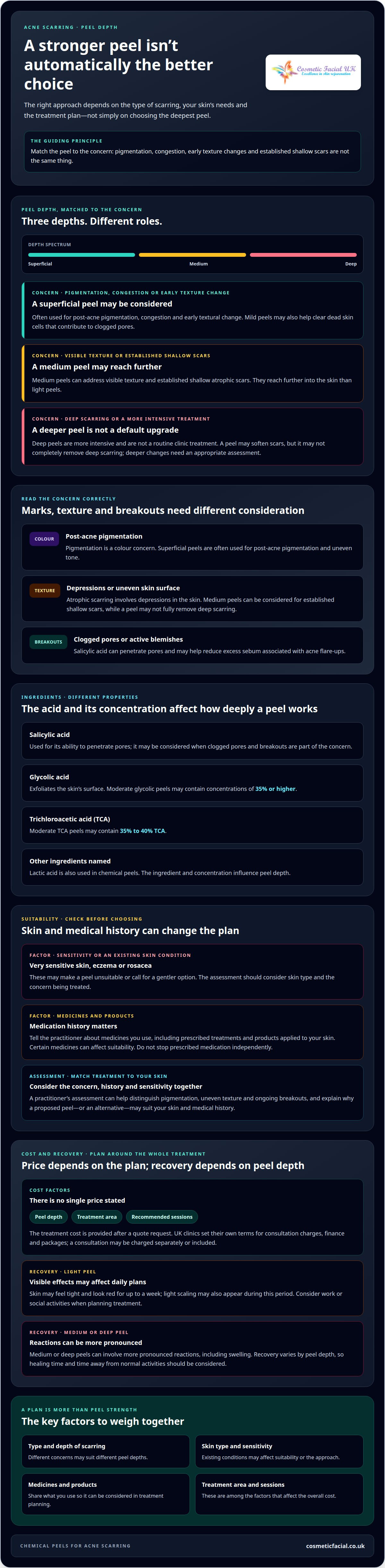
A chemical peel exfoliates the skin, supporting regeneration that can gradually soften the appearance of acne scars. This matters because the type and depth of scarring influence which peel may be suitable. Superficial peels are often used for post-acne pigmentation, congestion and early textural change, while medium peels can address visible texture and established shallow atrophic scars.
A peel can improve skin texture, but it may not completely remove deep scarring. Mild peels may also help with acne by clearing dead skin cells that contribute to clogged pores. For active blemishes, salicylic acid can penetrate pores and help reduce excess sebum associated with acne flare-ups.
Acids and active ingredients
Peels use acids with different properties and strengths, including salicylic acid, glycolic acid, lactic acid and trichloroacetic acid (TCA). Salicylic acid is used for its ability to penetrate pores, while glycolic acid exfoliates the skin’s surface. Moderate glycolic peels may contain concentrations of 35% or higher; moderate TCA peels may contain 35% to 40% TCA. Ingredient and concentration affect how deeply a peel works.
Peel depth is one factor behind the price difference between a clinic’s mildest and strongest treatments. Cost depends on the peel, treatment area and plan, and is provided after a quote request. A stronger peel involves a different approach from a superficial one, so the type of peel and the skin concern being addressed shape the overall plan.
Combining treatments may also be considered for acne scarring. Chemical peels combined with microneedling may produce better outcomes than either treatment alone. Laser therapy is another treatment category used for skin concerns, but the appropriate approach depends on the scarring and skin being treated. The method, treatment area and recovery all need consideration when planning combined procedures.
Peels don’t all address the same concern. A light peel may target acne, congestion or pigmentation, whereas a medium peel can reach further into the skin to address shallow scars and uneven texture. Deep peels are more intensive and are not a routine clinic treatment. For readers considering professional skin peels, the distinction between peel depth and scar type is central to understanding the treatment options.
Skin conditions and medications that may affect suitability
Suitability depends on skin sensitivity, existing conditions, medication use and the concern being treated. A practitioner’s assessment helps match the approach to your skin and medical history.
When choosing a UK clinic for an acne-scar peel, look for an assessment that considers skin type, medical history and your specific concerns. The practitioner should explain why a proposed peel suits your pigmentation, texture or active breakouts, and discuss alternatives if it does not.
Skin type and peel suitability
Skin type and sensitivity influence whether a peel is appropriate and how gentle the approach should be. Very sensitive skin, eczema and rosacea may make treatment unsuitable or call for a gentler option. The assessment should also distinguish post-acne pigmentation, uneven texture and ongoing breakouts, rather than treating every concern as scarring.
Medication history matters too. Certain medicines can affect suitability, so tell the practitioner what you use, including prescribed treatments and products applied to your skin. This helps them decide whether to proceed, choose a gentler approach or avoid a peel. Don’t stop prescribed medication independently; the relevant decision is how it may affect treatment planning.
For consultation charges, finance and packages, UK clinics set their own terms. A consultation may be charged separately or included, and finance or package deals may or may not be available. Treatment cost depends on the case and is provided after a quote request; the peel, treatment area and recommended plan all affect the price.
Potential changes to skin tone and texture
Peels may improve uneven tone and surface texture by addressing post-acne pigmentation, congestion and early textural changes. The distinction matters: pigmentation is a colour concern, while atrophic scarring involves depressions in the skin. A peel may soften scars, but deeper changes can need a different assessment rather than simply a stronger peel.
Salicylic acid may be considered when clogged pores and breakouts are part of the concern, while the approach to lingering marks or uneven texture may differ. The practitioner weighs these concerns alongside skin sensitivity and medical history, rather than assuming one ingredient addresses every feature.
A useful assessment records the main skin concern, relevant conditions, medicines and sensitivity before recommending a treatment approach. For example, rosacea or eczema may change whether a peel is suitable, even when acne marks remain the primary concern. A skin assessment discussion can help relate these factors to the options being considered.
Risks, side effects and recovery times
Recovery depends on peel depth. Temporary redness, tightness, scaling or swelling can affect daily plans, and healing time differs between superficial, medium and deep treatments.
Temporary side effects
Temporary effects are the visible response of the skin after the peel solution is applied. With a light peel, skin may feel tight and look red for up to a week. Light scaling may also appear during this period. Consider these effects when planning work or social activities, especially if visible flaking would be inconvenient.
Medium or deep peels can involve more pronounced reactions, including swelling or blisters that break and peel. Swelling after a medium peel may occur during the first 48 hours. With deeper peels, swelling is likely to disappear after two weeks, while redness may remain for up to three months. These timelines describe different effects, not one continuous recovery stage.
Peeling and recovery time
Peeling is the shedding of treated outer skin as it heals. After a medium peel, skin may take 7-14 days to heal, and peeling may last up to 2 weeks. A deep peel may take 14-21 days to heal fully. The difference matters when arranging time away from work or planning activities involving visible skin.
After a chemical peel, peeling typically begins two to three days after treatment. Superficial peel redness and flaking may take 1-7 days to diminish. Medium-depth and deep peels involve longer recovery than superficial treatments, so the depth selected for acne scarring affects the practical recovery period as well as the treatment plan.
Medium peels may leave skin red, swollen or blistered for up to two weeks before new skin starts to show. A consultant may recommend waiting two weeks after a deep peel before returning to work or normal activities. Medium or deep peels may also require bandages for the first few days, which can affect everyday routines.
Recovery from a deep peel can extend beyond the initial healing period. Skin may remain red for up to three months, and swelling after a deeper peel is likely to resolve after two weeks. After a deep treatment, patients must completely avoid sun exposure for three to six months. This extended restriction is an important practical consideration when choosing this level of treatment.
Recovery varies with peel depth and the skin concern being treated, including acne scarring. A light peel may involve redness and tightness for up to a week, while medium or deep treatments can involve longer healing and peeling. Understanding these differences helps you weigh visible effects and recovery time against the intended result.
Aftercare and sun protection
Aftercare is part of treatment planning because a peel leaves skin more vulnerable while it heals. Sun protection is required after a chemical peel, and advice varies with peel depth, treated area and expected recovery.
After any peel, avoid sun exposure and use sun protection. This is particularly important after a deep peel, when patients must completely avoid sun exposure for three to six months. Consider this restriction before treatment, especially if you have outdoor plans. A tailored aftercare plan should reflect the peel depth and your skin’s healing response.
Peeling skin can be tempting to rub or exfoliate, but physical exfoliation is specifically discouraged for 24 hours before and after an at-home chemical peel. This instruction concerns at-home use; it should not be extended to other treatment settings without advice. Flaking and redness after a superficial peel may take 1-7 days to diminish, so avoid treating visible peeling as a sign that more exfoliation is needed.
At-home peel preparation also includes avoiding Retin-A, acids and acne-clearing products for 3-5 days before and after application, according to the stated guidance. Glycolic acid is one example of an acid used in peels, so the products used around treatment matter. These instructions apply to at-home peels and should not be treated as a substitute for individual aftercare advice following a professional procedure.
A history of cold sores is another relevant detail. People with a history of cold sores should take prescribed antiviral medication to help prevent breakouts after a chemical peel. Raise this during treatment planning rather than starting medication without a prescription. The practitioner can take your history into account when advising on facial treatment and recovery.
Downtime depends on depth. After a medium peel, swelling may occur during the first 48 hours, and peeling can last up to 2 weeks. A deep peel can take 14-21 days to heal, with redness lasting up to three months. These periods describe different stages, so visible redness may continue after initial healing.
Bandages may be needed for the first few days after a medium or deep peel. A consultant may recommend waiting two weeks after a deep peel before returning to work or normal activities. Plan around these recovery details to avoid scheduling treatment just before an important event.
Aftercare should reflect the peel used, the skin layers treated and any relevant history, including cold sores. Follow the tailored advice for sun exposure and recovery rather than automatically applying at-home peel guidance to a clinic treatment.
Peel depth and suitability for acne scars
Peel depth should match the skin concern, rather than being chosen simply because a deeper procedure sounds more effective. For acne scars, distinguish between colour changes, early uneven texture and established shallow depressions.
Superficial peels are often used for post-acne pigmentation, congestion and early textural changes. They target outer skin layers, making them more relevant to lingering marks or a rough surface than to deeper depressions. If acne is still active, a light peel may also address acne concerns. The treatment aim matters: pigmentation and atrophic scarring are different features.
Medium peels can address visible texture and established shallow atrophic acne scarring. Their deeper penetration makes them more relevant when scars create an uneven surface, rather than colour changes alone. Medium-strength trichloroacetic acid (TCA) peels penetrate deeper skin layers and are often used to target scarring and texture. This does not mean every scar needs a medium peel; scar type and skin suitability remain central.
A deeper treatment is not automatically the best route to smoother skin. Deep chemical peels are not a routine clinic treatment, and chemical peels may soften scars without completely removing deep scarring. Match the procedure to the depth and appearance of the scars, while considering recovery and aftercare as part of the decision.
Course planning also affects expectations. A clinical overview suggests that meaningful improvement in acne scars may require a course of 3 to 6 peels, typically spaced 4-6 weeks apart. The number of sessions and interval depend on the planned treatment, rather than applying as a fixed schedule to every person. A course allows the treatment plan to address the concern over time.
Peel depth also needs to be considered alongside skin type. The same medium peel, for example, is not automatically suitable for every skin tone or sensitivity level. A practitioner assesses skin type, medical history and the specific scar pattern before deciding whether a peel is suitable. This helps distinguish shallow atrophic scars from pigmentation, congestion or other textural changes.
Some acne scars may be considered for treatments beyond peels. Microneedling, for example, can be combined with chemical peels, while laser therapy is another treatment category for skin concerns. These approaches are not interchangeable; the suitable plan depends on scar type, skin characteristics and recovery. A deeper or combined procedure should not be assumed to deliver a clearer result for everyone.
The key decision is matching scar appearance to peel depth: superficial treatment for pigmentation or early texture, and medium depth for established shallow scarring. Deep peels are not routine, and no peel should be expected to erase every scar.
Cosmetic Facial: Acne Treatment
Cosmetic Facial offers Acne Treatment and Skin Peels for people considering options for active acne or acne-related skin concerns. If scarring, ongoing breakouts or uneven texture are influencing your decision, these services are a relevant next step after considering peel depth, suitability and recovery.
The appropriate approach depends on the concern. Acne Treatment relates to active blemishes, while Skin Peels may be considered as part of a plan for skin texture or post-acne marks. A deeper peel is not automatically preferable, particularly when scar type, sensitivity or recovery requirements point towards another option.
If you would like to discuss your acne concerns and potential treatment options, contact Cosmetic Facial.
Choose a plan that fits your priorities
A treatment decision involves more than the peel itself. Consider your main priority, how much recovery time you can accommodate and whether ongoing aftercare fits your routine. The cost of a chemical peel for acne scars in the UK is most useful as part of that wider decision, not as a figure considered in isolation.
Before proceeding, consider what you would regard as a worthwhile change and how treatment could affect everyday life. You may prefer to address one concern at a time or wait until treatment and recovery fit your schedule. Your skin’s characteristics and response help determine whether an approach is suitable, so an individual plan may differ from general descriptions.
Taking time to weigh these priorities can help you make a considered choice without feeling rushed. If you’re ready to discuss your options, you can Contact Cosmetic Facial.
Frequently Asked Questions
What happens during a chemical peel?
A chemical solution is applied to the skin and left in place for a few minutes to penetrate the epidermis and, depending on the peel, deeper layers. The treatment then supports exfoliation and cell turnover. For example, a practitioner may select salicylic acid when clogged pores are also a concern. The acid, concentration and contact time depend on the treatment plan and the skin being treated.
How many peel sessions are usually needed, and how far apart should they be?
The interval depends on peel depth and the aim of treatment. A light peel may be repeated monthly to maintain results, while a medium peel may be repeated every 6-12 months. These are maintenance intervals, not a fixed schedule for every acne-scar treatment. A course plan takes account of the skin’s response and the time needed between treatments.
How many sessions do I need?
For acne scarring, a course may involve 3 to 6 peels, commonly spaced 4-6 weeks apart. This is a general treatment pattern rather than a required number for every person. For example, someone treating shallow textural scars may have a different plan from someone whose main concern is post-acne pigmentation. The treatment aim and response across the course help shape the number of sessions.
Why peel treatment for acne?
A peel may help with mild to moderate acne by exfoliating dead skin cells that contribute to clogged pores. Salicylic acid can also penetrate pores and help reduce excess sebum linked to breakouts. This makes a peel relevant when active blemishes and congestion are concerns. Acne and acne scarring have different treatment aims, so the selected peel should reflect whether the priority is breakouts, marks or texture.
What is the average cost of a chemical peel for acne scars in London and other UK regions?
There is no single average that reflects every peel and treatment plan across London and the UK. The price depends on the case and is provided after a quote request. Factors include peel depth, the area treated, ingredients used and the number of sessions in the plan. A London price should not be assumed to apply to clinics elsewhere in the UK.
How many chemical peel sessions are usually needed for acne scars, and what is the total cost?
A course for acne scars may involve 3 to 6 peels, often spaced 4-6 weeks apart. The total cost depends on the treatment plan and the price of each session; it is given after a quote request. The number of sessions, peel depth and treatment area all affect the overall amount. Ask for the course total, rather than considering one session in isolation.
What types of chemical peels are used for acne scars, and how do their UK prices compare?
Superficial peels may address post-acne pigmentation and early textural changes, while medium peels can target visible texture and established shallow scars. Deep peels are not a routine clinic treatment. There is no single UK price comparison that applies across these types: the cost depends on the case and is provided after a quote request. Depth, ingredients, treatment area and plan affect the price.
What happens during a chemical peel treatment for acne scars?
The practitioner assesses the scar pattern and skin before selecting a peel suited to the treatment aim. A solution is applied to the treatment area and left for a few minutes. Shallow atrophic scars and post-acne pigmentation, for example, may call for different approaches. The plan also accounts for skin sensitivity and recovery, matching the procedure and aftercare to the individual rather than relying on scar concerns alone.
Disclaimer
All content on cosmetic Facial website, including blogs, graphics, logos, images, and software, is the property of CosmeticFacial UK or its content suppliers and is protected by applicable copyright laws. Unauthorized use, reproduction, distribution, or modification of any content without prior written permission is strictly prohibited.


