


The number of sessions can matter as much as the cost of each appointment when planning CO2 laser treatment. For deeper acne scarring or more significant sun damage, a course may involve two to three sessions spaced six to eight weeks apart.
It’s understandable to want a clear idea of the commitment before deciding whether treatment is suitable. The cost of a laser facial in London depends on factors such as the area treated, treatment depth and number of sessions, so one figure may not reflect the full plan.
This article explains what influences CO2 laser prices, why session needs and treatment frequency vary, and what to consider when assessing suitability and affordability. It also outlines how treatment area and depth can shape the plan, so you can better understand the factors behind the cost before making a decision.
Key Takeaways
- CO2 laser costs depend on the treatment area, depth, equipment and what aftercare is included, so compare the scope of treatment as well as the quoted amount.
- For deeper acne scarring or significant sun damage, a plan may involve two to three sessions spaced six to eight weeks apart.
- Assess affordability against the full treatment plan, including any sessions, aftercare and follow-up, rather than considering one appointment in isolation.
- Suitability matters: the article explains why skin tone and individual skin concerns are considered when assessing CO2 laser treatment.
- Use the treatment plan to understand how session needs and spacing may affect your schedule as well as the overall commitment.
Factors affecting CO2 laser prices in London
CO2 resurfacing costs depend on the area treated and treatment depth. In London, the quoted plan should also explain what care is included.
Treatment Type and Price
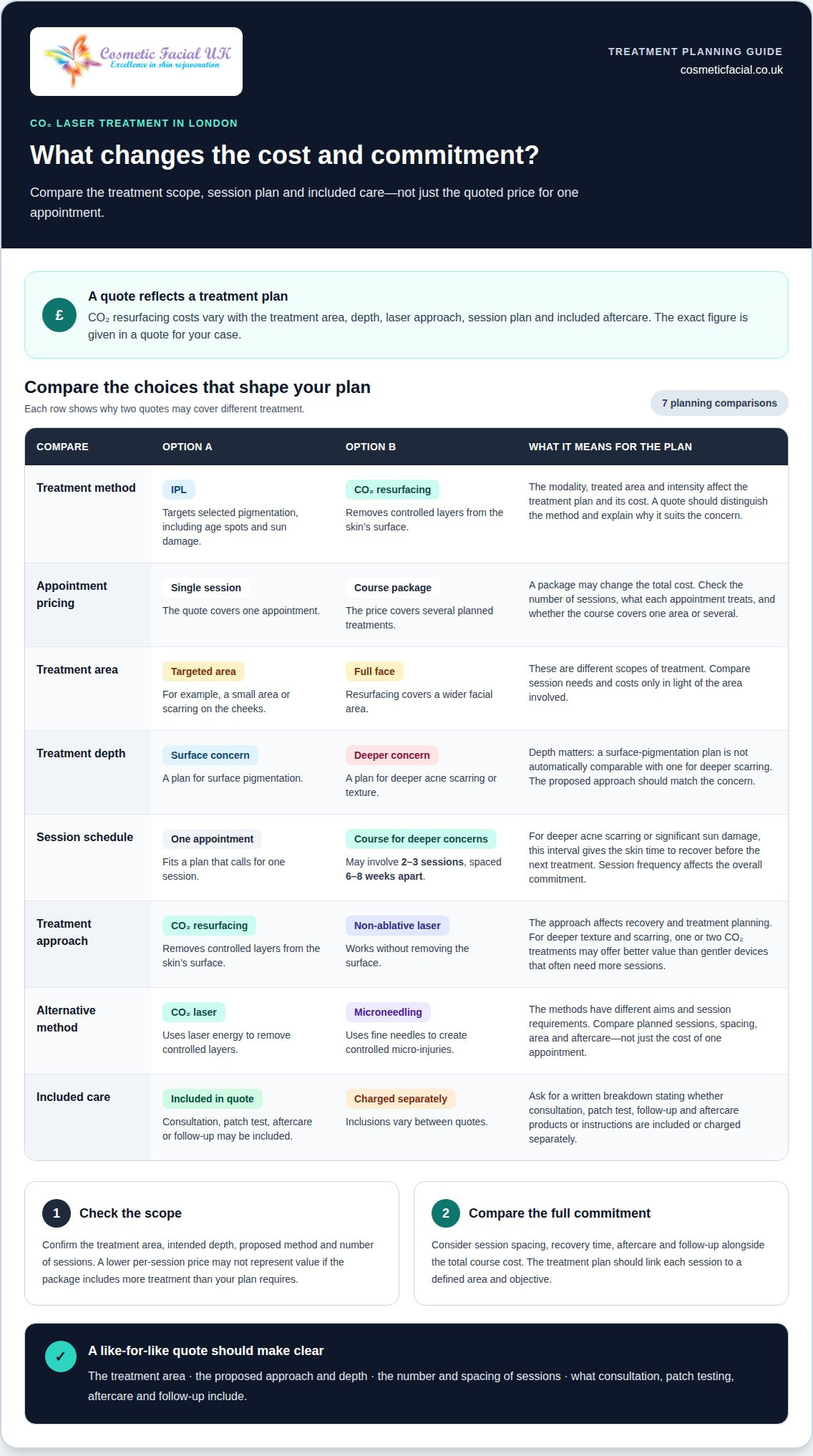
IPL age-spot and sun-damage treatment differs from CO2 resurfacing. IPL targets selected pigmentation, while CO2 treatment removes controlled layers from the skin’s surface. The modality, treated area and intensity all affect the treatment plan and its cost.
For scarring, pigmentation and uneven texture, compare the proposed method with the concern being treated. Microneedling and laser treatments are not interchangeable: each has different aims and session requirements. A useful quote specifies the treatment area, proposed approach and any planned combination, rather than grouping every concern under “laser facial”.
Single Sessions and Course Packages
A single-session quote covers one appointment, while a course price covers several planned treatments. A package may change the total cost, but it should also specify the number of sessions and what each appointment treats. Check whether the course is for one area or several, as these plans are not equivalent.
Ask how the course addresses your concern, such as acne scarring or surface pigmentation. A lower per-session price does not represent value if the package includes more treatment than your plan requires. Compare the full course scope, session spacing and aftercare before weighing a package against individual appointments.
Consultation, Patch Test and Aftercare
Do London laser facial prices include a consultation, patch test and aftercare? Inclusions vary between quotes, so the written breakdown should state whether each is included or charged separately. It should also explain any follow-up appointment and the aftercare products or instructions provided.
When choosing a London laser clinic, look for clear information about the treating professional’s relevant laser training and experience. The clinic should explain its skin assessment, eye protection, risk screening and response procedures. Ask how these steps apply to your proposed treatment instead of relying on a general safety statement.
For IPL age spots, sun damage, scarring or pigmentation, the treated area and method affect the plan. A quote should distinguish IPL from CO2 resurfacing and explain why that approach suits the concern. The same applies when comparing laser treatment with microneedling: the target, depth and intended treatment course differ.
CO2 resurfacing costs vary with treatment area, depth, laser approach, session plan and included aftercare. The exact figure is given in a quote for your case. Ask for the treatment scope and inclusions to be itemised, so the total reflects the same plan you are comparing.
For example, treating a small, targeted area and resurfacing the full face involve different scopes. Depth matters too: a plan for surface pigmentation is not automatically comparable with one for deeper scarring. Review the area, intended depth and aftercare together, then consider whether the proposed treatment matches your priorities.
Treatment frequency
Session frequency affects the overall commitment, not just the appointment count. For deeper acne scarring or significant sun damage, a course may involve two to three CO2 laser sessions, spaced six to eight weeks apart. This interval gives the skin time to recover before the next treatment.
The treatment area also shapes the schedule. A practitioner may plan resurfacing for the full face or focus on specific areas, such as scarring on the cheeks. A targeted plan and a full-face plan treat different surfaces, so compare their session needs only in light of the area involved.
CO2 laser treatment and non-ablative laser approaches differ in how they treat the skin. CO2 resurfacing removes controlled layers; non-ablative treatments work without removing the surface. The approach affects recovery and the way treatment is planned. For deeper texture and scarring, one or two CO2 treatments may offer better value than gentler devices that often need more sessions.
Microneedling is another option with a different treatment mechanism. It uses fine needles to create controlled micro-injuries, rather than laser energy. Comparing it with CO2 treatment means looking beyond the cost of one appointment: consider the planned number of sessions, spacing, treatment area and aftercare. A lower single-session cost does not necessarily mean a lower total commitment.
A single appointment suits a plan that calls for one session, while a course groups several visits into a programme. Course packages can change the total cost, but their value depends on whether the sessions match the treatment objective. Confirm the number of appointments and the interval between them, then consider the whole course rather than an isolated session.
For facial rejuvenation, treatment frequency depends on the concern and intended depth. Surface pigmentation may call for a different approach from deeper acne scarring. The treatment plan should link each session to a defined area and objective, rather than assuming every concern needs the same schedule. Aftercare between appointments matters too, as the skin needs time to recover before further treatment.
Discuss how session spacing, treatment area and aftercare fit your schedule before deciding. Explore facial treatment options to understand which approaches address your concern.
Suitability and contraindications
CO2 laser suitability depends on skin tone, concern, treatment depth and healing history. The available guidance identifies lighter skin tones, classified as Fitzpatrick types I to III, as those on which CO2 laser works best. This classification is one part of assessment, not a complete decision. A consultation should also consider whether fractional treatment is proposed and whether it addresses the concern being treated.
Darker skin tones need an individual assessment before treatment planning. Fitzpatrick I to III guidance does not, by itself, establish that someone outside those categories cannot have treatment, nor does it establish suitability. A specialist assessment should consider skin tone alongside the concern, proposed settings and healing history. If treatment is unsuitable, the plan should explain why and whether another approach better fits the person’s needs.
The treatment area matters. A full-face plan differs from treating a localised concern, such as scarring on the cheeks. CO2 treatment may also be considered for areas beyond the face, including the shoulders, but facial suitability cannot be assumed to apply elsewhere. The assessment should identify each area separately and explain the intended treatment depth. That makes the proposed plan clearer before deciding whether to proceed.
Medical history and current skin condition should form part of the consultation. Tell the practitioner about previous procedures, skin treatments and any concerns affecting healing. The assessment should establish which area is being treated, what change is being sought and whether fractional CO2 is appropriate. These details help distinguish suitability from preference. Wanting resurfacing does not, on its own, show that this method is suitable.
Contraindications are individual factors that may make treatment inappropriate or require postponement. An assessment should consider the person’s health information and the condition of the treatment area. It should also explain likely healing and aftercare, so the person can understand the commitment before consenting. If the plan changes from one area to another, such as from the face to the shoulders, suitability should be assessed for each area.
Use the consultation to clarify how the assessment informs the decision. Ask how Fitzpatrick classification, treatment depth and healing history affect the proposed plan. A clear explanation should distinguish fractional CO2 resurfacing from other approaches, rather than treating all laser treatments as equivalent. If the assessment identifies a concern, the practitioner should explain its relevance and discuss whether treatment should proceed, change or be deferred. This supports an informed decision without assuming that one skin type or treatment area determines the outcome.
Financing and affordability
Affordability means planning for the complete treatment commitment, not just one appointment. For example, a CO2 plan may include treatment, recovery time, aftercare and further sessions. Set out these elements before deciding what fits your budget. This gives you a clearer basis for comparing the treatment’s likely costs with its practical impact.
Are laser facial treatments covered by the NHS or private health insurance in the UK? Cosmetic laser treatment is not automatically covered by the NHS or private health insurance. NHS access depends on clinical need, while private cover depends on the policy and treatment indication, so review the relevant terms before budgeting.
Separate essential costs from optional additions. A written treatment plan should identify the area, proposed approach, expected session frequency and aftercare. For example, a plan targeting sun damage may differ from one addressing fine lines or deeper scarring. Comparing like-for-like plans helps you understand what each quote includes, without assuming a longer package is automatically better value.
Consider recovery as part of affordability. CO2 resurfacing can involve visible healing, so time away from work or social commitments may affect your decision. Factor in practical arrangements alongside treatment costs. A plan that fits your available recovery time may be more manageable than one requiring changes you cannot accommodate.
Ask how the treatment aims to target your main concern. CO2 laser treatment can stimulate collagen remodelling, but the proposed depth and treated area influence the plan. If smoother texture is your priority, clarify how the treatment relates to that aim. Avoid paying for additional areas or procedures that do not address your stated concern.
Before committing, use a simple affordability review:
- Record the full quoted treatment scope and every included item.
- Separate the planned sessions from optional treatments or products.
- Allow for aftercare and recovery-related arrangements.
- Compare the total commitment with your available budget.
Payment options vary, and you should not assume a payment plan is available. If one is offered, review the total payable, instalment dates, interest or other charges, and cancellation terms before agreeing. Consider whether repayments remain manageable alongside your usual household commitments. A lower instalment does not mean the overall treatment is affordable.
A staged approach may help with budgeting, but treatment spacing must remain clinically appropriate. For instance, a practitioner should not bring sessions forward solely to fit a payment schedule. Agree the treatment plan first, including recovery and aftercare, then consider whether the full commitment is suitable. If it is not manageable, delaying treatment is more prudent than accepting terms that put pressure on essential spending.
Number of sessions
The number of CO2 laser resurfacing sessions depends on the concern and treatment depth. Deeper acne scarring or significant sun damage may involve two to three sessions. These are spaced six to eight weeks apart. The interval allows recovery between appointments and helps structure the treatment plan. A single session should not be assumed to address every concern.
A localised area may need a different plan from full-face resurfacing. The practitioner assesses the affected area, texture and depth before recommending a session schedule. For example, acne scarring across both cheeks may call for a different plan from a small area of uneven pigmentation. The proposed number of sessions should relate to the target concern, not just a standard package.
Fractional CO2 treatment delivers controlled laser energy to selected skin zones. The treatment depth and coverage help determine how many appointments are planned. A 2025 systematic review found approximately 30% to 70% improvement in acne-scar appearance for most patients studied. That range describes reported outcomes, not a guaranteed result for an individual patient.
Recovery affects appointment spacing. CO2 laser treatment downtime is typically five to ten days. Redness, swelling or sensitivity can affect how quickly someone feels ready for another appointment. The practitioner should explain expected healing and aftercare for the chosen treatment depth. A planned interval also gives the skin time to settle before progress is assessed.
Each review should consider the response to the previous session. Changes in scarring, pigmentation and surface texture can help determine whether the plan is progressing as expected. For example, persistent uneven texture may need reassessment before another treatment. The next appointment should follow clinical progress and healing, rather than an automatic calendar reminder.
Session length is another practical factor. CO2 laser appointments generally last from 15 minutes to an hour, depending on the treatment area and concern severity. A full-face plan may take longer than a smaller targeted area. Include appointment time and downtime in your schedule, especially if work or social commitments affect recovery.
Before starting, ask for the planned session count, spacing and review points. Clarify what changes might prompt the practitioner to adjust the schedule. If the plan includes two or three appointments, understand how each contributes to the treatment objective. This helps you assess the full commitment, including recovery and aftercare, rather than focusing only on the first visit.
Fractional CO2 laser treatment is available for concerns requiring resurfacing. A suitable plan connects the treatment area, depth and session spacing to the patient’s skin assessment. It should also explain how progress will be reviewed after healing. This provides a clearer basis for deciding whether the proposed course fits your goals and schedule.
Cosmetic Facial
Cosmetic Facial offers laser treatments and can help you discuss the factors behind a treatment plan and its cost. Turn to the clinic when you want to understand how the treatment area, session schedule, suitability and aftercare affect your decision. A discussion can clarify what a quote includes, helping you consider the full commitment before proceeding.
Bring your main skin concern and questions about recovery, treatment frequency and affordability to your discussion with Cosmetic Facial. These details help focus the conversation on what matters to you, without assuming that one approach or schedule suits everyone.
Make your next step an informed one
Choosing whether to proceed is a personal decision. Consider which skin concern matters most, how treatment fits your priorities, and whether the recovery period works with your routine. The cost of a laser facial in London is only one part of that decision; the treatment plan should also suit your needs and expectations.
Cosmetic Facial offers Botox Treatment, HIFU Face Lift and IPL Hair Removal Treatment. These treatments have different purposes, so they are not interchangeable with CO2 resurfacing. Understanding the distinction can help you focus your discussion on the treatment that addresses your concern.
Take time to consider your priorities before deciding. A clear conversation about your treatment aims can help you choose a considered next step.
Frequently Asked Questions
How many sessions will I need?
Deeper acne scarring or more significant sun damage may involve two to three CO2 laser sessions, spaced six to eight weeks apart. The treatment plan should connect each appointment to a defined concern and area. For example, the practitioner can review how a localised scar responds before deciding whether further treatment is appropriate. This helps make the course responsive to progress rather than simply following a preset schedule.
How much does CO2 laser cost?
The price depends on the treatment area, laser approach, treatment depth and included aftercare; the exact figure is provided in a quote. A quote is easier to assess when it separates the procedure from any follow-up care or products. Compare plans only when they cover the same area and treatment objective. A single appointment and a multi-session course are different commitments.
When will I see results?
Results after CO2 laser resurfacing usually appear within 7-14 days after treatment, as the skin recovers. The visible change depends on the concern being treated, such as acne scarring or sun damage, and on the treatment depth. Use the review appointment to discuss changes in texture or pigmentation. The practitioner can assess the treated area once the initial healing period has passed.
How much downtime is there?
Downtime after CO2 laser treatment is typically five to ten days. During this period, redness and flaking can settle as the skin heals. Plan appointments around work or social commitments that would be difficult during visible recovery. Follow the aftercare instructions for the treated area, and allow the skin to heal before applying make-up, which is generally possible seven to ten days after treatment once the skin has fully healed.
Does it suit darker skin tones?
CO2 laser is described as working best on lighter skin tones classified as Fitzpatrick types I to III. This does not, by itself, determine suitability for every person with a darker skin tone. A consultation should assess skin tone, the treatment area and the concern being addressed. Ask how those factors influence the proposed approach, and whether another treatment better fits your needs.
Does the treated area change the price?
Yes. The area treated is one factor that affects the quote. Treating a small, localised concern differs from resurfacing the full face, as the scope and depth can vary. Areas such as the neck or décolletage also need their own plan. Check that the quote names the exact area and treatment objective so you can compare equivalent plans.
How much does laser facial treatment cost in London?
The cost of a laser facial in London depends on the treatment type, area, depth, session plan and included aftercare. The exact figure is given after a quote request for your case. To understand the full commitment, check whether the proposed plan covers one appointment or a course, and whether follow-up care is included. A quote should correspond to the specific treatment area and concern.
How do laser facial prices vary by treatment type, such as resurfacing, pigmentation, acne, or vascular laser?
Prices differ because resurfacing, pigmentation, acne and vascular treatments address different concerns and may use different laser approaches. CO2 resurfacing is planned by area and depth, while a pigmentation or vascular treatment targets a different issue. Acne scarring may also call for a course rather than one appointment. Compare the treatment objective, area, session plan and aftercare, not just the treatment label.
Disclaimer
All content on cosmetic Facial website, including blogs, graphics, logos, images, and software, is the property of CosmeticFacial UK or its content suppliers and is protected by applicable copyright laws. Unauthorized use, reproduction, distribution, or modification of any content without prior written permission is strictly prohibited.


