


One session is not always the full treatment plan. Plasma treatment for under eye wrinkles in London typically involves 1-3 sessions, depending on the degree of skin laxity. The treatment is non-surgical, and the number of sessions is considered alongside the area being treated and the skin’s condition.
It’s understandable to want a clear idea of the commitment and recovery before deciding whether plasma treatment for under-eye wrinkles in London is suitable for you. This guide explains which concerns plasma treatment may address around the eyes, how sessions are planned and what to expect as the skin heals, including the small crusts and swelling that can occur early in recovery. It also outlines how controlled plasma energy works and why results develop over time, helping you set realistic expectations.
Key Takeaways
- A plasma eye-lift appointment usually takes around 45-60 minutes, with the treatment area influencing the duration.
- The treatment may address skin laxity and fine lines around the eyes, while dark circles and puffiness have different possible causes.
- A course typically involves 1-3 sessions, depending on skin laxity and the area being treated.
- Collagen changes develop gradually, so visible results are not expected immediately after treatment.
- Small crusts and swelling can occur during recovery; crusts usually heal over 5-7 days.
Treatment duration
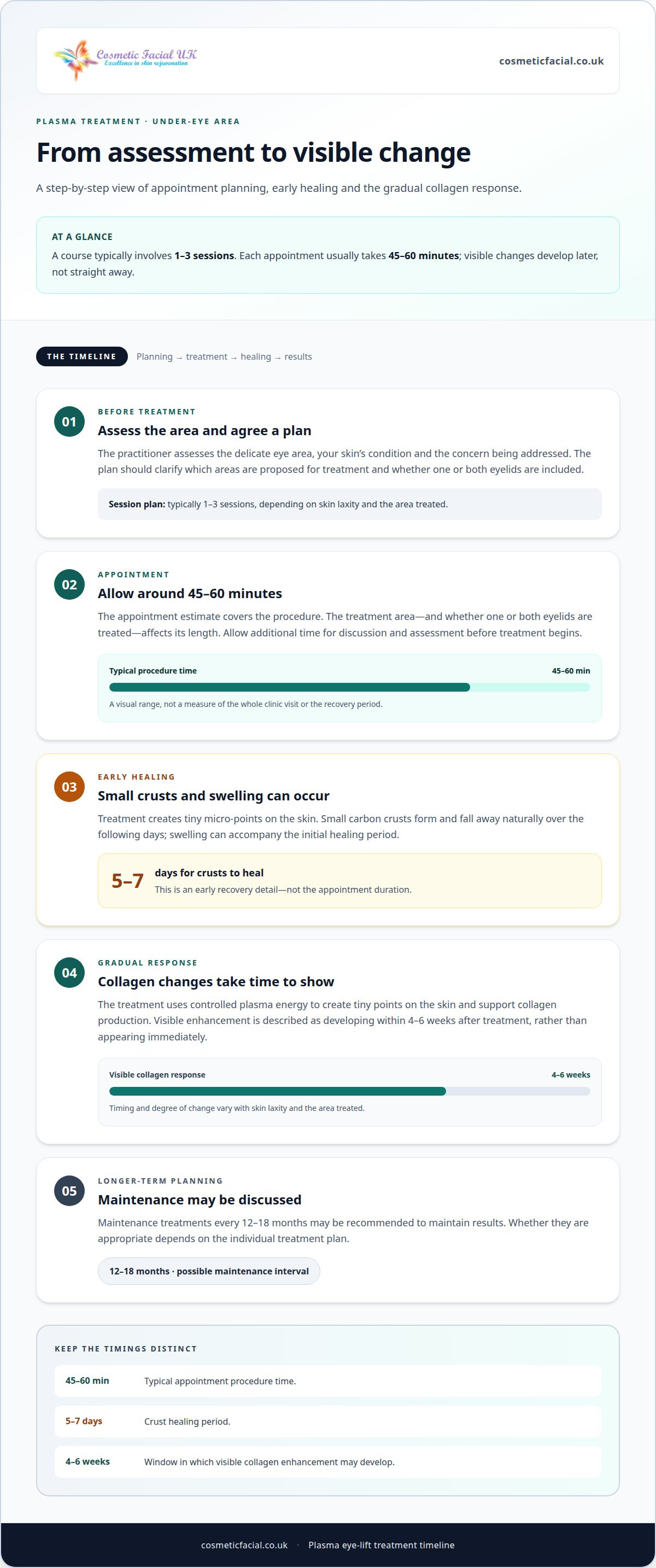
A plasma eye-lift appointment in London usually takes 45-60 minutes. The treatment area and whether one or both eyelids are treated affect the appointment length. This estimate covers the procedure, not necessarily every part of a clinic visit. Allow time for discussion and assessment before treatment begins. The area around the eyes is delicate, so the practitioner needs to assess the skin and identify the treatment area first.
The number of appointments is separate from the length of each visit. Plasma eye-lift treatment typically involves 1-3 sessions, depending on skin laxity. An individual plan may therefore include one appointment or a course. The technique uses controlled plasma energy to create tiny micro-points on the skin. Blood collection is not part of this described mechanism. It is distinct from treatments that involve drawing blood, so ask which procedure is being proposed if the explanation is unclear.
Results develop over time rather than appearing immediately. Enhanced collagen production becomes visible within 4-6 weeks after treatment. The skin’s texture and appearance may then look refreshed as the healing and collagen response progress. The timing and degree of change vary with skin laxity and the area treated. Maintenance treatments every 12-18 months may be recommended to maintain results.
Small carbon crusts form during treatment and fall away naturally over the following days. Crusts take 5-7 days to heal, and swelling can accompany the initial healing period. Pain levels aren’t quantified here, so a practitioner should explain the sensations expected during the procedure. Ask how the eye area will be managed during treatment and what aftercare applies. Don’t treat the 45-60-minute appointment estimate as the length of recovery.
Before treatment, establish who will perform the procedure and what relevant training and professional oversight apply. The practitioner should explain their experience treating the eye area and the risks involved. A professional title alone does not show whether their training is appropriate for the procedure.
There is no single average price for every London case. The cost depends on the area treated, whether one or both eyelids are included, and the recommended treatment plan. Ask for a quote based on your proposed treatment.
Look for London clinics that explicitly offer plasma treatment for the eye area, and check that the service described matches the procedure you are considering.
Suitability depends on skin laxity, the area to be treated and the concern being addressed. Before proceeding, have an assessment that explains whether the proposed treatment is appropriate for your circumstances.
Read clinic feedback for comments about communication, treatment and recovery, then establish the practitioner’s relevant qualifications and experience. Ask how professional oversight and insurance apply to the procedure. These checks help you understand who is responsible for your care and what the appointment involves.
Dark circles, fine lines, wrinkles and puffiness
Changes around the eyes can involve several concerns at once, including fine lines, skin laxity, dark circles and puffiness. Identifying the features you want to address helps clarify what a treatment is intended to target.
Potential benefits for wrinkles and dark circles
Plasma treatment creates controlled micro-points on the skin and supports collagen production. It may be considered for lines and wrinkles associated with laxity around the eyes, with the aim of improving the skin’s appearance and texture. Dark circles are a separate concern: a refreshed appearance depends on identifying which visible features contribute to the tired-looking effect.
Under-eye wrinkles can begin to appear in a person’s late 20s or early 30s, and are most prevalent in people over 30. Age alone doesn’t describe the treatment area. Fine lines, deeper creases, loose skin and puffiness can look different, even when they occur together. A useful assessment separates each feature rather than treating every change as the same concern.
Dark circles can look different from person to person. Note whether the area appears darker in colour, looks shadowed, or is accompanied by puffiness and fine lines. These visible differences help describe the concern but do not establish its cause. For example, a hollow-looking contour and a brown-toned area are distinct features, even if both contribute to a tired appearance. Treatment selection should reflect the feature being addressed rather than assume one approach will correct every cause.
Comparing under-eye wrinkle treatments
A plasma pen, CO2 laser and microneedling use different techniques, so they aren’t interchangeable names for one treatment. Plasma treatment uses controlled plasma energy to create tiny points on the skin and support collagen production. CO2 laser treatment uses a laser, while microneedling uses a needling technique. The method alone doesn’t establish which option suits a particular concern.
For comparison, focus on the treatment target, the eye-area technique, expected recovery and the practitioner’s explanation of likely results. Ask whether the concern is skin laxity, surface texture, pigmentation or shadowing, and how the proposed method relates to it. Plasma treatment may be relevant to wrinkles associated with laxity, but dark circles and puffiness need separate consideration. A discussion of facial treatment options can help frame those distinctions before deciding.
Session time and recommended number of sessions
Plasma eye-lift treatment typically involves 1-3 sessions, with skin laxity influencing the plan. The number of visits and the interval between them are separate considerations.
Recommended session number
A course may involve one session or up to three, depending on the degree of skin laxity. The treatment area matters too: upper eyelids, lower eyelids and surrounding skin may be assessed individually. The plan should specify which areas will be treated and what each session is intended to address.
During the assessment, the practitioner considers the skin’s condition and the extent of laxity. For example, a plan for one eyelid area may differ from a plan covering both upper and lower eyelids. The recommended number of sessions should follow that assessment, rather than assume everyone needs the same course.
Each session is a procedure, not a guarantee of a particular degree of tightening. Controlled plasma energy creates tiny micro-points on the skin and supports collagen production. The aim is to address skin laxity through a gradual response, so discuss the expected changes alongside the number of appointments. An advanced technique does not remove the need to tailor the plan to the treatment area.
Ask the practitioner to explain the proposed course as a sequence: which areas are included, how many sessions are recommended, and what will be reviewed before another session. This makes it easier to understand whether the plan covers one eyelid area or several. It also clarifies how the skin’s response will be assessed before deciding on further treatment.
Session spacing
Sessions are spaced to allow the skin to settle and its response to be reviewed before further treatment. The appropriate interval depends on the treated area and the condition of the skin. Do not assume a fixed schedule based on the total number of sessions alone.
At each review, the practitioner can compare the treated area with its earlier appearance and consider whether another session is appropriate. For example, the plan may be reviewed after treating the upper eyelids, before extending treatment to the lower eyelids. This keeps the sequence tied to the area treated and the skin’s response.
Maintenance is a separate decision from the initial course. Treatments every 12-18 months may be recommended to maintain results. That timing is not another interval within the initial 1-3-session plan; it refers to later maintenance. Clarify which stage a suggested appointment belongs to.
Before agreeing to a course, make sure the session count, treatment areas and review points are clear. A written plan can distinguish the initial procedure from later maintenance and explain how each appointment contributes to the intended result.
Collagen, elastin and hyaluronic acid renewal
Plasma treatment around the eyes is described as supporting collagen production. Collagen, elastin and hyaluronic acid have different roles in the skin, so “renewal” does not mean that one procedure replenishes all three. This distinction matters when considering ageing, fine lines and a treatment plan for delicate eyelid skin.
Controlled plasma energy creates tiny micro-points on the skin and supports collagen production. Collagen provides structural support within the skin, making its production relevant to concerns involving laxity and lines. This process is gradual, not an immediate change in texture. It also does not mean that every line or change around the eyes has the same cause.
Elastin is associated with the skin’s ability to stretch and return, while collagen contributes structural support. They are separate components, so an explanation focused on collagen should not become a promise of elastin renewal. For example, if you are concerned about both creasing and loose skin, have each feature considered within the treatment area rather than assuming one biological process addresses both in the same way.
Hyaluronic acid is another distinct component of the skin, often discussed in relation to moisture. Its role should not be confused with collagen production. The described plasma mechanism concerns collagen support, not replacing hyaluronic acid. This distinction helps set realistic expectations when the under-eye area appears dry, finely lined or less firm.
Timing is also relevant. Enhanced collagen production becomes visible within 4-6 weeks after treatment, rather than immediately. That period gives the skin time to respond, so judging the result straight after a session won’t show the full developing effect. For instance, an early change in surface appearance and a later change associated with collagen production are not necessarily the same outcome.
A treatment plan should connect the biological explanation to the concern being treated. It should identify the specific area, such as upper eyelid skin or the skin beneath the eyes, and explain what change is intended. The recommended course typically involves 1-3 sessions, depending on skin laxity. Session count alone does not establish whether collagen, elastin or hyaluronic acid is the relevant consideration.
At review, compare the same concern and area discussed before treatment, rather than relying on a general impression of rejuvenation. Note whether the priority is fine lines, laxity or skin texture, then discuss how the observed change relates to the original aim. Since collagen changes take time, the 4-6-week timeframe provides a useful point for considering developing results, not a guarantee of a particular appearance.
Downtime, side effects and aftercare
After plasma treatment around the eyes, small carbon crusts form immediately at the treated points. These crusts fall away naturally over the following days and take 5-7 days to heal. They are part of the initial healing period, so recovery is not the same as leaving the clinic with finished results. Plan around the visible healing time, particularly if work or a facial event is approaching.
Swelling is also common in early recovery and usually improves over several days. It can temporarily affect the appearance of the skin around the eyes, including how puffy the area looks. Consider this short-term change separately from the treatment’s intended effect on lines or laxity. The appearance during healing is not an immediate measure of the final result.
Allow the crusts to fall away naturally. Removing or disturbing them would go against the natural healing process described for this treatment. Follow the aftercare instructions provided for your procedure, and use them to guide how you manage the treated area during those 5-7 days. The clinic should explain which changes form part of expected healing and how to respond if your recovery differs.
Before treatment, ask what recovery may look like for the specific area being treated. Upper eyelids, lower eyelids and surrounding skin are distinct areas, so the plan should make clear which are involved. If both eyelids are treated, discuss how crusts and swelling might affect your usual routine. This helps you plan without assuming every facial procedure has the same downtime.
Do not confuse the 5-7-day crust-healing period with the time needed for results to develop. Healing concerns the surface crusts, while changes associated with collagen production take longer to become visible. For example, the skin may still be settling after the immediate procedure, even as the intended rejuvenation develops gradually. Recovery and results are related, but they describe different stages.
At a review, describe the treated area and any changes you have noticed, such as crusts or swelling. A clear account helps the practitioner compare your experience with the aftercare guidance for the procedure. If instructions cover several facial areas, follow the directions specific to the skin around your eyes. The treatment plan should also explain how to distinguish normal healing from changes that require further clinical advice.
Cosmetic Facial: Plasma Treatments
Cosmetic Facial provides Plasma Treatments for people considering treatment for lines and skin laxity around the eyes. If you are weighing the proposed sessions against the recovery period, discuss your areas of concern and what the procedure involves. This can help you understand whether the treatment’s intended focus matches your priorities.
Bring questions about the treatment area, likely healing process and how results develop over time. If dark circles are your main concern, explain this clearly, as they may have different causes from wrinkles or laxity. Contact Cosmetic Facial to discuss Plasma Treatments and your under-eye concerns.
Make your next step an informed one
Choosing plasma treatment for under-eye wrinkles in London starts with identifying the concern you want to address. Consider what matters most to you, such as the appearance of lines, skin laxity or a tired-looking eye area. This gives you a practical starting point for discussing whether the proposed approach aligns with your priorities.
A considered conversation can distinguish your main concern from other facial goals. Cosmetic Facial offers Botox Treatment and HIFU Face Lift, as well as IPL Hair Removal Treatment for a different treatment need. These are distinct services, so keep the discussion focused on the area and outcome you want to explore.
Take time to decide what feels appropriate after discussing your aims and the treatment approach. A clear understanding of the options can help you make a decision that reflects your priorities.
Frequently Asked Questions
How many sessions do I need?
An under-eye plasma course typically involves 1-3 sessions, with skin laxity influencing the recommendation. Clarify whether the plan covers the upper eyelids, lower eyelids or both, as the treatment area affects the approach. Ask what will be reviewed before any further session. This helps you understand the proposed course rather than assuming that everyone needs the same number of appointments.
Is there any downtime?
Yes. Small carbon crusts form during treatment and take 5-7 days to heal, while swelling usually improves over several days. This may affect how the treated area looks during early recovery. If you have a work event or social occasion planned, discuss timing before the procedure and follow the aftercare instructions for the specific area treated.
Are there any side effects?
Small crusts and swelling are common during the initial healing period. Crusts fall away naturally, so do not pick or remove them. Swelling generally improves over several days. Before treatment, ask the practitioner to explain the expected healing process and which changes should prompt you to seek advice. This gives you a clear reference for monitoring the treated skin at home.
What is a plasma eye lift and how does it work?
A plasma eye lift uses controlled plasma energy to create tiny micro-points on the skin and support collagen production. It is a non-surgical treatment without incisions or stitches. If you are considering plasma treatment for under-eye wrinkles in London, ask which eyelid areas are included and what the treatment is intended to target. This helps define the procedure before you agree to a plan.
Can I combine different under-eye treatments?
Different treatments may address different concerns, but combining them is not automatic. For example, wrinkles, laxity and dark circles may need separate consideration. Discuss each treatment you are considering, including the area it targets and the order in which treatments would be performed. The practitioner can explain whether a combined approach suits your concerns and how the plan would be staged.
How long do the results last?
Results don’t have a single guaranteed duration. Maintenance treatments every 12-18 months may be recommended to maintain the effect, but that interval is not a promise that results last for a fixed period. Ask how maintenance relates to your treatment area and the changes you want to maintain. This separates a suggested review schedule from a guaranteed length of result.
How soon will I notice results?
Changes associated with enhanced collagen production become visible within 4-6 weeks after treatment, rather than immediately. The early healing appearance is different from the developing result, so avoid judging the outcome while crusts and swelling are present. Ask when a review should take place and which changes the practitioner will assess, such as skin laxity or the appearance of fine lines.
What is plasma treatment for under-eye wrinkles and how does it work?
This non-surgical procedure applies controlled plasma energy to selected skin around the eyes. The energy creates tiny micro-points and supports collagen production, which may help address wrinkles linked with skin laxity. It does not mean every under-eye concern has the same cause or treatment target. Explain whether your priority is fine lines, loose skin, puffiness or dark circles before discussing treatment.
Disclaimer
All content on cosmetic Facial website, including blogs, graphics, logos, images, and software, is the property of CosmeticFacial UK or its content suppliers and is protected by applicable copyright laws. Unauthorized use, reproduction, distribution, or modification of any content without prior written permission is strictly prohibited.


