


What if the reason redness keeps returning is that the treatment is addressing the wrong cause? Finding a permanent solution for facial redness is a common goal, particularly when skincare products have made little difference. However, there isn’t a guaranteed one-off fix: rosacea is a chronic condition, and redness can also be linked to visible blood vessels, irritation or other skin concerns.
Recurring redness can be frustrating, especially when it is unclear which treatment to consider. Improvement may be possible, but the right approach depends on what is driving the redness and how your skin responds. An assessment can help distinguish persistent background redness from visible thread veins or the bumps and spots associated with rosacea. Rosacea treatment, laser therapies or facial thread vein treatment may be discussed where appropriate, but suitability and results vary.
This article explains common causes of facial redness, compares treatment approaches without promising permanent clearance, and outlines when a clinical assessment may help. It also covers what to discuss at a consultation in Marylebone, London, so you can make an informed decision about next steps.
Key Takeaways
- A permanent solution for facial redness cannot be promised, but the right management plan may help reduce symptoms over time.
- Redness can have different causes, and its appearance alone isn’t enough to confirm a diagnosis.
- Compare skincare, medical management and device-based treatments by what each is intended to address. They are not interchangeable.
- Before choosing a treatment, ask about the suspected cause, likely benefits, limitations, risks and follow-up care.
- At a London consultation, discuss whether rosacea treatment, laser therapies or facial thread vein treatment may suit your individual concerns.
Is there a permanent solution for facial redness? Start with the cause
Redness that remains between episodes of flushing, returns repeatedly or becomes a consistent feature can be described as persistent facial redness. A permanent solution for facial redness cannot be guaranteed, because redness has different possible causes and some may recur. Lasting improvement can be a realistic treatment aim, but it is not the same as permanent clearance.
The most useful answer is that treatment depends on the cause, your skin and an individual clinical assessment. Without identifying what is contributing to the redness, it is difficult to judge whether skincare, medical management or a procedure is appropriate. An assessment can help clarify next steps without promising a cure.
The video below discusses approaches to facial and body redness. Individual treatment suitability still requires clinical assessment.
What can persistent facial redness indicate?
Possible explanations include rosacea, visible superficial blood vessels, skin sensitivity and irritation. These are not diagnoses based on appearance alone, and more than one factor may be involved. For example, redness may fluctuate with triggers or irritation while visible vessels remain. Rosacea is one recognised cause, but not every red or flushed face has rosacea, and similar-looking symptoms can require different approaches.
Repeated product trials may not resolve the problem. A product might soothe irritation without addressing another contributor, or it may not suit sensitive skin. Note when redness appears, what seems to trigger it and whether other symptoms occur. This information can make a clinical discussion more useful.
When should facial redness be assessed?
Seek professional advice if redness is persistent, changing, uncomfortable or concerning, particularly if it comes with other symptoms. Sudden or severe symptoms warrant appropriate medical assessment rather than an assumption that the issue is cosmetic.
If the cause is uncertain, a dermatology consultation in London gives you an opportunity to discuss the pattern of redness and possible next steps. Cosmetic Facial is a Marylebone clinic offering dermatology consultations. Treatment options should be considered only after individual assessment, with the aim of understanding the concern before weighing suitable approaches and their limitations.
Why facial redness persists: rosacea, visible vessels, and skin irritation
Redness can look similar across different skin concerns, but its pattern and behaviour may offer useful clues. Some people notice episodes that come and go, while others see a more constant background colour or fine vessels that remain visible. These observations can guide a clinical discussion, but cannot confirm a diagnosis on their own.
A trigger-related flare may settle, while redness that persists, changes or repeatedly returns deserves assessment. Triggers and irritation can contribute to fluctuations, and repeated product changes may further unsettle sensitive skin. Keep a short diary of when redness occurs, how long it lasts and any associated discomfort. This can help clarify the pattern for a clinician.
Rosacea and recurrent facial flushing
Rosacea can involve recurring facial redness or flushing, although its presentation varies between individuals. Some people also experience inflammatory bumps or spots, and eye symptoms can occur. These features are not present in everyone, and redness alone is not enough to identify rosacea. The condition may have periods of greater and lesser activity, so a cosmetic procedure should not be presented as a cure or as a way to prevent every future flare.
Inflammatory redness and visible vessels are not necessarily the same concern. Redness that fluctuates alongside other skin changes may need a different management approach from distinct superficial vessels that remain apparent between episodes. A clinician can consider the full pattern rather than selecting a treatment based on colour alone.
Visible vessels, sensitivity, and other possible contributors
Fine superficial vessels can contribute to persistent facial redness. Sensitivity or irritation may also leave skin looking red or feeling uncomfortable, particularly when a product or routine is not well tolerated. These factors can overlap, so an assumption based only on appearance may lead to an unsuitable approach.
If redness is new, changing, uncomfortable or difficult to explain, seek an appropriate clinical assessment before choosing a procedure or adding more products. Note any changes to your routine and patterns you have noticed. This information can help a practitioner consider possible contributors and discuss next steps. If you’re considering assessment in Marylebone, find information about the London clinic and its services.
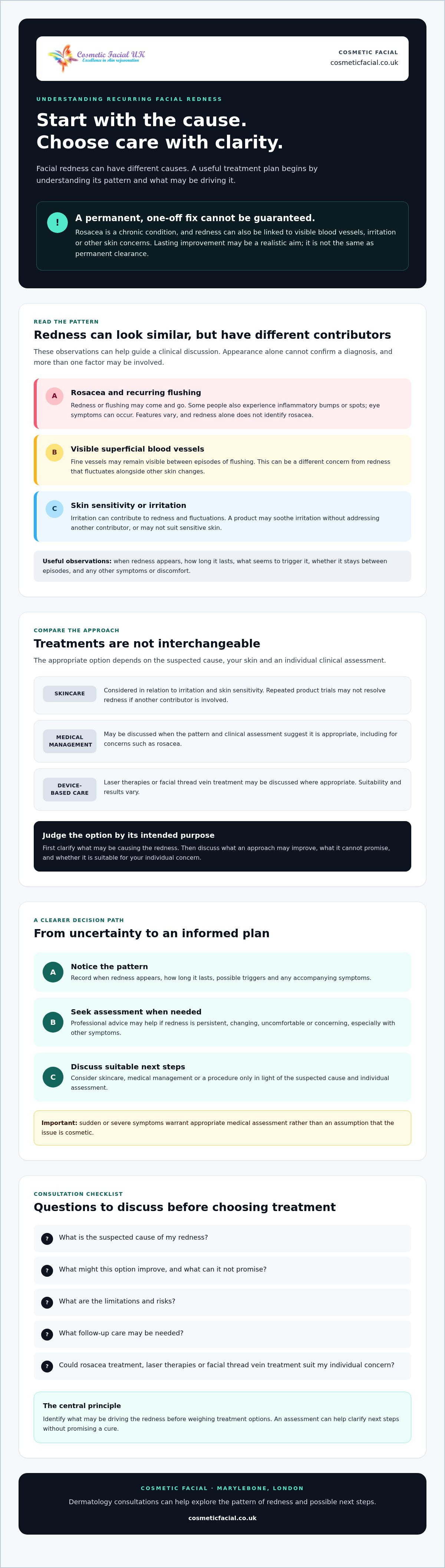
Comparing treatments for facial redness: what they may improve and what they cannot promise
Treatment options have different purposes. Skincare may support comfort and reduce avoidable irritation. Medical management may be considered for rosacea, while laser or intense pulsed light (IPL) may be assessed for selected vascular redness. These approaches are not interchangeable, and none can promise permanent clearance or prevent every future flare.
Skincare and medical management: different roles
A gentle, suitable skincare routine may support the skin barrier and comfort, particularly if sensitivity or irritation contributes to redness. For ongoing skin wellness, clinics like Body 'N' Balance offer gentle facial treatments designed to soothe delicate complexions, though cosmetic care alone may not address visible vessels or an underlying condition. If rosacea is suspected, discuss medical management with an appropriate clinician, who can advise on options based on your individual presentation. Do not treat a skincare product as a guaranteed or permanent solution.
Laser and light-based options for selected redness concerns
Laser and IPL are distinct technologies, and suitability depends on the concern being treated. A clinician may consider a device-based approach for visible superficial vessels or some patterns of background redness. This does not make it a treatment for every rosacea symptom or for general skin sensitivity. Discuss the expected response, risks, recovery and any session requirements individually. Outcomes cannot be guaranteed.
Cosmetic Facial offers laser therapies and facial thread vein treatment. Confirm the specific technology available, its indications and its suitability for your skin before agreeing to a treatment plan.
| Approach | Intended concern | Assessment needs | Limitations and follow-up |
|---|---|---|---|
| Skincare | Comfort, sensitivity or irritation | Consider skin response and current routine | May not address vessels or other causes; review tolerance |
| Medical management | Rosacea or other diagnosed concerns | Clinician advice based on symptoms and assessment | Plan and review depend on the diagnosis and response |
| Laser or IPL | Selected visible vessels or redness patterns | Confirm indication, suitability and available technology | Results, session needs, risks and recovery vary; follow-up may be needed |
Use this comparison as a starting point, not a self-diagnosis tool. Before proceeding, ask what cause is suspected, what the proposed option is intended to improve, what it cannot address, and how progress and any adverse effects will be reviewed. A permanent solution for facial redness cannot be assured, but matching treatment to the concern may support a more considered plan. For information about the clinic, visit Cosmetic Facial’s London clinic.
How to choose a facial redness treatment safely in London
A safe treatment decision starts with a clear account of the concern, not with a device or procedure name. Describe when the redness began, whether it comes and goes, what seems to trigger it and any accompanying symptoms, such as discomfort or spots. A clinician can assess whether the pattern may relate to a medical concern, visible vessels, irritation or another cause, and whether further assessment is appropriate.
Suitability depends on your skin and medical history as well as the proposed treatment. A procedure considered for visible vessels, for example, may not address inflammatory symptoms or sensitivity. If the cause remains uncertain, ask whether a medical assessment should come before an aesthetic treatment. A guide to private dermatologist consultations in London can also help you understand what to expect from a specialist appointment.
Questions to ask before agreeing to treatment
Make sure you understand what the proposed treatment is intended to address and why it may suit your concern. Ask about realistic benefits and limitations, possible recurrence, risks, downtime and alternatives. Clarify who will assess you, who will deliver the treatment, what their relevant qualifications are, and what follow-up is available if you have questions or a reaction.
It is reasonable to take time to consider the information. Be cautious of any suggestion that one procedure will permanently clear redness or prevent every future flare. A clear plan should explain how the outcome will be reviewed and what the next step might be if the response is limited.
Preparing for a London clinical consultation
Bring a concise history to make the discussion more specific. Include:
- When the redness started and whether it is constant or episodic.
- Patterns you’ve noticed, including possible triggers or changes over time.
- Other symptoms, previous treatments and how your skin responded.
- Your current skincare routine and relevant medical history.
This information will not establish a diagnosis by itself, but it can help the clinician decide what needs further assessment. The consultation should clarify whether a medical or aesthetic pathway is appropriate, explain potential options and limitations, and allow you to discuss aftercare and follow-up before making a decision. If the concern is changing or accompanied by sudden or severe symptoms, seek appropriate medical advice rather than waiting for a cosmetic appointment.
Facial redness treatment at Cosmetic Facial: assessment before a treatment plan
Cosmetic Facial is a clinic in Marylebone, London, offering dermatology consultations and skin services relevant to facial redness. Because persistent redness can have more than one possible explanation, a discussion should begin by understanding the concern rather than assuming a particular procedure is suitable.
After assessment, rosacea treatment, laser therapies or facial thread vein treatment may be options to discuss, depending on the findings and the clinic’s current services. Suitability, availability, expected results, risks and aftercare depend on individual assessment. No option should be presented as a guaranteed permanent solution for facial redness.
What a personalised discussion can clarify
An assessment can help clarify which concern may be contributing to redness and whether a service offered by the clinic is relevant. It is also an opportunity to discuss your goals, medical and skincare history, skin sensitivity and expectations. This conversation may inform next steps, but it does not guarantee a particular diagnosis or treatment outcome.
Before agreeing to a plan, ask what the proposed treatment is intended to improve, what it may not address, and how risks and aftercare will be discussed. If a device-based procedure is suggested, confirm the specific technology, its indication for your concern, the likely recovery and what follow-up is available. Make sure these details are clear before deciding whether to proceed.
Arrange a conversation about persistent redness
Notes about when the redness began, how it changes and what you’ve already tried can help make a consultation more focused. Share relevant medical history, your current skincare routine and any concerns about sensitivity. If the symptoms suggest a medical issue rather than a cosmetic one, ask whether a different assessment pathway is appropriate.
A measured discussion can help you understand the options without pressure to choose a treatment immediately. The aim is to establish what may be causing the redness, consider suitable next steps and set realistic expectations, not to promise permanent removal.
Make your next step an informed one
A permanent solution for facial redness cannot be guaranteed, because the right approach depends on its cause and your individual skin. Rosacea, visible vessels and irritation may need different forms of management, so a treatment name alone is not enough to determine suitability. A clinical assessment can help clarify the concern, compare realistic options and set expectations about limitations, risks and follow-up.
Cosmetic Facial offers dermatology consultations in Marylebone, London. Discuss your symptoms and history with a clinician to explore whether a medical or aesthetic approach may be appropriate. Any treatment options should be considered in light of an individual assessment, with no promise of permanent redness removal.
Taking time to understand the cause and ask informed questions can help you approach treatment with greater confidence. If redness is persistent or concerning, discuss it with a clinician and explore appropriate next steps.
Frequently Asked Questions
Is there a permanent solution for facial redness?
There’s no guaranteed permanent solution for facial redness, because the right approach depends on its cause and redness can return. Rosacea, visible superficial vessels and irritation may need different forms of management. A clinical assessment can help identify which concern may be contributing and whether skincare, medical management or a procedure is appropriate. Lasting improvement may be possible, but it should not be presented as permanent clearance.
Can laser treatment permanently remove facial redness?
Laser treatment cannot guarantee permanent removal of facial redness. A clinician may consider laser for selected concerns, such as visible vessels, but suitability and expected results depend on your skin and the cause of the redness. Ask about potential benefits, limitations, risks, recovery and follow-up before deciding. Redness associated with an underlying condition may need ongoing management, and a cosmetic procedure should not be assumed to prevent future symptoms.
What causes redness on the face that does not go away?
Persistent facial redness can have several possible causes, including rosacea, visible superficial vessels, sensitivity or irritation. These concerns can look alike or overlap, so appearance alone cannot confirm what is causing your symptoms. Note when the redness began, whether it fluctuates, any possible triggers and other symptoms. If it persists, changes or causes discomfort, seek clinical advice rather than relying on repeated product trials.
Can rosacea redness be treated permanently?
Rosacea is generally managed rather than permanently cured, and treatment cannot guarantee that redness or future flares will stop. Management depends on individual symptoms and may involve clinician-guided medical care, skincare advice or, for selected redness concerns, a procedure. A clinician can discuss realistic aims and review how symptoms respond. Seek assessment if redness is persistent or accompanied by other changes, rather than treating it as a cosmetic issue alone.
How do I know whether facial redness is rosacea or visible veins?
You cannot reliably distinguish rosacea from visible veins by appearance alone. Rosacea may involve recurring redness or flushing and can have other symptoms, while superficial vessels may remain visible between episodes. These features can also coexist. A clinician can assess the pattern, history and associated symptoms to guide next steps. Note when redness appears, how long it lasts and whether you’ve noticed discomfort or other changes.
Is IPL or laser better for facial redness?
Neither IPL nor laser is universally better. The suitable option depends on the type and cause of redness, your skin and clinical assessment. They are distinct technologies, and a practitioner may consider them for selected concerns, including certain visible vessels or redness patterns. Ask which specific concern the proposed treatment targets, what results are realistic, and what risks, recovery and follow-up may involve. Confirm the technology offered before agreeing to treatment.
When should I see a dermatologist about facial redness?
Seek professional advice if facial redness persists, changes, causes discomfort or concerns you, particularly if other symptoms are present. Sudden or severe symptoms warrant appropriate medical assessment. A dermatologist can review the pattern, your skin and relevant history, and advise whether a medical or aesthetic pathway is appropriate. If you’re unsure what is causing the redness, a dermatology consultation in London may help clarify possible next steps.
Disclaimer
All content on cosmetic Facial website, including blogs, graphics, logos, images, and software, is the property of CosmeticFacial UK or its content suppliers and is protected by applicable copyright laws. Unauthorized use, reproduction, distribution, or modification of any content without prior written permission is strictly prohibited.


