


The best treatment depends on more than a vein’s location. Facial thread veins most often appear around the nose and across the cheeks, and may also show on the chin. Laser treatment for facial thread veins in London may be an option, but the vessels and surrounding skin both need to be considered.
It’s natural to want to know whether visible veins can be treated safely and what a session involves before deciding. Suitability for light-based treatment can vary with skin type, so an assessment should consider this alongside the vessels’ appearance and position.
This article explains where facial thread veins commonly appear, how laser and other treatments differ, and what to expect from treatment sessions. It also covers when thread veins may be associated with varicose veins, so you can understand what a clinical assessment should address.
Key Takeaways
- Facial thread veins commonly appear around the nose and cheeks, but their location and appearance can help distinguish them from other forms of redness.
- Laser, IPL, electrolysis and sclerotherapy work in different ways; an assessment helps identify which approach may suit the vessels and treatment area.
- Session numbers and spacing vary, so understanding the treatment plan can help you prepare for the process and likely timescale.
- Skin type is an important consideration when assessing light-based treatment suitability, alongside the characteristics of the veins.
- Facial thread veins are usually a cosmetic concern, but veins elsewhere can sometimes be associated with varicose vein symptoms that merit attention.
Can thread veins be the result of an underlying varicose vein issue?
Facial thread veins are small, dilated blood vessels beneath the skin, often visible around the nose and cheeks. They may also appear on the chin. Genetics, hormonal changes, sun exposure, wind and ageing can contribute to their development. They are usually a cosmetic concern, but veins elsewhere on the body can have a different significance.
Facial thread veins can run in families, and having a parent with thread or varicose veins may make them more likely to develop. They can also occur alongside rosacea, a skin condition that causes facial redness. An assessment can distinguish visible vessels from general flushing and consider their pattern, colour and location before discussing treatment.
Thread veins themselves are not considered dangerous to health, but they can be associated with underlying varicose veins. Varicose veins may cause discomfort and swelling, and can increase clotting risk as a person ages. If visible leg veins occur with these symptoms, seek medical assessment rather than treating them as only a cosmetic concern. Facial vessels alone do not establish a varicose vein problem.
For people searching near Canary Wharf, the neighbourhood name alone cannot identify a suitable laser venue. Compare the treatment offered with your concern: a facial laser assessment should address facial vessels, rather than assume treatment for leg veins is interchangeable. The same applies to listings near Canary Wharf station or the surrounding commercial district. A thorough consultation should examine the treatment area and explain the proposed method.
Clapham listings may describe thread vein treatment without clarifying whether they cover facial vessels or legs. Look for a specific treatment area, such as cheek veins or vessels around the nose, and whether the method is laser or another approach. A service listing is only a starting point, not an assessment of suitability. A Clapham location alone does not establish the practitioner’s qualifications or the treatment’s likely effect.
Before choosing a London clinic, review the treating practitioner’s relevant qualifications and laser training, and ask about their experience with facial vessels. Check which regulatory registration applies to the clinic and procedure, and how consent, assessment and aftercare are handled. These details clarify who performs the treatment and what clinical process to expect.
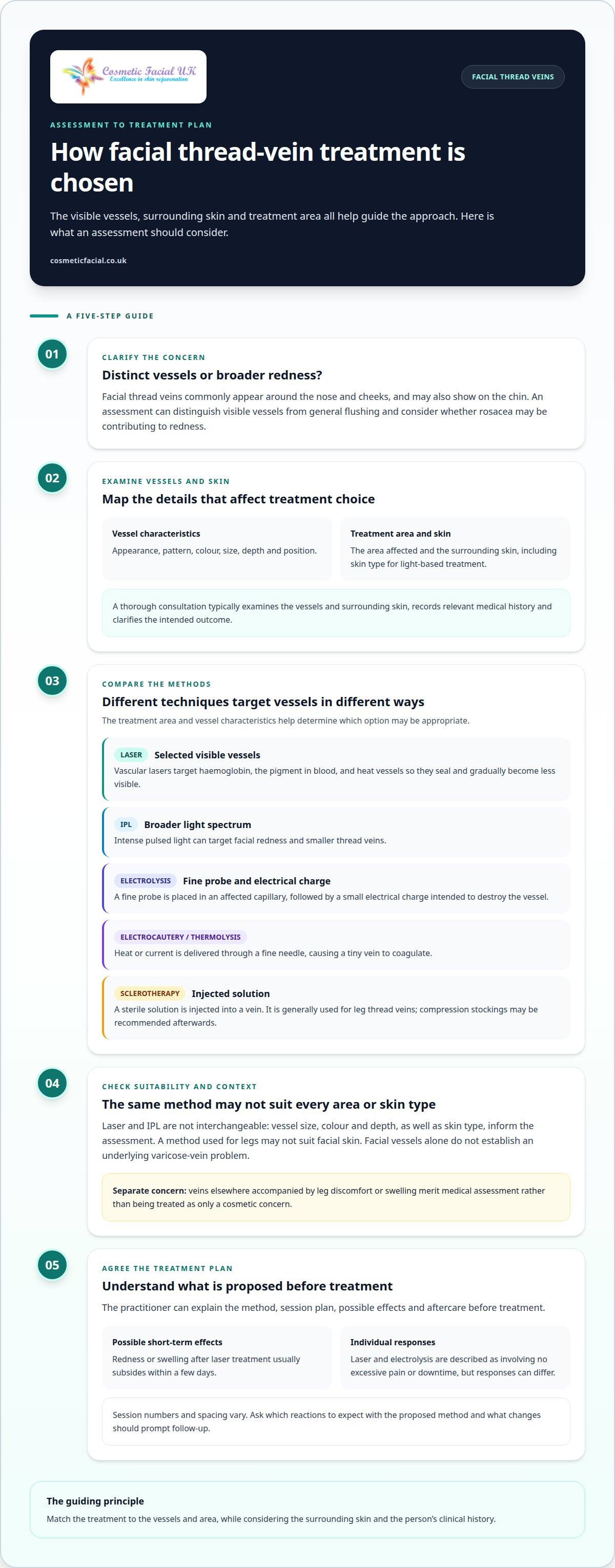
Possible short-term effects include redness or swelling, which usually subside within a few days after laser treatment. Laser and electrolysis are described as involving no excessive pain or downtime, but individual responses can differ. At consultation, ask which reactions to expect with the proposed method and what changes should prompt follow-up.
Advanced electrolysis is different from laser treatment. It uses a fine probe placed in an affected capillary, followed by a small electrical charge intended to destroy the vessel. It may be considered for selected thread veins, while laser directs light at visible vessels. The location, vessel characteristics and skin assessment guide the choice of method.
What Treatments Are Available For Thread Veins?
Treatment choice depends on the visible vessels, their depth and the area affected. An assessment should establish whether the concern is a defined thread vein, broader facial redness or a condition such as rosacea. These findings matter because treatments target vessels differently, and a method used for legs may not suit facial skin.
Laser treatment directs light towards selected vessels. Vascular lasers target haemoglobin, the pigment in blood, and heat vessels so they seal and gradually become less visible. Intense pulsed light (IPL) uses a broader spectrum of light and can target facial redness and smaller thread veins. The approaches are not interchangeable: vessel size, colour, depth and skin type inform the assessment.
Other options include electrolysis, electrocautery and sclerotherapy. Electrolysis uses a fine probe and a small electrical charge to treat an affected capillary. Electrocautery or thermolysis delivers heat or current through a fine needle, causing a tiny vein to coagulate. Sclerotherapy involves injecting a sterile solution into a vein, generally for leg thread veins; compression stockings may be recommended afterwards. The treatment area is central to choosing an appropriate technique.
A thorough consultation typically examines the vessels and surrounding skin, records relevant medical history and clarifies the intended outcome. The practitioner can explain the proposed method, session plan, possible effects and aftercare before treatment. If flushing is more prominent than distinct vessels, rosacea may need consideration, since vein removal alone may not address the underlying redness.
Consultation and clinic location are separate practical considerations. A London clinic may treat facial vessels, leg veins or both, so the assessment should identify the area to be treated. A GP referral is not automatically required for a private cosmetic consultation. If veins are accompanied by leg discomfort or swelling, a GP can assess whether medical evaluation is appropriate.
Consultation fees vary between clinics and should be explained before an appointment is arranged. Treatment costs depend on the case and are provided after a quote request; factors include the treatment area, vessel characteristics and proposed method. NHS access should not be assumed for cosmetic removal of facial thread veins. If you have a medical concern, a GP can discuss your symptoms and the appropriate pathway.
Can facial thread veins return after laser treatment? Treated vessels may become less visible, but new vessels can develop, particularly when contributing factors remain. A consultation can distinguish persistent vessels from newly developed ones. To explore a facial assessment and treatment options, review facial thread vein treatment.
Treatment expectations and number of sessions
Laser treatment is planned around the target vessels and the area being treated. The practitioner explains the proposed session plan and what to expect as the treated vessels gradually become less visible.
Session Number and Spacing
Thread vein treatment typically involves one to three sessions, spaced several weeks apart. For spider veins, two to three sessions are enough on average to achieve optimal results. These are general guides, not a schedule for every face: the number, size and response of the vessels influence the plan.
At assessment, the practitioner can identify the treatment area and set a review point before further sessions. This allows the response to be considered before deciding whether additional treatment is appropriate. The cosmetic goal also affects planning: treating a small cluster differs from addressing a wider area with several visible vessels.
Allow several weeks between appointments rather than expecting a complete result immediately after one session. Laser energy targets blood vessels, which gradually become less visible. The practitioner can explain what changes to look for between visits and how the next appointment fits the treatment plan.
Appointment Duration and Treatment Process
A facial thread vein laser appointment begins with a review of the agreed treatment area and plan. The practitioner then directs laser light at the selected vessels. Appointment length depends on the area treated and the number of vessels addressed, so a small area and a broader treatment area may take different amounts of time.
There is no single session length that applies to every treatment. At consultation, ask how much time to allow for the planned area, including any assessment before the laser is used. This gives a more useful estimate than relying on a general appointment time for someone else’s treatment.
The practitioner should explain the intended target, expected number of sessions and spacing before treatment starts. This helps you understand whether the plan involves one appointment or a course. It also clarifies what is included in each visit, rather than assuming every session is identical.
After treatment, follow the practitioner’s aftercare instructions for the treated skin. Common advice includes using broad-spectrum SPF 50 on the area for at least four weeks, avoiding hot baths, saunas and steam rooms for 48 hours, and avoiding vigorous exercise for 24 to 48 hours. These steps help guide care between appointments.
At follow-up, the practitioner can compare the response with the original treatment aim and decide whether another session is appropriate. If the appearance changes gradually, this may reflect the expected process rather than an immediate result. A clear plan should distinguish the intended outcome, proposed sessions and review point.
Treatment for spider veins and vascular lesions
Thread veins, spider veins and telangiectasias describe small, dilated blood vessels visible beneath the skin. “Spider veins” refers to their fine, branching appearance, while telangiectasias is the clinical term for these superficial vessels. Visible vessels may appear individually or in groups. These terms describe appearance, not the cause or the most suitable treatment.
Vascular lesions is a broader term, so identifying the specific feature matters before treatment. A fine red vessel across the cheek differs from widespread facial redness, even if both affect appearance. Thread veins can occur anywhere, but are most often seen on the legs. Facial vessels commonly appear around the nose and cheeks, where skin characteristics also inform assessment.
Approximately 50-60% of adults experience thread veins at some point. That figure includes different body areas and does not predict whether a particular person will develop facial vessels. The practical first step is to identify the exact concern: an individual visible vessel, a branching group, or redness extending beyond distinct vessels. This distinction helps focus a treatment discussion.
Laser and IPL are both light-based approaches, but they are not identical. Vascular lasers target haemoglobin in blood vessels, heating and sealing selected vessels. IPL uses a broad spectrum of light to target facial redness and smaller thread veins. The practitioner considers the visible vessels and surrounding skin when deciding whether either approach suits the treatment area.
Electrolysis is another option for selected fine capillaries. A fine probe enters the affected capillary, and a small electrical charge is used to destroy the vessel. Electrocautery or thermolysis uses a very fine needle to deliver current or heat, causing the tiny vein to coagulate. These techniques use a probe rather than directed light.
Sclerotherapy is used for leg thread veins, not as a direct substitute for facial laser treatment. It involves injecting a sterile solution into the vein, irritating and collapsing its wall. Compression stockings may be recommended for several days to weeks afterwards. The difference between facial vessels and leg veins affects both the procedure and aftercare.
During assessment, describe whether the concern is a distinct vessel or an area of diffuse redness, and identify its location, such as the nose, cheek or leg. The practitioner can consider the vessel pattern, skin and treatment aim together. This helps distinguish spider veins from other vascular lesions and establish a relevant approach, rather than choosing a method based solely on the word “removal”.
Laser treatment suitability for different skin types
For anyone considering laser treatment for facial thread veins in London, skin type is a central part of assessment, not a detail to consider after choosing a device. A practitioner should assess skin tone, visible pigmentation and the vessels together. This helps determine whether light-based therapy suits the treatment area and what factors need consideration before proceeding.
Light-based treatments interact with blood vessels and surrounding skin. Vascular lasers target haemoglobin in vessels, while IPL uses a broad spectrum of light. The practitioner considers how the skin around each vessel may respond, rather than focusing only on the red line. Skin tone is one factor, alongside vessel appearance and location.
Tell the practitioner about recent changes in skin colour, such as a tan or a darker patch near the cheek. This gives them a clearer picture of the area at your appointment. Mention sensitive or persistently flushed skin too. For example, redness associated with rosacea may need a different assessment from an isolated vessel beside the nose.
The vessels themselves also matter. A fine red line across the cheek, a deeper-looking blue vessel and diffuse redness are different treatment targets. An assessment for laser treatment for facial thread veins in London should identify the visible features and explain why laser or IPL is being considered. The device name alone cannot establish whether treatment suits a particular area.
Discuss comfort before treatment begins. Ask what sensations may occur with the proposed vein treatment and how the practitioner will respond if your skin becomes uncomfortable. Laser therapy and electrolysis are described as involving no excessive pain or downtime, although experiences vary. A clear explanation supports informed consent and helps you know what to expect during the appointment.
Assessment should cover the treatment area, skin condition and intended outcome. The practitioner can explain which vessels the method will target and what changes to monitor afterwards. If skin colour or another feature makes assessment difficult, clarify the plan before treatment starts. This helps ensure the proposed approach is based on the skin and vessels observed.
Skin type alone does not determine suitability. Expect an individual assessment of skin tone, current colour changes, vessel appearance and sensitivity. These factors guide whether light-based therapy is suitable and what alternatives may be considered. The consultation should leave you understanding the reasoning behind the proposed approach, not just the device name.
Cosmetic Facial: Facial Thread Vein Treatment
Cosmetic Facial provides Facial Thread Vein Treatment for people concerned about visible facial vessels. It is a useful next step if you want an assessment of the affected area and a discussion of suitable options, including whether laser treatment may suit your skin and vein characteristics.
A treatment discussion can clarify the proposed approach, what sessions involve and how aftercare supports the treated skin. If facial redness is also a concern, mention whether it appears as distinct vessels or general flushing, as these features may call for different considerations. The aim is to understand the concern and treatment plan before deciding how to proceed.
Take the next step with a focused assessment
Choosing laser treatment for facial thread veins in London starts with a clear discussion of your skin, the vessels you want treated and the outcome you hope to achieve. An assessment can turn general information into a plan that reflects your concerns, rather than relying on a standard approach. Use the conversation to understand the reasoning behind the recommended method and decide whether it feels right for you.
Cosmetic Facial provides Facial Thread Vein Treatment. Other aesthetic services include Botox Treatment, HIFU Face Lift and IPL Hair Removal Treatment. These address different concerns and are not substitutes for assessing facial veins. The next step is to discuss the treatment area and your questions, without making a decision before you understand the proposed approach.
A considered decision starts with understanding what is being treated and why. Take that step at your own pace.
Frequently Asked Questions
Where do thread veins appear?
Thread veins can appear anywhere on the body, although they’re most commonly seen on the legs. On the face, they’re often visible around the nose and across the cheeks; some people notice them on the chin. Their pattern can range from a single fine line to a branching cluster. Location and appearance help distinguish visible vessels from broader redness when discussing treatment.
What Is Recovery Like After Laser Vein Removal?
Recovery after facial laser vein removal may involve temporary redness or swelling, which usually subsides within a few days. The treated area may look different during this period, so follow the aftercare instructions for your session. Contact the treating clinic if a reaction concerns you or differs from the effects described beforehand. Recovery can depend on the area and treatment used.
What causes thread veins on the face?
Facial thread veins may develop due to inherited susceptibility, hormonal changes, sun and wind exposure, ageing or injury to the area. For example, someone with a family history of visible veins may be more likely to develop them. Facial thread veins can also occur alongside rosacea, although general flushing and distinct visible vessels are not the same. Identifying the pattern helps guide assessment.
What laser treatments are used for facial thread veins?
Vascular lasers target facial vessels by directing light towards haemoglobin in the blood. Intense pulsed light, or IPL, uses a broader spectrum and may be considered for facial redness and smaller thread veins. These are different light-based approaches, not interchangeable names for the same device. The treatment selected depends on the vessels and surrounding skin identified during assessment.
How effective is laser treatment for facial thread veins, and how many sessions are usually needed?
Laser treatment can make targeted facial vessels less visible as they gradually respond, but the extent of change varies with the vessel pattern and treatment area. Thread vein treatment typically involves one to three sessions spaced several weeks apart. For spider veins, two to three sessions are enough on average to achieve optimal results. A practitioner can explain how these general expectations relate to your treatment plan.
Which London clinics offer laser treatment for facial thread veins, and where are they located?
Cosmetic Facial offers Facial Thread Vein Treatment at its clinic in Marylebone, London. The service is relevant if you’re seeking an assessment of visible facial vessels and potential treatment options. The clinic’s location alone does not establish whether a particular laser approach suits your skin or veins. A consultation should clarify the treatment area, method being considered and plan for your concern.
How should I prepare for laser treatment and care for my skin afterwards?
Before treatment, be ready to describe your skin concerns, relevant medical history and any changes in the treatment area. Ask the practitioner to explain preparation and aftercare for the planned method, as advice can differ between treatments. Afterwards, follow the clinic’s directions for the treated skin and raise any reaction that concerns you. This helps align your care with the procedure.
Who is not suitable for laser treatment for facial thread veins?
Suitability cannot be decided from skin type alone. The practitioner needs to consider skin tone and condition, the appearance and location of the vessels, and whether redness may relate to rosacea. These factors can affect the choice of light-based treatment or whether another approach should be discussed. An assessment establishes whether laser treatment is appropriate for your particular concern.
Disclaimer
All content on cosmetic Facial website, including blogs, graphics, logos, images, and software, is the property of CosmeticFacial UK or its content suppliers and is protected by applicable copyright laws. Unauthorized use, reproduction, distribution, or modification of any content without prior written permission is strictly prohibited.


