

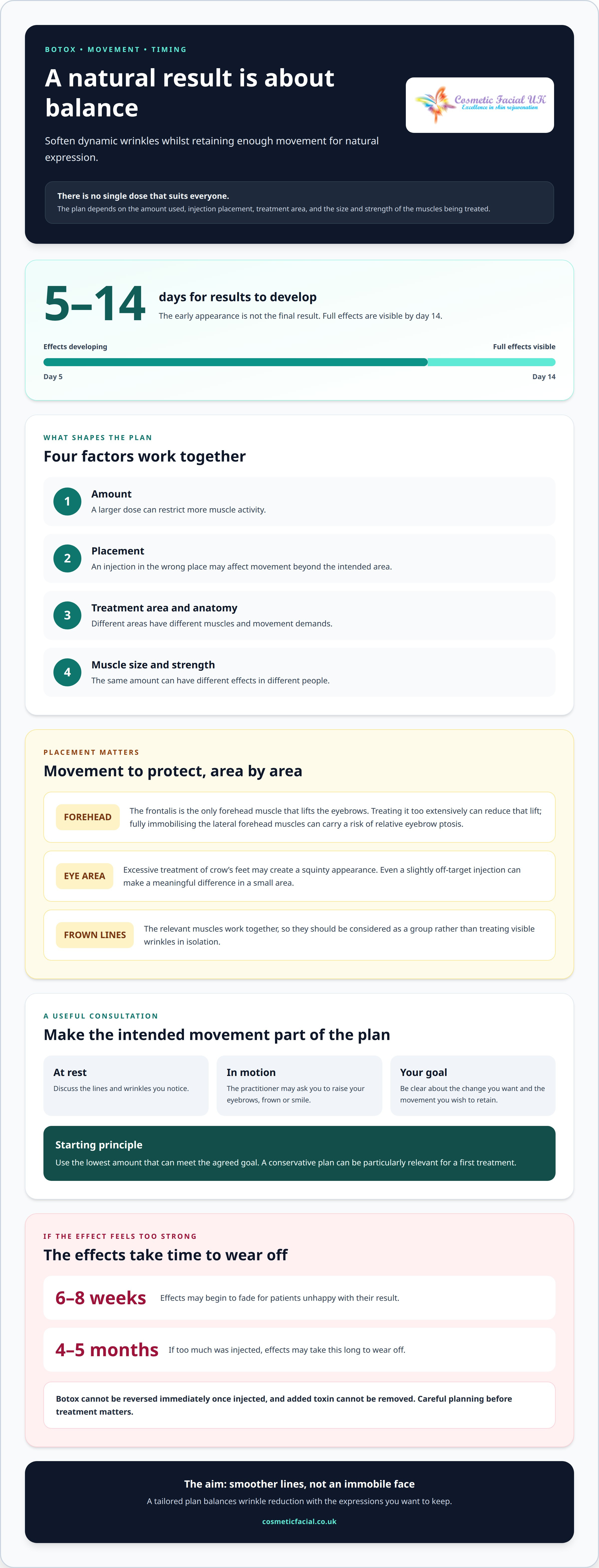
There is no single Botox dose that is too much for everyone. The risk of a frozen appearance depends on the amount injected, where it is placed, the treatment area, and the size and strength of the muscles being treated. Avoiding a “frozen” look with Botox means softening dynamic wrinkles while retaining enough movement for natural expression.
It’s understandable to want lines to look less pronounced without losing the expressions that make your face recognisable. Too much product, or injections that don’t suit your facial anatomy, can restrict movement. A carefully planned treatment aims to balance wrinkle reduction with natural expression.
This article explains how dosage and placement can affect movement, why treatment should be tailored to the area and muscle size, and what to discuss with a practitioner about your goals. It also covers why results take time to develop and why a conservative approach can be particularly relevant for a first treatment.
Key Takeaways
- There is no single Botox dose that is too much for everyone; the right amount depends on the treatment area and the size and strength of the muscles.
- Injection placement matters as well as dosage, particularly when treating the forehead and the area around the eyes.
- A natural-looking result aims to soften dynamic wrinkles while preserving facial expression and movement.
- Discuss the look you want and the movement you wish to retain during your consultation, especially if this is your first treatment.
- Botox results develop over 5–14 days, so allow time for the effects to emerge before assessing the outcome.
1. Will Botox leave me with a frozen face?
Botox doesn’t automatically remove facial expression. A frozen appearance can occur when treatment restricts movement more than intended, but dosage and placement can be planned to soften wrinkles while preserving some movement. Results develop over 5–14 days, with full effects visible by day 14, so the early appearance isn’t the final result.
In the UK, Botox is a prescription-only medicine. An authorised prescriber must assess your suitability and prescribe it; the person administering the injections may be different. Before treatment, establish who will assess you, prescribe the medicine and administer the injections. A medically qualified practitioner with training in facial anatomy can explain how the plan relates to your muscles and expressions.
Choose someone with experience relevant to facial injections rather than relying on a job title alone. An aesthetic doctor should be able to discuss the treatment area, intended effect and movement they aim to preserve. Ask to see before-and-after photographs of their work, particularly for the wrinkles you want treated. Look for results that appear subtle and suit the person’s facial structure.
A useful consultation includes assessing your expressions at rest and in motion. The practitioner may ask you to raise your eyebrows, frown or smile, then observe which muscles are active. This helps explain where treatment may smooth dynamic wrinkles and where retaining movement matters. Be clear if you want a restrained change rather than a more pronounced reduction.
Botox cannot be reversed immediately once injected. If the effect is too strong, targeted treatment may sometimes improve symmetry or movement, but added toxin cannot be removed. For patients unhappy with their result, effects may begin to fade after 6–8 weeks; if too much was injected, they may take 4–5 months to wear off. These timelines make careful planning important before treatment.
For a first appointment, discuss a conservative plan and how the result will be reviewed once the effects have developed. A follow-up assessment can help determine whether the result is balanced before further treatment is considered. Choosing a practitioner who listens to your goals, assesses facial movement and explains the limits of treatment is a practical step towards avoiding a “frozen” look with Botox.
2. How Botox injection placement and dosage affect facial movement
Botox dosage and injection placement work together. A larger dose can restrict more muscle activity, while an injection in the wrong place may affect movement beyond the intended area. Practitioners consider both the muscles responsible for a wrinkle and the expressions you want to retain. The aim is to soften lines without making the face appear immobile.
For a natural result, the dose should reflect the strength and activity of your individual facial muscles. A practitioner can observe how your forehead moves during expressions before selecting an amount and targeted injection sites. There is no single dose that suits every face. Muscle size, position and strength vary, so the same amount can produce different effects in different people.
The frontalis is the only forehead muscle that lifts the eyebrows. Treating it too extensively can reduce that lifting action, particularly if the lateral forehead muscles are fully immobilised. According to the Scottish Government, this can carry a trade-off of relative eyebrow ptosis. Selective treatment that preserves some movement can help avoid an overly fixed brow position.
Placement matters in small areas, too. An injection placed slightly off target can make a meaningful difference to the result. Around the eyes, excessive treatment of crow’s feet may create a squinty appearance. For frown lines, the practitioner should consider how the relevant muscles work together, rather than treating visible wrinkles in isolation.
Personalised planning also takes facial anatomy and the desired degree of change into account. Someone seeking subtle softening may need a different plan from someone seeking stronger wrinkle reduction. The practitioner should explain which movements may change, where treatment is proposed and how the dose supports your agreed goal. This helps you make an informed choice about the balance between smoother skin and visible expression.
Natural facial movement is not achieved by pursuing the largest possible reduction in every line. It depends on treating selected muscles whilst allowing others to contribute to expressions such as raising the brows or smiling. If you are considering treatment, a discussion of your preferred outcome can guide that assessment. You can explore facial treatment information as part of considering your options.
3. Tailoring treatment to the target area and muscle size
A suitable Botox plan depends on the muscle being treated, its strength and the area’s anatomy. Forehead muscles, for example, contribute to raising the brows, so treating them differs from treating frown lines. A qualified practitioner assesses facial movement and muscle activity before deciding where treatment may help. The starting principle is to use the lowest amount that can meet the agreed goal, rather than a standard dose for every face.
A full consultation establishes suitability and clarifies what treatment can address. The practitioner should consider the lines and wrinkles you notice, the expressions that create them, and how much movement you want to retain. They can then explain the intended effect and how the proposed amount relates to your facial anatomy. If you want a subtle change, say so clearly; a stronger reduction in movement may not suit your preference.
Starting conservatively is particularly relevant for a first treatment. A smaller initial amount lets the practitioner assess its effect before considering any adjustment. This matters on the forehead, where excessive Botox can leave the area shiny and immovable. The aim is not to treat every visible line, but to select the muscles and sites that relate to your concerns.
Different treatment areas require different planning. A practitioner may assess how your forehead moves when you lift your brows, then compare it with movement around the eyes or between the brows. Muscle size and strength affect the response, so a dose suitable for one area cannot simply be transferred to another. The plan should reflect the target muscle and the expressions you want to preserve.
A review appointment is an opportunity to assess how treatment has taken effect and whether further treatment is appropriate. It is not an automatic step towards adding more Botox. The practitioner can compare the result with your original goal, consider remaining muscle movement and explain your options. This measured review is more useful than making changes before the initial effect can be judged.
Botox addresses dynamic wrinkles linked to muscle activity; it may not resolve concerns caused by other factors. During assessment, the practitioner can explain whether Botox suits the area or whether a different approach may better match your concern. For example, line and wrinkle treatment planning should distinguish movement-related lines from other changes in skin appearance. A tailored plan connects the treatment area, muscle size and desired result, rather than treating facial lines as though they all have the same cause.
4. How Botox works and why a frozen appearance can occur
A frozen look after Botox injections usually results from excessive dosing, unsuitable placement or treatment planning that restricts too much muscle activity. An inexperienced practitioner may also misjudge how your facial muscles work together, affecting expressions beyond the intended area.
Botox relaxes small facial muscles involved in dynamic wrinkles, including crow’s feet and frown lines. These lines form as muscles contract when you smile or scowl. When treatment reduces activity in selected muscles, the skin above may look smoother during those expressions. The aim is to soften movement-related lines, not remove every expression from your face.
The effect depends on how much muscle activity is reduced. If too much Botox is used in one area, the muscle may move less than intended. For example, excessive treatment across the forehead can limit your ability to raise your brows. The result may feel fixed, even when treatment was intended to address forehead lines.
Placement also affects which muscles are treated. Facial muscles sit close together and contribute to different movements, so an injection in the wrong location can alter more than one expression. A practitioner plans injection sites around the target muscle and observes facial movements, such as raising the brows or frowning, before treatment.
The area around the eyes needs particular care. Crow’s feet appear beside the eyes when you smile, but over-treating them may create a pulled or squinty appearance. A conservative plan considers how the muscles around the eyes contribute to a natural smile, rather than focusing only on smoothing visible lines. The intended effect should suit the movement of the area.
Treatment planning can also go wrong when every visible wrinkle is treated in the same way. A forehead line caused by raising the brows differs from a frown line created by drawing them together. Assessing these actions separately helps identify which muscles contribute to each concern. It also helps the practitioner explain which movements may change and why.
If you develop a frozen appearance, the practitioner can assess the affected area and how its movement has changed. Botox cannot be removed once injected, so it cannot be reversed immediately; targeted treatment may sometimes help improve symmetry or movement. Its effect fades over time. Careful assessment, appropriate placement and a conservative plan are central to reducing the risk of an overdone appearance.
5. Communicating aesthetic goals
Before Botox treatment, discuss the areas you want assessed, the expressions you want to preserve and the change you consider acceptable. For example, you might want frown lines softened while still moving your face naturally when concentrating. Clear priorities help the practitioner shape a plan around your preferences, rather than treating every visible line as a target.
Describe the result you want in practical terms. “Refreshed” may mean subtle softening, while “smooth” may suggest a stronger reduction in visible movement. Explain which description is closer to your goal and whether you’re concerned about looking frozen or unnatural. This gives the practitioner useful context for discussing possible injection areas and the degree of muscle relaxation involved.
Point out specific expressions that matter to you. You could mention raising your eyebrows, smiling in photographs or frowning while concentrating. The practitioner can assess these movements alongside the lines they create, including forehead lines, crow’s feet or frown lines. This helps distinguish the wrinkle you want addressed from the facial movement you want to keep.
Discuss any previous treatment and how it affected you. If an earlier result felt too strong, describe where your movement changed and what you would prefer now. If this is your first appointment, say so; the practitioner can explain a conservative starting approach and how the result may be reviewed. Be direct about whether you prefer a small change to more complete smoothing.
Ask the practitioner to explain the proposed treatment area, the expected change in movement and the reasoning behind the plan. If frown lines are your concern, for example, ask which muscles contribute to them and how the approach relates to your expressions. Before deciding, you should understand what treatment is intended to do and whether that outcome matches your preferences.
Agree how the result will be assessed. Botox effects develop over 5–14 days, with full effects visible by day 14, so immediate impressions may not show the settled outcome. Discuss when a review would be useful and what the practitioner would assess, such as symmetry, remaining movement and the appearance of the treated lines. This makes any later discussion specific to your result, rather than based on assumptions.
Clear communication is part of planning a result that reflects your preferences. Discuss your aesthetic treatment goals
Cosmetic Facial: Botox Treatment
Cosmetic Facial offers Botox Treatment for people considering a tailored approach to facial lines and movement. At our London clinic, a consultation gives you the opportunity to discuss the areas you want treated, the expressions you wish to preserve and whether Botox suits your goals. It’s a useful next step if you want to understand how treatment planning can take your facial anatomy and preference for a subtle result into account.
Raise any concerns about looking over-treated, including how much movement you want to retain. The practitioner can explain the proposed approach and answer your questions before you decide whether to proceed. Botox is not suitable for everyone, and treatment should reflect your individual assessment and preferences.
Make your next step a considered one
Aiming for natural movement is central to avoiding a “frozen” look with Botox, but what feels natural is personal. Before deciding on treatment, consider what you want to look different in everyday situations, such as speaking, smiling or being photographed. This gives your consultation a clear focus and helps you judge whether the proposed approach reflects your priorities.
You can also consider what you would rather preserve. Perhaps you want a refreshed appearance without changing how your face conveys concentration or amusement. Being specific about those preferences makes the conversation more useful than simply asking for fewer lines. You’re entitled to understand the intended outcome before choosing whether to proceed.
If you’d like to explore whether Botox Treatment suits your goals, contact Cosmetic Facial in London to discuss your preferences and questions. A considered decision starts with a conversation, not an expectation that you’ll proceed.
Take the time you need to make a choice that feels right for you.
Frequently Asked Questions
How much is too much Botox?
Botox is excessive when it restricts more movement than needed to address your concern. There isn’t one dose that defines “too much” for everyone, because facial muscles differ in strength, size and position. For example, an amount that softens one person’s forehead lines may limit another person’s brow movement. The useful measure is whether the planned effect matches your anatomy and the expressions you want to retain.
Why Does BOTOX Sometimes Look Frozen?
A frozen appearance can occur when treatment relaxes facial muscles too strongly or affects muscles beyond the intended target. For instance, reduced forehead movement can make it harder to raise your eyebrows. The result also depends on treatment planning and injection technique, not just the amount used. The practitioner should explain which movements may change so you can consider whether that trade-off suits your priorities.
Will Botox leave me with a frozen face?
Botox doesn’t inevitably create a frozen face; the outcome depends on the treatment plan and how your muscles respond. Before treatment, describe a real-life expression you want to keep, such as raising your brows to show surprise. This gives the practitioner a specific movement to consider alongside your wrinkle concerns. If preserving expression matters to you, say so before agreeing to the treatment area and intended effect.
How can I find an experienced injector?
Look for an injector who can explain facial anatomy and show before-and-after photographs of relevant work. During your consultation, notice whether they assess your expressions, listen to the result you want and explain the proposed injection sites. Ask who will prescribe and who will administer the injections, as these may be different people. A clear explanation of the plan is more useful than relying on an impressive-sounding title alone.
Which injection areas and techniques are most likely to look natural?
No injection area guarantees a natural appearance; the plan must suit your facial anatomy and desired movement. Selectively treating a particular dynamic wrinkle, rather than immobilising a broad area, can preserve more expression. For example, a plan for crow’s feet should account for how your eyes and cheeks move when you smile. The practitioner should explain the intended change for each area before proceeding.
How can I choose a qualified Botox injector in the UK?
In the UK, Botox is a prescription-only medicine, and an authorised prescriber must assess your suitability and prescribe it. The person administering injections may be different. Ask who takes each role and what training they have in facial anatomy and injectable treatments. A responsible consultation should cover your medical suitability, treatment aims and proposed plan, rather than moving directly from a request to injections.
How long does Botox take to work and how long do results last?
Effects typically begin to develop 5–14 days after treatment, with full effects visible by day 14. Results generally last 3–4 months, although the experience can vary between people and treatment areas. Avoid judging the final effect immediately after an appointment; early changes may not show the settled result. If you have questions about movement or symmetry as the effect develops, discuss them with the practitioner who treated you.
Can Botox be adjusted or reversed if the result looks frozen?
Botox cannot be removed or reversed immediately once injected. A practitioner may be able to use targeted treatments to improve symmetry or movement, but this doesn’t remove the toxin. If the result feels too strong, contact the treating practitioner for an assessment rather than arranging further injections elsewhere. The effect will fade over time; when too much has been injected, this may take 4–5 months.
Disclaimer
All content on cosmetic Facial website, including blogs, graphics, logos, images, and software, is the property of CosmeticFacial UK or its content suppliers and is protected by applicable copyright laws. Unauthorized use, reproduction, distribution, or modification of any content without prior written permission is strictly prohibited.


